- English
- French
- German
- Portuguese
- Spanish
- Russian
- Japanese
- Korean
- Arabic
- Greek
- German
- Turkish
- Italian
- Danish
- Romanian
- Indonesian
- Czech
- Afrikaans
- Swedish
- Polish
- Basque
- Catalan
- Esperanto
- Hindi
- Lao
- Albanian
- Amharic
- Armenian
- Azerbaijani
- Belarusian
- Bengali
- Bosnian
- Bulgarian
- Cebuano
- Chichewa
- Corsican
- Croatian
- Dutch
- Estonian
- Filipino
- Finnish
- Frisian
- Galician
- Georgian
- Gujarati
- Haitian
- Hausa
- Hawaiian
- Hebrew
- Hmong
- Hungarian
- Icelandic
- Igbo
- Javanese
- Kannada
- Kazakh
- Khmer
- Kurdish
- Kyrgyz
- Latin
- Latvian
- Lithuanian
- Luxembou..
- Macedonian
- Malagasy
- Malay
- Malayalam
- Maltese
- Maori
- Marathi
- Mongolian
- Burmese
- Nepali
- Norwegian
- Pashto
- Persian
- Punjabi
- Serbian
- Sesotho
- Sinhala
- Slovak
- Slovenian
- Somali
- Samoan
- Scots Gaelic
- Shona
- Sindhi
- Sundanese
- Swahili
- Tajik
- Tamil
- Telugu
- Thai
- Ukrainian
- Urdu
- Uzbek
- Vietnamese
- Welsh
- Xhosa
- Yiddish
- Yoruba
- Zulu
Does MIL-STD-1553B test card support 1Mbps transmission?
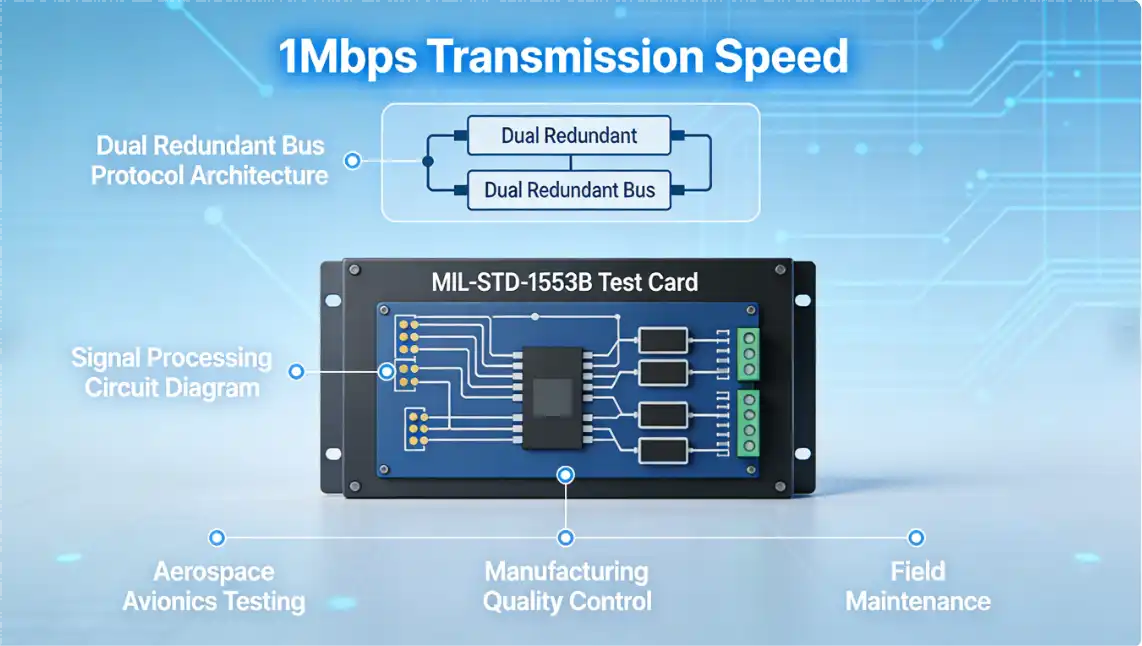
MIL-STD-1553B test cards can handle communication speeds of up to 1Mbps. A set data rate of 1 megabit per second is used by the MIL-STD-1553B communication protocol, and test cards made for this standard are intended to keep this exact transfer speed. These specialized testing tools use advanced signal processing and timing systems to make sure precise 1Mbps operation. This makes them necessary for checking and fixing communication systems in aerospace and defense industries that need to be reliable and transfer data in a predictable way.
Understanding MIL-STD-1553B Communication Protocol and Test Card Functionality
When it comes to aircraft and defense, the MIL-STD-1553B communication system is a key piece of technology that makes it possible to send data securely in mission-critical settings. This military standard describes a digital time division command/response multiplex data bus that works at a constant 1Mbps data rate to make sure that all aircraft systems can talk to each other reliably and consistently.
Protocol Architecture and Data Bus Design
The protocol design uses a dual backup bus setup that makes it possible for both planes and spaceships to work even if something goes wrong. As long as one bus doesn't work, the other buses will still be able to communicate with each other. The data bus uses transformer-coupled, half-duplex communication with Manchester II bi-phase encoding, which lets data transmission be self-synchronizing without the need for separate clock signals. Bus controllers handle all communication tasks, telling remote terminals when to send or receive data based on set schedules. This unified method guarantees fixed behavior, which means that the time of messages stays the same and reliable across all operating situations. The protocol can handle up to 31 external terminals per bus, and each terminal can handle more than one section thanks to its own internal addressing structure.
Test Card Signal Processing Capabilities
MIL-STD-1553B test cards use advanced signal processing technologies to correctly mimic and keep an eye on bus communications. These gadgets have precise timing circuits that keep the exact 1Mbps transmission rate needed by the standard. This makes sure that they work with real systems while they are being tested. The test cards use special transceiver circuits that meet MIL-STD-1553B electrical requirements, such as voltage levels, rise times, and impedance characteristics. Engineers can check that sent data meets strict time and loudness requirements with signal integrity tracking. This lets them find problems before they affect working systems.
Bus Controller and Remote Terminal Emulation
Advanced test cards can simulate multiple bus controllers and external ports at the same time, which lets you fully test a system without needing all of its hardware to be active. During the system integration phase, when engineers need to make sure that communication protocols work, this emulation feature comes in very handy. The test equipment supports both cyclic and acyclic message patterns, which lets engineers make sure that both normal operational sequences and exception handling scenarios work. Message screening and trigger features help engineers focus on certain communication events, which speeds up the testing process while the system is being built or maintained.
Benefits and Applications of MIL-STD-1553B Test Cards in Industry
The aerospace and defense sectors rely heavily on MIL-STD-1553B test cards to maintain system reliability and ensure compliance with stringent operational requirements. These specialized tools deliver substantial benefits that directly impact operational readiness and safety standards across multiple application areas.
Enhanced System Validation and Integration
Test cards make it possible to fully check aircraft communication systems before they are used. This lowers the chance of problems happening in the air, which can be very expensive and cause missions to be interrupted. Without putting expensive flight hardware at risk or breaking safety rules, engineering teams can simulate complex operational scenarios, such as fault conditions and emergency procedures. Testing individual subsystems separately before connecting them to full aircraft networks is a big help to the system integration process. This method lets engineers find and fix interface problems early in the development process, which lowers the overall cost of the project and speeds up the time it takes to get certified.
Manufacturing Quality Control and Production Testing
Before sending electronics parts to customers, production sites use MIL-STD-1553B test cards to make sure that the parts they make meet the standards. Automated test routines can quickly check hundreds of communication parameters, making sure that quality is uniform across production runs and keeping manufacturing output high. Here are the main benefits these devices offer in manufacturing settings:
• Automated Testing Protocols: Test cards support scripted validation sequences that check signal integrity, timing accuracy, and protocol compliance without manual intervention, reducing human error and increasing testing consistency.
• Real-time Fault Detection: Advanced monitoring capabilities identify intermittent communication issues that might not appear during basic functional testing, preventing defective units from reaching operational environments.
• Comprehensive Data Logging: Detailed test records provide traceability documentation required for aerospace quality standards, supporting compliance with DO-178C and other certification requirements.
• Scalable Testing Solutions: Modular test card designs accommodate varying production volumes, from prototype validation to high-volume manufacturing scenarios.
These advantages collectively enable manufacturing organizations to maintain the exacting quality standards demanded by aerospace and defense customers while optimizing production efficiency and cost management.
Field Maintenance and Troubleshooting Applications
Maintenance workers use portable MIL-STD-1553B test cards to figure out why operating aircraft and ground systems are having contact problems. By isolating problems to specific bus segments or remote terminals, these tools help keep planes in the air longer and lower maintenance costs. Technicians can check how systems respond to different conditions and make sure that repairs have fully restored functionality by injecting controlled test patterns into operational buses. This feature comes in handy, especially during line maintenance, when quickly figuring out what's wrong has a direct effect on how many planes are available and when they can be used.
Comparing MIL-STD-1553B Test Cards with Alternative Testing Tools
The avionics testing landscape includes various specialized instruments, each designed to address specific aspects of system validation and troubleshooting. Understanding the distinct capabilities of MIL-STD-1553B test cards compared to alternative testing solutions helps procurement professionals select the most appropriate tools for their specific requirements.
Protocol Analyzers versus Test Cards
Protocol monitors are very good at collecting and decoding bus data, which lets you see contact trends and message content in great detail. These tools usually have a lot of filtering options and advanced triggering options that help engineers find specific communication events in complicated operational situations. However, protocol analyzers mostly work as passive monitoring tools, so they can't send test signals or pretend to be bus participants. In addition to this limitation, test cards offer active modeling features that let engineers create controlled test scenarios and check how systems respond to known conditions.
Signal Analyzers and Oscilloscopes in Avionics Testing
High-end oscilloscopes and traditional signal analyzers both give you a great view of electrical signal properties like rise times, voltage levels, and noise analysis. These tools are very helpful when looking into problems with signal integrity or making sure that MIL-STD-1553B test cards are being followed. The problem with general-purpose signal analyzers is that they don't have protocol-specific intelligence. They can correctly measure electrical factors, but they can't figure out what a message means or automatically make sure that the process is being followed. Test cards fill in this gap by mixing the generation of electrical signals with intelligence that knows how to work with different protocols. This makes the testing process easier for aviation applications.
Integrated Test Systems and Rack-Mounted Solutions
Large-scale test systems often have a lot of different types of instruments placed on a rack. This makes it possible to test very complicated aircraft systems in a wide range of ways. The main difference between these solutions is that they usually come with MIL-STD-1553B test cards and other specialized tools that work together to make strong test settings for system-level validation. When choosing between combined systems and independent test cards, you have to choose between freedom and complexity. Because they are portable and have specific functions, stand-alone test cards are great for maintenance work in the field and focused repair. While integrated systems offer more testing options, they also need bigger capital and their own testing centers.
Procurement Guide: How to Source MIL-STD-1553B Test Cards for Your Business
Successful procurement of MIL-STD-1553B test cards requires careful consideration of technical specifications, supplier capabilities, and long-term support requirements. The specialized nature of these instruments demands a strategic approach to vendor selection and procurement planning.
Identifying Qualified Suppliers and Manufacturers
There are both well-known instrument makers and specialized electronics testing companies in the aircraft and military testing market. Qualified suppliers usually have AS9100 approval and a lot of experience working with both military and civilian aircraft users. When evaluating a vendor, you should look at their technical skills, factory quality systems, and infrastructure for after-sales support. Companies that sell goods and have their own engineering teams can help you choose the right product and make it exactly what you need for your purpose.
Technical Specification Evaluation Criteria
It's important to carefully look at certain technical factors to make sure that the test cards you choose are right for your application. Bus interface standards must meet the requirements set out in MIL-STD-1553B Notice 2, which includes transformer coupling, impedance matching, and signal level compatibility. Software skills have a big effect on how well operations run and how well they integrate with current test settings. Modern test cards should have tools for popular development platforms and support industry-standard computer interfaces. This will cut down on the time it takes to set up and train users.
Cost Considerations and Budget Planning
The prices of test cards vary a lot depending on their software, feature sets, and channel numbers. When making a budget, you should think about how much the hardware will cost at first, how much it will cost to license software, and how much it will cost to support the equipment over its lifetime. If you buy a lot of units at once, you may get better prices, especially if you want to use the same test platforms across multiple facilities or programs. When you figure out the total cost of ownership, you should look at choices like extended warranties and service plans for tuning.
Technical Specifications and Troubleshooting with MIL-STD-1553B Test Cards
Technical specifications define the performance boundaries and capabilities that distinguish professional-grade MIL-STD-1553B test cards from basic testing tools. Understanding these parameters enables engineers to select appropriate equipment and maximize testing effectiveness.
Critical Performance Parameters
Signal timing precision is one of the most important standards for MIL-STD-1553B test cards because the protocol requires exact timing compliance. When using multiple channels for testing, channel isolation specifications become important because crosstalk between channels could ruin test results. Professional test cards usually achieve timing accuracy within ±0.1% of specification values, making sure that even the most sensitive avionics systems work reliably. High-quality test cards keep channels more than 60dB apart, which stops crosstalk when trying multiple things at once.
Troubleshooting Methodologies and Fault Isolation
Systematic debugging methods use test cards to quickly find the source of communication issues. Before moving on to protocol-level analysis, the process usually starts with basic connectivity verification, making sure that the bus termination and coupling transformers work correctly. Message injection techniques let engineers check that certain remote terminals respond correctly to command sequences, which helps them find broken parts in complex systems. It is possible to validate error handling methods with error injection, which makes sure that systems react correctly to faulty data or time violations.
Calibration and Maintenance Requirements
Test cards stay accurate for as long as they are used if they are calibrated regularly. Professional test equipment needs to be calibrated once a year at least to keep up with national standards. In critical situations, some parameters may need to be checked more often. Software updates, connector inspections, and environmental stress screening are all part of preventative maintenance that find potential reliability problems before they affect testing operations. The right way to store and handle equipment helps keep it reliable and extends its useful life.
MXTD: Your Trusted Partner for Advanced MIL-STD-1553B Testing Solutions
Xi'an Mingxi Taida Information Technology Co., Ltd. (MXTD) is a well-known company that makes high-performance MIL-STD-1553B test cards and complete testing systems for aircraft. The MXTD team has been working in this field for more than 12 years and has a history of making solid goods that meet the strict 1Mbps transfer needs of aircraft and military uses.
Industry-Leading Product Portfolio
MXTD's MIL-STD-1553B test card options have outstanding performance qualities that are on par with industry standards while being more cost-effective. The company's product line includes both standard products that can be sent right away and custom solutions that are made to fit the needs of each customer. Standard products work with all existing test environments and come with extra features like better signal integrity, wider temperature ranges, and more advanced software interfaces. The engineering team is always improving product designs based on what customers say and how the industry changes. This keeps MXTD solutions at the cutting edge of testing technology.
Comprehensive Support Infrastructure
MXTD cares about its customers' success in more ways than just delivering products. It offers full technical help and service programs. The company has a helpful technical support team that can help with remote video guidance, free software updates, and quickly fix problems within an hour. The support infrastructure includes the right logistics tools for transporting precision instruments, like shock-proof, moisture-proof, and anti-static packaging systems. Customers around the world can be sure of a reliable delivery service, and the integrity of the product is maintained throughout the shipping process. The standard warranty coverage lasts for one year, but there are ways for customers to get longer coverage in certain situations, giving them confidence in their investment. When you have strong goods and full support, you have a relationship that lasts throughout the lifecycle of the product.
Customization and OEM/ODM Capabilities
Full ODM and OEM services are available from MXTD's engineering team, so customers can get test solutions that are perfectly suited to their application needs. The customization process starts with a thorough analysis of all the parameters. Next, the design is optimized, and prototypes are tested to make sure the final products meet all performance goals. Production scheduling works for both standard product orders and custom development projects, and delivery dates and milestones are communicated clearly. The company's manufacturing skills allow for everything from small trial runs to large production runs, so customer projects can grow and become more mature.
Conclusion
MIL-STD-1553B test cards definitely allow 1Mbps transfer, making them necessary for checking and keeping communication systems in space. These special gadgets let engineers check how well systems work, figure out what's wrong, and make sure they're following strict industry standards. They do this by combining exact time control with full protocol intelligence. To get the most out of your working efficiency and return on investment, you need to carefully consider the technical specs, provider skills, and long-term support needs of the test tools you choose.
FAQ
Do MIL-STD-1553B test cards support the full 1Mbps transmission rate?
Yes, MIL-STD-1553B test cards are specifically designed to support the complete 1Mbps transmission rate mandated by the protocol standard. These devices incorporate precision timing circuits and signal processing capabilities that maintain exact compliance with the fixed data rate requirements throughout all testing operations.
How do test cards integrate with existing avionics test setups?
Modern MIL-STD-1553B test cards feature standard interfaces including PXIe, PCIe, and USB connections that facilitate integration with existing test environments. Software support typically includes drivers for popular development platforms and comprehensive API libraries that streamline integration with custom test applications and automated test sequences.
What distinguishes test cards from protocol analyzers in MIL-STD-1553B applications?
Test cards provide active simulation and signal generation capabilities, enabling engineers to emulate bus controllers and remote terminals during system validation. Protocol analyzers excel at passive monitoring and data capture but cannot inject test signals or simulate system components, making test cards essential for comprehensive system testing and troubleshooting.
Can test cards handle both bus controller and remote terminal functions simultaneously?
Advanced MIL-STD-1553B test cards support simultaneous bus controller and remote terminal emulation, allowing comprehensive testing scenarios without requiring additional hardware. This capability enables validation of complete system interactions and communication protocols using a single test instrument.
What calibration requirements apply to MIL-STD-1553B test cards?
Professional test cards typically require annual calibration to maintain traceability to national standards and ensure continued accuracy. The calibration process verifies timing accuracy, signal levels, and protocol compliance parameters to guarantee reliable test results throughout the equipment's operational lifespan.
Partner with MXTD for Superior MIL-STD-1553B Testing Solutions
MXTD delivers industry-leading MIL-STD-1553B test card solutions that consistently support 1Mbps transmission requirements while providing exceptional value and reliability. Our extensive product portfolio includes both standard and customized offerings designed to meet the demanding needs of aerospace and defense applications. With over 12 years of specialized experience, comprehensive technical support, and rapid response capabilities, MXTD stands ready to enhance your avionics testing capabilities. Contact our team at manager03@mxtdinfo.com to discuss your specific requirements and discover how our cost-effective solutions can optimize your testing operations while maintaining the highest quality standards expected from a trusted MIL-STD-1553B test card supplier.
References
1. Department of Defense Interface Standard: Digital Time Division Command/Response Multiplex Data Bus, MIL-STD-1553B Notice 2, September 1986.
2. Society of Automotive Engineers. "Guidelines for MIL-STD-1553B Data Bus System Design and Integration." SAE Aerospace Standard AS4111, Revision C, 2010.
3. Condor Engineering. "Advanced Testing Methodologies for MIL-STD-1553B Communication Systems." Avionics Testing Handbook, 3rd Edition, 2019.
4. National Institute of Standards and Technology. "Calibration Procedures for Digital Communication Test Equipment." NIST Special Publication 250-84, 2018.
5. Aerospace Industries Association. "Best Practices for Avionics System Integration and Testing." AIA-NAS-4101, Revision 2, 2020.
6. International Organization for Standardization. "Quality Management Systems for Aerospace Testing Equipment." ISO 9001:2015 Aerospace Supplement, 2017.
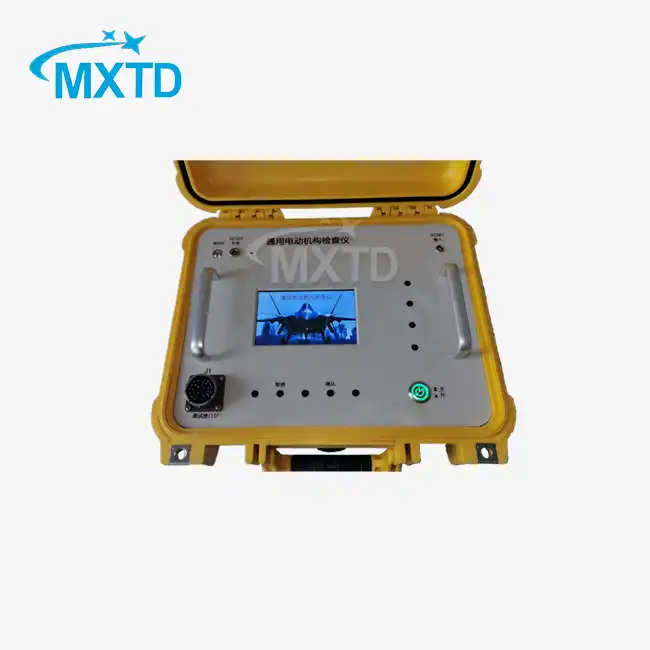
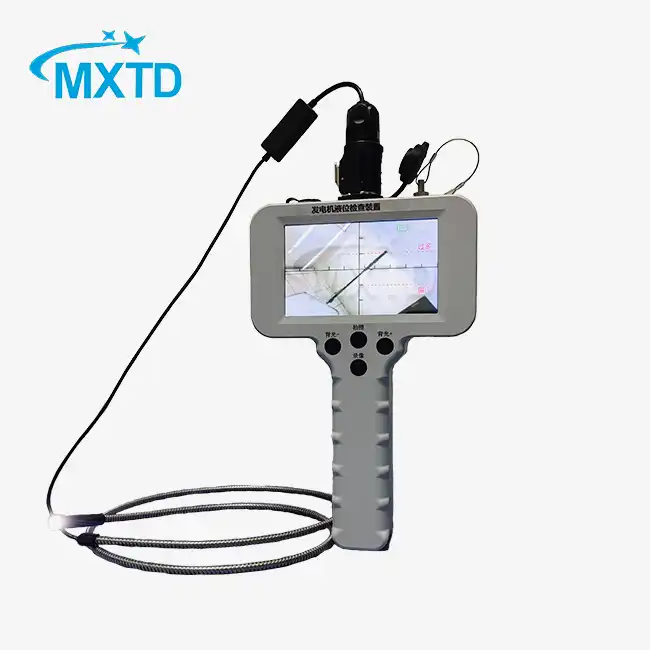

Our customers’ satisfaction speaks for our quality — contact us to experience the same reliable service.