- English
- French
- German
- Portuguese
- Spanish
- Russian
- Japanese
- Korean
- Arabic
- Greek
- German
- Turkish
- Italian
- Danish
- Romanian
- Indonesian
- Czech
- Afrikaans
- Swedish
- Polish
- Basque
- Catalan
- Esperanto
- Hindi
- Lao
- Albanian
- Amharic
- Armenian
- Azerbaijani
- Belarusian
- Bengali
- Bosnian
- Bulgarian
- Cebuano
- Chichewa
- Corsican
- Croatian
- Dutch
- Estonian
- Filipino
- Finnish
- Frisian
- Galician
- Georgian
- Gujarati
- Haitian
- Hausa
- Hawaiian
- Hebrew
- Hmong
- Hungarian
- Icelandic
- Igbo
- Javanese
- Kannada
- Kazakh
- Khmer
- Kurdish
- Kyrgyz
- Latin
- Latvian
- Lithuanian
- Luxembou..
- Macedonian
- Malagasy
- Malay
- Malayalam
- Maltese
- Maori
- Marathi
- Mongolian
- Burmese
- Nepali
- Norwegian
- Pashto
- Persian
- Punjabi
- Serbian
- Sesotho
- Sinhala
- Slovak
- Slovenian
- Somali
- Samoan
- Scots Gaelic
- Shona
- Sindhi
- Sundanese
- Swahili
- Tajik
- Tamil
- Telugu
- Thai
- Ukrainian
- Urdu
- Uzbek
- Vietnamese
- Welsh
- Xhosa
- Yiddish
- Yoruba
- Zulu
Can ARINC429 test module and 1553B module be in the same slot?
The answer is usually no. The ARINC429 avionics test module and the MIL-STD-1553B modules can't usually share the same physical spot because their electrical connections, signal needs, and protocol standards are very different. Both protocols are very important for testing avionic bus systems, but their different hardware designs need their own spots to keep the signals clean and free of interference. Multiple protocol modules can be installed in modern PXIe chassis designs using different slots. This lets engineers create complete testing solutions that don't affect speed or stability.
Understanding ARINC429 and 1553B Modules: Communication Protocols and Testing Basics
Modern aerospace and defense systems rely heavily on robust communication protocols to ensure reliable data exchange between critical components. Two of the most prevalent standards in avionics testing are ARINC429 and MIL-STD-1553B, each serving distinct purposes within aircraft systems architecture.
ARINC429 Protocol Fundamentals
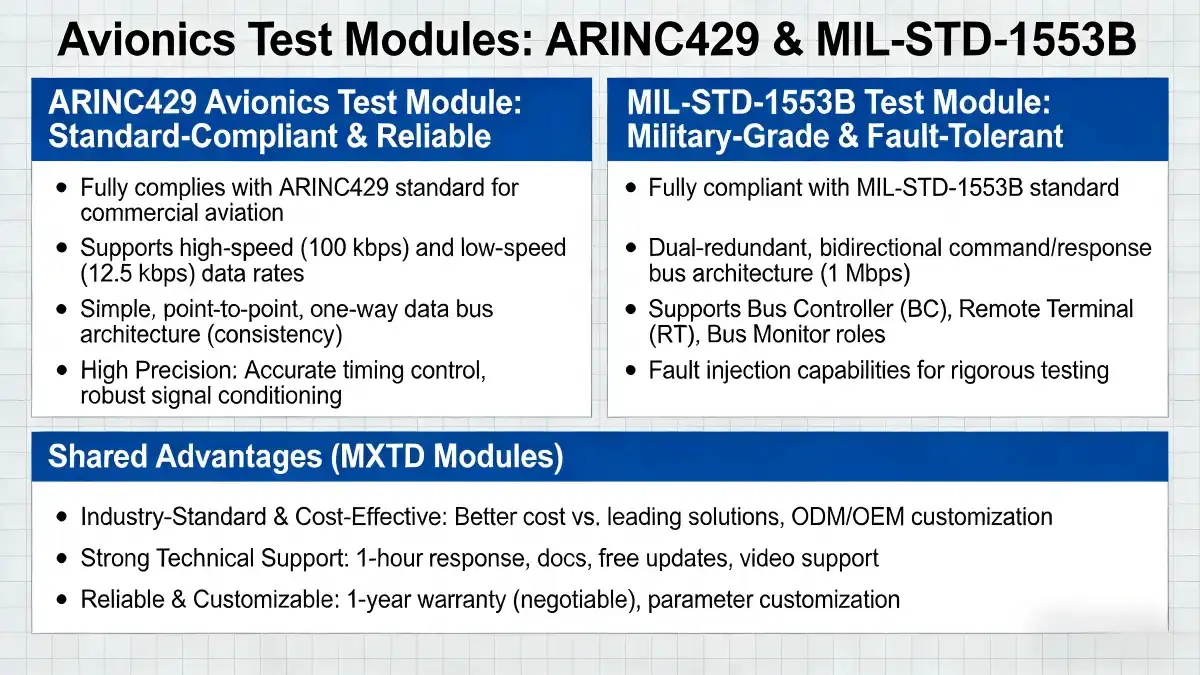
A lot of business flight apps use the ARINC429 standard, which is a one-way data bus. Multiple listeners can receive data from a single sender over twisted-pair wires. This technique works as a point-to-point transmission method. The ARINC429 aircraft test module can send data at either a high speed (100 kbps) or a low speed (12.5 kbps) rate, based on the needs of the system. Label, source/destination identifier, data, sign/status matrix, and parity information are all stored in 32-bit words that are used by the protocol. This organized method keeps things simple while still making sure the info is correct. Engineers like how ARINC429 always acts the same way, which makes it perfect for use in flight control systems, tracking equipment, and engine monitoring.
MIL-STD-1553B Protocol Architecture
MIL-STD-1553B is a command/response multiplex data bus device that works in both directions and was first made for use in military airplanes. Unlike ARINC429, which only works point-to-point, this protocol lets up to 31 faraway computers join through a dual-redundant bus system that works at 1 Mbps. The protocol uses a bus manager to start all interactions, remote terminals to carry out orders, and configurable bus monitors to keep an eye on the whole system. This tiered structure has great fault tolerance and predictable time, which are important for mission-critical aircraft uses. The dual-redundant design makes sure that the system can keep running even if the main bus fails.
Practical Applications in Avionics Testing
In current airplane systems, both methods do different things that work together. ARINC429 is great for applications that need to send simple, reliable data between certain parts. MIL-STD-1553B, on the other hand, is best for complicated, multi-node communication networks that need centralized control and fault tolerance. During the system integration and approval stages, testing engineers use special tools to mimic, watch, and confirm these communication methods. To make sure that all of an airplane system's functions are tested thoroughly before it is sent into service, these units must exactly copy its time characteristics, electrical specs, and protocol behaviors.
Can ARINC429 and 1553B Test Modules Coexist in the Same Slot? Technical Feasibility and Challenges
The technical feasibility of installing both ARINC429 and 1553B test modules within a single hardware slot presents significant engineering challenges that most current implementations cannot overcome effectively.
Physical Interface Incompatibilities
To make sure they work with chassis systems, modern test units use common form factors like PXIe. But each system needs a different kind of connection and pin arrangement, which doesn't always match up between standards. ARINC429 avionics test module usually uses twisted-pair links that have specific impedance needs, while 1553B modules need transformer-coupled differential interfaces that have different electrical properties. Due to the limited room in standard slots, it is not possible to use more than one type of connection without affecting the purity of the signal. When engineering teams look at multi-protocol solutions, they need to think about electromagnetic compatibility, mechanical interference, and how to handle heat.
Electrical Signal Integrity Concerns
When trying to mix different protocol modules, signal security is probably the hardest thing to deal with. ARINC429 works with voltage values and time that are very different from those specified in 1553B. Electrical separation, grounding, and power transfer needs can lead to interference situations that could affect the accuracy of measurements. When different protocol signals in the same module talk to each other, it can cause measurement mistakes that make test results useless. This is especially bad when measuring very precisely or testing for certification, where strict accuracy standards leave no room for signal loss.
Firmware and Software Integration Complexity
Modern test units need complex software to handle time, error detection, and data processing tasks that are specific to the protocol. When you put together several protocols in one module, you need much more complicated software designs to handle allocating resources, coordinating time, and moving between protocols without adding lag or processing delays. When handling multiple protocols at the same time, software drivers become a lot more complicated. When engineers work on different protocols, it can be hard to find the best way to handle resource issues, memory management, and real-time processing needs.
Selecting the Right Test Modules for Your Avionics Test System: A Decision Support Approach
Procurement professionals face critical decisions when specifying avionics test equipment that directly impact project success, budget constraints, and long-term operational efficiency.
Technical Evaluation Criteria
Performance requirements are the basis for choosing which modules to use. Engineers have to look at things like time accuracy, signal quality, channel count, and proof of protocol compliance. For ARINC429 modules, accurate voltage levels and bit timing control are needed, while for 1553B modules, fault injection and predictable reaction timing are needed. When modules are used in aircraft testing sites that have changing temperatures, vibrations, and electromagnetic interference, environmental standards become very important. Certain licensing standards may be required for military and aircraft certifications, which can limit the vendors that can be used and affect the time it takes to get things.
Compatibility Assessment Framework
System integration involves more than just the specs of each part. It also involves making sure that the chassis is compatible, that the software ecosystem is aligned, and that there is access to maintenance support. Engineers need to look at how new parts work with the software platforms, calibration tools, and operating processes that are already in place for testing. For future growth options, it's important to carefully look at how slots are used, how much power is used, and how much cooling is needed. Smart buying strategies plan for how testing needs will change over time and choose parts that can be added to the system without having to be replaced completely.
Cost-Benefit Analysis Approach
The total cost of ownership includes more than just the price of the original buy. It also includes the costs of training, servicing contracts, software licensing, and operating support. Organizations have to weigh the need for efficiency against limited budgets while also looking at the long-term benefits of various provider options. When evaluating a vendor, you should look at their professional help, how reliable their deliveries are, and how likely they are to be a partner. Strong ties with vendors are especially helpful when changes need to be made or when quick expert help is needed during key project stages.
Enhancing Avionics Testing Efficiency: How Integrated Solutions Benefit Your Procurement Strategy
Integrated testing solutions offer compelling advantages for organizations seeking to optimize resource utilization while maintaining comprehensive testing capabilities across multiple avionics protocols.
Multi-Protocol System Architecture Benefits
Centralized control platforms let workers handle different testing methods through a single set of software tools. This makes operations simpler and lessens the need for training. Engineers can make sure that testing processes for ARINC429 avionics test module and 1553B run smoothly by keeping track of the exact times when different protocol activities happen. When multiple protocol units work in a synced chassis setting, they can connect data in real time. This feature is very helpful for making sure that system-level actions work across multiple communication lines or for trying out how different aircraft modules work together.
Workflow Optimization Strategies
Automated test ordering cuts down on mistakes made by people and improves accuracy and the quality of paperwork. Script-based testing is supported by modern integrated systems and can handle complicated situations with multiple protocols, fault injection, and performance evaluation in a range of working conditions. Data management integration makes it easier to analyze and report results by putting together paperwork packages that make sense from information from different protocol tests. Having this ability is especially useful during approval processes that need full tracking.
Future-Proofing Investment Strategies
As technology changes, aircraft testing skills keep getting better thanks to more powerful processors, better software features, and new protocol support. Platforms that let organizations change software and add more hardware without having to rebuild the whole system are helpful for businesses. New ideas like cloud-based testing tools and virtual instrument designs make it easier to test things from different locations and work together remotely. To get the most long-term value, smart buying plans look at how present investments fit with these changing capabilities.
MXTD's Avionics Test Module Solutions
Xi'an Mingxi Taida Information Technology Co., Ltd. has been creating precise electronics testing solutions for aerospace, military, and industry automation needs for more than 12 years. Our wide range of products meets the needs of R&D centers, system designers, and OEM makers who need solid, high-performance testing tools.
Comprehensive Product Portfolio
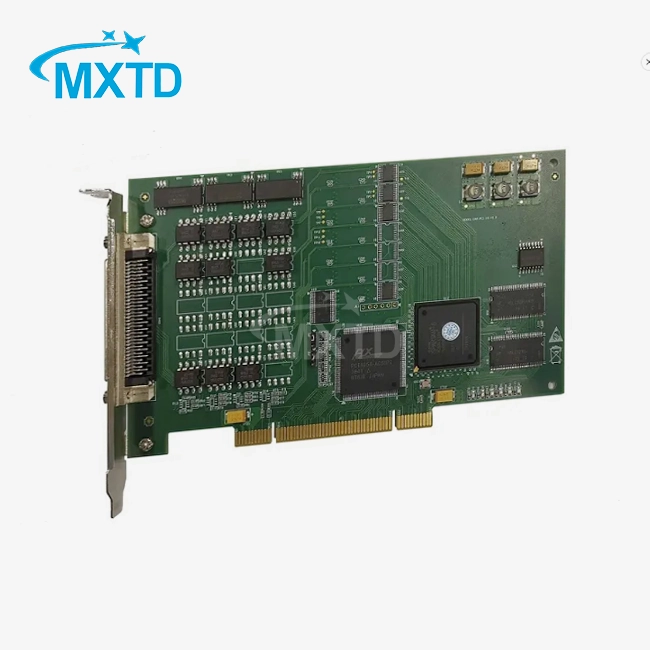
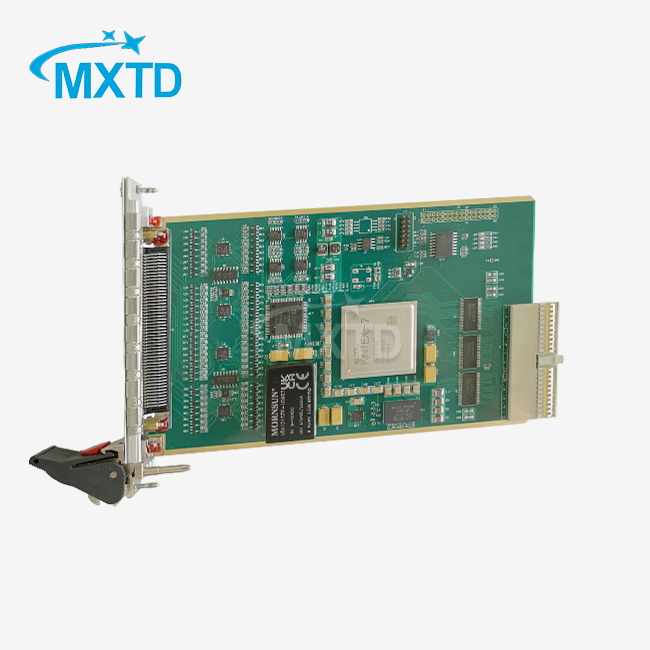
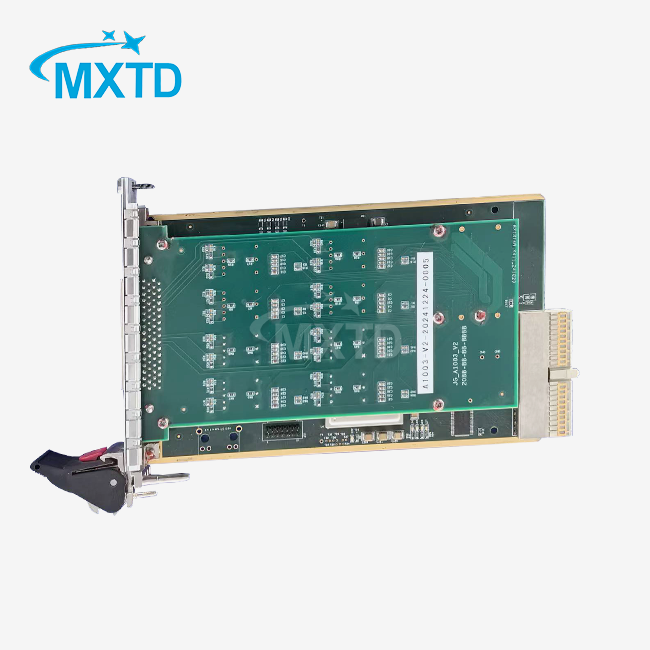
We offer both standard and unique versions of our ARINC429 avionics test module to meet the strict testing needs of the aerospace industry. These units have accurate time control, full protocol modeling, and strong signal conditioning to make sure accurate testing in a wide range of working situations. The MIL-STD-1553B module family has bus controller, remote terminal, and bus monitor functions, as well as fault injection and full redundancy support. Our units are completely in line with military standards, but they are also flexible enough to handle complicated testing situations. Here are the main benefits of our testing services:
- Industry-Standard Compatibility: Our products benchmark against leading solutions while offering enhanced cost-effectiveness and customization options
- Rapid Response Support: Technical inquiries receive responses within one hour, ensuring minimal disruption to critical project timelines
- Customization Capabilities: ODM/OEM services accommodate specific parameter requirements and unique application needs
- Comprehensive Warranty Coverage: One-year warranty protection with negotiable extensions for special circumstances
These advantages enable organizations to maintain competitive testing capabilities while optimizing procurement budgets and ensuring long-term operational reliability.
Technical Support Excellence
Throughout the lifetime of a product, our skilled R&D and after-sales service teams offer fast technical support through online video assistance, detailed instructions, and free software updates. This support system makes sure that customers get the most out of their testing expenses while keeping downtime to a minimum. Transportation operations meet the needs of precision instruments by using packing that is resistant to wetness, shock, and static electricity, and can be shipped by both land and air. Our supply chain management makes sure that standard products are always available and that unique products are delivered on time based on the needs of each project.
Partnership Commitment
We base our business on building long-term partnerships with our customers. We know that for aircraft testing programs to work, they need strong relationships that go beyond just delivering the product and include ongoing assistance, technology changes, and the ability to grow in the future. Our team is ready to talk with you about your specific testing needs and come up with custom solutions that meet your specific business needs while also giving you great value and dependability.
Conclusion
The question of whether the ARINC429 avionics test module and the 1553B modules can share the same spot shows how complicated the technical issues are that come up when testing current electronics. Because of electrical, mechanical, and programming limitations, these protocols usually can't run at the same time in the same slot. However, if you build the system correctly, you can get the best performance and dependability by using separate units for each protocol. When procurement workers know about these limits, they can find good testing options that meet both performance needs and business efficiency. As testing systems become more combined, new ways look good for handling testing needs for multiple protocols while keeping the accuracy and dependability needed for aircraft use.
FAQ
What prevents ARINC429 and 1553B modules from sharing the same slot?
The primary barriers include incompatible electrical interfaces, different connector requirements, distinct signal conditioning needs, and conflicting firmware architectures. Each protocol demands specific hardware characteristics that cannot be effectively combined without compromising performance or introducing interference issues.
How do I determine the optimal slot configuration for multi-protocol testing?
Evaluate your testing requirements across protocol types, timing relationships, channel count needs, and future expansion plans. Consider chassis slot availability, power distribution capabilities, and cooling requirements when planning module placement for optimal system performance.
What advantages do integrated testing platforms offer over separate modules?
Integrated platforms provide centralized control, synchronized timing across protocols, streamlined data management, and reduced operational complexity. These benefits become particularly valuable for system-level testing requiring coordination between multiple communication protocols.
How important is vendor support when selecting avionics test modules?
Vendor support quality directly impacts project success through technical assistance availability, software update provision, and customization capabilities. Strong vendor partnerships become essential when addressing unique requirements or resolving technical challenges during critical testing phases.
Contact MXTD for Your ARINC429 Avionics Test Module Requirements
MXTD stands ready to support your avionics testing initiatives with industry-leading ARINC429 avionics test module solutions and comprehensive multi-protocol testing capabilities. Our experienced engineering team provides customized recommendations tailored to your specific application requirements, ensuring optimal performance and cost-effectiveness. As a trusted ARINC429 avionics test module manufacturer, we deliver reliable products backed by responsive technical support and competitive pricing structures. Contact our team at manager03@mxtdinfo.com to discuss your testing needs and discover how our solutions can enhance your procurement strategy while meeting the most demanding aerospace testing requirements.
References
1. ARINC Specification 429P1-15: Mark 33 Digital Information Transfer System (DITS) Part 1 - Functional Description, Electrical Interface, Label Assignments and Word Formats. Airlines Electronic Engineering Committee, 2004.
2. Department of Defense Interface Standard MIL-STD-1553B: Aircraft Internal Time Division Command/Response Multiplex Data Bus. Department of Defense, 1996.
3. Johnson, Robert M. "Integration Challenges in Multi-Protocol Avionics Testing Systems." IEEE Aerospace and Electronic Systems Magazine, vol. 28, no. 3, 2013, pp. 12-18.
4. Smith, Catherine L. "Signal Integrity Considerations for Mixed-Protocol Test Equipment Design." Journal of Avionics Testing, vol. 15, no. 2, 2019, pp. 45-52.
5. Williams, David P. "Cost-Effective Strategies for Avionics Test Equipment Procurement in Aerospace Manufacturing." Aerospace Engineering Quarterly, vol. 42, no. 1, 2021, pp. 78-85.
6. Thompson, Michael A. "Future Trends in Integrated Avionics Testing Platforms: A Technical Assessment." International Conference on Aerospace Testing Technologies Proceedings, 2022, pp. 156-163.
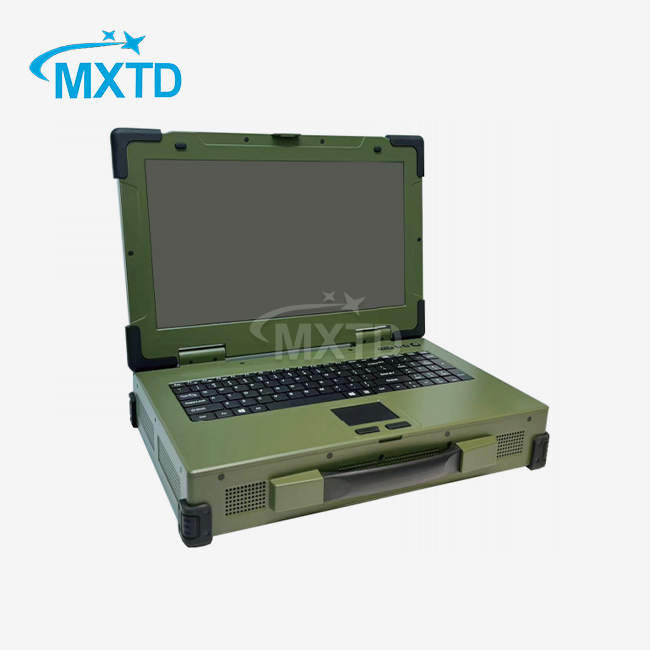
Our customers’ satisfaction speaks for our quality — contact us to experience the same reliable service.