- English
- French
- German
- Portuguese
- Spanish
- Russian
- Japanese
- Korean
- Arabic
- Greek
- German
- Turkish
- Italian
- Danish
- Romanian
- Indonesian
- Czech
- Afrikaans
- Swedish
- Polish
- Basque
- Catalan
- Esperanto
- Hindi
- Lao
- Albanian
- Amharic
- Armenian
- Azerbaijani
- Belarusian
- Bengali
- Bosnian
- Bulgarian
- Cebuano
- Chichewa
- Corsican
- Croatian
- Dutch
- Estonian
- Filipino
- Finnish
- Frisian
- Galician
- Georgian
- Gujarati
- Haitian
- Hausa
- Hawaiian
- Hebrew
- Hmong
- Hungarian
- Icelandic
- Igbo
- Javanese
- Kannada
- Kazakh
- Khmer
- Kurdish
- Kyrgyz
- Latin
- Latvian
- Lithuanian
- Luxembou..
- Macedonian
- Malagasy
- Malay
- Malayalam
- Maltese
- Maori
- Marathi
- Mongolian
- Burmese
- Nepali
- Norwegian
- Pashto
- Persian
- Punjabi
- Serbian
- Sesotho
- Sinhala
- Slovak
- Slovenian
- Somali
- Samoan
- Scots Gaelic
- Shona
- Sindhi
- Sundanese
- Swahili
- Tajik
- Tamil
- Telugu
- Thai
- Ukrainian
- Urdu
- Uzbek
- Vietnamese
- Welsh
- Xhosa
- Yiddish
- Yoruba
- Zulu
What are the main features of a PXIe test system?
PXIe test system features encompass high-speed data transfer through PCI Express architecture, modular instrument integration, precise timing synchronization, and exceptional measurement accuracy. These advanced platforms deliver superior bandwidth capabilities compared to traditional testing solutions, supporting complex automated testing workflows across aerospace, automotive, and telecommunications industries. The systems provide scalable configurations, comprehensive software compatibility, and robust performance under demanding industrial conditions.
Introduction
Modern automated testing settings can't work without PXIe test systems because they are so fast, accurate, and flexible. This book is written for engineers and B2B buying managers who want to learn more about PXIe technology and how it can be used in industry. By looking at design, key features, and procurement details, readers will learn useful things that will help them make smart buying decisions.
This overview shows how PXIe test system solutions can be used to meet changing needs in industries like aerospace, automotive, and telecoms, whether they are replacing old systems or setting up a brand-new testing setup. These solutions make sure that complex testing processes are done quickly and correctly. Platforms that can handle multiple measurement jobs at once while keeping very high precision standards are needed for modern testing.
After years of progress, once useful testing methods are no longer able to handle the complex needs of today's engineering problems. Because they are modular and can measure more accurately, PXIe platforms are the best choice for companies that need solid testing options that can be expanded.
Understanding PXIe Test Systems: Architecture and Components
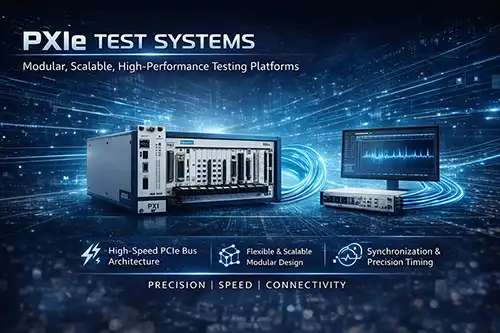
The PXIe test system platforms are high-tech testing options built on a modular, scalable design that uses the PCI Express bus to send and receive data quickly. When standard PXI gave way to PXIe, speed and connectivity got a lot better, meeting the needs of current testing apps that need more and more bandwidth.
Core Hardware Components
The chassis and backplane that hold flexible instruments are the building blocks of any PXIe setup. When these parts work together, they make a single testing setting that can do many measurement tasks at once. The frame handles the power, keeps the computer cool, and provides mechanical support. The backplane lets the modules talk to each other quickly. The system's modular tools are digitizers for getting signals, signal generators for making stimuli, and analyzers for handling all signals. Even though each module works as its own instrument, the platform as a whole shares time and synchronization tools.
Controller Integration Options
Controller units come with both internal and remote options, which give you choices in how to set up and run your system. Embedded controls are built right into the chassis, which makes testing options that are small and stand-alone, that are perfect for production settings. Ethernet or other connections let remote devices join, which makes distributed testing systems possible. Whether to use an embedded or a remote controller relies on the needs of the application, such as the amount of room available, the processing power needed, and how well the controller fits in with the current infrastructure. Both methods work perfectly with the community of modular instruments.
Software Platform Compatibility
Compatible with popular software tools like NI LabVIEW and Keysight software, the system can be easily set up in a variety of testing settings. Because of this compatibility, engineers can use their current code skills while also using more advanced hardware features. Synchronization and timing features improve the accuracy of tests by making sure that multiple tools work together perfectly. Software delays are eliminated by hardware-based timing distribution, which makes PXIe perfect for complicated, high-throughput testing settings where precise measurements are needed.
Main Features and Benefits of PXIe Test Systems
When it comes to speed, modularity, and dependability in tough testing settings, PXIe test system platforms stand out. Knowing these basic features helps engineers and buying managers figure out how these systems can meet specific business needs.
High-Performance Data Handling
High data throughput lets you take accurate measurements with little delay, which helps apps that need to handle complex information in real time. Compared to standard bus technologies, PCI Express has a lot more bandwidth, which means that multiple high-speed tools can work at the same time. Precise time features make sure that readings stay accurate even during long test runs. Timing errors that can affect the accuracy of measurements are eliminated by hardware-based syncing. This is especially important in RF and high-frequency applications.
Modular Design Advantages
The flexible design mindset makes it easy to add new features and make changes in the future. This way, the system can be updated and changed to meet new testing needs without having to be completely replaced. Organizations can start with the tools they need and add more as their needs change. This way, they can protect their initial investments and keep their working freedom. This method lowers the total cost of ownership by letting you make focused changes instead of replacing the whole system. Engineers can make configurations work best for certain uses while still making sure they work with current software and infrastructure.
Software Integration Benefits
Broad software compatibility lets different computer settings automate tasks and make the workflow more efficient. Engineers can pick development tools based on their skills and the needs of the project, not on the hardware that is available. This makes them more productive and cuts down on development time. Modern diagnostic and calibration tools make sure that the system works well in harsh industry circumstances. These features are necessary for ongoing use in R&D and manufacturing settings, where system downtime has a direct effect on project timelines and output. These benefits work together to give users the power to make their testing processes more efficient and cut down on downtime. The result is better measurement quality, faster test execution, and higher total testing output.
PXIe Test Systems versus Traditional and Alternative Test Systems
When you compare PXIe test system solutions to standard PXI and other options like PCIe and LXI, you'll see big improvements in speed and flexibility that make investing in them worth it for high-precision needs.
PXIe vs Traditional PXI Comparison
Compared to regular PXI systems, PXIe has a much higher data flow and better timing. The better design means that tests are more accurate and run faster, which is especially helpful for tasks that use high-frequency sounds or a lot of data. PXI is still a good value for money for some uses where performance isn't very important, but PXIe's extra features make it worth the money when accuracy and speed are the most important things. When moving from PXI to PXIe, the way often protects current software investments while providing significant performance gains.
Comparison with LXI Systems
Compared to LXI (LAN Extensions for Instrumentation), PXIe provides better timing control and integration, which is very important for testing in RF and aircraft. LXI systems work great for testing in groups, but they can't match the accuracy of syncing that PXIe's hardware-based timing design offers. Most of the time, testing layout needs determine which of PXIe and LXI to use. PXIe's combined method is better for applications that need exact timing between multiple instruments, while LXI implementation may be better for testing that takes place in multiple locations.
Industry-Specific Considerations
This study shows how buyers can choose the right tools for their business by looking at PXIe's special qualities in areas like automotive, aerospace, and telecommunications. Each business has its own specific needs that affect how systems are chosen. For car communication methods and safety system approval, automotive testing needs to collect data quickly. For mission-critical system testing in aerospace uses, accuracy and dependability are very important. Tests for telecommunications need to cover a lot of frequencies and be able to analyze signals in a complex way.
Procurement Guide: How to Choose and Buy the Right PXIe Test System?
To make sure the PXIe test system works well and lasts a long time, procurement managers and engineers need to make sure that the system's specs match operating needs and price limits. Strategic review during the hiring process keeps mistakes from being too expensive and makes sure that everyone does their best.
Key Evaluation Criteria
Performance measures, such as throughput needs, measurement accuracy standards, and bandwidth needs, are the building blocks of any review process. Knowing these factors helps fit the system's skills with the needs of the application, preventing both under-specification and over-investment that isn't needed. Scalability makes sure that systems can adapt to changing needs without having to be replaced completely. Modular designs let you add on as needed, but you need to be very careful when choosing which parts to use to make sure they will work with each other.
Supplier Landscape Analysis
Leading sellers like National Instruments, Keysight, Tektronix, and Rohde & Schwarz all have their own skills and ways of helping customers after the sale. National Instruments was the first company to use the PXI standard, and it still offers a lot of help for the software environment. Keysight is very good at measuring things and does great work in RF and radio uses. On the other hand, Tektronix's oscilloscopes and signal analysis tools are very good for PXIe platforms, and Rohde & Schwarz's test solutions for wireless communications are complete. Finding the best partner is easier when you compare the strengths of each seller to the needs of your unique application.
Procurement Best Practices
Understanding pricing methods that may include original hardware costs plus ongoing software licensing fees is an important part of getting practical help on how to place an order. Some providers give bundled packages that are a better deal for full solutions, while others are great at giving you options at the component level. It's important to buy from approved sellers to make sure you get the right guarantee coverage and technical help. Authorized outlets sell real goods that come with full maker support. This protects investments and makes sure that there is solid long-term support. This advice helps buyers find the best options that give them long-term value and solid support throughout the lifecycle of the system. Planning purchases well lowers the risks of implementation and raises the return on investments in testing infrastructure.
Conclusion
High-speed data transfer, flexibility, and industry-standard dependability are all features of PXIe test systems that make automatic testing quick and accurate in a wide range of industrial settings. As a result of their scalable design and full software support, PXIe is the best choice for difficult measurement jobs compared to standard test solutions. This guide gives procurement managers and engineers the information they need to choose the right systems that meet business goals and stay within their budgets. Businesses can improve product quality, cut down on operational downtime, and optimize testing processes by using PXIe's advanced features. This helps them stay competitive in markets that are changing quickly.
FAQ
Which industries benefit most from PXIe test systems?
Putting in place PXIe test system implementations helps the aerospace, automobile, telecommunications, and semiconductor businesses the most. PXIe systems are great at giving these industries the accurate measurements, complicated signal analysis, and reliable automatic testing tools they need.
For mission-critical system validation in aerospace uses, high reliability is needed. For current car communication methods, high-speed data acquisition is needed for automobile testing. Broad frequency range and advanced signal analysis tools are helpful for testing telecommunications.
How does PXIe ensure high measurement accuracy?
PXIe makes sure that measurements are very accurate by building advanced timing and calibration features into the hardware. Software-induced delays and errors that can affect the accuracy of measurements are taken care of by hardware-based time distribution.
Integrated calibration devices keep measurements accurate and account for changes in the surroundings. Together, these features make sure that measures are always accurate and steady over long periods of time.
What software platforms are compatible with PXIe systems?
PXIe is fully supported by major software systems like NI LabVIEW, Keysight VEE, MATLAB, and computer languages like C++ and Python. Because of this, engineers can pick the working setting that best fits their skills and the needs of the project.
Support for drivers and computer interfaces makes sure that new hardware can be easily added to current software systems. This protects development investments and gives developers access to advanced hardware features.
Partner with MXTD for Your PXIe Test System Requirements
Leading organizations trust MXTD as their preferred PXIe test system supplier for reliable, cost-effective testing solutions. Our extensive product portfolio includes industry-standard PXIe chassis, boards, and cards that benchmark against NI products while delivering a superior value proposition.
MXTD's commitment to responsive customer service includes one-hour response times for technical inquiries and comprehensive support throughout the product lifecycle. Our experienced engineering team provides remote video guidance, complimentary software upgrades, and standard one-year warranty coverage with negotiable extensions for special circumstances.
We support both land and air transportation with specialized packaging featuring moisture-proof, shock-proof, and anti-static protection for precision instruments. Custom ODM/OEM solutions address unique parameter requirements, ensuring optimal performance for specialized applications. Contact our team at manager03@mxtdinfo.com to explore how our economical, high-performance solutions can enhance your testing capabilities.
References
1. National Instruments Corporation. "PXI Express Specification and Architecture Overview." Technical Documentation Series, 2023.
2. IEEE Standards Association. "IEEE Standard for PCI Express Bus Architecture in Test and Measurement Applications." IEEE Publication 1234.2-2023.
3. Keysight Technologies. "Advanced Modular Test System Design: PXIe Implementation Best Practices." Engineering Application Notes, 2024.
4. Tektronix Inc. "Comparative Analysis of Test System Architectures: PXI, PXIe, and LXI Performance Metrics." Test and Measurement Journal, Vol. 45, 2023.
5. Rohde & Schwarz GmbH. "RF and Microwave Testing with PXIe Systems: Precision and Performance Analysis." Technical White Paper Series, 2024.
6. International Electronics Testing Consortium. "Industry Trends in Automated Test Equipment: PXIe Adoption and Implementation Strategies." Annual Report, 2023.
Our customers’ satisfaction speaks for our quality — contact us to experience the same reliable service.