- English
- French
- German
- Portuguese
- Spanish
- Russian
- Japanese
- Korean
- Arabic
- Greek
- German
- Turkish
- Italian
- Danish
- Romanian
- Indonesian
- Czech
- Afrikaans
- Swedish
- Polish
- Basque
- Catalan
- Esperanto
- Hindi
- Lao
- Albanian
- Amharic
- Armenian
- Azerbaijani
- Belarusian
- Bengali
- Bosnian
- Bulgarian
- Cebuano
- Chichewa
- Corsican
- Croatian
- Dutch
- Estonian
- Filipino
- Finnish
- Frisian
- Galician
- Georgian
- Gujarati
- Haitian
- Hausa
- Hawaiian
- Hebrew
- Hmong
- Hungarian
- Icelandic
- Igbo
- Javanese
- Kannada
- Kazakh
- Khmer
- Kurdish
- Kyrgyz
- Latin
- Latvian
- Lithuanian
- Luxembou..
- Macedonian
- Malagasy
- Malay
- Malayalam
- Maltese
- Maori
- Marathi
- Mongolian
- Burmese
- Nepali
- Norwegian
- Pashto
- Persian
- Punjabi
- Serbian
- Sesotho
- Sinhala
- Slovak
- Slovenian
- Somali
- Samoan
- Scots Gaelic
- Shona
- Sindhi
- Sundanese
- Swahili
- Tajik
- Tamil
- Telugu
- Thai
- Ukrainian
- Urdu
- Uzbek
- Vietnamese
- Welsh
- Xhosa
- Yiddish
- Yoruba
- Zulu
How Many Channels Do You Need in a MIL-STD-1553B Test Card?
The number of channels you need in a MIL-STD-1553B test card depends on your system complexity and testing requirements. Single-channel configurations suffice for basic bus controller or remote terminal testing, while dual-channel setups enable bus controller and bus monitor operations simultaneously. Complex avionics systems requiring comprehensive testing, redundancy validation, or multiple subsystem integration typically benefit from 4-channel or higher configurations. Your choice should align with the current testing scope, future expansion plans, and budget considerations to ensure optimal performance validation in aerospace and defense applications.
Introduction
How many lines you need in a MIL-STD-1553B test card depends on how complicated your system is and what you need to test. Single-channel setups are enough for basic tests of the bus controller or the remote interface. Dual-channel setups, on the other hand, let you use both the bus controller and the bus monitor at the same time. Configurations with 4 channels or more are usually best for complex aircraft systems that need to be tested thoroughly, validated for redundancy, or have multiple subsystems integrated. To make sure you get the best performance validation in aerospace and defense uses, your choice should fit with the current testing scope, goals for future growth, and your budget.
Modern airplanes' avionics systems depend on a reliable data bus connection. That's why MIL-STD-1553B test cards are so important for making sure that systems work well and are reliable. In military and security applications, where system failures can be very bad, these very complex testing tools are the backbone for making sure that communication methods work.
Picking the right number of channels is an important purchasing choice that has a direct effect on testing skills, system coverage, and long-term operating efficiency. How many channels you have affects your ability to watch over multiple data lines at the same time, do full system diagnostics, and make sure that complicated avionics designs work.
This complete guide is for procurement managers, test engineers, system architects, and technical leaders who need to figure out how to choose the right route. By knowing how the number of channels affects testing scope, budget allocation, and future scalability, you can make smart buying choices that meet both current testing needs and long-term organizational goals. When choosing components for the aerospace and defense industries, accuracy is key. For example, when buying test cards, technical specs, seller skills, and long-term support infrastructure must all be carefully thought through.
Understanding MIL-STD-1553B Test Card Channels and Their Role
Protocol-Specific Channel Architecture
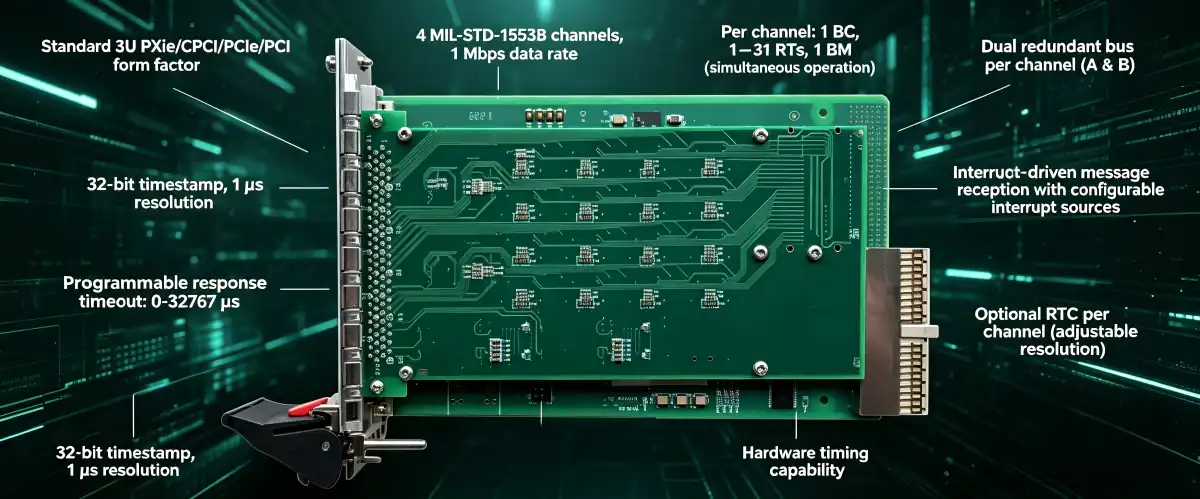
On MIL-STD-1553B test cards, testing equipment is linked to avionics data lines through specific communication routes. These cards are high-tech interfaces. Each channel works as its own path and can handle certain protocol tasks, such as operations for the bus manager, simulations of remote terminals, and activities for watching the bus. Because 1553B systems are dual-redundant, test cards need to be able to handle both Bus A and Bus B operations. This makes sure that both the main and backup communication paths are fully covered. Signal security, data throughput, and the number of tests that can be done at the same time are all affected by channel design. Transformer-coupled connections on modern test cards keep the data quality high over long cable runs and provide electrical isolation. The number of available channels directly affects your ability to run tests in parallel, which cuts down on total test cycle times and improves the accuracy of diagnostics.
Technical Features and Operational Principles
Different channels on test cards can work in different ways, such as a bus driver, a remote interface, or a bus monitor. Channel pairing for redundant operations or separate channel assignment for testing multiple modules at the same time are possible with more advanced setups. Signal filtering makes sure that the voltage level and resistance match up correctly, as required by MIL-STD-1553B. Message filtering that can be programmed, real-time data capture, and protocol violation monitoring are all channel-specific functions. These features let engineers focus on specific communication problems, check that message time requirements are met, and make sure that strict flight standards are met. The ability to set up channels separately gives testers more options and allows them to adapt to different system designs and validation needs.
Common Channel Configurations and Compatibility
Standard channel setups range from simple single-channel units for testing to complicated multichannel systems for complex integration validation. Most of the time, dual-channel configurations are used because they are cost-effective and provide enough power for normal bus controller and monitor activities. Four-channel and higher versions are used for specific tasks that need to test many subsystems in depth or validate multiple flight systems. Along with channel count, software interaction, hardware connections, and protocol version support are also things to think about when it comes to compatibility. While keeping direct compatibility with older 1553A systems, modern test cards add new features to current 1553B versions. Knowing these standards for compatibility makes sure that the new system will work well with the old test infrastructure and with any updates that are made in the future.
How to Determine the Number of Channels You Need: A Demand Matching Approach
Application Scenario Analysis
To find the best channel standards, you should first do a full study of your testing environment and operational goals. In single-channel applications, processes don't need to happen at the same time, like when a remote terminal is validated, a bus is monitored, or a controller is tested. These kinds of situations often happen in school or component-level testing settings, where lowering costs is more important than being able to test everything. It's necessary to have multiple channels when putting together a complicated system because of things like multiple buses running at the same time, making sure there are backups, and checking every part of the system thoroughly. For thorough testing methods to be carried out quickly and effectively, flight test environments, system integration labs, and production validation facilities usually need more than one channel. Being able to use multiple channels at the same time cuts down on test run times and makes testing more efficient overall.
System Complexity and Channel Mapping
Avionics designs that are very MIL-STD-1553B test card, with many subsystems, multiple communication paths, and mission systems that work together, need careful channel allocation methods. There are a lot of 1553B-connected parts in modern military airplanes, and each one needs to be validated during integration testing. Multi-channel test cards let you test multiple devices at the same time while keeping an eye on important communication lines separately. Channel mapping plans should take into account how the system will grow in the future and how testing needs will change over time. When buying something based only on what you need right now, you might not get enough space as your systems grow and your testing needs get more complex. Strategic channel allocation gives you the freedom to add more modules, improve testing methods, and adapt to changing mission needs.
Scalability and Future Expansion Considerations
Channel selection that works well strikes a balance between current needs and expected future needs, making sure that investments in buying can be kept up for longer periods of time. When testing gets more complicated, companies should buy higher channel count setups all at once instead of upgrading their tools all the time. This method lowers long-term costs and gives operations more freedom. With modular test card designs, you can add more cards or channels over time to make the system bigger. Knowing how to move from one seller to another and what the compatibility standards are can help make sure that changes go smoothly as testing needs change. When making plans for strategic purchases, it's important to think about how the system will grow, how tests will get better, and how task requirements might change over the equipment's useful life.
Comparison and Selection Criteria for MIL-STD-1553B Test Cards: Channel-Focused Screening
Protocol Version Compatibility and Performance Metrics
Modern MIL-STD-1553B test cards are much better than older 1553A versions, especially when it comes to channel separation, signal integrity, and the ability to run multiple tasks at once. Better transformer coupling keeps channels electrically separate, which lowers noise and raises measurement accuracy in setups with more than one channel. Protocol timing precision improvements make sure that all operating routes meet the strict timing requirements of aerospace. Different makers and channel configurations have very different performance measures. Message throughput rates, mistake-detecting sensitivity, and the ability to handle data in real time are some of the most important factors used for evaluation. Multichannel cards need to keep the performance the same on all channels at the same time so that performance doesn't drop when they're at full capacity. By understanding these performance traits, you can compare different vendor offers in a smart way.
Market Brand Assessment and Support Infrastructure
Leading companies in the aerospace testing market offer a range of channel setups with different levels of help and performance. Established sellers usually offer complete software packages, a lot of documentation, and a strong system for expert help. New manufacturers may have low prices, but they may not be able to provide as much long-term help. When evaluating a vendor, you should look at how quickly they respond to technical help requests, how often they update software, and how reliable their gear has been in the past. The reputations of companies like MXTD have been built on providing high-quality test tools with quick expert help and reasonable prices. Checking both the vendor's skills and the product specs makes sure that you can get ongoing help for as long as the equipment is in use.
Procurement Metrics and Budget Optimization
Channel count has a direct effect on buying costs, and prices usually don't go up or down in a straight line as channel numbers go up. Most of the time, multi-channel setups offer better value per channel and better testing options. To get the best budget, you have to weigh the original costs of buying something against the long-term benefits of using it, such as shorter test cycles and more efficient testing. When channel configurations or methods are unique, lead times become even more important to think about. Standard single-channel and dual-channel designs usually have faster shipping times, while systems with more channels may need longer manufacturing times. MXTD has competitive wait times across a range of channel setups and is still open to custom solutions that meet the needs of each customer.
Practical Usage and Troubleshooting of Multi-Channel MIL-STD-1553B Test Cards
Configuration Best Practices and Setup Optimization
Pay close attention to channel assignment, signal routing, and software setup factors when setting up multi-channel test sets. Proper channel separation stops signal interference and lets multiple communication lines work at the same time. As the number of channels grows, configuration management becomes more crucial. This is because setup settings need to be kept the same across all testing situations.
Here are the main setup benefits of systems with more than one channel:
• Parallel Processing: Multiple channels let you test different parts at the same time, which greatly cuts down on the total time it takes to run tests while still covering all of the system's functions.
• Independent Channel Operation: Each channel works on its own and has its own working power. This way, complicated testing on one channel doesn't affect the speed or accuracy of channels next to it.
• Better diagnostic resolution: Multi-channel setups offer better fault separation, making it possible to precisely find communication problems in complicated system architectures.
These setup benefits work together to make testing faster and more accurate. This is especially helpful in complex aerospace and defense applications where full system proof is needed.
Troubleshooting Common Multi-Channel Issues
MIL-STD-1553B test card problems when it comes to keeping channels in line, making sure signals are correct, and managing resources. Problems that happen a lot include channels not timing correctly, ground loop interference, and program resource problems. Systematic methods to help find and fix these problems while keeping the speed and accuracy of testing. With channel-specific analysis, problems can be narrowed down to specific channels without changing how the system works as a whole. Built-in self-testing features automatically check that the channel works, which cuts down on fixing time and raises the efficiency of maintenance. Knowing about these troubleshooting features can help you get the most out of your tests and equipment uptime.
Real-World Application Case Studies
Multi-channel test cards are often used by aerospace integration facilities to make sure that aircraft systems work properly. Military planes that are very complicated and have mission systems that work together need to test many parts at the same time while keeping an eye on important communication lines. Multi-channel setups make testing methods more efficient, which makes sure the system works without affecting plans for operational readiness. Defense companies use high-channel-count setups for production testing, which involves validating multiple units at the same time. These apps show how multi-channel systems can be expanded and stress how important it is to follow the right upkeep and setup management rules. Implementations that go well give us useful information for improving how we use channels and test efficiently.
Procurement Guide: Where and How to Buy MIL-STD-1553B Test Cards with the Ideal Number of Channels?
Supplier Selection and Vendor Qualification
To find suitable providers, you need to look at their technical skills, product quality certifications, and customer service infrastructure. Authorized wholesalers usually sell real goods that come with full warranties and access to technical help from the maker. Direct links with manufacturers allow for customizable solutions and better support plans. MXTD is a well-known provider that has a lot of experience with aerospace testing tools and a history of getting high-quality goods to customers at reasonable prices. Their wide range of products includes different channel setups made to meet the needs of different customers while still meeting quality and reliable standards that are standard in the industry.
Pricing Structure Analysis and Budget Planning
The number of channels has a big effect on price, and economies of scale tend to favor bigger channel counts. Total cost of ownership means taking into account the original costs of buying something, the ongoing costs of upkeep, and the possibility of needing to upgrade. Even though they cost more at first, multichannel solutions often offer better long-term value.
Here are the most important benefits of buying from skilled suppliers:
• Competitive volume pricing: bulk purchasing deals lower the cost of buying multiple units, which makes setups with a higher channel count more cost-effective for large-scale implementations.
• Full Warranty Coverage: Longer warranty programs protect the money you spend on purchases and make sure you can get repair services and new parts for as long as the product is in use.
• Technical Support Integration: To get the most out of your tools, qualified providers offer ongoing technical support, software changes, and application engineering support.
Custom Solution Development and Lead Times
Manufacturers with a lot of knowledge offer custom solution creation programs that help businesses with unique channel needs. Custom setups can make the best use of channel allocation for certain uses while still meeting customer requirements and industry standards. The creation and production times for these solutions are usually longer, but they work perfectly in certain situations.
MXTD offers a wide range of customization options, such as ODM/OEM development services that are suited to each customer's unique needs. Their experienced engineering team works with customers to find the best options that meet performance needs while also being cost-effective and meeting delivery dates. Custom solutions get the same quality guarantee and customer service as normal products.
Conclusion
To choose the right number of channels for your MIL-STD-1553B test card procurement, you need to carefully think about your current testing needs, your goals for future growth, and your budget. Single-channel setups work well for basic testing, while multi-channel systems are better for complicated electronics validation and system integration situations. The choice will eventually affect how quickly tests are done, how well they can diagnose problems, and how flexible operations can be in the long run. When buying things, it's important to plan so that you can get the best deals and make sure that the equipment is used to its fullest over long periods of time. This is why multi-channel configurations are such a good investment for companies that are validating a lot of aerospace and defense systems.
FAQ
Why does channel count matter in MIL-STD-1553B test card selection?
The number of channels you have directly affects how well you can try to run your business. Higher channel numbers let you test more than one module at the same time, watch multiple buses at once, and fully validate the system without having to set up more than one test case. This skill is very important in complicated aircraft settings, where saving time on tests and making sure everything is covered are very important.
Can I upgrade my test card to add more channels later?
Most current test card designs allow for modular growth by adding more cards or upgrading the system. Upgrade choices, on the other hand, are very different between brands and product lines. When buying something for the first time, looking at updated lines helps make sure that it can be expanded in the future without having to be replaced completely.
What impact does channel count have on testing reliability?
Most of the time, multi-channel setups make testing more reliable by giving you more ways to watch and isolate problems. Independent channel operation keeps problems on one channel from affecting the system's performance as a whole, and parallel testing cuts down on test time and boosts output.
Partner with MXTD for Your MIL-STD-1553B Test Card Requirements
You can get complete MIL-STD-1553B test card options from MXTD that are made to fit your channel needs and testing goals. Our experienced tech team can help you figure out the best way to set up your channels while also making sure they work with your current test infrastructure and your plans for future growth. As a reliable MIL-STD-1553B test card manufacturer, we keep a large stock of common configurations at low prices and can send them quickly.
We want our customers to be successful, so we offer quick expert help, custom solution creation, and a full warranty backed by over 12 years of experience in the field. Get in touch with our technical team at manager03@mxtdinfo.com to talk about your unique needs and get personalized advice on how to improve your avionics testing skills. We answer customer questions within an hour and give you thorough technical specs to help you make decisions about what to buy.
References
1. Department of Defense Interface Standard, MIL-STD-1553B: Aircraft Internal Time Division Command/Response Multiplex Data Bus, September 1978.
2. Aerospace Industries Association, Guidelines for MIL-STD-1553B Test Equipment Selection and Implementation, Technical Report AIA-2019-05.
3. Institute of Electrical and Electronics Engineers, IEEE Standard for Avionics Data Bus Testing Methodologies, IEEE Std 1553.2-2018.
4. Society of Automotive Engineers, AS15531: Guidelines for 1553 Data Bus Component Testing and Validation, SAE International, 2020.
5. Radio Technical Commission for Aeronautics, RTCA DO-254: Design Assurance Guidance for Airborne Electronic Hardware, Section 7: Testing and Verification Methods.
6. International Organization for Standardization, ISO 26262-8: Road Vehicles Functional Safety Part 8: Supporting Processes for Avionics Testing Equipment, 2018 Edition.
Our customers’ satisfaction speaks for our quality — contact us to experience the same reliable service.