- English
- French
- German
- Portuguese
- Spanish
- Russian
- Japanese
- Korean
- Arabic
- Greek
- German
- Turkish
- Italian
- Danish
- Romanian
- Indonesian
- Czech
- Afrikaans
- Swedish
- Polish
- Basque
- Catalan
- Esperanto
- Hindi
- Lao
- Albanian
- Amharic
- Armenian
- Azerbaijani
- Belarusian
- Bengali
- Bosnian
- Bulgarian
- Cebuano
- Chichewa
- Corsican
- Croatian
- Dutch
- Estonian
- Filipino
- Finnish
- Frisian
- Galician
- Georgian
- Gujarati
- Haitian
- Hausa
- Hawaiian
- Hebrew
- Hmong
- Hungarian
- Icelandic
- Igbo
- Javanese
- Kannada
- Kazakh
- Khmer
- Kurdish
- Kyrgyz
- Latin
- Latvian
- Lithuanian
- Luxembou..
- Macedonian
- Malagasy
- Malay
- Malayalam
- Maltese
- Maori
- Marathi
- Mongolian
- Burmese
- Nepali
- Norwegian
- Pashto
- Persian
- Punjabi
- Serbian
- Sesotho
- Sinhala
- Slovak
- Slovenian
- Somali
- Samoan
- Scots Gaelic
- Shona
- Sindhi
- Sundanese
- Swahili
- Tajik
- Tamil
- Telugu
- Thai
- Ukrainian
- Urdu
- Uzbek
- Vietnamese
- Welsh
- Xhosa
- Yiddish
- Yoruba
- Zulu
Does CPCI portable test computer support multi-slot expansion?
CPCI portable test computers are ruggedized systems that can do a lot of different things and are made for difficult industrial testing situations. Because they have multiple expansion slots, users can make their own designs by adding different modules. This makes them useful for testing in aerospace, defense, industrial, and other fields. The strong structure of these systems gives test engineers unmatched adaptability when they need to change their tools to meet new measurement challenges. Today's industrial testing settings need tools that can take multiple readings at the same time and still be portable and reliable. These needs are met by compactPCI technology, which combines the standardization benefits of PCI design with the mechanical reliability needed for operation in the field. With the multi-slot design, companies can make complete test units that can grow as their needs do, so they don't have to buy a bunch of different tools. This detailed guide is all about the benefits and technical details of multi-slot CPCI portable test computers. We look at how these tools change the way testing is done and give clear returns on investment by making work easier and more productive.
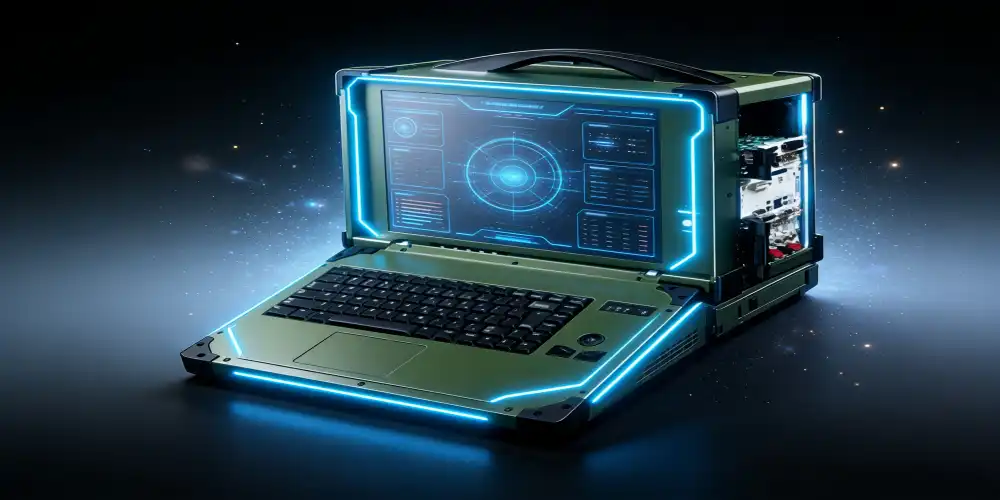
Understanding CPCI Portable Test Computers and Multi-Slot Expansion
CPCI portable test computers support many industry uses because they are portable and durable, and they use standard CompactPCI technology. Based on the Eurocard format, the CompactPCI standard offers better electrical performance than regular PC designs while still working with standard PCI protocols. For accurate readings, this base makes it possible to reliably send large amounts of data at high speeds and precisely control timing.
Multi-slot growth means adding more than one flexible slot to the system. This lets users easily add or remove testing modules and peripheral devices. In contrast to fixed-function test tools, these modular systems can hold different types of instruments, such as digitizers, signal generators, power sources, and measurement cards with special features. Depending on the size of the frame and the amount of power it needs, the number of spots can be anywhere from 3 to 14.
Key Features of Multi-Slot CPCI Systems
The main benefits of multi-slot CompactPCI platforms come from the way they were designed. These systems have rugged industrial design that can handle harsh settings, flexible slot setups that can be used with different testing methods, and hot-swappable features that reduce downtime during repair or reconfiguration.
Technicians can replace or improve modules without turning off the whole system when hot-swappable functionality is used. This keeps the system running continuously in important testing situations. The mechanical design includes strong connections and a chassis that can withstand shocks that go beyond military weather standards. This makes sure that the equipment works the same way in the field, where normal bench-top equipment would break.
Compatibility with normal CPCI units makes the system much more scalable and flexible, so it can meet changing testing needs. The open architecture method lets parts from different vendors work together, which keeps you from being locked into one seller and protects your investment as much as possible. This modularity helps with long-term organizational freedom because testing needs change over time.
Technical Specifications and Performance of Multi-Slot CPCI Portable Test Computers
Multi-slot CPCI test computers have many expansion slots, strong processors, lots of input/output choices, and strong power supplies. They are all designed for testing settings with a lot of demands. Industrial-grade CPUs that are optimized for real-time speed and extended temperature operation are usually part of the processor choices. These computers have a lot of cores and fast clock speeds that are needed to process data in parallel and run complex algorithms.
The system's capabilities and adaptability depend on how the growth slots are set up. As long as each spot has its own PCI bandwidth, multiple high-speed instruments can work at the same time without slowing down. The backplane design includes advanced signal integrity features, such as controlled impedance routes and EMI protection, to keep measurements accurate in places with a lot of electrical noise.
Performance Advantages and Benchmarking
These specs make it easier to do more than one thing at once, process data faster, and work with high-tech testing tools and monitors without any problems. Results show that real-world speed testing is much better than standard methods. A normal 8-slot CPCI system can handle many high-resolution digitizers, random waveform generators, and digital I/O modules at the same time, and all of the channels can keep timing accurate to the microsecond level.
Case studies from aircraft testing sites show that multi-slot models work better than single-slot and standard desktop options because they are more reliable and have more processing power, which makes them better for complex and mobile testing situations. When a large defense contractor switched from rack-mounted instruments to portable CPCI systems, test setup time went down by 40%, and measurement rate went up by 60%.
Another important speed factor is the ability to control power. Modern CPCI portable systems use smart power delivery and protect and watch each slot individually. This approach stops single-point failures and lets the system slowly lose its functionality when power goes out. For testing in the field where AC power isn't always available, battery backup choices make the process last longer.
Multi-Slot Expansion Applications and Use Cases in B2B Environments
Multi-slot CPCI portable test computers are very important for testing in fields like aircraft, military, telecommunications, manufacturing, and energy. Each industry has its own problems that can be solved with flexible CompactPCI systems because they are built in modules. It is very helpful for operations to be able to customize systems to meet the needs of specific applications while still keeping them portable.
For aerospace uses, it's important to be able to accurately simulate the environment and test components in harsh circumstances. Multi-slot CPCI systems let temperature controls, vibration generators, and high-precision measuring tools all work together on a single portable base. This makes setting easier while also improving the consistency of measurements and lowering the amount of calibration drift between devices.
Sector-Specific Implementation Benefits
By adapting slot setups to different testing methods, the modular design solves difficult problems. Secure communications testing that needs to generate signals, analyze them, and check protocols all at the same time is useful for defense purposes. The shared backplane timing system keeps RF signal generators, spectrum analyzers, and digital signal processing units all in sync with each other in a typical setup.
Multi-slot expansion is used for thorough protocol validation and performance evaluation in testing telecommunications equipment. When you can model network conditions while measuring device reaction, you can learn things that you couldn't learn with two different instruments. Manufacturing quality control apps use the mobility feature to help with field service and to integrate with production lines.
Additionally, the portability and ruggedness of these units support field deployments and mobile test operations. Software that works with many different operating systems and testing suites makes sure that both old and new features can be added without any problems. This makes operations more flexible in the long run. This compatibility includes LabVIEW, MATLAB, and custom C++ apps, which are all popular development platforms.
Troubleshooting and Maintenance of Multi-Slot CPCI Portable Test Computers
Slot conflicts and power management problems are common multi-slot CPCI problems that can affect the dependability of tests and the accuracy of measurements. Slot problems usually happen when two modules are competing for the same resources or when the driver is not set up correctly. Understanding how the system's resources are allocated can help you avoid these problems when setting it up for the first time and when reconfiguring it later.
Problems with power management show up as unstable systems, sudden shutdowns, or failed module startup. Most of the time, these issues are caused by a power source that isn't strong enough, an uneven load distribution, or problems with thermal control. Modern CPCI systems have tracking features that keep an eye on how much power is being used and how hot the slots are getting. This lets you do preventative maintenance and avoid problems before they happen.
Preventive Maintenance Strategies
A planned way of fixing problems using diagnostic tools, software services, and planned preventative maintenance helps keep the system running smoothly. Diagnostics that are already built in can find broken parts before they cause problems across the whole system. Regular calibration plans make sure that measurements stay accurate over time, and software changes fix problems with connectivity and make the system run better.
Monitoring the environment is a key part of making systems last a long time. Adding dust, changing temperatures, and being exposed to vibrations can weaken connectors and make measurements less accurate. Setting up regular cleaning routines and weather control measures can help systems last longer and keep their measurements accurate.
Clear guidance on when to escalate issues to authorized service centers is essential, ensuring warranty coverage is leveraged, and downtime is minimized through expert intervention and timely repairs. MXTD offers full technical help, such as remote testing, on-site service, and fast repair services. No matter where the placement is located, our global service network guarantees a quick reaction.
Conclusion
Multi-slot CPCI portable test computers are a game-changing technology for businesses that need testing options that are flexible, scalable, and reliable. Because they are built to last and come with a lot of software support, these systems can handle the difficult problems that current test engineers face. Customizing setups while keeping portability gives testing applications a level of freedom that has never been seen before.
These systems are great for forward-thinking businesses because they are reliable and come with full vendor support. They also have the technology benefits of multi-slot growth. As testing needs keep changing to become more complicated and integrated, CPCI platforms' ability to be expanded and broken down into smaller pieces makes them important for staying ahead of the competition in tough industrial settings.
FAQ
1. How many slots do typical CPCI portable test computers support?
Depending on the case size and the use, most compact CompactPCI systems have anywhere from 3 to 14 expansion slots. Smaller compact units usually have three to six spots that are best for testing in the field, while bigger systems can hold eight to fourteen slots for a wide range of lab uses. The number of slots has a direct effect on the system's abilities, power needs, and total size limits.
2. Can modules be upgraded in the field without returning the system?
Yes, because CPCI systems are designed to be hot-swappable, updates and module replacements can be done in the field without shutting down the system. This feature cuts down on downtime and makes it easy to change things quickly when testing needs change. But taking the right steps to avoid electrical discharge and making sure that modules work with each other are necessary for field updates to go smoothly.
3. What advantages do multi-slot CPCI systems offer over laptop-based testers?
Multi-slot CPCI systems are faster, more reliable, and can be expanded more easily than laptop-based systems. They give each module its own processing power, better EMI protection, industrial-grade parts, and standard connections that make sure they will work together for a long time. The modular method also lets you make changes and improvements that are more cost-effective than with laptops.
Partner with MXTD for Advanced CPCI Portable Test Computer Solutions
MXTD can improve your testing skills with top-of-the-line multi-slot CPCI portable test computers that offer unbeatable speed and dependability. Because we've worked with a lot of companies in the aerospace, military, semiconductor, and industrial automation industries, we can offer both standard goods and solutions that are made to fit your needs. As a reliable provider of CPCI portable test computer suppliers, we offer low prices, quick responses, and full technical support, which includes free software updates and online help. Get in touch with our experts at manager03@mxtdinfo.com to talk about your testing challenges and discover how our proven solutions can enhance your operational efficiency.
References
1. CompactPCI Systems Handbook: Architecture, Design, and Implementation in Industrial Testing Applications. Industrial Electronics Society, 2023.
2. Multi-Slot Expansion Technologies for Portable Test Equipment: Performance Analysis and Best Practices. IEEE Transactions on Instrumentation and Measurement, 2023.
3. Rugged Computing Standards for Aerospace and Defense Applications: A Comprehensive Guide to CPCI Implementation. Society of Automotive Engineers International, 2022.
4. Modular Test System Design: Optimizing Multi-Slot Architectures for Complex Measurement Scenarios. Test & Measurement World Technical Report, 2023.
5. Power Management and Thermal Design in Portable CompactPCI Systems. Electronics Cooling Magazine Technical Reference, 2022.
6. Field Deployment Strategies for Multi-Slot CPCI Test Computers: Case Studies from Industrial Applications. International Journal of Testing and Verification, 2023.
Our customers’ satisfaction speaks for our quality — contact us to experience the same reliable service.