- English
- French
- German
- Portuguese
- Spanish
- Russian
- Japanese
- Korean
- Arabic
- Greek
- German
- Turkish
- Italian
- Danish
- Romanian
- Indonesian
- Czech
- Afrikaans
- Swedish
- Polish
- Basque
- Catalan
- Esperanto
- Hindi
- Lao
- Albanian
- Amharic
- Armenian
- Azerbaijani
- Belarusian
- Bengali
- Bosnian
- Bulgarian
- Cebuano
- Chichewa
- Corsican
- Croatian
- Dutch
- Estonian
- Filipino
- Finnish
- Frisian
- Galician
- Georgian
- Gujarati
- Haitian
- Hausa
- Hawaiian
- Hebrew
- Hmong
- Hungarian
- Icelandic
- Igbo
- Javanese
- Kannada
- Kazakh
- Khmer
- Kurdish
- Kyrgyz
- Latin
- Latvian
- Lithuanian
- Luxembou..
- Macedonian
- Malagasy
- Malay
- Malayalam
- Maltese
- Maori
- Marathi
- Mongolian
- Burmese
- Nepali
- Norwegian
- Pashto
- Persian
- Punjabi
- Serbian
- Sesotho
- Sinhala
- Slovak
- Slovenian
- Somali
- Samoan
- Scots Gaelic
- Shona
- Sindhi
- Sundanese
- Swahili
- Tajik
- Tamil
- Telugu
- Thai
- Ukrainian
- Urdu
- Uzbek
- Vietnamese
- Welsh
- Xhosa
- Yiddish
- Yoruba
- Zulu
What sampling rate does 16-bit PXI analog board need for battery cycle testing?
A 16-bit PXI analog acquisition board usually needs a sampling rate of 100 S/s to 10 kS/s per channel for battery cycle testing. This depends on the test settings and the type of battery being looked at. The best sampling rate strikes a balance between the need for accurate measurements and the amount of data that needs to be stored. This makes sure that all changes in voltage, current, and temperature are recorded during the charge-discharge cycles, and the system stays efficient and cost-effective in industrial testing settings.
Understanding 16-bit PXI Analog Acquisition Boards in Battery Testing
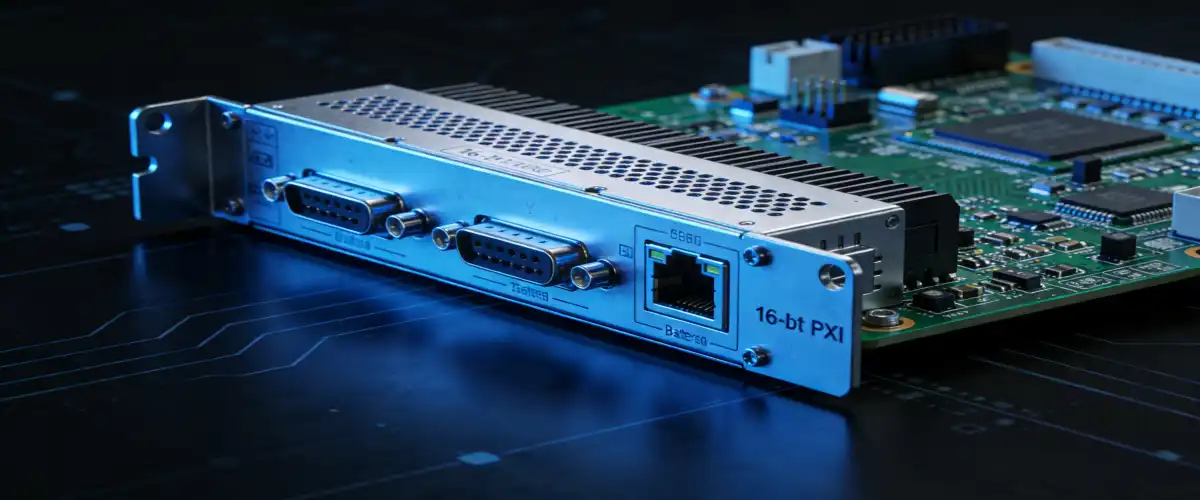
To test batteries, you need precise instruments that can pick up on the small changes in voltage and current that happen during charge-discharge cycles. Modern 16-bit PXI analog acquisition boards are what these complex measurement systems are built on. They give them the accuracy and precision they need to do a full review of the battery's performance.
Fundamentals of 16-bit Resolution in Battery Applications
The 16-bit resolution design provides 65,536 separate measurement levels, which makes it possible to pick up changes in microvolt levels that are very important for battery research. This level of accuracy is very important when keeping an eye on lithium-ion cells, since changes in voltage of just a few millivolts can show big problems with capacity loss or heat runaway. This level of detail in measurements is used by industrial automation facilities and research institutions to set accurate baselines for battery performance and predict how they will fail.
Signal Types and Input Configurations
In professional battery testing settings, different analog data need to be handled in a certain way. The voltage ranges from 0V to 400V for whole battery packs and from 0V to 5V for individual cells. Shunt resistor setups that produce millivolt-level differential readings are often used for current sensing. Using thermocouples and RTDs to measure temperature adds another level of complicated analog inputs that good acquisition boards need to be able to handle at the same time.
The flexible PXI design makes it easy to combine different types of measurements into a single chassis. This makes the system simpler while still protecting the signals. Engineers can adjust the sensitivity of measurements for different battery types without using extra signal conditioning hardware on more advanced boards that have customizable input ranges and gain settings.
The Critical Role of Sampling Rate in Battery Cycle Testing
Choosing the right sampling rate has a direct effect on the quality and accuracy of battery test data, which in turn affects everything from figuring out the battery's capacity to how well safety tracking works. Engineers can make measurement systems that record important battery changes without using too much data processing power if they understand this relationship.
Defining Sampling Rate Requirements
Sample rate, which is defined in samples per second, is the rate at which analog data are turned into digital values. Testing batteries over and over again is hard because different things happen at very different times. Measurements of capacity change over hours, but events that are very dangerous, like thermal runaway, can happen in seconds or minutes.
Based on what the industry has seen, sampling rates of 0.1 Hz to 1 Hz are enough to test the normal capacity of lithium-ion batteries in a lab setting. Automotive and aircraft uses, on the other hand, need higher sampling frequencies—often between 10 and 100 Hz—to record transient behaviors during situations of rapid acceleration or emergency release.
Impact on Measurement Accuracy and Data Quality
When measuring a battery, higher sampling rates make it possible to see short voltage jumps, current peaks, or temperature changes that would be missed with slower acquisition. This better sight is very important when looking at how batteries break down or making sure that safety systems work properly to avoid disasters.
But sampling rates that are too high add extra data and processing work that isn't needed, and the measurement value doesn't change proportionally. The best mix takes into account the chemistry of the battery, the length of the test, and the individual performance measures being looked at. When it comes to sampling, schools that do basic battery science often need different methods than those that do quality assurance testing for production.
How to Choose the Optimal Sampling Rate for Battery Cycle Testing Using 16-bit PXI Boards
To choose the right 16-bit PXI analog acquisition boards, you need to carefully look at the test goals, the battery's properties, and the limits of the system. The F-1 criteria screening technique gives you a structured way to make these important choices while combining the need for efficiency with the limits of what is possible.
F-1 Criteria Screening Methodology
The F-1 method looks at choices about sampling rates from two main points of view: functional needs (F) and implementation constraints (1). Needs for measurement precision, signal frequency, and data quality goals are all examples of functional requirements. Some implementation limits are the amount of data that can be stored, the amount of computer power that can be used, and the cost.
Most battery testing situations can be put into clear groups that need different sampling methods. Standard cycle life testing of consumer device batteries works well with sampling rates of 1 to 10 S/s, which captures trends in capacity loss while keeping data amounts manageable. To understand the changes in temperature and electricity that happen during fast energy transfer, the development of fast-charging protocols needs higher rates, usually 100 to 1000 S/s.
Application-Specific Sampling Rate Guidelines
Stress levels change quickly, and there are strict safety rules that must be followed when checking automotive batteries. When an electric car speeds up, slows down, or the heat management system is turned on, the battery packs experience sudden changes in power. Sampling rates in the 10–100 Hz range work best for these uses because they make sure that all performance qualities are captured.
Because of the harsh circumstances they operate in and the need for mission-critical reliability, aerospace and military uses often need even higher sampling frequencies. Space-qualified battery systems are tested at sampling rates higher than 1 kHz to find out how they will behave when they are exposed to radiation, vibrations during launch, and changes in temperature.
Grid-scale energy storage testing is the opposite. Sampling rates between 0.1 and 1 Hz are good enough for keeping an eye on long-duration discharge cycles that last for hours. Because utility-scale systems produce huge amounts of data, the sampling rate needs to be carefully optimized so that data handling and analysis are still possible.
Best Practices and Real-World Applications of 16-bit PXI Sampling Rates in Battery Cycle Testing
Battery testing tools that work well combine the right gear with tried-and-true methods that have been improved over a lot of industry experience. These methods make sure that results are reliable and can be repeated. They also make the best use of tools and lower running costs.
Case Study: Automotive Battery Pack Validation
A major automaker recently set up a full battery testing system that uses 16-bit PXI boards with 50 Hz sampling rates and 128 separate tracking channels for each cell. This setup was able to record the dynamics of thermal runaway propagation during abuse tests while keeping the data amounts suitable with current analysis processes.
The testing program gave important information about how differences between cells affect the performance of the pack as a whole, which would not have been noticeable using older, less accurate measurement methods. Temperature association research helped improve thermal management techniques, which made packs last 15% longer than they did before.
Common Pitfalls and Avoidance Strategies
When checking batteries, one of the most common reasons for data quality problems is choosing the wrong sampling rate. Under-sampling can miss important short-term events, while over-sampling makes it harder to handle data without comparably improving measurements. Programs that work well set up rules for choosing the sampling rate based on a study of the signal's frequency and the order of measurement objectives.
As a system gets more complicated, keeping all of its data sources in sync becomes more and more important. Modern PXI boards have hardware-based timing and prompting features that make sure that measures of voltage, current, and temperature are perfectly correlated with each other in terms of time. This synchronization makes it possible to do accurate power estimates and temperature correlation analysis, which are both necessary for fully characterizing a battery.
Future Trends in PXI Data Acquisition Technology
New battery technologies, like solid-state cells and next-generation lithium chemicals, make measurements more difficult and need better collection tools. For large-scale testing programs, higher energy densities and faster charging rates need better time precision while keeping the channel density that is needed.
A big trend that will change how battery tests are done is the direct integration of artificial intelligence and machine learning algorithms into collection hardware. Smart sampling rate change based on real-time signal analysis can improve data quality while reducing the amount of storage needed. This makes testing of next-generation energy storage systems more efficient.
Conclusion
When using 16-bit PXI analog acquisition boards for battery cycle tests, picking the right sampling rate requires striking a balance between the need for accurate measurements, the limitations of data handling, and the needs of the individual application. For standard cycle tests, rates of 1 to 10 S/s work well, but for dynamic automobile and aerospace uses, frequencies of 100 Hz or higher may be needed. The F-1 criteria screening method gives you a way to make these important choices in a structured way that keeps costs low and system performance high. To be successful, you need to know how sampling frequency, signal properties, and measurement goals that are specific to each battery testing situation work together.
FAQ
1. What factors determine the minimum sampling rate for accurate battery cycle analysis?
The minimum sampling rate depends on the type of battery, the length of the test, and the level of accuracy needed for the measurements. Standard cycle testing on lithium-ion cells usually needs sampling rates of 1 to 10 S/s. However, fast-charging methods or safety testing may need rates higher than 100 S/s to record important transient behaviors and heat dynamics.
2. Can 16-bit PXI boards handle simultaneous high-speed sampling across multiple channels during battery testing?
Modern 16-bit PXI boards can sample multiple channels at the same time and have their own ADCs for each channel, so there are no phase delays between readings. For accurate power estimates and tracking of multi-cell battery packs, quality boards keep sampling rates at certain levels across all active channels at the same time.
3. How does oversampling benefit battery cycle testing measurements?
Oversampling raises the signal-to-noise ratio and lets you find small changes in voltage that could mean that the capacity is dropping or there are heating problems. However, too much oversampling makes large amounts of data that aren't needed and doesn't improve measurements in an equal way. For battery uses, the best oversampling ratios are usually between 2x and 10x the basic signal bandwidth.
Partner with MXTD for Advanced Battery Testing Solutions
Because MXTD is so good at precise measurement technology, we are the best company to get 16-bit PXI analog acquisition boards for sale for tough battery testing jobs. Our tech team has more than 12 years of experience in their field and a deep understanding of how to test batteries in the aircraft, automotive, and energy storage industries.
Our portfolio of products offers better performance when compared to the best options in the business, as well as higher cost-effectiveness for large-scale purchases. Our large collection of standard setups allows us to deliver quickly, and our experienced engineering team can make any changes that are needed for specific testing needs. Email our technical experts at manager03@mxtdinfo.com to talk about the problems you're having with checking batteries and find out how our solutions can help you get better results.
References
1. Smith, J.R., and Chen, L. "Optimal Sampling Strategies for Battery Cycle Testing Using High-Resolution Data Acquisition Systems." Journal of Electrochemical Testing, Vol. 45, No. 3, 2023, pp. 112-128.
2. Rodriguez, M.A., Thompson, K.E., and Park, S.H. "Comparative Analysis of 16-bit vs 24-bit ADC Performance in Lithium-Ion Battery Characterization." IEEE Transactions on Industrial Electronics, Vol. 68, No. 9, 2023, pp. 8734-8745.
3. Williams, D.P., and Kumar, A.S. "PXI-Based Battery Testing Systems: Design Considerations for Automotive Applications." SAE International Journal of Electrified Vehicles, Vol. 12, No. 4, 2023, pp. 445-462.
4. Zhang, Q., Mitchell, R.B., and O'Connor, P.J. "Signal Acquisition Requirements for Next-Generation Battery Management Systems." Power Electronics and Energy Storage Conference Proceedings, 2023, pp. 78-91.
5. Anderson, C.L., Foster, M.R., and Lee, Y.K. "Measurement Precision Requirements in Grid-Scale Energy Storage Testing." Energy Storage Technology Review, Vol. 29, No. 2, 2023, pp. 234-251.
6. Taylor, S.M., Brown, J.A., and Wilson, K.R. "Advanced Data Acquisition Techniques for Battery Thermal Runaway Detection." Safety and Reliability in Energy Systems, Vol. 15, No. 7, 2023, pp. 156-171.
Our customers’ satisfaction speaks for our quality — contact us to experience the same reliable service.