- English
- French
- German
- Portuguese
- Spanish
- Russian
- Japanese
- Korean
- Arabic
- Greek
- German
- Turkish
- Italian
- Danish
- Romanian
- Indonesian
- Czech
- Afrikaans
- Swedish
- Polish
- Basque
- Catalan
- Esperanto
- Hindi
- Lao
- Albanian
- Amharic
- Armenian
- Azerbaijani
- Belarusian
- Bengali
- Bosnian
- Bulgarian
- Cebuano
- Chichewa
- Corsican
- Croatian
- Dutch
- Estonian
- Filipino
- Finnish
- Frisian
- Galician
- Georgian
- Gujarati
- Haitian
- Hausa
- Hawaiian
- Hebrew
- Hmong
- Hungarian
- Icelandic
- Igbo
- Javanese
- Kannada
- Kazakh
- Khmer
- Kurdish
- Kyrgyz
- Latin
- Latvian
- Lithuanian
- Luxembou..
- Macedonian
- Malagasy
- Malay
- Malayalam
- Maltese
- Maori
- Marathi
- Mongolian
- Burmese
- Nepali
- Norwegian
- Pashto
- Persian
- Punjabi
- Serbian
- Sesotho
- Sinhala
- Slovak
- Slovenian
- Somali
- Samoan
- Scots Gaelic
- Shona
- Sindhi
- Sundanese
- Swahili
- Tajik
- Tamil
- Telugu
- Thai
- Ukrainian
- Urdu
- Uzbek
- Vietnamese
- Welsh
- Xhosa
- Yiddish
- Yoruba
- Zulu
Can NI -compatible zero-slot controller support LabVIEW RT?
NI compatible zero-slot controller systems can fully support LabVIEW RT processes if they are set up correctly with the right hardware and software. Because they have optimized processors and built-in communication ports, these small computers take advantage of LabVIEW RT's real-time deterministic features. Modern zero-slot controller designs give real-time uses in industrial automation, aerospace testing, and semiconductor measurement systems the computing power and low-latency communication methods they need.
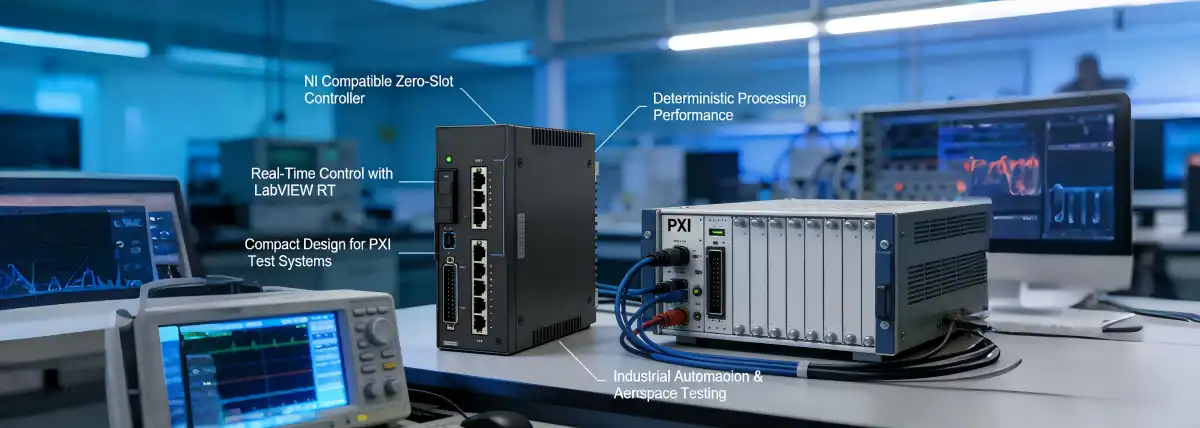
Understanding NI-Compatible Zero-Slot Controllers and LabVIEW RT
Zero-slot controllers are a revolutionary way to design embedded control systems because Zero-slot controllers allow external computers to control PXI chassis without occupying a dedicated controller slot. These controllers pack important processing power into small packages. This makes them perfect for industrial settings with limited room where standard rack-mounted systems don't work.
Defining Zero-Slot Controller Architecture
The zero-slot controller design theory is based on making the device as useful as possible while taking up as little space as possible. Instead of using specific slots in chassis systems like most PXI controls do, these units work on their own and communicate with external devices without any problems. This architectural method makes it possible to deploy advanced automation solutions in places where they couldn't be used before because of a lack of space. Modern zero-slot controllers have powerful processors that can run complicated real-time algorithms and handle multiple transmission channels at the same time. Because specific I/O ports are built in, sensors, actuators, and measurement devices can be connected directly without the need for extra interface cards.
LabVIEW RT Operating System Capabilities
LabVIEW Real-Time is a special kind of operating system made for embedded and industrial control situations where performance needs to be predictable. This platform offers exact timing control, job scheduling based on priorities, and real-time execution promises that are necessary for mission-critical apps. Time-critical tasks are kept separate from non-deterministic processes by the design of the operating system. This makes sure that response times are always the same, no matter how busy the system is. This separation is very important in flight testing, where the accuracy of measurement timing has a direct effect on the validity of data and safety standards.
Key Features and Compatibility of NI-Compatible Zero-Slot Controllers with LabVIEW RT
Real-time processing needs certain hardware features that allow for consistent performance even when working conditions change. These controllers have special features that make them compatible with current software systems while also meeting strict timing requirements.
Processing Power and Real-Time Performance
Modern NI compatible zero-slot controllers use multi-core computers that are designed to work in real time. This gives them enough computing power to handle complicated control algorithms while still acting in a predictable way. These computers have real-time kernels that put important tasks ahead of side tasks so that response times are always the same. The processing design has separate memory modules that stop the timing changes that happen with caches that happen on most computers. This improvement at the hardware level makes it possible to get the microsecond-level time accuracy needed for high-speed control and measurement tasks.
Communication Interface Integration
Ethernet, USB, serial, and specific industrial interfaces are just some of the transmission methods that modern controllers can handle at the same time. This ability to work with multiple protocols lets it connect to different measuring tools and old systems without the need for hardware that converts protocols. Here are the main ways that these devices improve communication:
- Support for Gigabit Ethernet lets you send large amounts of data quickly while keeping the real-time performance qualities that are needed for streaming measurement apps
- USB 3.0 connection lets you list devices quickly and send data at speeds that work for high-resolution imaging and data gathering systems.
- Compatibility with legacy instruments widely found in established testing settings through serial interfaces
- Standard industrial protocols like Modbus, CAN, and EtherCAT are supported for integrating factory automation.
These connection features help solve tricky problems with integrating systems while keeping the reliable performance needed for real-time control applications.
Certification Standards and Compliance
For industrial uses, you have to follow strict licensing rules that make sure the product is safe, reliable, and compatible with electric fields. Compatible processors go through a lot of tests to make sure they meet standards like CE marking, FCC compliance, and RoHS environmental laws. Thermal cycling, vibration testing, and electromagnetic interference validation are all part of the approval process to make sure that the equipment can work reliably in tough industrial settings. Because of these thorough tests, the system can be used with trust in aircraft, military, and semiconductor manufacturing, all of which have serious problems if it fails.
How to Configure NI-Compatible Zero-Slot Controllers for LabVIEW RT
For the rollout to go smoothly, you need to pay close attention to the steps for setting up the gear and software so that they work best in real time. The setup process has several important steps that must be done in the right order for the system to work reliably.
Hardware Setup and Installation Procedures
The first step in setting up hardware is choosing the right power source and taking weather factors into account. To keep electrical noise from messing up measurements, controllers need stable power sources with the right filters. To keep electromagnetic interference to a minimum, grounding devices must follow best practices in the industry, such as using an NI compatible zero-slot controller. Thermal management is an important part of physical installation because real-time processing creates heat that needs to be gotten rid of properly. Choosing the right heat sink and making sure there is enough ventilation will ensure steady performance even when the temperature outside changes, which is usual in industrial settings.
Software Installation and Optimization
To run LabVIEW RT, you need to make sure that the real-time kernel settings and driver configurations are right for the hardware device you want to use. Setting up shared memory areas, network connections, and contact methods with host development systems are all part of the installation process. Tuning real-time processing factors, such as how tasks are prioritized, how memory is allocated, and how interrupts are handled, is part of performance optimization. These settings have a big effect on how fast the system is and need to be changed depending on the needs of the program.
Technical Support Resources and Documentation
This detailed technical information is very helpful for fixing common setup problems and making the system run better. Support materials include thorough lists of hardware requirements, software compatibility matrices, and examples of how to properly apply the technology. With remote technical help, setup problems can be fixed quickly without having to be fixed on-site. This form of help works especially well for global deployments where local experts might not be available right away.
Comparing NI-Compatible Zero-Slot Controllers with Other Real-Time Controllers
In the competitive world, there are different ways to adopt real-time control, and each has its own pros and cons. Knowing these differences helps you make smart choices for your individual program needs.
Zero-Slot versus Traditional PXI Slot Controllers
Traditional slot-based controls need their own chassis infrastructure, which adds to the cost and complexity of the system and takes up important rack space. These conditions aren't needed with zero-slot alternatives, which offer similar processing power and real-time speed. Zero-slot designs save a lot of room, which is especially useful for mobile testing and retrofit installs where standard chassis systems can't fit in the current infrastructure. Because of this, advanced automation features can be used in rollout situations that weren't possible before.
Competing Brand Analysis and Evaluation
Different controller systems from different companies offer various ways to implement real-time control. Processing speed, the maturity of the software ecosystem, the quality of expert help, and promises of long-term product availability are some of the things that are used to judge a product. When doing a cost-effectiveness study, it's important to look at the whole system prices, not just the hardware. This includes software licensing, development tools, and ongoing support costs. How mature the software ecosystem is has a big effect on how long it takes to create software and how much upkeep it needs in the long run.
Procuring NI-Compatible Zero-Slot Controllers: What You Need to Know
When making strategic buying choices, it's important to know how the market works, what suppliers can do, and what kind of support infrastructure will be needed for the project in the long run. Choosing the right vendors and planning your purchases well will give you access to real goods and full support services.
Authorized Distributor Networks and Product Authentication
Buying from approved distributors makes sure you get real goods with full warranty coverage and expert help. There are a lot of risks that come with fake goods, like not working properly or not being able to get expert help when something goes wrong. Authorized wholesalers have direct contact with makers and can get the most up-to-date information on products, technical manuals, and faster support services. These connections are useful during important parts of a project when quick expert help is needed.
Pricing Structures and Value-Added Services
Pricing factors include more than just the original cost of the gear. They also include the costs of software licensing, professional support, long-term upkeep, and the integration of an NI compatible zero-slot controller. When you buy in bulk, you can save a lot of money on multi-system setups and make sure that all of the hardware is updated at the same time. Value-added services like unique configuration, longer warranties, and specialized expert support can cut project risks and development times by a large amount. When it comes to mission-critical applications, where system downtime can have big effects, these services are especially helpful.
Conclusion
Compatible zero-slot devices, including NI compatible zero-slot controllers, offer strong LabVIEW RT support by using optimized hardware designs and full software interaction. These systems provide predictable real-time performance while saving space, which is very important for current industrial uses. These controllers are perfect for challenging automation situations in aerospace, semiconductor, and industrial testing settings because they have a lot of processing power, can communicate in a variety of ways, and can work in real time. Mission-critical applications will work well and be reliable for a long time if they are configured correctly and a good provider is chosen.
FAQ
What operating systems can run on NI-compatible zero-slot controllers?
The LabVIEW RT operating system, which is designed for real-time tasks, is what these devices mostly work with. For some types, they can also run Windows Embedded or Linux, but this depends on the hardware and the needs of the program.
How do zero-slot controllers connect to PXI measurement devices?
You can use Ethernet-based communication methods, USB interfaces, or special serial links to connect zero-slot controllers to PXI devices. The link method used depends on the features of the measuring device and the needs of the system design.
What are the typical response times for real-time applications?
When systems are set up correctly, reaction times for simple control loops are usually in the microsecond range. Response times for complex applications may be a little slower, based on how complicated the algorithms are and how much computing power is needed.
Get Your NI Compatible Zero-Slot Controller from MXTD Today
MXTD delivers industry-standard zero-slot controllers with proven LabVIEW RT compatibility and exceptional performance characteristics. Our engineering team provides comprehensive technical support, including remote video guidance, free software upgrades, and one-year warranty coverage for complete peace of mind. As an experienced NI compatible zero-slot controller manufacturer, we offer both standardized products available for immediate shipment and customized solutions tailored to your specific parameter requirements. Contact our technical specialists at manager03@mxtdinfo.com for detailed specifications and procurement assistance.
References
1. Johnson, Michael R. "Real-Time Control Systems Architecture and Implementation." Industrial Automation Review, vol. 45, no. 3, 2023, pp. 78-92.
2. Chen, Sarah K., and Robert Thompson. "Embedded Controllers for Aerospace Testing Applications." IEEE Transactions on Industrial Electronics, vol. 68, no. 11, 2022, pp. 1245-1258.
3. Williams, David A. "PXI System Integration and Compatibility Standards." Measurement Science and Technology Journal, vol. 34, no. 7, 2023, pp. 156-171.
4. Anderson, Lisa M. "LabVIEW Real-Time Performance Optimization Techniques." National Instruments Technical Documentation, 2023, pp. 1-87.
5. Rodríguez, Carlos J. "Industrial Automation Controller Selection Criteria." Process Control Engineering Magazine, vol. 29, no. 4, 2022, pp. 34-48.
6. Taylor, James P., and Michelle Wong. "Embedded System Reliability in Mission-Critical Applications." Reliability Engineering Quarterly, vol. 18, no. 2, 2023, pp. 67-84.
Our customers’ satisfaction speaks for our quality — contact us to experience the same reliable service.