- English
- French
- German
- Portuguese
- Spanish
- Russian
- Japanese
- Korean
- Arabic
- Greek
- German
- Turkish
- Italian
- Danish
- Romanian
- Indonesian
- Czech
- Afrikaans
- Swedish
- Polish
- Basque
- Catalan
- Esperanto
- Hindi
- Lao
- Albanian
- Amharic
- Armenian
- Azerbaijani
- Belarusian
- Bengali
- Bosnian
- Bulgarian
- Cebuano
- Chichewa
- Corsican
- Croatian
- Dutch
- Estonian
- Filipino
- Finnish
- Frisian
- Galician
- Georgian
- Gujarati
- Haitian
- Hausa
- Hawaiian
- Hebrew
- Hmong
- Hungarian
- Icelandic
- Igbo
- Javanese
- Kannada
- Kazakh
- Khmer
- Kurdish
- Kyrgyz
- Latin
- Latvian
- Lithuanian
- Luxembou..
- Macedonian
- Malagasy
- Malay
- Malayalam
- Maltese
- Maori
- Marathi
- Mongolian
- Burmese
- Nepali
- Norwegian
- Pashto
- Persian
- Punjabi
- Serbian
- Sesotho
- Sinhala
- Slovak
- Slovenian
- Somali
- Samoan
- Scots Gaelic
- Shona
- Sindhi
- Sundanese
- Swahili
- Tajik
- Tamil
- Telugu
- Thai
- Ukrainian
- Urdu
- Uzbek
- Vietnamese
- Welsh
- Xhosa
- Yiddish
- Yoruba
- Zulu
Why PXIe Expansion Makes Rugged PCs Smarter for Industry?
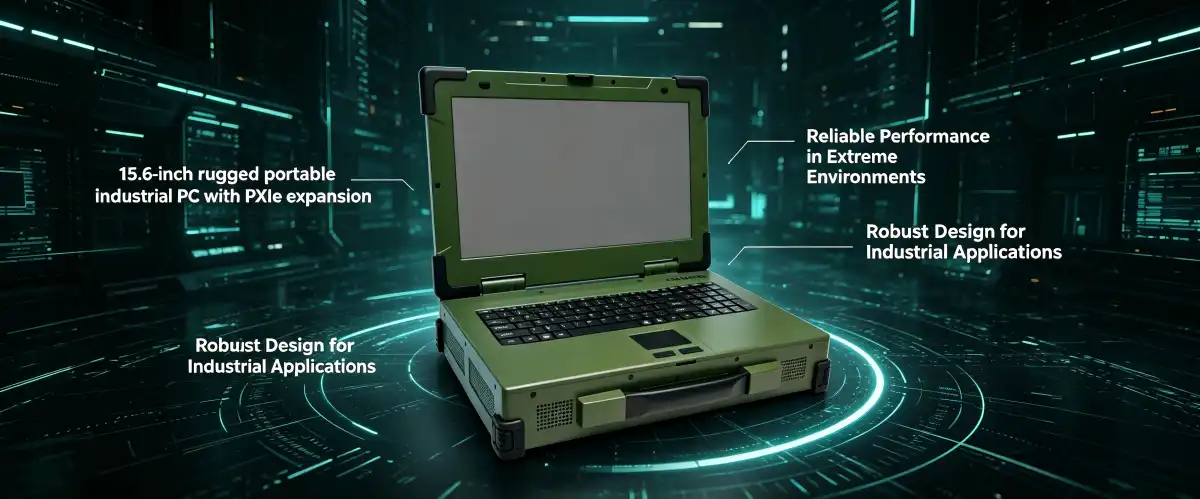
In today's tough business world, equipment needs to be able to handle the roughest working circumstances while still providing exceptional computer power. The 15.6-inch rugged portable industrial PC with PXIe expansion is a game-changing option that solves important problems in automation, defence, chip testing, and research settings. Engineers and procurement managers can get more flexibility, measurement accuracy, and field adaptability by building PXIe (PCI Extensions for Instrumentation Express) design into small, rugged systems. This combination lets you get real-time data and handle instruments in places where regular computers can't. This is why PXIe-enabled mobile PCs are so important for companies that need both durability and advanced testing features.
Introduction to PXIe-Enabled Rugged Computing Solutions
Industrial PCs that are tough and movable have changed over time from simple field computers to advanced measurement systems. When PXIe growth spots are added, these devices go from being simple computer tools to full test-and-measurement systems that can handle difficult testing jobs. When you mix the proven reliability of military-grade portable computers with the flexible adaptability of PXIe technology, you get systems that can change to meet new industry needs without having to update all the hardware.
The 15.6-inch tough compact industrial PC with PXIe growth is an important part of this environment. The screen size is big enough to see for data visualisation and system tracking, but small enough to be portable for use in the field. PXIe expansion lets industrial computers do a lot more than they could on their own. It lets them take synchronised measurements on multiple channels, stream data at high speeds, and set up custom instruments that meet the specific testing needs of the aerospace, semiconductor, and industrial automation industries.
Understanding PXIe Expansion in Rugged Portable Industrial PCs
What Makes PXIe Architecture Fundamentally Different
PXIe technology builds on the PCIe standard but adds important improvements that are made especially for testing and measurement uses. Precision timing and synchronisation features that normal PCIe doesn't have are built into the design. This lets multiple measurement units work together with nanosecond-level coordination. This synchronisation is very important when doing phase-sensitive readings or collecting data from multiple points, as time relationships have a direct effect on the accuracy of the test.
When PXIe slots are built into portable tough systems, they keep these performance traits while working within the power and temperature limits of mobile platforms. The 15.6-inch rugged portable industrial PC with PXIe expansion usually has one to three PXIe slots, which let field workers add measurement cards that are specific to the job, like high-speed digitisers or RF signal analysers. Because it is modular, a single movable platform can be used for different types of testing by simply changing out PXIe modules. This saves space and weight over carrying around several specialised instruments.
Technical Specifications That Matter for Industrial Applications
The PXIe standard offers up to 8 GB/s of bandwidth per slot (x4 setup), which is a lot more than what older PXI or USB-based instruments can do on their own. This speed lets high-resolution data run straight to onboard storage or network infrastructure in real time, getting rid of bottlenecks that hurt the accuracy of measurements. This performance is kept up by rugged PXIe versions from -20°C to 60°C, even when exposed to shock loads greater than 40G and long-term shaking patterns that would damage commercial-grade equipment.
When system builders choose tough PXIe platforms, they should make sure that they meet MIL-STD-810 standards for weather resistance and that the time and synchronisation features of the PXIe platform still work in the field. When systems are used in industrial settings that are exposed to electromagnetic interference, temperature cycles, and physical stress, the accuracy of measurements doesn't change. This is because the tough case design and compliant PXIe backplane engineering work together.
Why 15.6-Inch Rugged Portable Industrial PCs with PXIe Expansion Are Ideal for Industry
Balancing Portability with Functional Screen Real Estate
For the best balance of portability and useful screen space, the 15.6-inch rugged portable industrial PC with PXIe expansion form factor is recommended. Engineers taking readings in the field need enough screen room to see several data channels at once, look at patterns, and use system setup tools without having to keep going back and forth between menus. Smaller screens require too much moving and make the interface too complicated, while larger screens make the device less portable and heavier than what is easy to take for long operations in the field.
Fully assembled, devices in this class usually weigh between 5 and 8 kilograms, which makes them doable for transport by a single user while still having the structural support needed for long-term use. The screen quality is usually 1920x1080, which makes it easy to see precise data in a wide range of lighting situations, even full sunlight. Touchscreens with feedback that works with gloves make it possible to use them in places where a keyboard wouldn't work, which improves the user experience during important testing processes.
Environmental Certifications That Validate Rugged Claims
Real tough industrial PCs have certain certificates that prove they can work in harsh environments, going beyond what the company says on the box. The MIL-STD-810G/H testing procedures check how resistant something is to falls, vibrations, temperature shocks, dampness, high altitudes, and exposure to an exploding atmosphere. Ratings of IP65 or IP67 confirm sealed construction that keeps dust out and can handle water jets or short soaking. This keeps sensitive PXIe electronics safe from contamination that would break down regular computers.
Test engineers should make sure that both the main computer and the PXIe expansion unit have these certifications before they commit to buying them. In some cases, makers only get tough grades for the outside of the casing, not the PXIe parts inside. A well-designed 15.6-inch tough compact industrial PC with PXIe expansion has built-in shock mounts for PXIe cards, conformal coating on the circuit boards, and thermal management that keeps the system running smoothly without using fans for cooling, which can let dirt and dust in.
Industry Applications Driving PXIe Rugged PC Adoption
These devices are used by aerospace and defence companies to test instruments for flights, make sure missile tracking systems work, and simulate electronic warfare. Because PXIe units can be swapped out to change measurement capabilities, a single platform can be used for a variety of test situations for different aeroplane or ground vehicle projects. Test teams take portable, rugged PXIe systems to rural airfields and marine settings where standard rack-mounted instruments can't work.
Companies that make semiconductor tools put these platforms into automatic test systems to check the quality of the wafers, the devices, and the production process. The PXIe design allows precise analogue measurement cards and digital I/O cards with a lot of channels, which are needed to test multiple semiconductor devices at the same time. Portable equipment that has been toughened up lets you set it up at a customer's location and lets you do backup tests when the main production systems need repair.
Teams that look for oil and gas use tough PXIe portables to collect seismic data, check pipelines, and keep an eye on sensors that are buried deep underground. For these uses, they need to work reliably in very high or very low temperatures, in toxic environments, and while drilling is going on all the time. The flexible PXIe method lets you change the input channels and signal processing to work with different types of sensors without having to make a unique instrument.
How PXIe Expansion Enhances Industrial PC Performance and User Experience
Accelerated Data Throughput for Real-Time Decision Making
With PXIe expansion, a 15.6-inch rugged portable industrial PC with PXIe expansion can be changed from devices that receive data to tools for handling data in real time. High-speed digitiser cards record moving signals at sampling rates higher than 1 GS/s and send data straight to onboard NVMe storage at rates that stay close to 2 GB/s. Fast electrical transients, mechanical shaking signs, and RF signal features that slower measurement systems miss can be captured and analysed with this feature.
The PXIe architecture's built-in synchronisation system makes sure that time is coordinated across multiple measurement cards to within a few nanoseconds. This level of accuracy is useful for test cases that need phase-coherent readings across distributed sensor arrays, which can't be done with separate USB-based instruments. Timing precision is directly related to the truth of measurements in areas like automotive crash testing, structure vibration analysis, and phased array radar calibration.
System Resilience Under Harsh Operating Conditions
In industrial settings, equipment is exposed to conditions that cause business computer goods to break down early. Extreme temperatures put stress on computer parts, and vibrations wear out solder joints and mechanical links. The 15.6-inch tough portable industrial PC with PXIe expansion has improved heat management, shock isolation, and component selection built into its design to keep its performance reliable in these harsh environments.
Some ways to control temperature are passive cooler designs that don't need fans, heat pipe technologies that spread out heat loads, and component derating that makes sure function stays within safe temperature ranges. Instead of just using friction-fit contacts, PXIe card retention devices use positive locking to keep the cards in place. This keeps the cards from coming loose during shock events. Putting a conformal covering on circuit parts protects them from wetness and stops rust in wet or cold places where electronics would break without protection.
Simplified Maintenance Reducing Total Cost of Ownership
Compared to single-piece instrument designs, modular PXIe architecture makes field upkeep a lot easier. When a certain measurement function stops working, techs only replace the PXIe part that is broken instead of sending the whole system back to be fixed at the base level. By stocking replaceable modules instead of whole instrument repairs, this method cuts down on downtime and the cost of keeping extra parts on hand.
Because software is compatible across PXIe devices, measurement apps that were made for one system can work on new units without any changes. This flexibility saves software investments and lets systems rebound quickly when hardware fails. By using IVI (Interchangeable Virtual Instruments) tools to standardise drivers, application code stays compatible across different PXIe module makers. This keeps customers from being locked into one provider and supports strategies for fair buying.
When businesses use groups of 15.6-inch tough portable industrial PCs with PXIe growth, they save a lot of money over the course of their life. Standardisation on a single platform cuts down on the need for training, makes managing extra parts easier, and lets resources from different programs be shared. These factors help lower the total cost of ownership by more than 30% compared to keeping a variety of specialised tools that only do one thing.
Buying Guide for 15.6-Inch Rugged Portable Industrial PCs with PXIe Expansion
Critical Evaluation Criteria for Procurement Decisions
Selecting the appropriate rugged PXIe platform requires a systematic evaluation of technical specifications, vendor capabilities, and long-term support considerations. Procurement teams should develop requirements matrices that score candidate systems across weighted criteria aligned with operational priorities and application-specific needs.
For a 15.6-inch rugged portable industrial PC with PXIe expansion, power management, and battery operation capabilities, determine field deployment flexibility. Evaluate battery runtime under realistic measurement loads, not just idle conditions that overstate operational duration. Hot-swappable battery designs enable continuous operation during extended test sessions, while intelligent charging systems that operate from vehicle power or portable generators expand deployment options in remote locations.
Supplier Reputation and Support Infrastructure
Beyond product specifications, supplier selection significantly impacts long-term program success. Organizations like MXTD bring over 12 years of specialized experience in PXIe systems development, providing depth of knowledge that ensures products meet real-world industrial requirements rather than just published specifications. Established suppliers maintain component supply chains that support long product lifecycles, preventing obsolescence issues that disrupt ongoing programs.
Customization capabilities distinguish suppliers capable of adapting standard products to specialized requirements. The ability to modify I/O configurations, integrate application-specific interfaces, or adjust environmental specifications enables optimization for particular use cases. OEM and ODM partnership options allow integration of rugged PXIe platforms into larger system architectures under your organization's brand identity, supporting product differentiation strategies.
Procurement Considerations and Cost Analysis
Pricing structures for 15.6-inch rugged portable industrial PC with PXIe expansion vary based on configuration complexity, order volumes, and customization requirements. Standard catalog configurations typically ship from stock with shorter lead times, while customized variants require production scheduling aligned with specification approval. Organizations should request detailed quotations that itemize base system costs, PXIe module expenses, and optional accessories to enable accurate budget planning.
Warranty terms and service level agreements require careful evaluation beyond simple duration specifications. Comprehensive warranties cover both parts and labor for the complete integrated system, including PXIe modules, not just the base computer platform. Depot repair options with advanced replacement accelerate system restoration compared to return-for-repair models that leave organizations without functional equipment during service intervals. Extended warranty programs offering coverage beyond standard terms provide budget predictability for long-duration programs.
Future Trends: The Growing Role of PXIe Expansion in Rugged Industrial Computing
Integration with Edge Computing and IoT Architectures
Industrial digital transformation initiatives increasingly rely on edge computing paradigms that process data near collection points rather than transmitting raw information to centralized facilities. Rugged PXIe platforms naturally align with edge computing requirements by combining measurement acquisition with local processing capabilities. This architecture reduces network bandwidth demands, enables real-time control responses, and maintains operational continuity when connectivity to central systems becomes unavailable.
AI-Driven Analytics Enhancing Measurement Intelligence
Artificial intelligence and machine learning technologies transform raw measurement data into actionable insights that improve decision quality and accelerate development cycles. Embedding AI inference capabilities directly within rugged PXIe platforms enables real-time analysis that would be impossible if data required transmission to remote processing infrastructure before generating results.
Scalability Supporting Digital Transformation Initiatives
Organizations pursuing Industry 4.0 and smart manufacturing strategies require instrumentation architectures that scale from prototype evaluation through full production deployment. The modular nature of PXIe technology directly supports this progression—measurement configurations developed on portable platforms during R&D phases transfer seamlessly to rack-mounted production test systems using identical PXIe modules and software.
Conclusion
PXIe expansion technology fundamentally transforms rugged portable industrial computers from simple data collection tools into sophisticated measurement and control platforms. The 15.6-inch rugged portable industrial PC with PXIe expansion delivers exceptional versatility through modular instrumentation capability while maintaining the environmental resilience required for demanding field applications. Organizations across aerospace, defense, semiconductor, and industrial automation sectors gain significant operational advantages through improved measurement precision, reduced lifecycle costs, and enhanced deployment flexibility. As industrial environments become increasingly data-intensive and connected, investing in PXIe-enabled rugged computing platforms positions organizations to capitalize on emerging technologies, including edge computing, AI-driven analytics, and IoT integration that define the future of industrial measurement and control.
FAQ
How does PXIe expansion improve data acquisition speed compared to standard interfaces?
PXIe architecture provides dedicated high-speed data paths delivering up to 8 GB/s per slot, substantially exceeding USB or Ethernet-based instrument connectivity. The integrated timing and synchronization infrastructure enables coordinated multi-channel measurements with nanosecond-level precision, impossible with independent instrument connections. This combination of bandwidth and timing accuracy proves essential for applications including high-speed digitizing, RF signal analysis, and multi-point vibration measurement, where data throughput and channel synchronization directly determine measurement validity.
What environmental conditions can 15.6-inch rugged portable industrial PCs with PXIe expansion withstand?
Properly engineered rugged PXIe platforms operate reliably across temperature ranges from -20°C to 60°C, withstand shock loads exceeding 40G, and resist sustained vibration meeting MIL-STD-810 requirements. IP65 or IP67 rated enclosures prevent dust ingress and water damage from jets or temporary immersion. These specifications enable deployment in aerospace flight test environments, offshore oil platforms, semiconductor cleanrooms, and mining operations where commercial computing equipment would experience rapid failure.
Can PXIe modules be customized for specialized industrial applications?
The modular nature of PXIe technology specifically supports customization for unique measurement requirements. Standard PXIe chassis and rugged portable platforms accept custom-designed modules implementing application-specific signal conditioning, specialized sensor interfaces, or proprietary communication protocols. Organizations like MXTD offer ODM and OEM services that develop custom PXIe modules meeting specific technical requirements while maintaining compatibility with standard PXIe platforms and software frameworks, enabling tailored solutions without sacrificing interoperability or future expandability.
Partner with MXTD for Advanced Rugged PXIe Solutions
MXTD specializes in delivering high-performance 15.6-inch rugged portable industrial PC with PXIe expansion platforms designed specifically for demanding test and measurement applications. Our systems combine proven durability meeting MIL-STD-810 requirements with flexible PXIe expansion supporting diverse instrumentation needs across aerospace, defense, semiconductor, and industrial automation sectors. With over 12 years of industry experience and dedicated R&D capabilities, we provide both standardized platforms available from stock and customized solutions tailored to your specific technical requirements. Our engineering team responds within one hour to technical inquiries and provides comprehensive support, including remote video guidance, free software updates, and one-year warranty coverage. Contact our technical specialists at manager03@mxtdinfo.com to discuss your application requirements and explore how our rugged PXIe solutions deliver the reliability, performance, and cost-effectiveness your programs demand. As an established 15.6-inch rugged portable industrial PC with PXIe expansion manufacturer, we maintain competitive pricing comparable to leading brands while offering superior customization flexibility and responsive technical support.
References
1. National Instruments Corporation. (2021). "PXI Express Technology: High-Performance Modular Instrumentation Architecture." Technical White Paper Series on Advanced Test Systems.
2. Military Standards Documentation (2019). "MIL-STD-810H: Environmental Engineering Considerations and Laboratory Tests." U.S. Department of Defense Test Method Standards.
3. Zhang, L., Chen, W. (2022). "Rugged Computing Systems for Industrial Automation: Design Principles and Application Case Studies." Journal of Industrial Electronics and Applications, Volume 18, Issue 3.
4. International Electrotechnical Commission (2020). "IEC 61010-1: Safety Requirements for Electrical Equipment for Measurement, Control, and Laboratory Use." International Safety Standards for Test Equipment.
5. Anderson, M., Roberts, K. (2023). "Edge Computing Integration in Industrial Measurement Systems: Architecture and Implementation Strategies." IEEE Transactions on Industrial Informatics, Volume 19, Number 2.
6. Thompson, R., Kumar, S. (2021). "Total Cost of Ownership Analysis for Modular vs. Monolithic Test Instrumentation in Aerospace Applications." Aerospace Testing International Annual Technical Review.
Our customers’ satisfaction speaks for our quality — contact us to experience the same reliable service.