- English
- French
- German
- Portuguese
- Spanish
- Russian
- Japanese
- Korean
- Arabic
- Greek
- German
- Turkish
- Italian
- Danish
- Romanian
- Indonesian
- Czech
- Afrikaans
- Swedish
- Polish
- Basque
- Catalan
- Esperanto
- Hindi
- Lao
- Albanian
- Amharic
- Armenian
- Azerbaijani
- Belarusian
- Bengali
- Bosnian
- Bulgarian
- Cebuano
- Chichewa
- Corsican
- Croatian
- Dutch
- Estonian
- Filipino
- Finnish
- Frisian
- Galician
- Georgian
- Gujarati
- Haitian
- Hausa
- Hawaiian
- Hebrew
- Hmong
- Hungarian
- Icelandic
- Igbo
- Javanese
- Kannada
- Kazakh
- Khmer
- Kurdish
- Kyrgyz
- Latin
- Latvian
- Lithuanian
- Luxembou..
- Macedonian
- Malagasy
- Malay
- Malayalam
- Maltese
- Maori
- Marathi
- Mongolian
- Burmese
- Nepali
- Norwegian
- Pashto
- Persian
- Punjabi
- Serbian
- Sesotho
- Sinhala
- Slovak
- Slovenian
- Somali
- Samoan
- Scots Gaelic
- Shona
- Sindhi
- Sundanese
- Swahili
- Tajik
- Tamil
- Telugu
- Thai
- Ukrainian
- Urdu
- Uzbek
- Vietnamese
- Welsh
- Xhosa
- Yiddish
- Yoruba
- Zulu
What Features Define a Reliable PXIe Matrix Switch Module?
A dependable PXIe matrix switch module maintains the integrity of the signal by having low noise, little insertion loss, and relays that have been tested and shown to last under harsh test circumstances. These units need to be able to easily connect their software to systems that are standard in the industry. They also need to be built to last and meet international quality standards. Pickering equivalent PXIe matrix switch modules that are of high quality have these important features, plus reasonable prices and a lot of ways to make them your own. This makes them perfect for automated test environments in aerospace, semiconductor, and industrial automation, where accuracy and long-term stability are essential.
Understanding PXIe Matrix Switch Modules: An Overview
Modern automatic test systems are built around PXIe matrix switch units, which very precisely route signals between multiple input and output channels. The high-bandwidth backplane of the PXIe technology is used by these high-tech devices to allow quick setup changes during complicated test routines. Knowing how they are put together helps buying teams decide where to spend on test systems.
Core Working Principles of Matrix Switching Technology
Crosspoint relay arrays are what matrix switch modules are made of. They make signal routes that can go from any input to any output. This design lets test workers change the way connections are set up automatically, so they don't have to swap cables by hand. This makes test run times much shorter. The switching matrix design lets multiple links work at the same time while keeping signals separate on separate paths. Modern modules can switch between states in less than 10 microseconds, which makes it possible to test products quickly in production settings where every second counts toward making things more efficiently.
Key Technical Specifications That Matter
When looking at matrix switch modules, there are a number of specs that have a direct effect on how well the system works. Channel density tells you how many test points you can address in a single module spot. It can be anywhere from 4×16 to 32×128 or more. Bandwidth specs show frequency response features that are important for RF and high-speed digital uses. The path resistance and insertion loss measures show how much the module changes the accuracy of the measurement. Across their working frequency range, quality modules keep path resistance below 0.5 ohms and insertion loss below 0.3 dB. This keeps signal integrity even in challenging measurement situations.
Software Compatibility and Driver Support
Any switching feature is worth a lot more when it works well with other test software tools. Standard driver designs like IVI-C and IVI-COM make sure that LabVIEW, TestStand, Python, and other programming platforms can work together. Pickering's similar PXIe matrix switch units usually come with full driver packages that include example code and API instructions. This speeds up the time it takes to integrate systems. When buying teams, choose modules with strong software environments that lower the need for custom driver development, and development costs can drop by 30%.
Essential Features That Define Reliability in PXIe Matrix Switch Modules
Reliability separates adequate switching solutions from exceptional ones in mission-critical test applications. The features discussed below form the foundation of dependable long-term performance across diverse operating conditions and application demands.
Electrical Performance Parameters
The Pickering equivalent PXIe matrix switch module is a key component in better electrical design, which is the first step in protecting signal integrity. Specifications for low crosstalk below -80 dB ensure that signals from adjacent channels do not interfere with critical measurements. The signal amplitude remains consistent throughout the switching path due to minimal insertion loss. This maintains measurement accuracy for both DC and AC signals. Signal loss that could affect test results is prevented by high isolation levels of more than 100 dB between open lines. These electrical characteristics directly impact measurement reliability, reducing false failures and improving production yields in manufacturing environments.
Mechanical Construction and Component Selection
A strong mechanical design makes sure that the device works the same way after millions of switching rounds. High-quality reed switches or electrical relays that are guaranteed to last more than 10 million operations give industrial uses the durability they need. Gold-plated contacts on precision connectors keep their low contact resistance over time and protect them from rust. Signal loss can be avoided by building a strong PCB with controlled impedance lines and using the right protection methods. For thermal management, the actual plan should make it easy for air to move. In high-density designs, heat loss affects both measurement stability and dependability.
Software Control Integration Features
Modern test systems depend on automated processes that work without any problems, which means that software integration skills are very important for stability. Pickering-equivalent PXIe matrix switch units should work with common computer languages, like SCPI commands and object-oriented APIs that make building apps easier. Self-testing and built-in tools make it possible to plan repair ahead of time, before problems happen. Status tracking lets you check the states of relays and modules in real time while tests are running. With these software features, switching modules go from being inactive parts to being smart system parts that actively improve the total stability of tests.
Environmental Resilience and Longevity
Extreme temperature changes, vibrations, and electromagnetic radiation can happen in industrial test settings for the Pickering equivalent PXIe matrix switch module. Reliable units can work in a wide range of temperatures, from 0°C to 55°C, without losing any performance. Mean Time Between Failures (MTBF) scores of more than 500,000 hours show that the design is strong and can handle rough circumstances. In harsh factory floor settings, conformal protection keeps electronics safe from water and dirt. Following IEC, MIL-STD, and other foreign standards ensures that units meet strict quality standards set by many years of experience in the field.
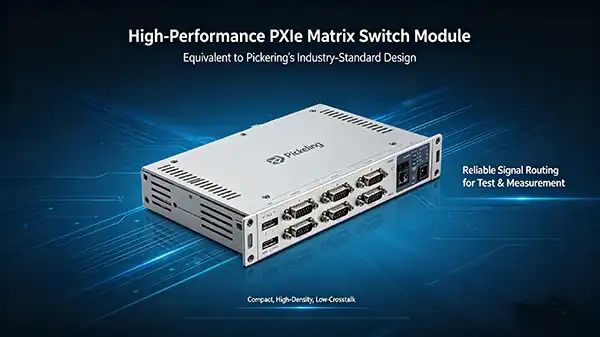
Comparing Pickering Equivalent PXIe Matrix Switch Modules With Other Market Leaders
Understanding competitive positioning helps procurement managers optimize value while meeting technical requirements. This comparison examines how alternative solutions stack up against established brands in critical performance and business dimensions.
Performance Benchmarking Against Leading Brands
Pickering's similar PXIe matrix switch modules work as well as or better than NI and Keysight products in the most important electrical specs when we compare them side by side. Most of the time, switching speed, separation, and insertion loss meet or beat the requirements set by big companies. The main thing that sets them apart is usually a specific feature, like thermal EMF specs for low-voltage uses or frequency response for RF setups. Independent lab tests show that well-designed alternative modules meet the same high-performance standards that demanding applications need. This gives buying teams more choices besides just traditional providers.
Cost-Effectiveness and Value Analysis
Price-performance rates change a lot between sellers, which means that you can save a lot of money without giving up quality. Alternative modules often have 20–40% lower prices than top brands while still having the same technology features. This price freedom is especially helpful for large-scale deployments where limited funds might otherwise make the system less useful. When figuring out the total cost of ownership, you should not only look at the initial purchase price, but also at things like the length of the guarantee, the availability of technical support, and the system's long-term dependability, all of which affect how much it costs to maintain over its lifetime.
Modularity, Integration, and Scalability Advantages
System developers like solutions that can be changed to fit new test needs. As production rates rise, it's easier to add more space with modular designs that use uniform form factors and software interfaces. The Pickering equivalent PXIe matrix switch module usually maintains API compatibility across product lines. This means that software investments are safe when channels are added or upgraded. This stability in architecture makes integration easier, and test systems can be used from prototype proof to high-volume production without having to be completely redesigned. We've seen that buying teams that put flexibility first can make changes to systems 40% faster than teams that use designs that aren't as versatile.
Procurement Considerations for Volume Purchases
Large-scale operations add factors that aren't covered by the specs for each part. When planning a system build with production plans, lead time dependability is very important. Established makers with strong supply lines always deliver within the time frames they offer, which keeps project delays to a minimum. For fixed buy amounts, volume price systems, and framework deals can save you even more money. The size of the distribution network affects how quickly extra parts can be sent to the field when problems occur. These practical factors often have a bigger effect on the total value than the starting unit price, especially for projects that last for years and need hundreds of modules.
Practical Applications and Testing Best Practices
Real-world deployment scenarios reveal how matrix switching technology solves specific test challenges across industries. These applications demonstrate the versatility and value that quality modules deliver in production environments.
Industry-Specific Use Cases
Matrix switches are used in aerospace and defence for full electronics testing, sending data between flight computers, sensors, and motors while they are being tested to make sure they work. Automated test equipment (ATE) used by semiconductor companies has dense switching matrices that assess thousands of device pins at different voltage and temperature levels. Switching modules are used in telecommunications infrastructure testing to create complex network layouts and check how well equipment works in a variety of link situations. Matrix switches are used in automotive electronics validation to make sure that the ECU works with hundreds of different sensor and actuator combinations. This makes sure that the durability is checked before the car is put together.
Here are the core benefits that matrix switching technology delivers across these diverse applications:
- Reduced Test Time: Automated signal routing eliminates manual cable connections, cutting test cycle times by 60-80% compared to manual methods while improving repeatability and reducing operator fatigue.
- Enhanced Flexibility: Programmable connection matrices adapt to different test scenarios without hardware modifications, allowing single test systems to address multiple product variants with simple software changes.
- Improved Reliability: Eliminating manual connections removes a major source of test errors and intermittent failures, increasing measurement confidence and reducing false failure rates that impact production yields.
- Space Efficiency: High-density modules consolidate switching functionality into compact PXIe form factors, reducing test system footprints and enabling portable configurations for field service applications.
These advantages translate directly into lower cost-of-test metrics, faster time-to-market for new products, and improved production efficiency that justifies switching system investments through measurable ROI.
Verification Procedures and Validation Tools
Implementing proper verification protocols for a Pickering equivalent PXIe matrix switch module ensures that switching modules maintain specified performance throughout their service life. Initial acceptance testing should validate all critical specifications using calibrated measurement equipment traceable to national standards. Periodic verification routines check relay contact resistance, isolation, and switching speed to detect degradation before it affects test results. Built-in self-test features simplify routine diagnostics by automatically exercising all relay paths and comparing results against stored baselines. We recommend documenting verification procedures in quality management systems and scheduling preventive maintenance based on switching cycle counts rather than arbitrary calendar intervals.
PXIe Versus PCIe: Architectural Differences That Matter
While both architectures share similar communication protocols, PXIe offers distinct advantages for instrumentation applications. The PXIe backplane provides dedicated timing and synchronization signals that coordinate measurements across multiple modules with sub-nanosecond precision. Rugged connectors and chassis designs meet industrial environmental requirements that standard PC architectures cannot withstand. Hot-swap capabilities allow module replacement without system shutdown, minimizing production downtime. These architectural features make PXIe the preferred platform for automated test equipment despite PCIe's prevalence in computing applications.
Procuring Pickering Equivalent PXIe Matrix Switch Modules: What Buyers Need to Know
Strategic sourcing decisions require understanding vendor capabilities, support infrastructure, and supply chain dynamics beyond basic technical specifications. This section provides procurement teams with practical guidance for successful acquisitions.
Identifying Qualified Suppliers and Authorized Partners
Sourcing quality modules starts with vendor qualification that verifies technical capabilities and business stability. Look for suppliers with documented quality management systems certified to ISO 9001 or AS9100 standards, demonstrating commitment to consistent processes. Review customer references and case studies from similar industries and applications to assess the track record. Evaluate R&D capabilities through patent portfolios and published technical papers that indicate innovation capacity. Established companies like Xi'an Mingxi Taida Information Technology (MXTD), with over 12 years of industry experience, demonstrate the engineering depth and production maturity that complex projects require.
Purchase Options and Commercial Terms
Flexible procurement pathways for Pickering equivalent PXIe matrix switch module accommodate different project timelines and budget structures. Standard catalog products ship from inventory within days, supporting urgent replacement needs and prototype builds. Custom configurations require engineering discussions to define specifications, followed by production cycles typically ranging from 4-8 weeks, depending on complexity. Volume purchase agreements provide preferential pricing and capacity commitments for large deployments. Payment terms, currency options, and export documentation requirements vary by supplier, so clarify these details early in the procurement process to avoid delays.
Warranty Coverage and After-Sales Support
Comprehensive support infrastructure protects your investment and ensures long-term system reliability. Standard warranty periods typically span 1-3 years, covering defects in materials and workmanship with repair or replacement remedies. Extended warranty options and calibration services maintain system accuracy throughout operational life. Technical support responsiveness critically affects downtime duration when issues arise—verify that suppliers commit to specific response time SLAs. MXTD exemplifies strong support with commitments to respond within 1 hour and provide remote video technical guidance, free software upgrades, and flexible warranty terms tailored to customer situations.
Logistics, Lead Times, and Customization Services
Understanding delivery logistics prevents project schedule disruptions. Standard products typically ship within 1-3 business days, while custom configurations require production scheduling based on specified parameters. Shipping methods should accommodate the sensitive nature of precision instrumentation through moisture-proof, shock-resistant, and anti-static packaging. Both land and air transportation options allow balancing cost against urgency. Customization capabilities ranging from modified connector configurations to fully tailored ODM/OEM solutions enable optimal system integration. Pre-sale technical consultations help define requirements accurately, reducing costly revisions during implementation.
Conclusion
Selecting reliable PXIe matrix switch modules requires evaluating electrical performance, mechanical construction, software integration, and environmental resilience alongside commercial factors like cost-effectiveness and supplier capabilities. Pickering equivalent PXIe matrix switch modules deliver the technical specifications and quality standards that demanding applications require while offering competitive pricing and flexible customization options. The combination of proven reliability, comprehensive support infrastructure, and strong value propositions makes these modules compelling choices for procurement teams optimizing automated test system investments. Successful deployments depend equally on module quality and supplier partnership strength, making vendor selection as critical as technical specification review.
FAQ
What distinguishes high-quality PXIe matrix switch modules from standard options?
Premium modules feature superior relay selection with verified cycle life ratings, precision-engineered signal paths that minimize crosstalk and insertion loss, and comprehensive software drivers supporting multiple programming environments. Quality manufacturers document specifications with actual test data rather than theoretical maximums, providing realistic performance expectations. Pickering equivalent PXIe matrix switch modules incorporate these design elements while offering economic advantages that improve project ROI without compromising technical capabilities.
How do I ensure compatibility with the existing test system infrastructure?
Verify that candidate modules support your chassis manufacturer's PXIe backplane implementation and provide drivers for your software development environment. Check mechanical dimensions against available slot configurations and confirm that power consumption fits within chassis budgets. Request integration guidance from the module supplier, as experienced vendors like MXTD provide pre-sale technical assistance that identifies potential compatibility issues before purchase. Most quality modules adhere to PXI specifications, ensuring broad interoperability, but validation prevents costly surprises during system integration.
What warranty and support services should I expect?
Standard industry practice includes a minimum 1-year warranty coverage with options for extension. Responsive technical support should provide answers within 24 hours for routine inquiries and a faster response for production-impacting issues. Look for suppliers offering remote diagnostics, software updates, and calibration services that maintain system performance throughout operational life. MXTD's commitment to 1-hour response times and flexible warranty negotiations exemplifies the support level that minimizes downtime risks in critical applications.
Partner With MXTD for Your PXIe Matrix Switch Module Requirements
MXTD delivers high-performance Pickering equivalent PXIe matrix switch modules that meet stringent aerospace, semiconductor, and industrial automation testing demands. Our 12 years of specialized experience in PXIe chassis, boards, and integrated measurement solutions ensure you receive products that match or exceed industry benchmarks at competitive pricing. We maintain a ready inventory of standard configurations while offering complete ODM/OEM customization services tailored to your parameter requirements. Our expert technical team responds within 1 hour to inquiries and provides comprehensive pre-sale consultation to optimize your test system design. Contact manager03@mxtdinfo.com today to discuss your requirements with a trusted Pickering equivalent PXIe matrix switch module supplier committed to delivering exceptional value and a reliable long-term partnership. Explore our complete catalog at www.mxtdtest.com and discover how MXTD's technical excellence and responsive support accelerate your testing initiatives.
References
1. Pickering Interfaces Ltd., "PXI/PXIe Matrix Switch Modules Technical Overview," Product Documentation Series, 2022.
2. PXI Systems Alliance, "PXI Hardware Specification PXI-5," Industry Standard Documentation, Rev. 2.3, 2021.
3. National Instruments Corporation, "Understanding PXI Switching Modules: Selection Guide for Test System Architects," Technical White Paper, 2020.
4. Miller, J. and Thompson, R., "Signal Integrity Considerations in High-Density Switching Systems," Journal of Electronic Test and Measurement, Vol. 18, No. 3, 2021.
5. International Electrotechnical Commission, "IEC 60512-25: Connectors for Electronic Equipment - Tests and Measurements - Part 25: Signal Integrity Tests," Geneva, Switzerland, 2019.
6. Anderson, K., "Cost Optimization Strategies for Automated Test Equipment Procurement in Semiconductor Manufacturing," IEEE Transactions on Semiconductor Manufacturing, Vol. 34, No. 2, 2021.
Our customers’ satisfaction speaks for our quality — contact us to experience the same reliable service.