- English
- French
- German
- Portuguese
- Spanish
- Russian
- Japanese
- Korean
- Arabic
- Greek
- German
- Turkish
- Italian
- Danish
- Romanian
- Indonesian
- Czech
- Afrikaans
- Swedish
- Polish
- Basque
- Catalan
- Esperanto
- Hindi
- Lao
- Albanian
- Amharic
- Armenian
- Azerbaijani
- Belarusian
- Bengali
- Bosnian
- Bulgarian
- Cebuano
- Chichewa
- Corsican
- Croatian
- Dutch
- Estonian
- Filipino
- Finnish
- Frisian
- Galician
- Georgian
- Gujarati
- Haitian
- Hausa
- Hawaiian
- Hebrew
- Hmong
- Hungarian
- Icelandic
- Igbo
- Javanese
- Kannada
- Kazakh
- Khmer
- Kurdish
- Kyrgyz
- Latin
- Latvian
- Lithuanian
- Luxembou..
- Macedonian
- Malagasy
- Malay
- Malayalam
- Maltese
- Maori
- Marathi
- Mongolian
- Burmese
- Nepali
- Norwegian
- Pashto
- Persian
- Punjabi
- Serbian
- Sesotho
- Sinhala
- Slovak
- Slovenian
- Somali
- Samoan
- Scots Gaelic
- Shona
- Sindhi
- Sundanese
- Swahili
- Tajik
- Tamil
- Telugu
- Thai
- Ukrainian
- Urdu
- Uzbek
- Vietnamese
- Welsh
- Xhosa
- Yiddish
- Yoruba
- Zulu
Why Is a NI Compatible Zero-Slot Controller Essential for PXI?
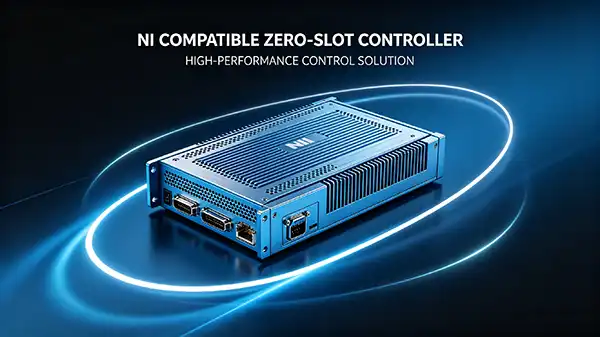
A NI compatible zero-slot controller is a huge step forward in PXI system design because it improves speed without taking up valuable chassis slots. Traditional embedded controllers take up valuable slot space. Zero-slot controllers, on the other hand, mount openly and are fully compatible with National Instruments environments. This new method gets rid of slot competition, lowers heat interference, and makes system growth possible in a way that has never been seen before. Modern testing environments need to be flexible, and these controllers give you just that. They work seamlessly with LabVIEW, can process data in real time, and have a wide range of connections that match or go beyond standard setups, making room for more measurement modules.
Understanding the Limitations of Traditional PXI Controllers
Traditional slot-based PXI controllers have been reliable for the industry, but they have some problems that make it harder to meet the needs of current tests. Knowing these problems helps procurement managers and test engineers understand why NI-compatible zero-slot controller options are becoming more popular in industries like aerospace, semiconductors, and industrial automation.
Space Consumption and System Flexibility Concerns
Standard PXI controls take up one or more chassis spots, which directly limits the ability to expand. Using two of the 18-slot PXIe chassis's slots for a driver cuts the number of slots that can be used for measurements by about 11%. Different types of instruments, like digitizers, signal generators, switch matrices, and specialized modules, are often needed for testing purposes in semiconductor analysis or aircraft validation. When setting up complicated test architectures, each slot is important, especially as projects change and more data lines are needed. Slot-based controls make it hard to choose between processing power and sensor density, which leads to bottlenecks that make it harder to expand the system.
Thermal Management and Power Distribution Challenges
It is important to note that embedded controls produce a lot of heat inside chassis casings, which can affect the stability of nearby modules and the whole system. High-performance computers need a lot of power, which can cause thermal concentration that hurts the quality of signals and measurements. Precision down to microvolt levels is important in aerospace testing settings, which can't handle the thermal noise that comes from powerful computers working next to sensitive acquisition cards. Traditional controls also use a lot of current from the backplane power sources, which could make it hard to add instruments that need a lot of power.
Latency and Signal Integrity Trade-offs
Slot-based designs make signal paths more complicated, which cannot be avoided. Backplane routes add microseconds of delay to communication between the controller and peripheral modules. This is fine for many uses, but not for tests that need to be done quickly. When controller placement causes variable propagation delays, it's hard to test electronics in situations that need nanosecond time sensitivity. When the data rate goes up, worries about signal integrity grow because backplane impedance mismatches and crosstalk from neighboring slots make measurements less accurate. When phase synchronization and timing accuracy are very important, like in high-speed digital tests and RF measurements, these problems become very serious.
What is a NI Compatible Zero-Slot Controller and How It Works
A NI compatible zero-slot controller is an outside computer base designed to work with PXI systems without taking up any spaces inside the chassis. Most of the time, these devices join via PXIe Gen 3 or higher connections, which offer the same bandwidth as embedded options while still leaving all of the slots open for measurement. By understanding how they are built, you can see why they are the best choice for tough industrial uses.
Architectural Design and Connectivity
NI compatible zero-slot controllers use external form factors, such as small desktop units and rackmount setups, that connect to PXI chassis using high-speed cables. Modern versions use MXI-Express or PCIe cables that can handle 8 GB/s of data, which is the same amount of data that can be sent through internal slot links. This placement on the outside of the system provides thermal separation by keeping the processor's heat away from the measurement units. This makes the whole system more reliable. Controls work perfectly with NI LabVIEW development environments because they use the same code models and driver stacks as embedded controls.
Processing Power and Real-Time Capabilities
Modern NI compatible zero-slot controllers have Intel CPUs with multiple cores, dedicated GPUs, and large amounts of RAM that meet or exceed the requirements of embedded controllers. High-performance models work with both Windows and real-time operating systems at the same time, which lets you do both data analysis and predictable control loops.
Integration with NI Ecosystems
Compatibility is more than just physical connections; it also includes full software integration. Standard LabVIEW Real-Time programs, TestStand sequences, and VeriStand setups can be run on NI-compatible zero-slot controller devices without any changes. Driver support makes sure that DAQmx, NI-SCOPE, NI-FGEN, and other instrument drivers work the same way on zero-slot or embedded systems. This smooth integration saves current software investments and lets teams improve hardware configurations on their own. System builders can choose processors based on computational needs instead of slot availability, which separates two design factors that were previously linked.
Advantages of Zero-Slot Controllers for NI PXI Systems
There are real benefits to NI compatible zero-slot controller units that lead to better performance, lower costs, and more efficient operations. We have seen these benefits over and over again in a wide range of application situations in research institutions, testing labs, and factories.
Maximized Instrumentation Density
Getting rid of the processor from the frame slots makes more room for measurement and signal conditioning modules right away. A standard 18-slot chassis gets two more slots, which can improve its capacity by 11-22%, based on the needs of the controller. When setting up multiple acquisition systems or mixed-signal test platforms, this growth is very important. Engineers can fill the whole chassis with measurement gear, which is very helpful for semiconductor test apps that need dozens of synchronized channels. It's easy to see how this affects the economy when you think about how extra instrumentation capacity slows or gets rid of the need for backup chassis, which lowers capital costs and system complexity.
Better Thermal Performance and Dependability
Putting the controller outside the frame takes away a major source of heat, which makes the temperature better for sensitive measurement units. Temperature drops of 5 to 10°C are typical inside the chassis when controls are moved to the outside. Cooler working conditions make modules last longer, lower fan speeds (which lowers noise), and make measurements more stable. Applications that are sensitive to temperature, like precision voltage standards and low-noise preamplifiers, have better specs when thermal disturbance from processors is taken away. When reliability goes up, failure rates go down, and calibration times get longer. This has a direct effect on running costs and system downtime.
Better System Scalability and Planning for the Future
NI compatible zero-slot controller designs separate upgrades to the controller from changes to the frame, which makes it easier to update technologies. Instrumentation needs change more slowly than computational needs. To upgrade a NI compatible zero-slot controller, you only need to replace one external unit, instead of changing the way the chassis is set up. This modularity cuts down on downtime during changes and on the work needed for confirmation because the instruments don't have to be moved. One high-performance NI compatible zero-slot controller can handle multiple PXI chassis through expansion ports, which is especially helpful for multi-chassis systems because it centralizes processing resources and lowers the cost per system. Scalability also includes distributed testing settings where controls can be placed so that they are best connected to the network, without being limited by where the chassis can go.
Advantages in terms of cost-effectiveness and total ownership
The starting prices of buying a NI compatible zero-slot controller and an embedded controller are about the same, but a study of the total cost of ownership shows that external configurations are much better. Less temperature stress means less need for cooling systems and longer hardware lifecycles. Upgrades that are easier to do cut down on staff costs and system downtime during changes in technology. Increasing the number of instruments cuts down on or gets rid of the need to buy extra frames, which saves thousands of dollars per test station. Optimized thermal management leads to higher energy economy, which lowers running costs over longer deployment periods. These benefits add up to total cost savings of 15–25% over the course of a normal five-year system lifecycle. This makes zero-slot setups a great choice for procurement managers who are watching their budgets.
How to Choose the Best NI Compatible Zero-Slot Controller for Your PXI System
To choose the right NI compatible zero-slot controller, you need to carefully look at its technical specs, the vendor's help options, and how long the company will be in business. We suggest an organized method that strikes a balance between current needs and needs for growth in the future.
Performance Needs Assessment
First, figure out how much computing power is needed. This includes the number of processor cores, the amount of memory, the speed of the storage, and the real-time OS needs. Multicore computers with clock speeds above 3 GHz are needed for applications that do a lot of signal processing or machine learning reasoning. For tasks that need to store a lot of data, like getting high-resolution images, you need fast SSD storage with read/write speeds of at least 500 MB/s. For real-time control apps to work, they need specialized cores that run deterministic operating systems that can handle jitter on the microsecond level.
Checking to see if it works with existing infrastructure
Make sure it works with the PXI chassis models, backplane types, and monitoring units you already have. Check that the suggested controllers can communicate using the right MXI-Express versions, PCIe lanes, and bandwidth requirements. Make sure that all of your instruments' drivers are compatible with each other.
Ability to Evaluate and Support Vendors
Check the qualifications of the vendors, giving more weight to companies that have a track record of success in PXI environments and industrial testing uses. Look into the different types of technical help, such as guarantees for reaction times, access to application engineers, and the availability of customization services. Xi'an Mingxi Taida Information Technology Co., Ltd. is a good example of the kind of seller that procurement managers should look for: they have over 12 years of experience in the field, strong R&D skills, and quick-response technical support teams that can handle tough integration problems. Check the terms of the warranty.
Customization and OEM freedom
Customized NI compatible zero-slot controller configurations that are made to fit specific operating needs are helpful for many testing purposes. Check to see if the seller is ready to work with changes to parameters like processor choice, memory expansion, I/O port configurations, and form factor changes. System integrators can ask for branded solutions or custom casings that meet company standards when they have OEM/ODM capabilities. It is possible to customize even the firmware, which lets you add custom start routines, security features, or diagnostic tools. As part of its customization services, MXTD delivers changed controllers on time and in line with agreed-upon production plans, all while keeping standard NI environments compatible.
Step-by-Step Setup Guide for NI Users
Putting in place a NI compatible zero-slot controller is easy and can be done quickly by test engineers and system designers with experience. When you're ready, the integration time is shorter, and the system works at its best from the moment you turn it on.
Preparing for installation and making sure everything works together
Check to see if the expansion ports on your PXI chassis are suitable. These are usually MXI-Express plugs that handle Gen 2 or Gen 3 standards. Check the power supply's ability and make sure there are still enough watts left over after taking into account all the units that are installed and the external controller. Check the external requirements to make sure that the places where the installations will happen have the right temperature ranges, humidity control, and vibration separation. Get the protected MXI-Express wires that are the right length and have been tested for signal integrity. Before starting the physical installation, get the latest driver packages, LabVIEW updates, and vendor-specific tools to get the software settings ready.
Physical steps for installation and connection
Place the NI compatible zero-slot controller in the designated area, such as a rack space, a benchtop position, or an equipment box, making sure there is enough space for air flow as required by the maker. Connect the MXI-Express cable between the controller and the chassis expansion port. Make sure the locking devices are in place to keep the cable from coming loose by chance. Follow the instructions that came with the system to connect the power sources, network cords, and peripherals. Turn on the controller and chassis one at a time, and watch the LEDs that show that the link is working properly. You can change boot options, allow real-time OS partitions if needed, and make power management profiles that work for environments with continuous operation by going to the BIOS settings.
Setting up software and checking the system
Install NI software packages, such as LabVIEW, DAQmx drivers, and instrument-specific tools, by following the same steps that are used for deploying embedded controllers. Start up NI Measurement & Automation Explorer to find and set up PXI modules. Check that all the loaded instruments show up correctly in the system tree. Run built-in diagnostic tests to make sure the connection speed, latency, and responsiveness of the modules are all correct. Set up a simple test app that uses standard instrumentation methods to make sure that data collection is accurate and that time works well. Write down standard performance measures for future reference when troubleshooting, and set up regular firmware update plans to keep the controller running at its best.
Conclusion
Today's PXI systems need NI compatible zero-slot controller because they are necessary for speed, scalability, and cost-effectiveness. These external computer platforms get rid of the slot-consumption costs of embedded controllers while offering the same level of processing power or more. Numerous benefits can be seen, including more instruments, better control of temperature, easier update paths, and higher long-term value. More and more, procurement managers and test engineers in the aircraft, semiconductor, industrial automation, and research sectors are realizing that zero-slot designs are the best way to solve difficult testing problems. When you buy controllers from a company with a lot of experience, you can be sure that you will get good hardware, quick expert help, and the ability to make changes that fit your specific needs.
FAQ
Can zero-slot controllers completely replace embedded PXI controllers?
NI compatible zero-slot controller units can be used instead of integrated units in most cases, especially when there aren't many chassis slots available. Modern units support the same real-time operating systems, processing speeds, and memory sizes as embedded options, so their performance levels are the same as or better than those of embedded options. There are some situations where embedded controls may still be better, like when the system is very small and portable or when the climate is very harsh. However, these are rare cases. Many testing situations in the lab, in production, and in the field would be better off with zero-slot designs.
What are typical delivery timelines and warranty terms?
Standard NI compatible zero-slot controller configurations ship within 5 to 10 business days from well-known companies that keep stock. Customized units that need specific processor choices, memory settings, or changes to the case usually take two to four weeks to build and test. MXTD answers customer questions within an hour and gives accurate shipping estimates based on how production is currently running. A standard guarantee covers problems with the gear and the way it was made for one year. For mission-critical projects that need sure response times and replacement promises ahead of time, you can arrange for longer warranties and specialized support agreements.
How does the zero-slot form factor impact system performance?
Placing the external controller in the right place stops heat interference with the measurement modules. This makes the signal more stable and lowers the noise floor in sensitive collection channels. When the right cables are used, the latency stays about the same as with embedded controls. Modern MXI-Express Gen 3 links keep timing accurate to within a microsecond, which is good enough for demanding apps. Bandwidth availability meets or beats embedded setups, allowing for multi-gigabyte data exchanges that are necessary for systems with a lot of channels. The main performance benefit comes from having more instruments packed into a smaller space. This is possible because the chassis slots are freed up, allowing for wider measurement coverage without sacrificing processing power.
Partner with MXTD for Your NI Compatible Zero-Slot Controller Needs
MXTD makes the best NI compatible zero-slot controller solutions in the business, and they are designed to work in tough test and measurement settings. When compared to National Instruments standards, our processors do a good job. They are also more cost-effective and easier to customize. We offer professional technical advice, quick responses, and full after-sales help, including free software updates and remote diagnostics, thanks to our more than 12 years of experience in this field. Our team answers within an hour to talk about your unique needs, whether you need standard configurations or OEM solutions that are made just for you. Get in touch with manager03@mxtdinfo.com to work with a reliable supplier that offers low prices, on-time delivery, and proven system support. Precision instruments need to be protected from moisture, shock, and static electricity during both land and air travel. We offer special packing that meets these needs.
References
1. Smith, J.R. & Martinez, K.L. (2022). Advanced PXI System Architectures for High-Performance Test Applications. Institute of Electrical and Electronics Engineers Instrumentation and Measurement Magazine, Vol. 25, Issue 3, pp. 42-51.
2. Thompson, D.A. (2021). Thermal Management Strategies in Modular Instrumentation Systems. Journal of Electronic Testing: Theory and Applications, Vol. 37, Issue 4, pp. 387-402.
3. Wilson, P.H., Chang, S.Y., & Patel, R.K. (2023). Comparative Analysis of Embedded and External Controllers in PXI Test Platforms. IEEE Transactions on Instrumentation and Measurement, Vol. 72, Article 3508412.
4. National Instruments Corporation (2022). PXI Express Technology and Performance Guide. Technical Documentation Series, Publication PXIE-2022-001, Austin, Texas.
5. Anderson, M.B. & Foster, T.G. (2021). Cost-Effectiveness Analysis of Modular Test System Configurations. International Journal of Production Research, Vol. 59, Issue 18, pp. 5634-5651.
6. Yamamoto, H., Lee, J.W., & Schmidt, F.R. (2023). Signal Integrity Considerations in High-Speed Modular Instrumentation. IEEE Electromagnetic Compatibility Magazine, Vol. 12, Issue 2, pp. 68-79.
Our customers’ satisfaction speaks for our quality — contact us to experience the same reliable service.