- English
- French
- German
- Portuguese
- Spanish
- Russian
- Japanese
- Korean
- Arabic
- Greek
- German
- Turkish
- Italian
- Danish
- Romanian
- Indonesian
- Czech
- Afrikaans
- Swedish
- Polish
- Basque
- Catalan
- Esperanto
- Hindi
- Lao
- Albanian
- Amharic
- Armenian
- Azerbaijani
- Belarusian
- Bengali
- Bosnian
- Bulgarian
- Cebuano
- Chichewa
- Corsican
- Croatian
- Dutch
- Estonian
- Filipino
- Finnish
- Frisian
- Galician
- Georgian
- Gujarati
- Haitian
- Hausa
- Hawaiian
- Hebrew
- Hmong
- Hungarian
- Icelandic
- Igbo
- Javanese
- Kannada
- Kazakh
- Khmer
- Kurdish
- Kyrgyz
- Latin
- Latvian
- Lithuanian
- Luxembou..
- Macedonian
- Malagasy
- Malay
- Malayalam
- Maltese
- Maori
- Marathi
- Mongolian
- Burmese
- Nepali
- Norwegian
- Pashto
- Persian
- Punjabi
- Serbian
- Sesotho
- Sinhala
- Slovak
- Slovenian
- Somali
- Samoan
- Scots Gaelic
- Shona
- Sindhi
- Sundanese
- Swahili
- Tajik
- Tamil
- Telugu
- Thai
- Ukrainian
- Urdu
- Uzbek
- Vietnamese
- Welsh
- Xhosa
- Yiddish
- Yoruba
- Zulu
What Should You Know Before Buying a Differential Analog Input Board?
It is very important to know what makes a Differential Analog Input Board right for your project if you are looking for precise measurement hardware for industrial automation, military testing, or chip validation. These boards connect analog data in the real world to digital processing systems. Instead of using a single ground point, they measure the voltage difference between two input ports. This method of measuring differentially cuts down on common-mode noise interference by a huge amount. This makes these boards essential in places where there is electrical interference, ground loops, or long wire runs. Before you buy, you should check the channel configuration, resolution, sampling rates, bus compatibility, and environmental specifications of the board to make sure it works well with your current PXIe chassis or test architecture and gives you the accurate measurements you need.
Understanding Differential Analog Input Boards
What Makes Differential Measurement Critical for Precision Applications
When you measure differential voltage, you use two input lines per channel, and the board only measures the voltage difference between them. This is very different from single-ended methods. Engineers call the way this design naturally blocks noise that shows up on both lines "common-mode rejection." Electromagnetic interference can easily mess up single-ended readings in factories that have motor drives, switching power sources, and RF equipment. Working with flight testing labs and chip production facilities has taught us that Differential Analog Input Board solutions always provide cleaner signals in electrically noisy settings. This lowers the number of false readings and enhances the integrity of data during important validation procedures.
Operating Principles That Deliver Superior Signal Fidelity
When analog data enters the board's input channels, they go through precise resistor networks that change the voltage levels. This starts the measurement process. Instrumentation amplifiers on high-quality analog boards have common-mode rejection rates of more than 80dB. This filters out unwanted noise before digitization. After being cleaned up, the differential signal is sent to a 16-bit analog-to-digital converter that can sample at up to 250kSps, which is fast enough for dynamic signal analysis. This design keeps the full-scale range accuracy at 0.1%, which meets the strict needs of quality control and testing labs. The digital data flows through PXIe, PCI, PCIe, or CPCI interfaces at transfer speeds of up to 4Gbps. This makes sure that real-time data is available for study or control choices right away.
Typical Applications Across Industrial Sectors
Differential Analog Input Board units are used in factories to keep an eye on strain gauges on structural test rigs. Mechanical stress creates millivolt-level signals that need to be measured accurately, even when there is welding equipment and variable frequency drives nearby. These boards are used by energy companies in turbine tracking systems to record data from sound sensors on multiple channels at the same time so that bearing wear can be found before a catastrophic failure. Differential acquisition boards are used in automotive testing labs to characterize battery management systems. They measure the voltages of individual cells in electric car packs, which have hundreds of cells that share shared ground paths. Semiconductor companies put these boards into automatic test equipment that checks the performance of integrated circuits. The accuracy of the measurements has a direct effect on yield rates and the cost of production.
How to Choose the Right Differential Analog Input Board for Your Business
Evaluating Your Specific Measurement Requirements
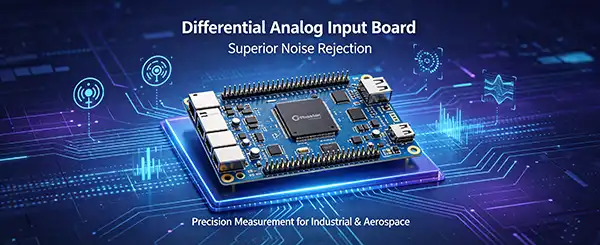
Figuring out how many channels you need changes the whole choice about what to buy. Boards with 32 differential channels are useful for tracking remote sensor arrays because they get rid of the need for external multiplexers, which add switching delays and noise sources. Our 5104 and 5114 series Differential Analog Input Board models can be set up with either 64 single-ended channels or 32 differential channels. This gives you options when your measurement methods change. It's also important to choose the right voltage range. Systems that are measuring low-level sensor outputs need ranges of ±10V for the best resolution, while systems that are monitoring industrial processes often need ranges of ±30V to handle higher-level signals from transmitters and actuators without needing extra signal conditioning.
Critical Technical Specifications That Impact Performance
Resolution tells you the smallest change in power that your system can pick up. A 16-bit conversion breaks the whole range into 65,536 separate steps, giving a resolution of about 305µV on a ±10V range. This standard has a direct effect on the accuracy of measurements in tasks such as thermocouple-based temperature tracking or signal acquisition from load cells. How quickly changing signals can be correctly recorded depends on the sampling rate. Our 250kSps maximum rate allows input signal bandwidths up to 2.5MHz, making it good for vibration analysis, acoustic testing, and power quality tracking where frequency content is in the kilohertz range. The multi-channel scanning capture mode keeps measurements in sync across channels, which is very important when the phase relationships between signals carry diagnostic information.
Measurement reliability is based on accuracy standards. If the 0.1% FSR precision standard is met, measurements will be within ±10mV of the true values on a ±10V range. This takes into account errors in gain, offset, and nonlinearity across the working temperature range. This level of efficiency meets most of the needs for industrial systems while keeping prices low. When used in climate-controlled labs or plant floors where temperatures can change, the device will always work the same way because it is stable across commercial-grade temperature ranges from -20°C to +60°C or industrial-grade ranges from -40°C to +70°C.
Comparing Board Architectures and Interface Options
The bus port you choose will depend on how your system is built. PXI and PXIe connections are the most common types used in test and measurement. They provide accurate timing and synchronization, which are necessary for coordinating readings from multiple devices. The PXIe x4 interface has a rate of 4Gbps, which means that all 32 differential channels can stream high-speed data continuously without buffer overruns. Legacy PCI ports are still useful for updating older systems, while PCIe choices are better for embedded computer uses that benefit from small form factors and high bandwidth. Our standard 3U board sizes—160mm x 100mm x 20mm with tolerances of less than 0.2mm—ensure mechanical compatibility with standard frames from a number of different makers.
When measurement circuits link to high-voltage equipment or when safety rules require galvanic separation between sensor circuits and computer systems, isolation specs should be carefully looked at. Our current product line is mostly non-isolated differential inputs that are best for low-cost uses. However, we still offer special design and manufacturing services that allow us to add channel-to-channel or channel-to-ground isolation when our customers need it. This ability to be customized shows that we know that companies that make aerospace, defense, and medical tools often have to follow special rules that normal goods don't.
Installing and Troubleshooting Differential Analog Input Boards
Pre-Installation Preparation and Safety Protocols
Before you put any Differential Analog Input Board hardware in your chassis, make sure that the power source can handle the current needs of both the new board and any other devices that are already there. Each analog board needs a certain amount of power from several voltage rails. If the supply capacity isn't high enough, the voltage drops, which affects the accuracy of all the devices that are installed. Make sure that your operating system version is on the list of ones that are supported. Problems with driver compatibility can be annoying during testing. As standard, our boards work with Windows 98 through Windows 10. If the needs of the project call for real-time operating systems or embedded platforms, we can also custom-make drivers for Linux, VxWorks, RTX, and LabVIEW RT.
Best Practices for Wiring Differential Input Channels
Choosing and arranging cables correctly has a big effect on the quality of measurements. Shielded twisted-pair wires maintain signal integrity by keeping the two leads of each differential pair close to each other. This makes sure that both experience the same electromagnetic interference, which is then filtered out by the differential amplifier. Connect wire shields to chassis ground only at the board end to avoid ground loops that would hurt the performance of common-mode rejection. If the wire is longer than three meters, you might want to use driven shields or active signal filtering closer to the sensor to reduce the effects of capacitive loads that weaken high-frequency signal components.
Diagnosing Common Signal Quality Issues
When tests show too much noise even though differential inputs were used, all possible reasons should be ruled out one by one. Make sure that the sensor shields are properly connected and that there are no ground loops between the board and the equipment that is far away. Check to see if nearby equipment with motor drives or switching power supplies has enough EMI filtering. Moving wire routes away from sources of interference is sometimes the best way to fix the problem. Our technical support team has fixed many problems where the problem was caused by empty channels that were not properly closed off and were serving as antennas to bring noise into live channels nearby.
Procurement Insights: What to Expect When Buying Differential Analog Input Boards
Understanding Cost Structures and Value Propositions
Industrial-grade Differential Analog Input Board units have different prices depending on the number of channels, the resolution, the sample speed, and the bus interface. Our line of products offers low-cost choices to name-brand products that still meet the standards needed for tough uses. The cost savings are especially big in setups with multiple channels, where the prices of each channel go up. A 32-channel differential board that works with NI instruments and costs less can save a project a lot of money without sacrificing measurement accuracy. When you supply more than one test station or build automated test equipment that needs dozens of acquisition boards across production lines, you can get savings for buying in bulk.
Lead Times and Supply Chain Considerations
When standard goods need to be changed to meet special parameter needs, customization fees are charged. Some of the things that ODM services do are change voltage ranges, add special filters, change port types, or make custom driver interfaces for software environments that are owned by others. Our engineering team looks at each customization request on its own and gives clear quotes that include development costs, hardware costs, and prices per unit at different volume levels. By comparing unique solutions to other options like external signal shaping or software-based post-processing, this method helps procurement managers make smart choices.
Standard product types like the CPC1-5104, PCI-5104, PCIe-5104, PXIe-5104, CPCI-5114, PCI-5114, PCIe-5114, and PXIe-5114 keep stock on hand and can be shipped right away, helping with tight project deadlines and replacing broken equipment. Our promise to reply within one hour during business hours makes sure that technical questions or questions about the state of an order are quickly answered, which reduces uncertainty in the procurement cycle. Customized goods need production schedules that are based on certain factors. Lead times need to be made clear during the quotation process so that project managers can plan delivery around installation and testing activities.
Warranty Coverage and Technical Support Services
The way we package and ship precision instruments keeps them safe during shipping. Boards are shipped in moisture-barrier shipping with anti-static bags inside. The boards are stacked in foam inserts that prevent mechanical shocks from getting through. There are different arrival times and budgets that can be met by both land transportation and air freight. Tracking information is available for shipments at all stages of the shipping chain. We keep in touch with experienced freight forwarders who know how to handle fragile electronic equipment. This lowers the risk of damage during foreign shipping to research institutions, aerospace facilities, and defense companies around the world.
Our regular one-year guarantee covers flaws in the way the product was made and broken parts that happen during normal use in certain environmental conditions. This support makes sure that boards will work properly throughout the lifetime of the product. This lowers the total cost of ownership by avoiding unexpected replacement costs during the warranty period. For important infrastructure uses where downtime has big practical or financial effects, special arrangements can be made, such as longer warranty coverage, on-site spare board programs, or guaranteed fix response times.
Building Trust: Why Choose MXTD Differential Analog Input Board Solutions
Proven Performance Backed by Industry Experience
The Xi'an Mingxi Taida Information Technology Co., Ltd. has more than 12 years of experience developing and making precise measurement tools. This experience directly affects the dependability of our products. Our engineering team has improved board designs over many generations by using what they've learned from installing thousands of them in aerospace, defense, industrial automation, semiconductors, and research institutions. The 5104 and 5114 series Differential Analog Input Board solutions are a great example of this collected knowledge because they provide reliable signal integrity and measurement stability that meet the strict needs of R&D managers, test engineers, and technical leaders who are in charge of important measurement infrastructure.
Our goods meet the performance requirements set by NI while also being much more cost-effective. This solves a major problem for procurement managers who have to keep capital equipment costs in check without sacrificing capability. System builders like how easily it works with current PXI, PXIe, PCI, and PCIe ecosystems. This makes design validation easier and cuts down on qualification time. The 16-bit resolution, 250kSps sampling rate, and 0.1% FSR accuracy work well together for most measurement needs in a wide range of settings, from checking structures in aerospace projects to using automatic validation tools in semiconductor factories.
Customization Capabilities That Address Unique Requirements
Standard goods work well for many uses, but some projects need features that aren't available on other products. With the help of fast engineering teamwork throughout the development process, our ODM and OEM services turn customer parameter requirements into hardware that is ready for production. This ability to be customized is useful for adding differential analog acquisition to custom test systems, changing the layout of connectors to fit certain sensor interfaces, or putting in place signal filtering that standard products can't do. This freedom is especially helpful for medium-sized to large businesses and system developers because it lets them offer unique products and gain a competitive edge in their own markets.
The driver dynamic library and sample programs that come with our boards make software integration faster, which lowers the amount of engineering work needed to get to the first test. Support for Windows environments from Windows 98 to Windows 10 ensures that old systems that are still used in factories can still work with the newer ones. Customized driver development for Linux, VxWorks, RTX, and LabVIEW RT platforms meets the needs of embedded and real-time applications. With this full software support, we show that we know that hardware alone isn't enough for successful deployment—the whole ecosystem of drivers, documentation, and example code that lets engineers focus on application development instead of low-level interface programming is needed.
Establishing Long-Term Partnership Value
We're committed to building long-term ties with OEMs, distributors, system developers, and end users, not just one-time deals. We know that buying tools is only one part of a longer process that includes installation, commissioning, operation, upkeep, and upgrades or replacements in the future. Our Differential Analog Input Board products come with responsive technical support, a stable supply of parts, and ongoing product development. If you choose our boards, you'll be able to work with us in the future as your measurement needs grow or change with the times.
The planning, production, and testing processes are all governed by quality control systems. These systems make sure that the performance of our products is the same across production lots and over time. This consistency is very important when building systems with multiple units or changing failed boards in working equipment—users expect new boards to work the same way as the original ones, without needing to be recalibrated or compensated. We put money into process control and quality proof because we know that our image depends on meeting the requirements of every board meeting, not just the samples we look at during the initial qualification.
Conclusion
To find the right Differential Analog Input Board, you have to weigh technical specs, system compatibility, cost, and the stability of the provider. You need to make sure that the measurement accuracy, channel count, sampling performance, and weather standards are all right for your application. The bus interface you choose should also be compatible with the infrastructure you already have. Knowing the difference between differential and single-ended designs helps you come up with the right answers for places with a lot of electrical noise where common-mode rejection is important. Working with experienced makers who offer full support, keep inventory available, and allow customization lowers sourcing risk, speeds up project timelines, and delivers measured value throughout the lifecycle of the product.
FAQ
What advantages do differential inputs provide over single-ended measurements?
Differential Analog Input Board inputs don't reference signals to a shared ground point. Instead, they record the voltage difference between two dedicated lines per channel. This design is better at blocking common-mode noise, which means that electromagnetic interference that shows up on both input lines is successfully cancelled. This noise protection is very helpful for industrial settings with motor drives, switching power sources, and ground potential differences. It lets cleaner readings be taken without having to buy expensive shielding or filtering solutions.
How do I determine the required sampling rate for my application?
The Nyquist rule says that the sampling rate should be higher than twice the highest frequency component in your input data. If it is not, you will get aliasing distortion. Depending on the mechanical frequency range being studied, rates for vibration tracking can run from 10kSps to 100kSps. For power quality analysis, rates of around 10kSps are needed to measure harmonic content in 60Hz systems. Our top speed of 250kSps is fast enough for most industrial measurement tasks with plenty of room to spare.
Can these boards integrate with my existing test system software?
Our standard driver packages work with Windows versions 98 all the way up to 10. They include dynamic libraries that work with popular computer languages like Python, C++, and .NET frameworks. For Linux, VxWorks, RTX, and LabVIEW RT systems, customized driver creation meets specific needs. Demo programs give examples of code that works, which makes it easier to add to private test programs or paid automation software platforms.
Partner with MXTD for Your Data Acquisition Needs
MXTD makes Differential Analog Input Board units that are very reliable and are designed to meet the strict needs of industrial automation, aircraft testing, chip validation, and research. Our 5104 and 5114 series products offer better value for money than NI-compatible solutions. They have 32 differential channels, 16-bit resolution, 250kSps sampling rates, and flexible ±10V or ±30V input ranges for PXI, PXIe, PCI, and PCIe bus interfaces. As a well-known manufacturer with more than 12 years of experience, we offer both standard goods that can be shipped right away and ODM customization that is made to fit your exact parameter needs. When you ask a technical question, our engineers and support teams answer within an hour. They offer free software upgrades, remote video help, and full guarantee coverage. Get in touch with manager03@mxtdinfo.com right away to talk about how our precision measurement solutions can improve the performance of your test system and make the buying process easier.
References
1. Taylor, J. (2021). Principles of Differential Analog Signal Acquisition in Industrial Environments. Instrumentation Technology Press.
2. Chen, W. & Martinez, R. (2022). Data Acquisition System Design for Aerospace Testing Applications. Journal of Test and Measurement Engineering, Volume 45, Issue 3, pp. 187-214.
3. Patel, S. (2023). Noise Rejection Techniques in Precision Analog Measurement Systems. Industrial Automation Technical Review, Volume 18, pp. 56-73.
4. Anderson, K. (2022). Comparison of PXI and PCIe Architectures for High-Channel-Count Acquisition Systems. Electronic Design Magazine, March 2022 Special Report.
5. Liu, H. & Williams, D. (2021). Calibration Methods for Multi-Channel Analog Input Devices. Measurement Science and Standards Quarterly, Volume 29, Number 2, pp. 45-62.
6. Robertson, M. (2023). Procurement Best Practices for Test and Measurement Equipment in Regulated Industries. Quality Assurance in Manufacturing Journal, Volume 37, Issue 4, pp. 112-129.
Our customers’ satisfaction speaks for our quality — contact us to experience the same reliable service.