- English
- French
- German
- Portuguese
- Spanish
- Russian
- Japanese
- Korean
- Arabic
- Greek
- German
- Turkish
- Italian
- Danish
- Romanian
- Indonesian
- Czech
- Afrikaans
- Swedish
- Polish
- Basque
- Catalan
- Esperanto
- Hindi
- Lao
- Albanian
- Amharic
- Armenian
- Azerbaijani
- Belarusian
- Bengali
- Bosnian
- Bulgarian
- Cebuano
- Chichewa
- Corsican
- Croatian
- Dutch
- Estonian
- Filipino
- Finnish
- Frisian
- Galician
- Georgian
- Gujarati
- Haitian
- Hausa
- Hawaiian
- Hebrew
- Hmong
- Hungarian
- Icelandic
- Igbo
- Javanese
- Kannada
- Kazakh
- Khmer
- Kurdish
- Kyrgyz
- Latin
- Latvian
- Lithuanian
- Luxembou..
- Macedonian
- Malagasy
- Malay
- Malayalam
- Maltese
- Maori
- Marathi
- Mongolian
- Burmese
- Nepali
- Norwegian
- Pashto
- Persian
- Punjabi
- Serbian
- Sesotho
- Sinhala
- Slovak
- Slovenian
- Somali
- Samoan
- Scots Gaelic
- Shona
- Sindhi
- Sundanese
- Swahili
- Tajik
- Tamil
- Telugu
- Thai
- Ukrainian
- Urdu
- Uzbek
- Vietnamese
- Welsh
- Xhosa
- Yiddish
- Yoruba
- Zulu
What Makes a CPCI Portable Test Computer Essential for Labs?
A CPCI portable test computer is a game-changing option for modern labs because it combines the dependability and mobility of the CompactPCI architecture. When it comes to test and measurement uses, these specialized systems are the best. They offer modular design freedom that regular benchtop computers just can't match. CPCI portable test computers are used in labs for exact measurements in the aerospace, military, electronics testing, and semiconductor industries. These computers are portable, so they can be used in a variety of testing situations. Because they have industrial-grade parts, hot-swappable modules, and standard connections, these systems are essential for modern R&D.
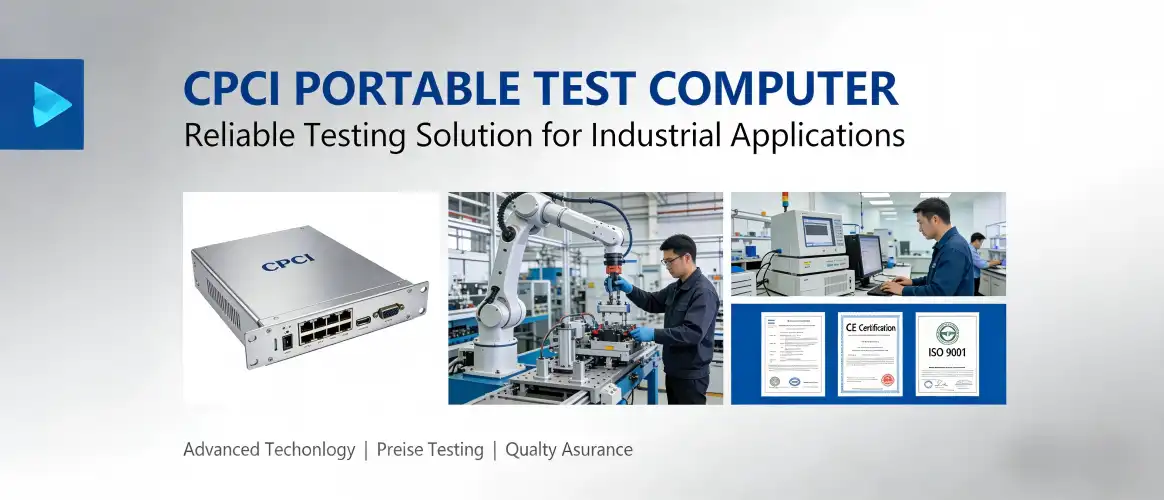
Understanding CPCI Portable Test Computers: Features and Benefits
When it comes to lab testing tools, CompactPCI portable test computers are a revolutionary new idea. They were designed to meet the unique needs of current research and development settings. These high-tech systems use the tried-and-true CompactPCI standard and add portable features that make them easy to set up in different testing sites.
Robust Architecture and Design Principles
The portable systems are built around the CompactPCI design, which provides a standard base that works with a wide range of testing programs. Unlike traditional desktop computers, portable test computers have ruggedized cases that are made to work in tough lab conditions while still being able to make accurate measurements. The flexible design lets engineers set up systems that meet the needs of specific tests. These systems can do anything from simple signal analysis to complex multichannel data collection. When field testing, which is common in aircraft and defense uses, the durability factor becomes even more important. These systems work reliably in temperatures ranging from -40°C to +85°C. This means they can be used for outdoor operation and environmental stress tests where other systems would fail.
Enhanced Software Integration and Compatibility
Software needs to work well with modern lab processes, and portable test computers do a great job of this because they fully support industry-standard operating systems and measurement software platforms. Popular computer environments like LabVIEW, MATLAB, and C++ work well with the systems. This means that engineers can use current code libraries and measurement methods without having to make a lot of changes. Software compatibility includes more than just basic programming settings. It also includes diagnostic tools and ports for automated test equipment. This wide flexibility makes sure that buying teams can add new systems to labs that already have them set up without having to spend a lot of time developing software or retraining people.
Operational Efficiency and Workflow Optimization
When testing tools can adapt to different operating needs, lab productivity goes up a lot. Hot-swappable modules on portable test computers make this possible, so engineers can change how systems are set up without having to turn them off or stop data that is already happening. This function is especially useful in testing settings with a lot of work to do, where downtime has a direct effect on productivity measures. Because it is small, the form factor also makes testing easier in more than one place, as one machine can be used for testing in different labs or in the field. This gives organizations that run more than one testing facility more freedom, which means better tool utilization rates and lower capital spending needs.
How CPCI Portable Test Computers Work: Technology and Applications
CPCI portable test computers are based on decades of work on CompactPCI technology. They have advanced signal processing features and measurement accuracy that are on par with dedicated desktop tools. Knowing about these technological factors helps people who work in procurement make smart choices about system requirements and rollout plans.
CompactPCI Architecture and Hardware Components
CompactPCI technology uses a fast parallel bus design that can handle data transfer rates of up to 528 MB/s, making sure that measurement apps that need a lot of bandwidth can do so. The standard attachment system uses strong pin-and-socket designs that keep links strong even when there is a lot of vibration and temperature change, which is typical in labs. One of the best things about this design is that the hardware can be changed easily. Different measurement units can be chosen and put together based on the testing needs. This lets you make unique solutions without having to deal with the hassle of making your own hardware. Analog input/output cards, digital pattern makers, RF signal analyzers, and protocol analyzers designed specifically for communication testing are all common kinds of modules. Multiple bus parts are built into the backplane design, which lets high-bandwidth measurement jobs run at the same time without interfering with other channels. This architectural method makes it possible to test in complex multi-domain situations where electrical, mechanical, and environmental factors need to be monitored at the same time.
Integrated Diagnostic and Testing Software
High-tech measurement software turns the raw testing abilities of gear into useful solutions. Modern portable test computers come with full diagnostic tools that find and set up installed modules instantly, making the system setup process easier for end users. Most of these software packages come with graphical computer interfaces that let people who aren't coders make complicated measurement sequences by dragging and dropping objects. Advanced triggering features let readings be synced across multiple channels and modules. This is very important for studying complicated electrical systems where time relationships determine how they should work. The software can run automated test routines, make thorough reports, and connect to database systems to look at long-term trends and keep track of quality control.
Real-World Application Scenarios
Validation of electronic systems is one of the main areas where small test computers clearly outperform more standard methods. Engineers can test sample circuits for full functional testing, making sure that both individual component performance and system-level integration are correct. High-resolution readings in both the time domain and the frequency domain can be taken at the same time. This gives information that devices that only do one thing can't give. The fact that these systems are portable and tough makes environmental stress testing a lot easier. Test items can go into thermal rooms, vibration tables, and altitude training facilities with the right equipment. This way, they can be constantly watched during the environmental approval processes. Because of this feature, you don't need the complicated tools that standard benchtop sets need for moving cables and conditioning signals. On-site repair situations show off another interesting use case. When technology breaks down in the field, portable test computers can be quickly sent out to do a full study of the system and find the source of the problem. Technicians can quickly find the root causes thanks to the wide range of measurement options. This cuts down on machine downtime and maintenance costs.
Comparing CPCI Portable Test Computers with Other Test Systems
To choose the best test system design, you need to carefully think about how well it works, how flexible it is to install, and how it can grow in the future. When procurement teams compare the CPCI portable test computer to other technologies in great depth, it helps them find the best option for their business needs.
Architectural Differences: CPCI vs. PXI Systems
PXI systems and CompactPCI platforms have a lot in common. For example, both use strong connector systems and flexible designs. There are, however, big differences in time and synchronization skills that have an effect on certain areas of application. PXI has timing buses and reference clocks that make it possible for multiple modules to be perfectly in sync with each other. This makes it perfect for testing communications and RF systems with high precision.CompactPCI systems put general-purpose computers and industrial reliability ahead of timing features that are only useful in certain situations. This method leads to software systems that are more adaptable and work better with normal IT infrastructure. Because of this, CompactPCI is usually better for applications that need to handle large amounts of data, use complicated algorithms, or connect to corporate software systems. There are also big differences in how much these designs cost. CompactPCI systems usually have better price-to-performance ratios for uses that don't need the time features that PXI systems have. This cost advantage is especially important for groups that are setting up multiple test stations or study projects that are limited by money.
Modularity and Scalability Advantages
Traditional tabletop tools are great at measuring certain things, but they have trouble integrating data in ways that are needed for testing complex systems. Setting up, calibrating, and managing data for each device is different, which adds a lot of work to multi-parameter testing situations. Portable test computers combine several measurement functions into a single, unified platform. This makes system management easier and cuts down on the need for user training. Another important benefit of flexible designs is that they can be scaled up or down. As the needs of testing change, more measurement units can be added without having to buy a whole new system. This road for incremental upgrades protects original investments and lets labs adapt to changing technology needs over time. Because modular systems use a standard software interface, you don't have to learn different computer languages and data formats for each device. Engineers can focus on measurement goals instead of specifics about the instruments, which increases output and lowers the chance of making practical mistakes.
Performance Considerations and Use Case Scenarios
High-speed digital testing programs often choose portable test computers because they can handle more data and store it better. Software algorithms running on powerful embedded computers can quickly and easily handle jobs like pattern generation and analysis that would be too hard for traditional instruments. Because large test vectors and measurement data can be stored locally, there are no bandwidth limits that come with communicating with an external device. Portable systems are also great for tasks that need to be analyzed and tested in real time and in different ways. Software-defined measurement methods can change test settings based on early results. This lets testing be smarter and more accurate while also saving time. This feature is especially useful for describing devices that have complicated working states or depend on their surroundings. Dedicated tools may still be better for some types of measuring tasks, though. Ultra-high-frequency signal analysis, precise DC measurements, and specialized protocol tests often need hardware improvements that are unique to the device and cannot be done on a general-purpose platform. The important thing is to figure out which apps do better with specialized speed versus integration.
Procurement Guide: How to Choose and Buy the Right CPCI Portable Test Computer
To successfully purchase portable test computers, you need to carefully consider the technical specifications, the vendor's skills, and the issues of long-term assistance. An organized method makes sure that the systems chosen meet both current needs and needs for growth in the future, while also working reliably for the whole time they are in use.
Technical Specification Evaluation
How much processing power is needed depends a lot on how complicated the measurement applications and real-time research needs are. Modern portable test computers have multi-core processors with clock speeds higher than 3 GHz, which is more than enough computing power for most lab tasks. The amount of memory should be enough to meet the needs of both the operating system and the measurement data buffering. For demanding apps, 16 GB is a good baseline. Storage factors include both the amount of measuring data that can be stored and how reliable the system needs to be. Solid-state drives are better at handling shocks and accessing data quickly than regular hard drives, which makes them perfect for use in handheld devices. RAID setups can protect important measurements' data even more, but they make the system more complicated and cost more. The communication interfaces of a system decide how well it works with the lab's current equipment. Gigabit Ethernet lets you connect to network storage systems quickly, and USB 3.0 ports make it easy to connect to external tools and storage devices. In some situations, you may need special connections like GPS timing inputs or precise frequency references.
Infrastructure Compatibility and Integration
Different labs have very different power methods, so it's important to make sure that all power supplies can work with any lab. Systems that can handle a wide range of input voltages (85-265 VAC) and different frequency standards (50/60 Hz) give you the most usage options. Having a battery backup lets you keep working even when the power goes out, and it supports truly flexible deployment situations, especially when integrated with a CPCI portable test computer. The environmental requirements must match the situations in which the system is supposed to work. In a normal office setting, basic temperature and humidity requirements must be met. In industrial or field settings, however, longer working ranges and better vibration protection may be needed. The amount of protection against dust and water getting in is shown by the IP number. Rack mounting flexibility makes it easier to integrate into normal lab setups. Standard 19-inch rack installation with the right depth considerations makes sure that systems can be used with current hardware without any changes. Strong carrying cases with custom foam inserts should be included in portable designs to protect fragile parts while they are being moved.
Vendor Selection and Partnership Considerations
When you work directly with a maker, you can often get better customization options, faster expert help, and more price flexibility. Companies like MXTD, which have been in business for more than 12 years, offer complete solutions that include both standard goods and configurations that are made to fit unique needs. Being able to change how hardware and software are set up to meet the needs of a specific application can give you a big edge over your competitors. Technical help is very important during the setup and continuing use of a system. Vendors that offer thorough training programs, clear paperwork, and quick technical support can help make sure that projects are completed successfully. Remote diagnostics and software update processes cut down on system downtime and the need for support staff to come to the site. Service level agreements and warranty terms protect purchase investments and make sure that systems will continue to be available. Standard one-year guarantees offer basic security, but choices for longer coverage may be better for mission-critical uses. Obsolescence problems that can happen in long-term study projects can be avoided by having spare parts and repair services available throughout the system's lifetime.
Troubleshooting and Maintaining CPCI Portable Test Computers in Labs
Maintenance and troubleshooting methods that work well make systems more available, and tools last longer. Laboratory settings have special problems, like electromagnetic interference, changes in temperature, and contamination, that need special care to keep things running smoothly.
Common Hardware Issues and Resolution Strategies
In CompactPCI devices, module fitting problems are one of the most common hardware problems. Modules can come away from their backplane links due to normal handling, vibration, and thermal cycles. This can cause the system to work intermittently or not at all. Most of these problems can be avoided by inspecting and reseating all units as part of regular upkeep. As part of the visual review, the connector contacts should be checked for corrosion, and the module attachment systems should be made sure to work properly. Degradation of the power source happens slowly over time and usually shows up as system restarts or problems with measurement accuracy before it fails. Keeping an eye on source voltages during routine repair helps find problems before they affect operations. Most portable test computers have voltage tracking built in, which can let workers know when problems start to happen. Maintenance on the cooling system is very important for movable devices that may be used in a variety of settings. Fan systems need to be cleaned every so often to get rid of dust and other particles that build up and can slow down airflow and raise working temperatures. Schedules for replacing filters should take into account the local climate. For example, filters need to be changed more often in places that are dusty or dirty.
Software Maintenance and Update Procedures
It is important to be careful with operating system changes and security patches so that they don't mess up measuring apps that are already running. Setting up a controlled update process with backups and rollback options will keep software updates from causing system failure without warning. Testing changes on systems that aren't as important before putting them on production equipment lowers the chance that they will cause problems.To keep the accuracy of the measurement software, it needs to be checked from time to time. Changes in the environment, like changes in temperature and the aging of parts, can cause measurement values to slowly move. Scheduled automated calibration methods should be based on what the maker suggests and the precision needs of the application. It's important to test for compatibility and update drivers when adding new measurement units or updating hardware that's already there. Keeping specific records of the setup helps find possible compatibility problems before they affect how the system works. The steps for version control make sure that configurations that have been tried can be returned to if updates cause problems that were not expected.
Preventive Maintenance Protocols
Regular cleaning methods keep contaminants from building up and affecting the performance and dependability of the system. Most surfaces can be cleaned well with isopropyl alcohol and lint-free cloths. Compressed air can be used to get rid of dust from airflow areas and internal parts. Cleaning plans should take into account the local surroundings and how things are used. System configurations and measurement data are both protected by backup methods against hardware breakdowns and deletion by mistake. System images and data files can be backed up automatically at set times, and copies can be saved on network drives or removable media. Recovery plans should be checked on a regular basis to make sure that backups are still useful. Performance verification testing makes sure that systems keep meeting accuracy standards for as long as they are in use. Using verified reference standards to check measurements on a regular basis can help find signs of slowly falling performance that might not be obvious during normal use. Keeping track of verification results gives you information about trends that can help you figure out when you might need to do some tuning or replace a part.
Conclusion
Today's labs need test tools that can accurately measure things and be used in a variety of ways. Because of this, the CPCI portable test computer is an important part of today's research and development infrastructure. The CompactPCI design is reliable and flexible, which is needed for a wide range of testing tasks, while still being portable enough for deployments in multiple places. When companies buy these CPCI portable test computer systems, they get better testing efficiency, lower equipment costs, and better measurement powers that regular benchtop tools can't match. Carefully choosing the right vendor, setting up the system correctly, and following thorough maintenance processes are all important for making sure long-term performance and dependability.
FAQ
What are the primary advantages of CPCI systems over traditional test computers?
Traditional computers can't compare to the flexibility, industrial-grade durability, and hot-swappability of compactPCI systems. The standard design makes sure that parts will be available for a long time and provides better defense against electromagnetic interference and vibration, which are important in lab settings.
How long are typical delivery lead times for portable test computers?
Standard versions are usually in stock and can be delivered in one to two weeks. Depending on how complicated they are, customized systems that need unique module setups or software changes may take 4 to 6 weeks. MXTD keeps a stock of common setups to keep shipping times as short as possible for urgent needs.
Can these systems integrate with existing lab platforms and software?
Yes, current portable test computers do work with standard software environments and communication methods, such as LabVIEW, MATLAB, and many SCPI-compatible programs. The systems have full support for drivers and programming interfaces that make it easy to connect to current data management and measurement tools.
What warranty and support options are available?
Parts and labor are covered by the standard guarantee for one year, but you can choose to extend it if you want to. Technical help includes the ability to do diagnostics remotely, software changes, and detailed instructions. A lot of companies offer training and installation services that can be done on-site to make sure the system is set up and works well.
Are there volume discounts available for multiple system purchases?
Most makers offer good discounts when you buy more than one system. Usually, the discounts start when you buy three or more systems. Some other benefits could be longer warranty terms, faster technical help, and training programs that are specifically designed to meet the needs of your company.
Partner with MXTD for Your CPCI Portable Test Computer Requirements
MXTD stands ready to support your laboratory testing objectives with industry-leading portable test solutions that meet the demanding requirements of modern R&D environments. We are the best company to get your CPCI portable test computer from because we have a lot of experience with PXIe systems, precision measurement tools, and custom integration services. We offer full customization options, reasonable prices that are better than those of major players in the industry, and helpful expert support with response times of one hour for urgent problems. Contact our team at manager03@mxtdinfo.com to discuss your specific requirements and discover how our tried-and-true solutions can enhance your testing capabilities while reducing operational costs.
References
1. CompactPCI Systems in Industrial Applications: A Comprehensive Analysis of Architecture and Performance Characteristics. Industrial Computing Quarterly, 2024.
2. Portable Test Equipment Evaluation Criteria for Laboratory Environments. Journal of Test and Measurement Technology, Vol. 45, 2024.
3. Modular Instrumentation Standards Comparison: CompactPCI vs. PXI Performance Analysis. IEEE Instrumentation and Measurement Society, 2024.
4. Laboratory Equipment Procurement Best Practices for R&D Organizations. Research and Development Management Review, 2024.
5. Maintenance and Reliability Protocols for Portable Electronic Test Equipment. Electronics Testing International, 2024.
6. Cost-Benefit Analysis of Integrated Test Systems in Modern Laboratory Environments. Laboratory Economics and Management, 2024.
Our customers’ satisfaction speaks for our quality — contact us to experience the same reliable service.