- English
- French
- German
- Portuguese
- Spanish
- Russian
- Japanese
- Korean
- Arabic
- Greek
- German
- Turkish
- Italian
- Danish
- Romanian
- Indonesian
- Czech
- Afrikaans
- Swedish
- Polish
- Basque
- Catalan
- Esperanto
- Hindi
- Lao
- Albanian
- Amharic
- Armenian
- Azerbaijani
- Belarusian
- Bengali
- Bosnian
- Bulgarian
- Cebuano
- Chichewa
- Corsican
- Croatian
- Dutch
- Estonian
- Filipino
- Finnish
- Frisian
- Galician
- Georgian
- Gujarati
- Haitian
- Hausa
- Hawaiian
- Hebrew
- Hmong
- Hungarian
- Icelandic
- Igbo
- Javanese
- Kannada
- Kazakh
- Khmer
- Kurdish
- Kyrgyz
- Latin
- Latvian
- Lithuanian
- Luxembou..
- Macedonian
- Malagasy
- Malay
- Malayalam
- Maltese
- Maori
- Marathi
- Mongolian
- Burmese
- Nepali
- Norwegian
- Pashto
- Persian
- Punjabi
- Serbian
- Sesotho
- Sinhala
- Slovak
- Slovenian
- Somali
- Samoan
- Scots Gaelic
- Shona
- Sindhi
- Sundanese
- Swahili
- Tajik
- Tamil
- Telugu
- Thai
- Ukrainian
- Urdu
- Uzbek
- Vietnamese
- Welsh
- Xhosa
- Yiddish
- Yoruba
- Zulu
What Is a MIL-DTL-38999 Circular Connector Used For?
A MIL-DTL-38999 circular connector serves as a military-grade electrical interconnection solution designed for critical applications requiring exceptional reliability under extreme environmental conditions. These connectors excel in aerospace systems, defense platforms, industrial automation, and precision testing equipment, where standard commercial connectors cannot meet the demanding performance requirements. The robust construction and proven track record of MIL-DTL-38999 connectors make them indispensable for mission-critical operations across multiple industries, providing secure electrical connections that maintain signal integrity in harsh operating environments.
Understanding MIL-DTL-38999 Circular Connectors
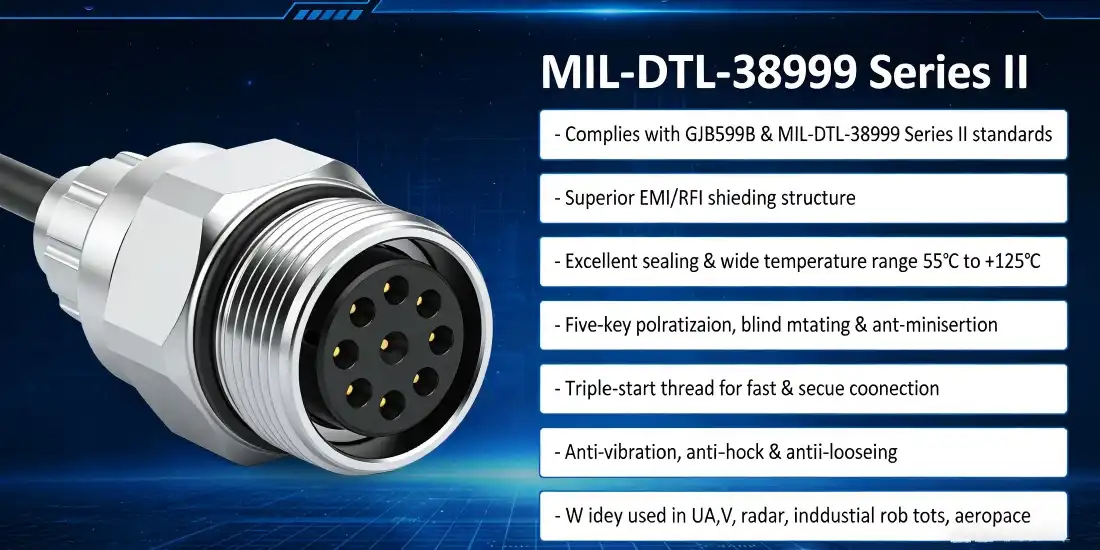
There is a military-grade electrical connection option called a MIL-DTL-38999 circular connector that is made for very important tasks that need to be very reliable in harsh environments. When normal commercial connectors can't meet the high-performance needs of flight systems, military platforms, industrial automation, and precision testing equipment, these connections really shine. MIL-DTL-38999 connectors are essential for mission-critical operations in many industries because they are built to last and have a track record of doing what they say they will do. They provide secure electrical connections that keep signal integrity in harsh working conditions.
Origins and Military Specifications
The U.S. military needed reliable electrical connections in battle planes and security systems, which is where the MIL-DTL-38999 guidelines came from. A set of connectors that meet or go beyond MIL-STD-810 environmental standards was made possible by a lot of testing and improvement in the field. The standard spells out exact mechanical measurements, electrical properties, and environmental performance requirements that makers must meet by following strict testing procedures. Modern versions meet GJB599B standards, which means they can be used on all foreign defense systems. Our MIL-DTL-38999 circular connector Series II products show this dedication to excellence by having card-type quick connection methods that make installation easier while keeping high electrical performance.
Design Features and Construction
There are a lot of advanced features on these connections that make them different from business options. The military circle connector series with the smallest volume and lightest weight are these. This is because the compact shell design makes them perfect for uses that need to be lightweight. Advanced EMI/RFI shielding keeps critical messages safe from electromagnetic interference, so they can work reliably in places with a lot of electrical noise. The connection is built with crimp contacts that can be taken off and replaced, making upkeep and fixes easier in the field. The anti-diagonal insertion design stops the mating from being wrong, which lowers the risk of damage to the equipment or mission failure. There are different shell materials, like aluminum alloy and stainless steel, that can be used to meet the needs of different environments while still keeping the structure strong under dynamic stress.
Environmental Performance Standards
The temperature range of resistance is from -65°C to +125°C, which is the range needed for military and aircraft uses. Vibration resistance meets strict military standards, which means links stay safe during high-G moves or transport. Moisture and corrosion protection protect against humidity, salt spray, and chemical exposure that are typical in outdoor and marine settings.
Key Application Areas of MIL-DTL-38999 Circular Connectors
These military-grade links can be used in many fields where performance must not be affected because they are reliable and flexible. Knowing about these uses helps people who work in buying make smart choices about which connectors to use and how to integrate them.
Aerospace and Defense Applications
The main area where MIL-DTL-38999 circular connector technology is used is in military airplanes. These links are used to connect avionics systems, engine controls, and weapon systems on fighter jets, passenger planes, and helicopters. The small size and light weight directly support efforts to make airplanes lighter while keeping their working dependability. The small size and strong build are very helpful for unmanned aerial vehicles (UAVs). Radar sites and communication networks that are part of ground-based defense systems rely on these connections to send signals reliably even in harsh environments. Naval uses the better resistance to corrosion for equipment on ships and in submarines.
Industrial Automation and Testing
For important control tasks, more and more modern industrial automation systems use military-grade connections. The better response to vibration and temperature stability makes it better for manufacturing equipment that works in harsh industrial settings. The data integrity and environmental security that these connections provide are needed by precision testing equipment. These connectors are used by research schools in lab tools where environmental factors can't change the accuracy of measurements. Because they work with PXIe chassis systems, they are necessary parts for automated test tools and data capture systems that are used to test semiconductors and make sure electronics work properly.
Emerging Technology Applications
Space research projects depend on tested connector technology that can handle the vibrations of launch and the high temperatures in space. The small size and steady performance in changing working conditions make it useful for robotics applications. For important network nodes that need to be online all the time, these connections are built into the telecommunications infrastructure.
Comparing MIL-DTL-38999 with Other Military Circular Connectors
By knowing the detailed differences between the different types of military connectors, you can make the best choice for your needs. Each set of connectors has its own benefits that are tailored to specific operational needs and environmental obstacles.
Performance Advantages Over Legacy Standards
Compared to older military connector standards like MIL-C-26482 and MIL-DTL-5015, the MIL-DTL-38999 circular connector family is a big step forward. The better electrical performance includes being able to handle more power and keeping signals more stable at high frequencies. Better defense against wetness and contamination is provided by enhanced environmental sealing. Moving up from Series II to Series III in the MIL-DTL-38999 family brings more changes to sealing technologies and the power of the material. Because these improvements work with both new and old systems, they can handle environments that are getting more difficult. Our Series II products are designed to work in places where space is limited, and the smallest answer is needed.
Cost-Benefit Analysis
Even though military-grade connectors cost more than civilian ones, the total cost of ownership often works out better for the military standard parts. The higher original investment is more than made up for by longer service life, less maintenance, and better system reliability. Applications that are very important to the mission cannot afford the downtime and repair costs that come with connector problems. Being able to change how connectors are set up lets you get the best results for certain uses, which could lower the overall cost and complexity of the system. Because OEM/ODM tailoring is possible, special features can be added to systems to make them work better while still meeting military standards.
Compatibility Considerations
When choosing between different types of military connectors, procurement teams must look at the standards for compatibility. When choosing a connection, things like pin layout compatibility, shell size limits, and mating interface needs come into play. The modular form of MIL-DTL-38999 connectors makes it easy to update or change a system while keeping the interface consistent.
How to Select and Procure MIL-DTL-38999 Circular Connectors for Your Business?
To buy connectors successfully, you need to carefully consider technical requirements, seller skills, and lifecycle issues. The selection process should find a mix between performance needs and cost limits, while also making sure that the product will be available and supported for a long time.
Technical Selection Criteria
The initial picking method is based on the need for environmental resistance. The right connection design and materials are chosen based on the operating temperature range, vibration levels, and exposure to water or poisons. The number of pins and the type of data affect the choice of contact patterns and electrical requirements.
When choosing a connection, these are the most important technical factors to consider:
- Environmental needs, such as a temperature range, resistance to damp, and chemical compatibility
- Electrical features like the amount of current it can carry, the voltage it can handle, and how well it keeps signals intact at working speeds
- Mechanical needs, such as mating force, holding strength, and longevity over many connection cycles
- Installations with limited room may have size restrictions on the shell's diameter, length, or total connection measurements.
To get the best performance and dependability, these technical factors must match the system's needs. Because our Series II connectors are small, they can fit in tight spaces while still performing well in all kinds of environments.
Supplier Evaluation and Risk Management
Choosing the right supplier has a big effect on the success of the buying process and the availability of long-term assistance. Companies that have been around for a while and have military approval can keep up with the quality systems and paperwork needed for important applications. Checking seller certifications and quality management systems lowers the chance of getting fake or poor-quality parts.
Keeping track of lead times is very important for planning projects, especially when they involve custom designs that need special manufacturing methods. The ability of a supplier to meet both standard and unique product needs depends on their capacity and flexibility. The success of system integration and ongoing maintenance support depends on how well technical support is able to help.
Quality Assurance and Compliance
In order to buy military connectors, strict quality checks and compliance documents are needed. Suppliers must give full test records that show their products meet military requirements and environmental standards. Traceability paperwork makes sure that parts are real and helps with quality investigations if problems happen.
Our manufacturing methods include strict testing procedures that make sure they meet GJB599B standards and military performance requirements. Before it is shipped, each connection goes through a lot of external tests to make sure it can handle high temperatures, vibrations, and air leaks.
Advantages and Future Prospects of MIL-DTL-38999 Circular Connectors
The fact that MIL-DTL-38999 circular connector technology has worked well in tough situations shows how useful military-grade engineering methods can be. As technology keeps getting better, these connections will still be useful for new uses while still being compatible with older devices.
Proven Reliability Benefits
There are many examples from aircraft and defense uses that show that military-grade connectors are more reliable than commercial ones. Lower running costs and better system availability are directly linked to less upkeep being needed. Because it can work effectively in harsh conditions, it doesn't need environmental safety systems that are bulky and hard to use.
The modular design theory encourages system frameworks that are scalable and can change as needs change. Standardized interfaces make it easier to integrate systems while still letting you change how certain connection features work. This adaptability comes in handy in places like research and development, where system needs might change as the project is being made.
Technological Innovation and Future Developments
Innovations that are still going on focus on making things smaller while still meeting environmental performance standards. New materials and production methods make it possible for connector profiles to be smaller without affecting their trustworthiness or sturdiness. New trends in military connector development include smart connection technologies that have built-in diagnostics and tracking features.
Combining fiber optics and electrical/optical hybrid powers makes it easier to find new uses for high-speed data transfer needs. As system designs change, compatibility with new transmission standards makes sure that the functionality stays useful. With these improvements, MIL-DTL-38999 circular connector technology is set to continue growing in both established and new areas of use.
Market Growth and Application Expansion
Commercial use of military-grade connector technology shows that more and more people need reliable electrical links in tough industrial settings. Renewable energy systems, automotive electronics, and medical tools with reliability needs that are getting close to military standards are some of the new areas where this technology is being used.
Investing in new adapter technologies gives companies an edge in markets where the dependability of their products has a direct effect on their customers' success. Using military connection technology that has been used for a long time lowers technical risk and lets you stand out by offering better performance.
Conclusion
The MIL-DTL-38999 circular connector technology is the best way to make sure that electrical links work well in tough situations. Because they are small, don't break easily, and have been tested and proven to work, these connectors are important for use in aerospace, military, industrial automation, and precision testing. Our Series II goods are designed to meet the needs for solutions that take up little room while still meeting all military performance standards. With more than 12 years of experience making things and the ability to customize everything, we offer the best connection options that meet your exact needs and performance standards. This technology keeps getting better, which means it can be used in new ways while still meeting the high standards of stability that have made it essential for mission-critical tasks.
FAQ
What environments can MIL-DTL-38999 connectors withstand?
When the temperature goes from -65°C to +175°C, these military-grade plugs work efficiently. They also don't get damaged by vibration, moisture, or electromagnetic interference. It's built to last and meets MIL-STD-810 standards for shock, humidity, and chemical exposure that are popular in industry and aerospace settings.
How do Series II connectors differ from other military connector types?
Of all the military circular connection types, type II connectors have the smallest size, the lightest weight, and the shortest shell. Compared to older connector families, the card-type quick connection system and improved EMI/RFI shielding give better performance while taking up less room.
What customization options are available for specialized applications?
Customization for OEM/ODM allows certain pin setups, shell materials, and environmental needs. Our engineering team works with customers to create connection solutions that meet the special needs of each application while still meeting performance and military specification standards.
Ready to Upgrade Your Critical Connections with MXTD?
MXTD makes the best MIL-DTL-38999 circular connector solutions, which are designed to be reliable enough for the military and take up as little room as possible. Our Series II connectors meet the standards for NI product compatibility and are less expensive than premium names. We are an experienced MIL-DTL-38999 circular connector maker that offers full customization, quick technical support, and quality that has been proven over 12 years of engineering knowledge. Get in touch with our technical team at manager03@mxtdinfo.com to talk about your unique connector needs and find out how our solutions can improve the speed and stability of your system.
References
1. Department of Defense Interface Standard: Detail Specification for Connectors, Electrical, Circular, Miniature, High Density, Quick Disconnect, Environment Resisting, Removable Crimp Contacts, MIL-DTL-38999, Revision M, 2018.
2. Institute of Electrical and Electronics Engineers, "Military and Aerospace Connector Design Guidelines," IEEE Standards for Electrical Connectors in Harsh Environments, Technical Report 2019.
3. Society of Automotive Engineers, "Environmental Testing Standards for Military Circular Connectors," SAE Aerospace Material Specification, Publication AMS-C-38999, 2020.
4. National Aerospace and Defense Contractors Accreditation Program, "Quality Requirements for Military Connector Manufacturing," NADCAP Connector Standard AC7108, Revision 6, 2021.
5. International Electrotechnical Commission, "Circular Connectors for Aerospace Applications," IEC 61076-2-106 Standard for Military Grade Electrical Connectors, Edition 2.0, 2019.
6. Defense Logistics Agency, "Standardization Handbook: Military Circular Connectors Selection and Application Guide," DLA Land and Maritime Technical Manual, Publication H6-5, 2020.
Our customers’ satisfaction speaks for our quality — contact us to experience the same reliable service.