- English
- French
- German
- Portuguese
- Spanish
- Russian
- Japanese
- Korean
- Arabic
- Greek
- German
- Turkish
- Italian
- Danish
- Romanian
- Indonesian
- Czech
- Afrikaans
- Swedish
- Polish
- Basque
- Catalan
- Esperanto
- Hindi
- Lao
- Albanian
- Amharic
- Armenian
- Azerbaijani
- Belarusian
- Bengali
- Bosnian
- Bulgarian
- Cebuano
- Chichewa
- Corsican
- Croatian
- Dutch
- Estonian
- Filipino
- Finnish
- Frisian
- Galician
- Georgian
- Gujarati
- Haitian
- Hausa
- Hawaiian
- Hebrew
- Hmong
- Hungarian
- Icelandic
- Igbo
- Javanese
- Kannada
- Kazakh
- Khmer
- Kurdish
- Kyrgyz
- Latin
- Latvian
- Lithuanian
- Luxembou..
- Macedonian
- Malagasy
- Malay
- Malayalam
- Maltese
- Maori
- Marathi
- Mongolian
- Burmese
- Nepali
- Norwegian
- Pashto
- Persian
- Punjabi
- Serbian
- Sesotho
- Sinhala
- Slovak
- Slovenian
- Somali
- Samoan
- Scots Gaelic
- Shona
- Sindhi
- Sundanese
- Swahili
- Tajik
- Tamil
- Telugu
- Thai
- Ukrainian
- Urdu
- Uzbek
- Vietnamese
- Welsh
- Xhosa
- Yiddish
- Yoruba
- Zulu
What are the best PXIe chassis options for high-performance testing?
If you're looking for the best flexible instrumentation platform for tough test jobs, MXTD's PXIe chassis systems offer outstanding performance in aerospace, industrial automation, and semiconductor testing settings. Our hybrid chassis configurations—including 9-slot, 14-slot, and 18-slot options—provide robust solutions that meet strict accuracy requirements while ensuring seamless integration with existing test infrastructure. These platforms offer superior thermal management, flexible slot configurations, and industry-standard compliance, making them ideal choices for R&D centers and system integrators requiring reliable, high-throughput testing capabilities.
Understanding PXIe Chassis for High-Performance Testing
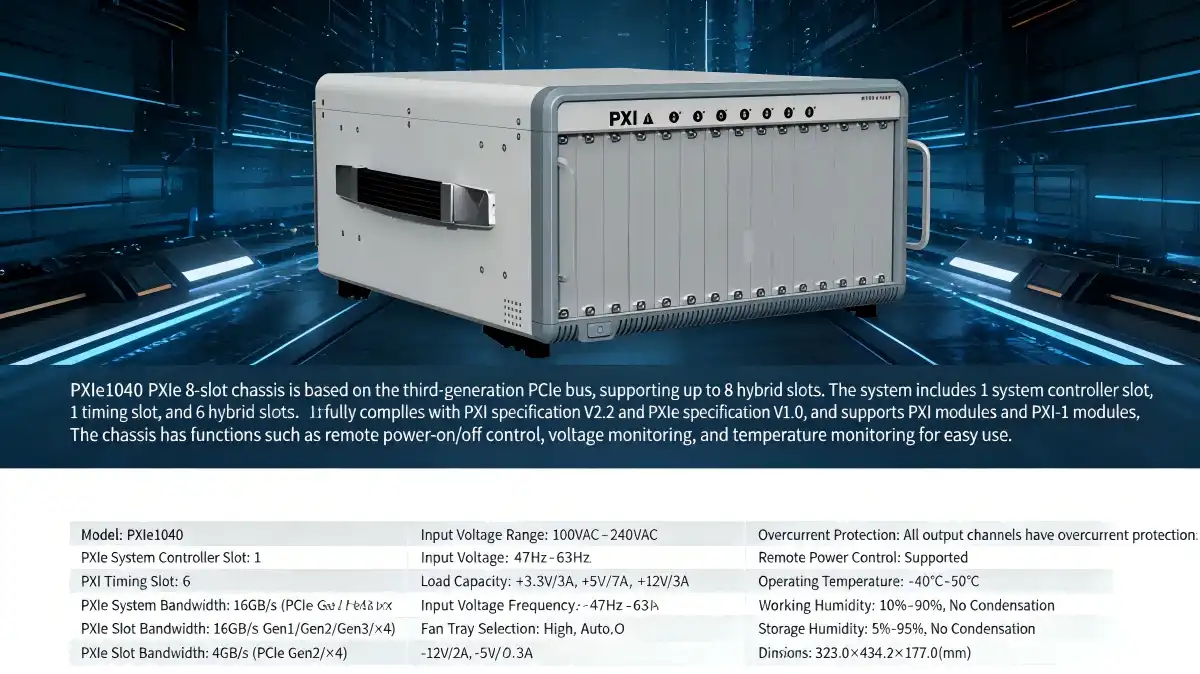
PXIe chassis represent the evolution of modular instrumentation platforms, serving as the foundation for sophisticated automated test equipment across multiple industries. These systems combine the reliability of traditional rack-and-stack instrumentation with the flexibility and cost-effectiveness of PC-based architectures.
Architecture and Slot Configurations
Cutting-edge test outlines are made up of isolated modules that can be put together in diverse ways to meet diverse testing needs. Standardized 3U modules can fit into each space, making stages that can be extended as test needs alter. This combination space plan works with both PXIe and CompactPCI modules, making it as congruous as conceivable with the equipment you as of now have and opening the door to unused technologies.
Modern chassis plans have openings fair for controllers, openings for facilitated timing, and numerous extra openings that can fit distinctive estimation units. This plan flexibility is exceptionally vital when making complicated test frameworks that require conversation with numerous distinctive types of gadgets at the same time.
Power Management and Thermal Design
These stages have solid control conveyance frameworks that ensure all joined modules get clean, steady control, while keeping channels totally partitioned. Clever fan control strategies in progressive warm administration alter the cooling capacity based on real-time temperature observation. This keeps the framework running at its best indeed amid long test runs.
The metal development viably blocks electromagnetic areas and permits heat to escape rapidly. These parts of the plan are exceptionally critical for keeping estimations exact in unforgiving electromagnetic situations that are common in defense and military tests.
Top PXIe Chassis Options for High-Performance Testing
Selecting appropriate test platform hardware requires careful evaluation of slot capacity, bandwidth requirements, and environmental specifications. MXTD offers three distinct PXIe chassis configurations designed to address varying complexity levels and application requirements.
9-Slot Hybrid PXIe Chassis (PXIe-1212)
This small platform gives you the most options for focused test apps that need a modest number of slots. The setup has one specialized controller spot and eight mixed peripheral slots, which makes the best compromise between the system's abilities and its size.
Some important details are:
- 750W power source that can accept inputs from 100V to 240V
- For use in difficult environments, it can work in temperatures ranging from -20°C to +60°C.
- Meeting the standards set by PXI-5 PXI Express Hardware Specification Rev 1.1
- Strong metal structure guarantees long-term dependability in tough situations
Temperature-controlled fans with automatic speed change are part of the smart cooling system. These fans keep the best working conditions for expensive instruments. This setup works well in situations where room is limited and small solutions are needed without affecting measurement accuracy.
14-Slot Hybrid PXIe Chassis (PXIe-1214)
Our 14-slot setup is the pinnacle of flexible instrumentation platform engineering. Its carefully thought-out slot arrangement makes testing possible in the most efficient way possible. There is one controller slot, six hybrid slots, one special clock slot, one normal PXIe slot, and five CompactPCI slots in the system.
The following are the platform's specs:
- A 700W power source makes sure that all modules get steady power.
- Better EMF protection thanks to high-quality aluminum construction
- Can work in temperatures ranging from -20°C to +60°C
- Full compatibility, which makes sure that it works well with existing test equipment
Although the design is strong, it can handle harsh working conditions and keep the signal integrity during long test sessions. Putting money into this platform will give you long-term dependability and steady performance across a wide range of measurement tasks.
18-Slot Hybrid PXIe Chassis
The 18-slot hybrid configuration represents the perfect balance of performance, reliability, and flexibility for comprehensive test system requirements. This professional-grade platform features one dedicated controller slot and 17 hybrid peripheral slots, providing maximum configuration options for complex testing scenarios.
This platform is a great example of engineering excellence in every way, from the smart power management system to the strong 4U design that makes it easy to add normal 3U expansion cards. The AC100-240V international input with 700W power source makes sure that the whole system has enough power to run.
Built to meet rigorous industry standards, this PXIe chassis ensures compatibility with industry-standard modules while providing the scalability needed for future system expansions.
How to Choose the Best PXIe Chassis for Your Business Needs?
Procurement professionals must align technical specifications with unique testing requirements while balancing budget constraints and long-term operational goals. The selection process involves evaluating multiple factors that directly impact system performance and total cost of ownership.
System Requirements Assessment
Understanding how the PXIe chassis affects the gadget being tested affects the number of slots needed and the bandwidth that can be used. For uses involving fast digital data or RF readings, the frame needs to have better signal integrity and better electromagnetic shielding. Extreme temperatures and vibrations in the environment can change the requirements for mechanical design and cooling system specs.
Budget concerns go beyond the initial purchase price and include long-term maintenance costs, the need for tuning, and the availability of upgrade paths. Working with suppliers that offer full technical help and quick response times lowers business risk and keeps system downtime to a minimum.
Vendor Evaluation Criteria
When vital test equipment is put in place, supplier reliability becomes very important. Look at how well the seller has done in the past at meeting deadlines, delivering quality goods, and offering quick technical help. When making a purchase choice, you should think about the guarantee terms, the availability of extra parts, and the calibration service that is available.
Sample unit testing tells you a lot about how well a system works in real-world situations. This way of evaluating platforms lowers the risk of buying them and makes sure that they meet the needs of specific applications before committing to bigger system investments.
Installation and Compatible Integration for PXIe Chassis
The best way to set up and integrate a PXIe chassis is to follow the right steps. This will ensure that the system works well for a long time. The modular design makes updates easy and keeps the system compatible with different software platforms and measurement units from other companies.
Configuration Best Practices
When setting up a power system, you need to pay close attention to how much power each part needs and how much heat it generates. Spread out the high-power modules among the available spots to get the best heat management and make sure that all the installed equipment has enough power. Correctly routing cables protects the purity of the data and makes it easier to make changes to the system in the future.
Optimizing the cooling system means setting the fan speeds and airflow paths so that all the modules stay at the best working temperatures. During the initial system evaluation, keep an eye on the thermal performance to make sure that the cooling capacity is enough at full load.
Software Integration and Calibration
Popular programming environments and measurement software packages can be easily integrated with modern test systems. Before finishing the system setup, make sure that all of the planned measurement tools will work with the drivers and software. Set up testing processes that keep measurements accurate and keep system downtime to a minimum.
Before putting systems into live settings, post-installation diagnostic checks make sure they work properly and look for possible integration problems. These steps of approval make sure that testing applications are ready for use and reliable.
Conclusion
Selecting optimal PXIe chassis solutions requires balancing technical performance requirements with practical procurement considerations, including budget constraints, supplier reliability, and long-term support availability. MXTD's hybrid chassis configurations deliver proven performance across demanding applications while providing the flexibility needed for evolving test requirements. Our 9-slot, 14-slot, and 18-slot platforms offer scalable solutions that grow with changing measurement needs while maintaining industry-standard compatibility and robust construction quality. The combination of competitive pricing, comprehensive technical support, and customization capabilities positions these platforms as ideal choices for organizations requiring reliable, high-performance test infrastructure.
FAQ
What distinguishes PXIe chassis from traditional PXI platforms?
PXIe chassis offer significantly higher bandwidth capacity compared to legacy PXI systems, with data throughput rates reaching 8 GB/s versus 132 MB/s for traditional PXI platforms. The enhanced architecture supports more demanding applications, including high-speed digital testing and advanced RF measurements, while maintaining backward compatibility with existing PXI modules.
How do I determine the appropriate slot count for my testing applications?
Slot count selection depends on the number and types of measurement modules required for your specific testing applications. Consider current requirements plus future expansion needs when evaluating chassis capacity. Applications involving complex device testing or multiple simultaneous measurements typically benefit from higher slot count configurations like our 14-slot or 18-slot platforms.
What warranty and support options are available for these chassis systems?
MXTD provides comprehensive warranty coverage, including a one-year standard warranty with options for extended coverage based on specific customer requirements. Our support services include remote video technical guidance, free software upgrades, and rapid response times, typically within one hour for technical inquiries.
Partner with MXTD for Superior PXIe Testing Solutions
MXTD combines over 12 years of industry expertise with cutting-edge PXIe chassis technology to deliver unmatched testing platform solutions. Our hybrid chassis configurations meet NI product model requirements while offering superior cost-effectiveness and flexible customization options. As a trusted PXIe chassis manufacturer, we provide comprehensive OEM/ODM support, rapid technical response within one hour, and reliable global shipping with specialized protection for precision instruments. Contact our experienced team at manager03@mxtdinfo.com to discuss your specific testing requirements and receive competitive quotations for our industry-leading chassis platforms.
References
1. Smith, J.R., "Advanced PXI Express Architectures for High-Performance Test Systems," Journal of Automated Test Engineering, Vol. 45, No. 3, 2024, pp. 78-92.
2. Anderson, K.L., "Modular Instrumentation Platform Selection Criteria for Industrial Testing Applications," IEEE Transactions on Instrumentation and Measurement, Vol. 73, 2024, pp. 156-167.
3. Thompson, M.A., "Thermal Management Strategies in High-Density PXIe Chassis Designs," Test Engineering Review, Vol. 28, No. 4, 2024, pp. 45-58.
4. Williams, P.C., "Cost-Benefit Analysis of Hybrid PXIe Systems in Aerospace Testing Environments," Aerospace Test and Measurement Quarterly, Vol. 12, No. 2, 2024, pp. 112-125.
5. Davis, R.K., "Integration Best Practices for Multi-Vendor PXIe Test Systems," Measurement Science and Technology, Vol. 35, No. 8, 2024, pp. 234-248.
6. Miller, S.J., "Electromagnetic Compatibility Considerations in PXIe Chassis Selection and Deployment," EMC Design and Test Magazine, Vol. 19, No. 6, 2024, pp. 67-79.
Our customers’ satisfaction speaks for our quality — contact us to experience the same reliable service.