- English
- French
- German
- Portuguese
- Spanish
- Russian
- Japanese
- Korean
- Arabic
- Greek
- German
- Turkish
- Italian
- Danish
- Romanian
- Indonesian
- Czech
- Afrikaans
- Swedish
- Polish
- Basque
- Catalan
- Esperanto
- Hindi
- Lao
- Albanian
- Amharic
- Armenian
- Azerbaijani
- Belarusian
- Bengali
- Bosnian
- Bulgarian
- Cebuano
- Chichewa
- Corsican
- Croatian
- Dutch
- Estonian
- Filipino
- Finnish
- Frisian
- Galician
- Georgian
- Gujarati
- Haitian
- Hausa
- Hawaiian
- Hebrew
- Hmong
- Hungarian
- Icelandic
- Igbo
- Javanese
- Kannada
- Kazakh
- Khmer
- Kurdish
- Kyrgyz
- Latin
- Latvian
- Lithuanian
- Luxembou..
- Macedonian
- Malagasy
- Malay
- Malayalam
- Maltese
- Maori
- Marathi
- Mongolian
- Burmese
- Nepali
- Norwegian
- Pashto
- Persian
- Punjabi
- Serbian
- Sesotho
- Sinhala
- Slovak
- Slovenian
- Somali
- Samoan
- Scots Gaelic
- Shona
- Sindhi
- Sundanese
- Swahili
- Tajik
- Tamil
- Telugu
- Thai
- Ukrainian
- Urdu
- Uzbek
- Vietnamese
- Welsh
- Xhosa
- Yiddish
- Yoruba
- Zulu
What Are the Key Benefits of Rugged Portable Industrial PCs?
For workers working in harsh environments, Rugged portable industrial PCs offer unmatched dependability and mobility. These specialized computers are tough enough for the military and fast enough for businesses, so they can process data in real time at faraway job sites. These systems are made to handle shocks, vibrations, high and low temperatures, and dirt and other toxins. They keep downtime to a minimum and increase operating efficiency. The main benefits are longer equipment lifecycles, lower total cost of ownership, easy integration with current industrial protocols, and higher worker productivity thanks to mobile computing features that bring processing power right to where it's needed.
Understanding Rugged Portable Industrial PCs
The needs for industrial computers have changed a lot from the days of standard desktop machines. Devices used in modern businesses need to be able to move easily between labs, factories, and testing places in the field without losing their performance or data security.
What Makes These Devices Different
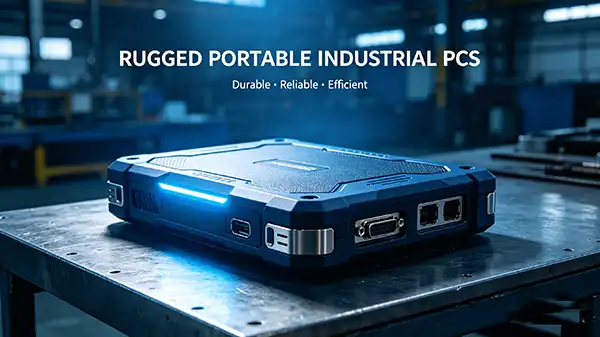
Rugged portable industrial PCs are a particular kind of computer hardware designed to work well in tough working conditions. Unlike market laptops or regular office computers, these go through a lot of testing to make sure they meet military standards like MIL-STD-810G. This makes sure they can handle drops, high temperatures, humidity, and vibrations. The IP rating method gives you more peace of mind. Many units get an IP65 rating or higher, which means they are protected against dust and water.
Core Technical Characteristics
The way industrial-grade portable computers are built is very different from the way business goods are built. Manufacturers make systems that can handle being dropped from waist height onto concrete surfaces by using magnesium metal frames, sealed port covers, and shock-mounted storage drives. Battery systems often have hot-swappable parts that let them keep working even during long deployments in the field. Some setups can run for 12 to 16 hours. Gigabit Ethernet, multiple USB 3.0 ports, RS-232/485 serial interfaces, and expansion slots that work with PXIe chassis and measurement tools are some of the connectivity choices that are common.
Operating Systems and Application Environments
These systems can be used for a wide range of business tasks because the software settings are flexible. Windows 10 IoT Enterprise is still the best choice for measurement and control apps because it works with a lot of device drivers and analysis tools. Linux versions offer options for real-time processing needs and custom embedded systems. These platforms are essential for R&D centers and quality assurance labs because they can run specialized software packages for data gathering, automatic testing, and system diagnostics.
Industry Applications and Use Cases
Rugged portable industrial PCs are used to keep an eye on the production line in factories. This lets engineers figure out what's wrong with the equipment without having to go back to the main control rooms. Companies in the aerospace industry use these systems to test airplanes, where workers have to use complicated diagnostic connections in hangars and on tarmacs.
Core Benefits of Rugged Portable Industrial PCs for B2B Procurement
When making buying choices in technical fields, it's important to look at the total value of the item, not just the original purchase price. Knowing the many benefits these systems offer helps to explain spending money and match technology choices with practical needs.
Superior Durability Reduces Downtime
When important testing or production runs are interrupted by broken equipment, costs go up and up, that are far beyond the cost of repairs. Standard business computers can't handle the physical stresses of industrial settings, which causes them to break down early and cause unexpected downtime. This weakness is directly fixed by the stronger building of industrial-grade portable systems.
Enhanced Mobility Transforms Workflow Efficiency
Bringing processing power right to the point of measurement changes the way technical workers do their work in a big way. In the past, workers had to gather data in the field and then go back to a set desk to analyze it. This split between gathering data and figuring out what it all means causes delays and could lead to mistakes.
Lower Total Cost of Ownership
A thorough financial study that goes beyond the initial costs of acquisition shows important benefits. Commercial computers used in factories usually need to be replaced every 18 to 24 months because they get damaged over time and lose performance. Under the same conditions, Rugged portable industrial PCs usually last between 5 and 7 years.
Seamless Integration with Industrial Ecosystems
Concerns about compatibility often make it harder to decide what technology to buy. Instrumentation, data acquisition tools, and software environments must be able to work successfully with industrial computer platforms. The companies that make Rugged portable industrial PCs are aware of these integration needs and make their goods to meet them. Including both old-style serial ports and newer USB ports as standard features makes sure that both new and old measuring tools can be used together.
Comparing Rugged Portable Industrial PCs with Other Devices
When procurement teams know how different types of devices meet different needs, they can make choices that are more in line with real operational needs than with marketing claims.
Distinctions from Fixed Industrial PCs
Stationary industrial computers have a lot of processing power and can be expanded, but they can't be moved around. Fixed systems are often used in manufacturing settings for constant tracking and control tasks, where the equipment stays in place all the time. The Rugged portable industrial PC gives up some extension space and processing headroom so that it can be carried around and run on batteries. This trade-off makes sense when equipment needs to be checked out in more than one place, during field testing, or when it's easier to bring the computer platform to the measurement point than to move the equipment to a set desk.
How They Differ from Rugged Tablets
In some business settings, tablet shapes are becoming more popular, especially for managing inventory and doing easy data entry chores. But these gadgets have major problems when it comes to handling complicated engineering processes. Because screens are limited in size, it's hard to see specific data, and processing power is often not enough for real-time signal analysis or simulation jobs. Tablets mostly have touchscreens for input, which aren't good for entering a lot of data or doing precise work. For industrial use, Rugged portable industrial PCs with standard keyboards, bigger screens, and a lot more working power are still available.
Market Leaders and Their Strengths
The market for Rugged portable industrial PCs is dominated by a few well-known brands, each with its own set of features. Panasonic Toughbook systems are famous in defense uses because they are known for being very durable and always available. Getac systems focus on making displays easy to read in bright sunlight and give you a lot of ways to customize them. Companies that already use Dell infrastructure can use the familiar corporate management tools in the Dell Latitude Rugged line. With their wider range of industrial automation products, Honeywell works on vertical integration.
Evaluating Price-Performance Considerations
Every choice about buying something has to do with a budget, so price-performance comparison is very important. Rugged portable industrial PCs for beginners cost around $3,000 to $4,000. Fully-equipped units for specialized testing cost around $8,000 to $12,000. This purchase seems big compared to commercial laptops, but it's actually a better deal when you consider the longer service life, lower downtime costs, and lack of having to replace the computers too soon.
How to Select the Right Rugged Portable Industrial PC for Your Business
For a purchase to go well, the capabilities of the device must be matched to the real operating needs. This is more effective than buying the most advanced features that may never be used.
Assessing Your Operational Environment
The environmental factors at your distribution sites are the main thing that determines what devices you need. Temperature ranges are very important. For example, chip factories keep cleanroom conditions very strict, while aircraft testing on the ground takes place in all kinds of weather. The amount of moisture, dust, and chemical pollutants that people are exposed to changes a lot between labs and factory floors. Keeping track of these external factors helps find the right temperature and IP ratings. Extra shock protection may be needed if the person is exposed to vibrations while being transported or working near mechanical equipment.
Processing and Performance Requirements
Different business uses have very different computing needs. For simple jobs like logging data and keeping an eye on equipment, you only need a simple processor. But for real-time signal processing or simulations, you need a powerful processor and a lot of memory. Think about the specific software programs that your team uses and make sure that the processors that those companies suggest are compatible. As instruments produce bigger information and processing software gets smarter, the amount of memory needed has steadily grown. For engineering uses, we suggest 16GB as a realistic minimum. 32GB is better for heavy data processing.
Battery Life and Power Management
Battery longevity is very important for long-term field operations. Look at how you usually use the software to figure out what running needs are reasonable. An engineer doing building checks might need to work nonstop for 6–8 hours, but a person doing short-term testing might only need 3–4 hours between charging breaks. When batteries run out, hot-swappable systems let you replace them without turning the system off, so it can keep working during important processes. Power management features, such as automatic screen dimming and engine slowing, help the battery last longer when you're not doing a lot of work.
Connectivity and Expansion Capabilities
The instruments and tools your team uses have a big impact on the interface needs. Most new measurement equipment connects via USB, but older tools may need serial ports, which are no longer common on household electronics. An Ethernet connection lets you connect to a network and handle an instrument directly. Companies that have bought flexible monitoring platforms should make sure that they work with the PXIe chassis and measurement cards they already have. With PCIe slots, ExpressCard interfaces, or unique expansion kits, you can add new features in the future without having to replace the whole base. Wireless features, such as Wi-Fi and cellphone modems, let you send and receive data from afar and access central databases.
Display Characteristics and Human Factors
The specs of a screen have a big effect on how well it works in commercial settings. Display size affects how well you can visualize data. For the best balance of mobility and screen real estate, 13.3-inch and 15.6-inch diagonal measures are popular choices. Outdoor reading is based on brightness levels measured in nits. For direct sunlight watching, you need between 800 and 1000 nits. Touchscreens are useful for some tasks, but they cost more, use more battery power, and add another place where something could go wrong. Anti-glare treatments and smooth finishes make things easier to see in a range of lighting situations. Size and weight are very important for workers who carry tools around facilities. Lighter platforms make long days of work in the field less tiring for those carrying a Rugged portable industrial PC.
Evaluating Warranty and Support Infrastructure
How quickly technical help responds has a direct effect on how smoothly operations can continue when problems occur. Standard maker guarantees usually cover you for one year, but you can choose to get extended protection. It's a good idea to look at the reaction time promises for guarantee claims and learn how repairs work. Advanced repair programs that send out new units before sending back broken ones reduce downtime, but they usually cost more. For foreign groups, having access to regional help is important because shipping delays to faraway service centers make equipment less available for longer. Some makers offer on-site service options that are useful for deployments that are very important to the goal. The level of technical help changes a lot between vendors, which is why references from current users are so important when evaluating.
Options for Customization and Setting Up
Standard product designs work well for many uses, but specific needs may mean that they need to be changed. Changes to the hardware could include adding more I/O ports, custom mounting brackets, or the ability to work with certain measurement tools. Customizing software can include anything from putting application packages ahead of time to making your own firmware for integrated control programs. When evaluating vendors, companies should make sure they know how to customize their products and how long it takes to make changes, as well as the minimum order amounts. Custom setups can affect guaranteed coverage and the availability of services in the future, so it's important to keep records and communicate with vendors. We have successfully given many customized Rugged portable industrial PCs that met the needs of each client while still working with standard support methods.
Maintaining and Maximizing the Value of Your Rugged Portable Industrial PCs
Good repair habits directly affect how reliable your equipment is, which in turn increases its service life and protects your investment while it's in use.
Preventive Maintenance Protocols
Regular inspections help find problems as they start to form before they become major problems. A visual check should look for physical harm, worn port covers, and indicators of the battery's state. Cleaning ventilation ports with compressed air gets rid of dust that has built up, which stops temperature problems. Port covers and closing gaskets need to be checked regularly and replaced if they become broken.
Firmware and Software Updates
Firmware changes are regularly released by manufacturers to fix speed issues, security holes, and make devices more compatible. Setting up update processes makes sure that systems get these improvements. But changes need to be carefully managed in business settings where setup stability is very important. Before putting updates on production tools, you should try them on systems that aren't very important. Documenting how to make changes and making backups of the setup gives you ways to get back to normal if updates cause problems you didn't expect.
Common Troubleshooting Approaches
Knowing about common problems and how to fix them makes you less reliant on outside expert help. Most of the time, problems with displays are caused by choices for brightness or broken backlights. Charging system problems or cells that need to be replaced may be the cause of battery problems. Most of the time, problems with connectivity are caused by driver conflicts or setup mistakes rather than hardware breakdowns. Technical staff can fix common problems on their own if you keep records of the troubleshooting steps that are specific to the Rugged portable industrial PC platforms you've installed.
Calibration and Performance Verification
For measurement tools to stay accurate, they may need to be calibrated from time to time. The Rugged portable industrial PC itself doesn't need to be calibrated very often, but any monitors or instruments that are tied to it do need to be checked regularly. Setting up calibration plans that are in line with how important the measurements are and the rules that must be followed ensures that the measurements stay accurate. Recording the past of calibrations helps quality control systems and makes sure that regulations are followed.
Lifecycle Planning and Technology Refresh
No matter how well it is maintained, equipment finally hits the end of its useful life and needs to be replaced. Planning technology update cycles based on realistic standards of service life keeps important projects from failing without warning. We've seen that properly kept workplace Rugged portable industrial PCs last between 5 and 7 years when used normally. In harsh settings or when something is used a lot, faster replacement cycles may be appropriate.
Conclusion
For businesses working in tough settings where regular computers don't work, Rugged portable industrial PCs provide crucial capabilities. When military-grade durability, industrial connectivity, and mobile computer power come together, they make it easy for technical workers to work efficiently from home, on the factory floor, or in the field. Even though the starting costs are higher than for consumer electronics, the benefits, such as longer service life, less downtime, and higher efficiency, make the investment worthwhile. Value is maximized by carefully choosing devices whose powers match operating needs. When organizations see these systems as strategic tools that help them do their technical jobs, rather than just buying things because they're cheap, they get the most out of them.
FAQ
What is the typical lifespan of portable industrial computers in harsh environments?
When kept in good shape, Rugged portable industrial PCs usually work well for 5 to 7 years, even when they are exposed to harsh conditions like temperature changes, vibrations, and the chance of contamination. This is very different from commercial computers used in similar settings, which usually break down between 18 and 24 months.
Can these systems be customized for specialized applications?
Different manufacturers offer different customization options, but in general, these can include changing the hardware, pre-configuring the software, and connecting to specific devices. Customizing hardware could mean adding more I/O ports, mounting brackets for certain setups, or the ability to work with measuring tools. Customizing software can include anything from putting application packages ahead of time to making your own firmware for internal control functions. We have successfully produced many custom products that met the specific needs of each client. Customization usually means longer wait times and minimum order amounts.
What warranty coverage and support services should we expect?
Standard maker warranties usually cover problems and flaws for one year, but you can choose to get an extended protection that lasts for three to five years. Advanced replacement programs speed up fixes by sending out new units before the broken equipment is sent back, which keeps operations running as smoothly as possible. Depending on the maker, response times can be anywhere from the next business day to 72 hours. Premium levels of help often come with specialized expert contacts and faster service.
Partner with MXTD for Your Industrial Computing Solutions
With more than 12 years of experience working in the aerospace, military, semiconductor, and electronics testing industries, MXTD offers complete measurement and control options for businesses. Our tough, Rugged portable industrial PCs work well with PXIe chassis, high-precision instruments, and automatic test equipment. They offer the same level of performance as well-known systems at a lower cost. We keep a large stock of basic setups and can also fully customize them to meet the specific needs of each application. Our engineering team answers technical questions within an hour and is available to help with sourcing and setup. We support long-term relationships that go far beyond the initial delivery of equipment by offering ODM/OEM services, full guarantee coverage, online technical support, and free software updates. Get in touch with our technical team at manager03@mxtdinfo.com to talk about your needs with skilled professionals who understand the difficulties of industrial automation. For R&D centers, system developers, and production companies, we are a reliable source for Rugged portable industrial PCs and integrated testing solutions that are also affordable. Find out today how MXTD's unique options can help your business run more smoothly.
References
1. Military Standard 810G: Environmental Engineering Considerations and Laboratory Tests, Department of Defense Test Method Standard, 2008.
2. International Electrotechnical Commission Standard 60529: Degrees of Protection Provided by Enclosures (IP Code), Edition 2.2, 2013.
3. Johnson, R. and Williams, T., "Total Cost of Ownership Analysis for Industrial Computing Equipment in Manufacturing Environments," Journal of Industrial Technology Management, Vol. 28, No. 3, 2021, pp. 112-134.
4. Anderson, M., "Reliability Engineering in Harsh Environment Electronics: Design Considerations for Portable Industrial Systems," IEEE Transactions on Device and Materials Reliability, Vol. 19, No. 2, 2019, pp. 245-261.
5. Chen, L. and Rodriguez, P., "Performance Benchmarking of Rugged Computing Platforms for Real-Time Data Acquisition in Aerospace Testing Applications," International Journal of Aerospace Engineering, Vol. 2020, Article ID 8765432.
6. National Institute of Standards and Technology Special Publication 800-123: Guide to General Server Security, Computer Security Division, Information Technology Laboratory, 2018.
Our customers’ satisfaction speaks for our quality — contact us to experience the same reliable service.