- English
- French
- German
- Portuguese
- Spanish
- Russian
- Japanese
- Korean
- Arabic
- Greek
- German
- Turkish
- Italian
- Danish
- Romanian
- Indonesian
- Czech
- Afrikaans
- Swedish
- Polish
- Basque
- Catalan
- Esperanto
- Hindi
- Lao
- Albanian
- Amharic
- Armenian
- Azerbaijani
- Belarusian
- Bengali
- Bosnian
- Bulgarian
- Cebuano
- Chichewa
- Corsican
- Croatian
- Dutch
- Estonian
- Filipino
- Finnish
- Frisian
- Galician
- Georgian
- Gujarati
- Haitian
- Hausa
- Hawaiian
- Hebrew
- Hmong
- Hungarian
- Icelandic
- Igbo
- Javanese
- Kannada
- Kazakh
- Khmer
- Kurdish
- Kyrgyz
- Latin
- Latvian
- Lithuanian
- Luxembou..
- Macedonian
- Malagasy
- Malay
- Malayalam
- Maltese
- Maori
- Marathi
- Mongolian
- Burmese
- Nepali
- Norwegian
- Pashto
- Persian
- Punjabi
- Serbian
- Sesotho
- Sinhala
- Slovak
- Slovenian
- Somali
- Samoan
- Scots Gaelic
- Shona
- Sindhi
- Sundanese
- Swahili
- Tajik
- Tamil
- Telugu
- Thai
- Ukrainian
- Urdu
- Uzbek
- Vietnamese
- Welsh
- Xhosa
- Yiddish
- Yoruba
- Zulu
What Applications Use RF Coaxial Airtight Connectors Most?
RF Coaxial Airtight Connectors are important parts of communication, radar, and electronic warfare tools for sending microwave data and power. These special connections keep their hermetic seals to keep high-frequency signals safe in harsh settings where dust, moisture, and changes in pressure can damage the system. Airtight coaxial solutions are very important in many fields, such as military and defense, telecommunications infrastructure, industrial robotics, and scientific research. These connections are important for mission-critical operations in many fields because of the growing need for 5G networks, improved radar systems, and precise testing equipment.
Understanding RF Coaxial Airtight Connectors and Their Core Benefits
RF Coaxial Airtight Connectors are precision-engineered solutions that are made to send high-frequency data while keeping the surroundings completely separate. These parts are different from regular connections because they have hermetic closing technology built in. This stops moisture, dust, and pressure differential effects that lower communication quality.
Technical Specifications That Define Performance
Several measured factors make up the requirements that set apart high-quality RF Coaxial Airtight Connectors. Characteristic resistance stays around 50±2 ohms to keep signal reflections to a minimum and power transfer efficiency at its highest. For military, defense, and outdoor telephony uses, operating temperature ranges from -65°C to +165°C are made to handle harsh environments. Electrical safety limits are provided by a dielectric withstand voltage of ≥300V, and signal leakage between wires is stopped by insulation resistance topping 5000MΩ.
Advanced Materials and Construction Methods
How long and reliably a connection works depends on how well it was made. As an insulator medium, high-end RF Coaxial Airtight Connectors use special glass materials that have a low dielectric constant and little dielectric loss. The inner and outer wires are made of an iron-tungsten-magnesium alloy that has low thermal expansion factors. This means that the dimensions stay the same even when the temperature changes. High-temperature mold sintering firmly joins these materials together, and gold plating on the surface protects them from corrosion and makes sure they conduct electricity well. This building method achieves airtightness values of ≤1×10⁻³ Pa·cm³/s, meeting strict military and aircraft requirements.
Performance Advantages Over Standard Connectors
When you compare RF Coaxial Airtight Connectors to regular ones, you can see that the latter have big practical advantages. Over time, oxidation and corrosion can hurt electricity performance. Hermetic shielding stops these problems, especially in naval, industrial, and outdoor settings. Because internal parts are not affected by changes in humidity and temperature, signal integrity stays fixed even when the weather changes. The small size and light weight make it easier to use in situations with limited room without lowering the mechanical strength. Because of these features, RF Coaxial Airtight Connectors are necessary for systems where failure could have major safety or working effects.
Major Applications of RF Coaxial Airtight Connectors
RF Coaxial Airtight Connectors utilizing hermetically sealed technology are used in many fields to keep transmission and measurement working even when conditions are bad. Understanding the individual needs of an application helps buying pros choose the best options.
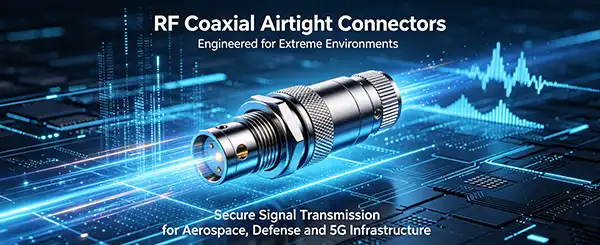
Telecommunications and 5G Infrastructure
Modern wireless networks need base stations that can work in all kinds of weather to be very reliable. Outdoor antenna systems, distributed antenna networks, and microwave backhaul equipment all use RF Coaxial Airtight Connectors to keep signal routes safe. As we move to 5G infrastructure, performance standards have become higher because of the increased sensitivity to interference from the environment that comes with higher frequencies and tighter network deployments. Hermetic sealing is needed for base station equipment that works all the time in rain, snow, salt spray, and changes in temperature. Without it, signal loss would happen, which would lower network capacity and service quality.
Aerospace and Defense Systems
The harshest conditions for RF Coaxial Airtight Connectors can be found in military and aerospace uses. Radar systems on airplanes and military ships need to be able to send signals continuously, even when they are exposed to vibrations, high temperatures, and sudden changes in pressure caused by changes in altitude. Stable resistance and low insertion loss are important for electronic warfare tools to find and stop threats. Satellite communication systems use connections that are hermetically sealed to handle the changes in temperature that happen when they are in space. Defense contractors look for airtight solutions that meet MIL-STD standards because the success of a task depends on being completely reliable in battle.
Industrial Automation and Manufacturing
Chemical exposure, electric interference, and mechanical shaking are some of the unique problems that can happen in a factory. Sensor input and control signals that guide precise moves in assembly tasks are sent through RF Coaxial Airtight Connectors in robotic systems. In semiconductor production plants, automated testing equipment needs stable RF links that keep the accuracy of the calibration even when temperature changes and cleanroom pressure differences happen. In chemical plants and factories, hermetic closing keeps corrosive gases out, which extends the life of process control instruments and lowers the need for upkeep.
Transportation and Vehicle Systems
Train control systems, passenger Wi-Fi networks, and safety communication equipment that is exposed to humidity and weather outside and inside tunnels all depend on RF Coaxial Airtight Connectors. In environmental rooms that mimic harsh conditions during car development, automotive testing labs use connections that are tightly sealed. Marine navigation and communication systems on business ships and offshore sites need connections that don't corrode from salt spray and keep the signal strong even after years of use. These transportation uses show how airtight technology makes it possible to connect in mobile settings where regular connections break down quickly.
Medical and Scientific Instrumentation
Precision tools are used in places like research labs and hospitals, where signal interference can make measurements less accurate. Medical imaging systems and MRIs use RF Coaxial Airtight Connectors to get rid of radiation that lowers the quality of the images. In order to keep the vacuum intact while sending high-power RF energy, particle reactors and plasma physics studies need hermetic shielding. For pharmaceutical research, environmental testing rooms need sealed feedthroughs so that humidity and temperature test conditions don't affect measuring tools outside the chamber. Because scientific uses need very accurate measurements, RF Coaxial Airtight Connectors are necessary parts of the infrastructure.
How to Choose the Right RF Coaxial Airtight Connector for Your Application
To choose the right RF Coaxial Airtight Connector, you need to carefully compare your technical needs with the product's specs and the vendor's abilities.
Critical Technical Parameters
To start, procurement managers should write down the practical needs that determine which RF Coaxial Airtight Connectors to buy. The operating frequency range tells us if designs made for microwave, radio frequency, or millimeter-wave uses are right for the job. Specifications for VSWR show how well connections send signal power without reflections that cause standing waves and measurement mistakes. Insertion loss tests show that the signal is weaker through the connector. This weakening builds up over many connection points in complicated systems. Ratings for temperature must include the whole range of temperatures that can be found in operation, storage, and shipping.
Environmental and Mechanical Considerations
The physical and protection layers that are needed are determined by the application setting. The fit for vacuum systems, pressurized spaces, and changes in altitude is based on the quality of the hermetic seal of the RF Coaxial Airtight Connector, which is measured by the rate of helium leakage. Connector bodies need to be strong enough to handle installation torque, wire pull forces, and equipment vibrations without coming loose or breaking. Chemical breakdown doesn't happen during service life because the material is compatible with cleaning agents, hydraulic fluids, and airborne contaminants. Mating cycle scores show how long something should last for uses that need to disconnect it from time to time versus long-term setups.
Vendor Evaluation and Quality Assurance
The choice of supplier has a big effect on the total cost of ownership and the long-term dependability of the system. Manufacturers with detailed quality control systems make it easy to track down and make sure that all of their production batches are the same. Compliance approvals for RF Coaxial Airtight Connectors, such as ISO 9001, AS9100 for aircraft uses, and ITAR registration for military projects, show that the process is mature and follows the rules. How quickly technical help responds affects how quickly problems are fixed when they come up during system development. Warranty terms and the availability of new parts protect against early breakdowns and problems in the supply chain that cause projects to take longer than planned to finish.
Installation and Maintenance Best Practices for RF Coaxial Airtight Connectors
When you handle expensive RF Coaxial Airtight Connectors the right way during installation and operation, you can keep their hermetic integrity and electrical performance, which are worth the extra money.
Installation Procedures That Protect Seal Integrity
Installing the RF Coaxial Airtight Connector with hermetic seals correctly is the first step to getting them to work well. For connector threads, you need precise torque tools instead of adjustable wrenches, which could damage the seal if they tighten too much. The mating surfaces must stay clean and free of any particles that could cause leaks through squeezed seals. To prepare a cable, the center conductors must be precisely cut, and the dielectric dimensions must be controlled so that the conductors are positioned evenly within the connection surfaces. Most failures in the field are caused by bad assembly methods. This is why techs who work with important systems need to get training in installation.
Routine Inspection and Testing Protocols
Preventive maintenance finds possible problems with RF Coaxial Airtight Connectors before they cause problems and extends their useful life. Visual checks find damage, rust, and loose links that make the system work less well. Taking VSWR readings on a regular basis ensures that the electrical properties stay within the allowed ranges as connections age. Helium leak testing proves the stability of an airtight seal in situations where protecting the environment is very important. Recording inspection results creates standard performance data that shows trends of decline that need to be fixed.
Common Challenges and Solutions
Field experience shows that RF Coaxial Airtight Connector issues can keep happening. For transportation and machinery uses where vibration can loosen things up, you need extra locking devices like safety wire or thread-locking compounds. Thermal switching between very high and very low temperatures can wear down solder joints and contact surfaces, so designs need to include ways to relieve stress. Corrosion in marine and industrial settings needs more than just plating on the surface. Specialized coats must be applied and then reapplied at regular service intervals. Dealing with these problems ahead of time through design choices and repair routines avoids costly downtime and damage to equipment.
Procurement Strategies and Cost Considerations for Bulk Buyers
OEM makers and system integrators need strategic sourcing methods for RF Coaxial Airtight Connectors that balance low costs with quality assurance and supply dependability.
Supplier Qualification and Risk Management
By making lists of accepted vendors for RF Coaxial Airtight Connectors, you can avoid getting fake parts and poor quality. Manufacturers who have their own testing labs give certificates for each production lot that prove the quality of the airtight seal and electrical performance. Transparency in the supply chain, such as declaring conflict minerals and being able to track down components, meets legal compliance standards. When main suppliers have problems with quality or capacity that affect production schedules, dual sourcing methods lower the risks.
Cost Optimization Without Compromising Quality
With volume pricing systems, buying RF Coaxial Airtight Connectors in bulk is rewarded with lower prices per unit, which is good for the project's finances. By using the same types of connectors across all product lines, you can simplify your inventory and get better prices by combining your orders. Custom setups that are made for specific uses get rid of features that aren't needed and add nothing to the value. When you look at the total cost of ownership instead of just the purchase price, you can see how stability, insurance coverage, and field failure rates affect the costs over the product's life.
Logistics and Technical Support Infrastructure
Supply chain efficiency affects how long projects take and how much it costs to keep RF Coaxial Airtight Connector supplies on hand. Suppliers that offer contract inventory or vendor-managed inventory programs lower the amount of operating capital that is needed while still making sure that parts are available. Development processes are sped up by technical support like application engineering help, custom design services, and a quick quote return. After-sales help that includes managing warranties, figuring out why things fail, and providing field service cuts down on the time it takes to fix problems that come up during the production or rollout phases.
Conclusion
RF Coaxial Airtight Connectors make it possible to send high-frequency signals reliably in fields where protecting the environment is important for doing business. Hermetic sealing technology keeps wetness, contamination, and changes in pressure from hurting everything from telecommunications infrastructure and air radar systems to scientific instruments and industrial automation. To choose the right connectors, you have to compare their technical specs, such as resistance, temperature range, seal quality, and mechanical strength, to the needs of the application. When you place a connector correctly and do regular upkeep, it will stay in good shape for a long time. Strategic buying from qualified suppliers strikes a balance between lowering costs and ensuring quality, supply dependability, and expert support. This lowers the risks of the project and the total cost of ownership.
FAQ
What distinguishes airtight from waterproof RF coaxial connectors?
RF Coaxial Airtight Connectors seal tightly so that gas molecules can't move through the contact. Helium leak rates, which are usually given in Pa·cm³/s, are used to define these connectors. This amount of protection is higher than waterproof grades like IP67 or IP68, which stop liquid water from getting in but let gases leak through over time. Hermetically sealed designs keep internal atmospheres stable in vacuum systems, pressurized spaces, and other situations where the world needs to be completely cut off.
Can airtight RF connectors function effectively in low-frequency applications?
Depending on how well they are designed, RF Coaxial Airtight Connectors work effectively across frequency ranges from DC to microwave bands. The hermetic closing technology was made for high-frequency uses, but it can protect against the world at any frequency. When making choices about what to buy, people should think about whether the extra cost of an airtight building is worth it to solve certain environmental problems instead of frequent issues.
How do buyers verify hermetic seal quality and IP ratings?
Reputable makers of RF Coaxial Airtight Connectors give test certificates that include results from helium leak tests, salt spray exposure tests, and temperature cycling tests. Performance claims made in publications are backed up by testing done in an independent lab according to MIL-STD standards. Contracts for buying things should spell out what certifications are needed and only accept parts that come with paperwork that shows how each unit is connected to quality test data.
Partner With MXTD for High-Performance Airtight Coaxial Solutions
System builders and purchasing managers looking for reliable RF Coaxial Airtight Connectors that are hermetically sealed should look through MXTD's wide range of products. Our connectors meet the standards for NI product models and offer low prices and stable performance, making them very cost-effective. We keep standard goods in stock that are used in the industry and can be customized by OEMs or ODMs based on unique parameter needs, with response times of less than an hour.
The engineers at MXTD have worked with PXIe frames, precision links, and integrated testing systems for more than 12 years. They have experience in aerospace, defense, industrial automation, and research institutions. Our production methods include gold plating and high-temperature sintering, which make RF Coaxial Airtight Connector seals with leak rates of less than 1 x 10⁻³ Pa·cm³/s. The products can work in temperatures ranging from -65°C to +165°C and have a characteristic impedance of 50±2Ω and an insulation resistance of more than 5000MΩ.
A full support system includes expert help via remote video chat, free software updates, and one-year guarantees that can be extended for more demanding uses. We set up production plans that are based on your unique needs and make sure that your parts get delivered safely by using packaging that is resistant to moisture, shock, and static electricity. MXTD provides technical quality and quick service for RF Coaxial Airtight Connector providers, whether you need to buy a lot of them or make your own solutions for specific uses. Email us at manager03@mxtdinfo.com to talk about your needs and get full specs that fit your project.
References
1. Johnson, M.R. (2021). Hermetic Connector Technology for Aerospace Applications. Society of Aerospace Engineers Technical Publication Series.
2. Chen, L. & Zhang, W. (2022). "Material Selection and Thermal Performance of Precision RF Connectors." Journal of Electronic Packaging, Vol. 144, No. 3, pp. 289-301.
3. International Electrotechnical Commission (2020). IEC 61169 Series: Radio-frequency Connectors - Part 1: Generic Specification. Geneva: IEC Publications.
4. Thompson, R.K. (2019). RF and Microwave Connector Design and Performance. Boston: Artech House Publishers.
5. Defense Logistics Agency (2023). MIL-DTL-38999 Series III Connectors: Environmental Sealing Requirements and Test Procedures. U.S. Department of Defense Standard.
6. Patterson, D.J. & Williams, S.A. (2022). "Reliability Analysis of Hermetic Seals in High-Frequency Transmission Systems." IEEE Transactions on Components, Packaging and Manufacturing Technology, Vol. 12, No. 6, pp. 1047-1059.
Our customers’ satisfaction speaks for our quality — contact us to experience the same reliable service.