- English
- French
- German
- Portuguese
- Spanish
- Russian
- Japanese
- Korean
- Arabic
- Greek
- German
- Turkish
- Italian
- Danish
- Romanian
- Indonesian
- Czech
- Afrikaans
- Swedish
- Polish
- Basque
- Catalan
- Esperanto
- Hindi
- Lao
- Albanian
- Amharic
- Armenian
- Azerbaijani
- Belarusian
- Bengali
- Bosnian
- Bulgarian
- Cebuano
- Chichewa
- Corsican
- Croatian
- Dutch
- Estonian
- Filipino
- Finnish
- Frisian
- Galician
- Georgian
- Gujarati
- Haitian
- Hausa
- Hawaiian
- Hebrew
- Hmong
- Hungarian
- Icelandic
- Igbo
- Javanese
- Kannada
- Kazakh
- Khmer
- Kurdish
- Kyrgyz
- Latin
- Latvian
- Lithuanian
- Luxembou..
- Macedonian
- Malagasy
- Malay
- Malayalam
- Maltese
- Maori
- Marathi
- Mongolian
- Burmese
- Nepali
- Norwegian
- Pashto
- Persian
- Punjabi
- Serbian
- Sesotho
- Sinhala
- Slovak
- Slovenian
- Somali
- Samoan
- Scots Gaelic
- Shona
- Sindhi
- Sundanese
- Swahili
- Tajik
- Tamil
- Telugu
- Thai
- Ukrainian
- Urdu
- Uzbek
- Vietnamese
- Welsh
- Xhosa
- Yiddish
- Yoruba
- Zulu
MIL-STD-1553B Test Card Integration: Common Challenges?
Integrating a MIL-STD-1553B test card into avionics systems remains one of the most intricate tasks faced by engineering teams in aerospace and defense. These specialized test cards enable validation of critical data bus communications, but their deployment often encounters signal integrity issues, protocol timing mismatches, and hardware-software interface conflicts. Understanding these integration challenges helps R&D managers and test engineers anticipate risks, streamline validation workflows, and maintain mission-critical system reliability throughout complex aerospace programs.
Understanding MIL-STD-1553B Test Card Integration Challenges
What Makes MIL-STD-1553B Integration Complex?
The MIL-STD-1553B protocol describes a dual-redundant serial data bus architecture that was first created for military electronics and is now widely used in defence and aerospace platforms. When we put together test cards that mimic or watch these data buses, we run into problems right away that are only found in this strong but strict standard. A standard MIL-STD-1553B test card has to accurately copy the functions of the bus controller, remote terminal, and bus monitor. It also has to meet strict electrical requirements, such as transformer coupling, Manchester II encoding, and exact 1 MHz bit rates. The protocol's strict timing requirements cause many integration problems. Command-response sequences must happen within microsecond windows, and if the test card adds any jitter or latency, the validation results may not be accurate. Signal compatibility problems are especially annoying when trying to connect newer test cards to older avionics designs that were made decades ago. Problems with the hardware-software interface make these problems even worse, because driver incompatibilities between test cards and host systems often lead to contact problems that aren't easy to figure out.
Common Integration Roadblocks in Operational Environments
In our work with aerospace R&D centers and system developers, we've seen common integration problems that cause schedules for validation to be pushed back. When there is a lot of equipment in a rack, electromagnetic interference lowers the quality of the bus signal, which can cause false error detections. When stub length configurations are wrong, they break the standard's transmission line standards, which leads to reflections that damage the integrity of the message. Configuration management is hard to do when different test cards from different vendors need to work with each other in the same PXIe chassis. Each card needs its own calibration processes and software interfaces, which can be hard to fix without specialised knowledge. It is very important for engineers to fully understand both the MIL-STD-1553B standard and the test card design they are using. Teams waste important time looking for symptoms instead of fixing the problems that cause them when they don't have systematic ways to diagnose them. Because of this, choosing the right test card solution from a qualified MIL-STD-1553B test card source is a must for the project to be a success.
Root Causes of MIL-STD-1553B Test Card Integration Problems
Hardware Inconsistencies and Compatibility Limitations
Hardware differences between test card types make it very hard to integrate them. Not every MIL-STD-1553B test card follows the full standard the same way. Some cards don't have full bus monitor ability, which makes it harder for them to do diagnostics while the system is being validated. Others don't separate channels well enough, which leads to crosstalk that shows up as strange data loss in multi-channel test setups. Differences at the component level in transformer coupling circuits have a direct effect on bus loading characteristics, which could have unintended effects on the system being tested. Legacy avionics platforms are especially hard to make compatible. Some older systems may use early versions of the MIL-STD-1553B standard that are slightly different from how things are done now. We've seen test cards that were made to work with newer versions of standards not be able to consistently communicate with equipment that was made in the 1980s. Because of these gaps in compatibility, a thorough pre-integration assessment is needed to find any possible mismatches before they cause testing plans to get thrown off.
Protocol Intricacies and Environmental Factors
The MIL-STD-1553B protocol has many timing and wiring requirements that must all be met at the same time for it to work properly. For Manchester encoding to work, the timing of the edges must be exact, and even small changes can lead to bit mistakes. Command-response times have small acceptable ranges—usually between 4 and 12 microseconds—that test cards must correctly copy when they are pretending to be remote terminals. Word validation uses parity checking, Manchester violations, and sync pattern recognition all at the same time. This creates a lot of different failure modes that need complex error handling. Environmental conditions add more factors that affect how well integration works. Extreme temperatures change the electrical properties of parts, which can throw off signal timing parameters beyond what is allowed. In aerospace test rooms, vibration can cause intermittent problems with connectors that show up as random bus errors. Noise from the power source gets into sensitive analogue front-end circuitry and raises the noise floor and lowers the signal-to-noise margins. Because of these environmental factors, successful integration in the lab is not a promise of reliable performance in the field.
Proven Principles and Best Practices for Effective Integration
Compliance and Strategic Selection Framework
Achieving reliable integration begins with selecting test cards that demonstrate verified compliance with the complete MIL-STD-1553B specification. We recommend procurement teams prioritize cards that have undergone formal validation testing, including verification of all electrical characteristics across their full operating temperature range. Certification from recognized testing laboratories provides objective evidence of specification compliance that mitigates integration risk. Strategic selection involves matching test card capabilities to specific application requirements. Bus controller emulation demands different hardware features than passive monitoring applications. Multi-channel test scenarios require careful attention to channel-to-channel isolation specifications. When evaluating potential suppliers, technical teams should request detailed specifications covering not just headline features but practical parameters like maximum sustainable message rates, error injection capabilities, and timestamp resolution. These details directly impact integration complexity and ultimate test system capability.
Structured Integration Workflow
Successful integration follows a systematic workflow, the MIL-STD-1553B test card that begins well before hardware installation. Pre-integration assessment includes documenting existing system architecture, identifying potential compatibility concerns, and establishing baseline performance metrics. This preparation enables teams to detect integration-induced changes that might otherwise go unnoticed until they cause operational problems.
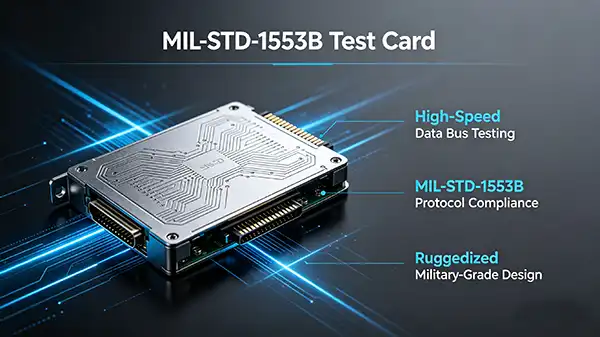
The integration workflow we recommend to our clients progresses through defined phases:
- Phase one involves physical installation with meticulous attention to grounding and shielding practices. Proper chassis grounding eliminates ground loop pathways that introduce common-mode noise. Shielded cables with 360-degree shield termination prevent external interference from coupling into bus signals. Stub length measurements verify compliance with the standard's transmission line requirements, typically limiting stub lengths to 12 inches or less, depending on bus impedance.
- Phase two focuses on software integration and driver installation. Modern test cards rely on complex driver stacks that interface between application software and card firmware. Driver version compatibility with the host operating system and development environment must be verified through testing rather than assumed from documentation. Configuration management practices should maintain detailed records of all software versions to enable rapid troubleshooting when issues arise.
- Phase three implements calibration and verification procedures. Calibration ensures test card output signals meet electrical specifications across all parameter ranges. Verification testing confirms proper functionality through loopback tests, signal integrity measurements, and protocol compliance checks. Ongoing signal verification during operational use detects drift or degradation before it compromises test validity.
Real-World Integration Lessons
Our collaboration with a major aerospace system integrator illustrates these principles in practice. The customer needed to validate a modernized mission computer bus interface while maintaining compatibility with existing subsystems. Initial integration attempts using standard test cards produced intermittent timeout errors that appeared randomly during extended test runs. Systematic troubleshooting revealed that the test card's default command-response gap timing fell near the edge of the acceptable window, and environmental temperature variations pushed it outside specification limits. Resolution required implementing custom timing profiles in the test card configuration and installing environmental monitoring to correlate errors with temperature excursions. This experience reinforced the importance of understanding not just typical specifications but worst-case parameter combinations. It also demonstrated the value of working with suppliers capable of providing responsive engineering support to address unexpected integration challenges.
Comparative Analysis to Support Procurement Decisions
Test Cards Versus Analyzers: Understanding the Distinction
The avionics validation market offers both test cards and protocol analyzers implementing MIL-STD-1553B functionality. Understanding their complementary roles guides effective procurement decisions. Test cards actively participate on the bus, generating commands and responses to validate system behavior under controlled conditions. They enable functional testing, performance characterization, and fault injection studies that require precise control over bus traffic patterns. Protocol analyzers serve a different purpose, passively monitoring bus activity to capture and decode message streams for analysis. They excel at troubleshooting integration issues, validating protocol compliance, and documenting system behavior during operational scenarios. Many sophisticated validation programs require both capabilities—test cards for active stimulus generation and analyzers for comprehensive traffic capture and analysis.
Performance and Compatibility Considerations
When evaluating MIL-STD-1553B test card options, performance benchmarks reveal significant differences across vendors. Channel count varies from single-channel designs to eight-channel implementations supporting complex multi-bus architectures. Message processing rates span from basic implementations handling a few hundred messages per second to advanced designs sustaining over 1000 messages per second per channel with microsecond-accurate timestamping. Compatibility scope extends beyond protocol compliance to encompass integration with test system architectures. PXIe-based test cards offer advantages for organizations standardizing on modular instrumentation platforms, providing seamless integration with other measurement devices in a unified chassis. These modular designs typically cost more per channel than standalone units but deliver superior scalability and system-level integration benefits that justify the investment for multi-instrument test applications. Leading industry solutions exhibit distinct positioning.
Strategic Procurement Guidance
Effective procurement balances multiple considerations beyond initial purchase price. Total cost of ownership includes driver maintenance, calibration requirements, and technical support responsiveness. Organizations planning long-term programs should evaluate supplier commitment to ongoing product support, including software updates addressing new operating system versions and evolving test requirements. Bulk purchasing strategies can achieve significant cost reductions when deploying multiple test stations or equipping geographically distributed facilities. Negotiating framework agreements with qualified suppliers establishes predictable pricing and delivery terms that simplify project planning. After-sales support expectations merit an explicit definition of MIL-STD-1553B test card during procurement, including response time commitments, warranty terms, and technical resource availability for integration assistance.
Enhancing Integration Success: Troubleshooting and Optimization Strategies
Systematic Diagnostic Framework
When integration problems occur, systematic troubleshooting methodologies accelerate resolution while minimizing disruption to validation schedules. We recommend a layered diagnostic approach that progresses from basic connectivity verification through increasingly sophisticated analysis techniques. Initial checks confirm physical layer integrity—verifying cable continuity, measuring bus impedance, and inspecting connector conditions for damage or contamination. Protocol layer diagnostics employ specialized tools to capture and analyze bus traffic patterns. Oscilloscope measurements reveal signal quality issues like excessive ringing, inadequate voltage levels, or timing violations. Protocol analyzers decode message streams to identify malformed commands, incorrect response patterns, or unexpected bus traffic sequences. These tools often expose integration issues that remain invisible to application-level testing. Advanced troubleshooting sometimes requires isolating whether problems originate in the test card, system under test, or their interaction. Loopback testing validates test card functionality independent of external connections. Substitution testing with known-good reference hardware helps identify defective components. Environmental chamber testing reproduces temperature-dependent failures under controlled conditions, enabling systematic characterization.
Process Optimization and Reliability Assurance
Beyond resolving immediate problems, process improvements eliminate recurring integration bottlenecks and enhance long-term reliability. Documentation standards ensure that integration knowledge persists beyond individual engineering assignments. Configuration management practices track hardware revisions, software versions, and calibration states across distributed test assets. Preventive maintenance schedules periodically verify test card performance before degradation causes test failures. Calibration intervals balance measurement accuracy requirements against downtime costs. Environmental monitoring detects adverse conditions before they impact test validity. These proactive measures transform integration from a project risk into a controlled, repeatable process that supports reliable test operations. Continuous improvement methodologies capture lessons learned from integration challenges and incorporate them into standard procedures. When engineering teams encounter novel problems, documenting the symptoms, diagnostic process, and resolution creates organizational knowledge that prevents recurrence. This systematic approach to integration management delivers compounding benefits as programs mature and test complexity increases.
Conclusion
Successfully integrating MIL-STD-1553B test cards requires a comprehensive understanding of protocol requirements, systematic integration workflows, and proactive troubleshooting capabilities. The challenges span hardware compatibility, signal integrity, protocol timing, and environmental factors that demand specialized expertise to navigate effectively. Organizations that invest in proper supplier selection, structured integration processes, and ongoing optimization achieve reliable validation capabilities that support mission-critical aerospace programs. As avionics architectures evolve and test requirements increase in complexity, partnering with experienced suppliers offering responsive technical support becomes increasingly valuable for maintaining competitive advantage in aerospace and defense markets.
FAQ
1. What causes timing errors during MIL-STD-1553B test card integration?
Timing errors typically result from incorrect command-response gap configurations, clock synchronization issues between the test card and host system, or latency introduced by software driver layers. Environmental temperature variations can shift component timing characteristics outside specification windows. Cable length mismatches and improper termination also contribute to signal propagation delays that manifest as timing violations. Careful calibration and environmental control mitigate these issues.
2. How do I select between different MIL-STD-1553B test card models?
Selection should prioritize application requirements, including channel count, message rate capacity, and whether bus controller or remote terminal emulation is needed. Verify complete specification compliance through independent testing documentation rather than relying solely on manufacturer claims. Consider integration factors like PXIe compatibility, driver support for your development environment, and supplier technical responsiveness based on customer references.
3. Can test cards integrate with legacy avionics systems?
Integration with legacy systems is possible but requires careful compatibility assessment. Older implementations may interpret specification details differently from what modern cards expect. Testing with representative legacy equipment during procurement evaluation identifies potential issues before commitment. Some suppliers offer configuration options enabling compatibility modes that accommodate legacy system quirks while maintaining specification compliance.
Partner with MXTD for Reliable MIL-STD-1553B Integration Solutions
Navigating the complexities of MIL-STD-1553B test card integration demands a supplier combining proven technical expertise with responsive support capabilities. MXTD delivers high-reliability PXIe-based test solutions engineered specifically for aerospace and defense validation requirements. Our solutions benchmark favorably against established international brands while offering economical pricing and customizable configurations tailored to your specific application needs. With over 12 years of R&D experience and a commitment to one-hour response times, we support your integration success from initial consultation through long-term operation. Contact our team at manager03@mxtdinfo.com to discuss your avionics testing requirements with a trusted MIL-STD-1553B test card supplier.
References
1. Department of Defense Interface Standard: Digital Time Division Command/Response Multiplex Data Bus. MIL-STD-1553B. 1978.
2. Anderson, R.T. "Practical Considerations in MIL-STD-1553B System Integration." Journal of Avionics Testing and Validation, Vol. 34, No. 2, 2019, pp. 112-128.
3. Harper, M.L. Avionics Data Bus Integration: Engineering Guide for Test and Measurement Systems. Aerospace Technical Publications, 2021.
4. Rodriguez, C. and Kim, S. "Signal Integrity Challenges in Modern MIL-STD-1553B Test Equipment." IEEE Transactions on Instrumentation and Measurement, Vol. 68, No. 5, 2020, pp. 1453-1467.
5. Williams, D.P. Military Avionics Systems: Testing, Validation, and Certification Practices. Defense Technology Press, 2022.
6. Zhang, Q. "Comparative Performance Analysis of Commercial MIL-STD-1553B Test Cards." International Conference on Aerospace Testing and Measurement Proceedings, 2023, pp. 234-249.
Our customers’ satisfaction speaks for our quality — contact us to experience the same reliable service.