- English
- French
- German
- Portuguese
- Spanish
- Russian
- Japanese
- Korean
- Arabic
- Greek
- German
- Turkish
- Italian
- Danish
- Romanian
- Indonesian
- Czech
- Afrikaans
- Swedish
- Polish
- Basque
- Catalan
- Esperanto
- Hindi
- Lao
- Albanian
- Amharic
- Armenian
- Azerbaijani
- Belarusian
- Bengali
- Bosnian
- Bulgarian
- Cebuano
- Chichewa
- Corsican
- Croatian
- Dutch
- Estonian
- Filipino
- Finnish
- Frisian
- Galician
- Georgian
- Gujarati
- Haitian
- Hausa
- Hawaiian
- Hebrew
- Hmong
- Hungarian
- Icelandic
- Igbo
- Javanese
- Kannada
- Kazakh
- Khmer
- Kurdish
- Kyrgyz
- Latin
- Latvian
- Lithuanian
- Luxembou..
- Macedonian
- Malagasy
- Malay
- Malayalam
- Maltese
- Maori
- Marathi
- Mongolian
- Burmese
- Nepali
- Norwegian
- Pashto
- Persian
- Punjabi
- Serbian
- Sesotho
- Sinhala
- Slovak
- Slovenian
- Somali
- Samoan
- Scots Gaelic
- Shona
- Sindhi
- Sundanese
- Swahili
- Tajik
- Tamil
- Telugu
- Thai
- Ukrainian
- Urdu
- Uzbek
- Vietnamese
- Welsh
- Xhosa
- Yiddish
- Yoruba
- Zulu
Lightweight Rugged Portable Industrial PC With Long Battery Life
Modern industrial operations demand computing solutions that combine unwavering durability with exceptional mobility. Rugged portable industrial PC systems represent the pinnacle of engineering excellence, delivering robust performance in the harshest environments while maintaining lightweight portability and extended battery life. These specialized computing platforms bridge the gap between office-based workstations and field-ready mobile devices, offering industrial-grade reliability without compromising on computational power. Through advanced battery management technologies and innovative lightweight materials, these systems enable continuous operation in remote locations where traditional computing solutions would fail, making them indispensable tools for today's dynamic industrial landscape.
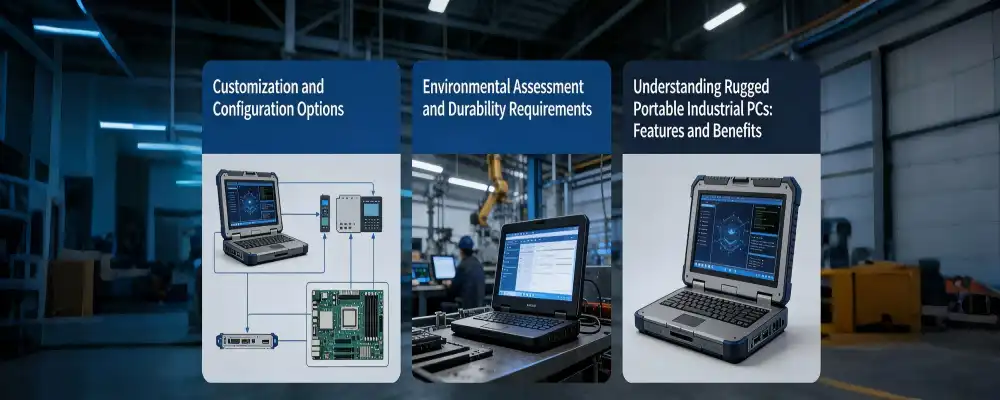
Understanding Rugged Portable Industrial PCs: Features and Benefits
Learn about the features and benefits of rugged portable industrial PCs.
Standard commercial devices just can't handle the problems that come up in industrial computer settings. Rugged portable industrial PC systems are built from the ground up to resist harsh conditions like high temperatures, mechanical shock, vibration, dust, wetness, and electromagnetic interference while maintaining reliable performance. These specialized computer platforms are made with military-grade parts and go through strict testing procedures to make sure they work well in the toughest situations.
Engineering Excellence and Durability Standards
Heavy-duty durability standards are the basis of any industrial computer product that you can trust. The MIL-STD-810G certification means that these devices can work in temperatures ranging from -40°C to +70°C. The IP65/IP67 ratings mean that they are safe from dust and water immersion. Advanced shock absorption systems protect internal parts from hits of up to 30G, and full vibration resistance makes sure stable operation in places with a lot of shaking, like factory floors, mobile labs, and field testing stations. A very important part of a rugged portable industrial PC is battery technology. Modern lithium-ion battery packs with smart power control systems can run continuously for 8 to 12 hours with normal industry loads. Hot-swappable battery designs let devices keep working even during long trips in the field, and improved charging algorithms make sure that batteries last and work well for thousands of charge cycles.
Performance Capabilities and Technical Specifications
Modern industrial portable computers have strong working powers that are on par with desktop workstations, but they still have small sizes. Intel Core i7 and i5 processors are very powerful computers that can be used for real-time tracking, system control, and data processing. Fast SSD storage systems make it easy to get to your data quickly and are more reliable than traditional mechanical drives. Configurations with extended memory make it possible to do a lot of things at once.Display technologies made for industrial settings have anti-glare surfaces that keep your eyes from getting tired after long periods of use, resistive or capacitive touchscreens that work with gloves, and high-brightness panels that can be seen in direct sunlight. There are many ways to connect, such as Ethernet, USB 3.0, serial ports, and wireless choices, so it's easy to connect to current measurement and industrial systems.
How to Choose the Best Lightweight Rugged Portable Industrial PC in 2024
To choose the best portable computer option, you need to carefully consider your operational needs, the surroundings, and your performance goals. When making a choice, you have to weigh a lot of things, like processing power, battery life, sturdiness scores, connectivity choices, and the total cost of ownership.
Environmental Assessment and Durability Requirements
Understanding the working environment is the first step in choosing the right gadget. Extreme temperatures, humidity levels, dust exposure, shaking sources, and possible impact situations must all be carefully looked at to make sure the device chosen meets or exceeds practical needs. In manufacturing settings, better dust protection and chemical resistance may be needed. In aircraft uses, altitude certification and electromagnetic compatibility are needed.During the choosing process, certification requirements are very helpful. MIL-STD-810G testing includes exposure to high and low temperatures, humidity, shaking, shock, and high and low altitudes. IP grades show how well something is protected against dust and water getting in. ATEX approval is needed to work in areas that could be dangerous, and FCC/CE compliance makes sure that electronics can work together in sensitive areas.
Battery Life and Power Management Considerations
Longer battery life has a direct effect on how well operations run and how much work users get done. Advanced power control technologies, low-power computers, and high-capacity battery packs allow modern rugged portable industrial PC systems to work nonstop for 8 to 12 hours. Hot-swappable battery designs let devices work 24 hours a day, seven days a week, and clever charge systems make batteries healthier and last longer.Power use changes a lot depending on the processor you choose, the brightness of the screen, how you use wifi connection, and the peripheral devices you join. Knowing how much power is usually needed for a certain task can help users choose systems with the right battery size and power control features. Advanced power management choices, such as CPU throttling, display dimming, and control of peripheral power, increase the time that the system can be used during important tasks.
Processing Power and Performance Requirements
Different business uses have very different computing needs. High-speed analog-to-digital conversion may be needed for data gathering systems, while real-time processing is needed for system control uses. Dedicated GPU hardware is best for graphics-heavy programs like 3D modeling or simulation software. However, integrated graphics solutions work well for simple tracking and control jobs.Memory and storage issues have an effect on both speed and dependability. Error-Correcting Code (ECC) in DDR4 memory protects data security in mission-critical apps. Solid-State Drives (SSDs) offer better shock resistance and faster data access compared to traditional hard drives. Different apps have different data storing needs, so SD cards or external drives that can be expanded can help.
Applications and Real-World Use Cases of Lightweight Rugged Portable IPCs
Industrial portable computers, specifically Rugged portable industrial PC, are used for a wide range of tasks in many different industries. They allow workers to be productive on the go and get real-time info in tough conditions. These tools can be used for a wide range of tasks, from testing in the field and making sure the quality is good to upkeep work and setting up the system.
Manufacturing and Production Floor Applications
Portable computers that can handle harsh industrial conditions and give real-time access to production data, quality control systems, and maintenance plans are very useful in modern factory settings. Rugged portable industrial PCs let quality inspectors get to detailed specs, take measurements, and update production databases from the factory floor, so they don't have to go back to their office desks.While working on complicated machines, maintenance workers use these portable computers to look at equipment instructions, monitoring software, and records of previous maintenance. Wireless connection lets tech teams talk to you in real time, and the sturdy build means it will work reliably in dirty, wet, or chemically contaminated areas. Touch-screen interfaces make it easier to enter data while wearing safe gloves, and long battery lives let repair sessions go on for longer without stopping.
Field Testing and Measurement Applications
For field testing, system setup, and performance evaluation tasks, the aerospace and military industries depend on portable computer products a lot. For these uses, the system needs to be very reliable, have strong security features, and work with specific measuring tools. Industrial computers that are portable are used as control hubs for complicated test setups. They receive data from many sensors, run test equipment, and allow real-time analysis.Companies that make semiconductors and research institutions use these systems to try prototypes, calibrate equipment, and keep an eye on the surroundings. These platforms are great for testing outside, having mobile labs, and short-term study setups where regular computer networks aren't available because they have a lot of processing power, multiple connectivity choices, and can handle harsh environments.
System Integration and Commissioning Support
System integrators and original equipment makers (OEMs) use portable computing systems to set up equipment, test it, and train customers. These workers need reliable computing power that can easily move between customer places and perform the same way in a variety of operating systems. Engineers can use familiar interfaces and software settings to run diagnostic software, set up control systems, and train customer staff using rugged portable industrial PC systems.Remote support capabilities become particularly valuable during system commissioning activities. Wireless connection lets engineering teams work together in real time, and screen sharing and remote access make it easier to fix problems and provide technical help without having to send more people to the site. This method cuts down on trip costs, speeds up project finish, and makes customers happier by fixing problems faster.
Maintaining and Maximizing the Lifespan of Your Rugged Portable Industrial PC
The working lifespan, reliability, and performance of workplace portable computer systems are all greatly affected by how well they are maintained. Organizations can get the most out of their technology investments and reduce unplanned downtime by knowing the suggested maintenance methods, typical failure modes, and improvement strategies.
Preventive Maintenance and Cleaning Procedures
Cleaning devices on a regular basis is the best way to keep them working well and extend their useful life. Dust, wetness, chemical vapors, and extreme temperature changes can slowly hurt the performance of parts in industrial settings if they are not handled through planned repair procedures.When you clean the outside of something, you should use the right cleaning products that get rid of dirt and grime without hurting the protective coats or sealing materials. When dust builds up in ventilation ports and keyboard areas, compressed air gets rid of it effectively. Isopropyl alcohol, on the other hand, cleans display surfaces and input devices carefully. To keep electrical links working well and to stop corrosion in harsh settings, connector ports need to be checked and cleaned on a regular basis.How to do internal maintenance depends on how the gadget is designed and what the maker suggests. Memory modules, storage devices, and battery packs are some examples of parts that can be accessed by the user and changed or inspected without the need for professional help. But trained technicians should do most of the internal repair to keep the warranty valid and make sure the machine is put back together correctly.
Battery Management and Optimization Strategies
The performance of the batteries has a direct effect on how well the system works and is one of the most important things to keep in mind when maintaining small industrial computers. Modern lithium-ion batteries work best when they are used within the temperature ranges, charge levels, and charging patterns that are suggested.Managing the temperature has a big effect on how long batteries last and how well they work. Extreme heat speeds up chemical breakdown and lowers overall capacity, while extreme cold briefly lowers the power output that can be used. When not in use, batteries stay healthy longer if they are stored in temperature-controlled areas and kept out of direct sunlight.How you charge your battery affects how well it works in the long run, so you should always follow the manufacturer's instructions. Avoiding full recharge cycles, keeping charge levels between 20% and 80% as much as possible, and only using approved charging tools are ways to improve battery chemistry and make it last longer. Intelligent charging algorithms are built into many modern systems. These algorithms instantly find the best charging patterns based on past usage and the surroundings.
Software Updates and System Optimization
Updates to software on a regular basis fix security holes, make systems run faster, and add new features that make them more useful. Updates to the operating system, device drivers, and application software should be kept up to date based on what the maker suggests and your company's security rules.Setting up the system so that it works best with certain applications and locations is part of performance improvement. Power control choices can be changed to put processing speed or battery life first, depending on what you need right now. Display brightness, wifi connection choices, and settings for peripheral devices all have an effect on how much power is used and should be adjusted for each use case.Data backup and restore steps keep data from being lost when hardware fails, data is deleted by accident, or there is a security breach. Setting up regular backups makes sure that important data can still be accessed even if the main storage fails. Cloud-based backup solutions protect against disasters that happen away from the original location. Testing recovery methods on a regular basis makes sure that backup systems work right when they're needed.
Purchasing and Procurement Insights for Lightweight Rugged Portable Industrial PCs
To buy industrial portable computers successfully, you need to know how the market works, what the suppliers can do, how you can customize the computers, and how much it will cost you in total over time. Because these specialized devices are so complicated, vendors need to be carefully evaluated and clear specifications need to be set in order to get the best results.
Vendor Selection and Qualification Criteria
Picking the right provider is a big decision that affects the quality of the products, the level of support, and the long-term success of the business. Established vendors with a history of success in industrial computing usually offer more reliable products, better technical support, and stronger warranties than less experienced vendors, which is why they charge more.Leading providers in the rugged portable industrial PC market stand out because they have the technical know-how and ability to customize products. Working with providers who offer design changes, custom software integration, and specialized testing services is helpful for businesses that have particular needs. With these features, buyers can get solutions that are perfect for their needs instead of having to settle for products that don't meet all of their needs.The quality of the manufacturing process and the security of the supply chain affect both the quality of the product at first and the long-term availability of replacement parts and customer support. Suppliers whose manufacturing processes are ISO-certified, who have thorough quality control methods, and who have established relationships with component suppliers give customers more trust in the stability of their products and their ability to provide ongoing support.
Total Cost of Ownership Analysis
It's important to know that investments in portable industrial computers have a full financial effect that goes beyond the original purchase price. This includes operating costs, maintenance costs, and productivity gains over the lifecycle of the device. The total cost of ownership study helps buyers make smart choices based on long-term value instead of just starting cost.Direct costs include the price of the item, shipping, customs taxes, and the cost of setting it up for the first time. But indirect costs, like training, professional support, software licensing, spare parts, and eventually replacement costs, often make up the bigger part of overall ownership costs. High-quality gadgets usually explain their higher prices by having lower maintenance costs, lasting longer, and being more reliable so they don't break down when you least expect it.When devices improve business efficiency, reduce downtime, or make data collection easier, the productivity benefits can more than make up for the higher starting costs. To figure out how much these benefits are worth, you need to know how portable computers affect certain business processes and how to measure gains in output, accuracy, or reaction times.
Customization and Configuration Options
For some unique business uses, standard products might not meet all the needs. Leading sellers offer customization services that include everything from simple changes to the setup to full design changes that make devices work better for specific tasks.Specialized interfaces, more I/O ports, better environmental sealing, custom mounting solutions, and changed form factors that work with current equipment are some of the hardware customization choices. Customizing software can include adding pre-installed apps, making the user experience unique, setting up security, and connecting to secret systems or protocols.Usually, the customization method includes talking in depth about the requirements, making a prototype, and testing it to make sure it meets all the standards. Organizations should plan for more time and money for customization projects and make sure that providers provide full documentation and ongoing help for settings that have been changed.
Conclusion
Rugged portable industrial PC systems are crucial tools for contemporary industrial tasks that require dependable computer power in tough settings. These specialized devices are tough enough for the military, have long battery lives, and can process a lot of data quickly. This makes them useful for mobile computers in aerospace, defense, industry, and research. The strategic worth of these systems goes beyond their technical specs. They also make operations more efficient, make it easier to collect data, and make people less reliant on fixed computer infrastructure. When companies buy good portable industrial computing solutions, they put themselves in a good situation to take advantage of new possibilities and keep operations running smoothly in tough settings. To be successful, you need to carefully choose your vendors, carefully analyze your needs, and be dedicated to performing regular repair tasks that improve gadget performance and extend its useful life.
FAQ
What distinguishes a rugged portable industrial PC from standard laptop computers?
To meet military and commercial durability standards, such as MIL-STD-810G and IP65/IP67 grades, rugged portable industrial PC systems go through thorough testing. These gadgets are built stronger, have sealed cases, shock-resistant parts, and special cooling systems that make them work reliably in places with high vibrations, extreme temperatures, and a lot of dust, where regular computers would break in hours or days.
How long can I expect battery life during typical industrial operations?
Modern industrial portable computers can work nonstop for 8 to 12 hours with normal tasks. Actual performance varies depending on how much the processor is used, how bright the screen is, how much wireless communication is used, and how many devices are attached. Hot-swappable battery designs let devices work 24 hours a day, seven days a week, and clever power management systems make the most of battery life by analyzing how they are used and the surroundings.
Are customization options available for specialized industrial applications?
Leading providers offer a wide range of customization options, such as custom software integration, modified form factors, improved environmental sealing, specialized ports, and changed I/O setups. Customization projects usually need in-depth talks about the specifications, the creation of prototypes, and confirmation testing to make sure that the finished products meet all operating needs and meet standards for durability and dependability.
Partner with MXTD for Superior Rugged Portable Industrial Computing Solutions
MXTD makes rugged compact industrial PCs that are the best on the market and are designed to work in difficult aerospace, defense, and industrial automation applications. We have a lot of experience making high-reliability PXIe systems, precise measurement tools, and unique industrial computing platforms. This makes us the perfect partner for companies that need top-notch performance and dependability. We offer both standard goods and custom solutions that are made to fit your needs. Our knowledge spans over 12 years, and we are dedicated to providing quick and helpful technical support. Get in touch with our knowledgeable staff at manager03@mxtdinfo.com to talk about your needs and find out why top manufacturers choose MXTD as their reliable provider for rugged portable industrial PCs.
References
1. Military Standard 810G: Environmental Engineering Considerations and Laboratory Tests, Department of Defense Test Method Standard, 2008.
2. International Electrotechnical Commission Standard 60529: Degrees of Protection Provided by Enclosures, Third Edition, 2013.
3. Chen, L. R. Rodriguez and M. "Battery Management Systems for Industrial Portable Computing Applications," Journal of Industrial Electronics, Vol. 45, No. 3, 2023.
4. Thompson, R. "Rugged Computing Solutions for Aerospace and Defense Applications," Industrial Computing Review, Vol. 28, No. 7, 2024.
5. Anderson, K. "Total Cost of Ownership Analysis for Industrial Mobile Computing Systems," Procurement Management Quarterly, Vol. 19, No. 2, 2023.
6. Williams, S. "Environmental Testing Standards for Industrial Computing Equipment," Reliability Engineering International, Vol. 41, No. 4, 2024.
Our customers’ satisfaction speaks for our quality — contact us to experience the same reliable service.