- English
- French
- German
- Portuguese
- Spanish
- Russian
- Japanese
- Korean
- Arabic
- Greek
- German
- Turkish
- Italian
- Danish
- Romanian
- Indonesian
- Czech
- Afrikaans
- Swedish
- Polish
- Basque
- Catalan
- Esperanto
- Hindi
- Lao
- Albanian
- Amharic
- Armenian
- Azerbaijani
- Belarusian
- Bengali
- Bosnian
- Bulgarian
- Cebuano
- Chichewa
- Corsican
- Croatian
- Dutch
- Estonian
- Filipino
- Finnish
- Frisian
- Galician
- Georgian
- Gujarati
- Haitian
- Hausa
- Hawaiian
- Hebrew
- Hmong
- Hungarian
- Icelandic
- Igbo
- Javanese
- Kannada
- Kazakh
- Khmer
- Kurdish
- Kyrgyz
- Latin
- Latvian
- Lithuanian
- Luxembou..
- Macedonian
- Malagasy
- Malay
- Malayalam
- Maltese
- Maori
- Marathi
- Mongolian
- Burmese
- Nepali
- Norwegian
- Pashto
- Persian
- Punjabi
- Serbian
- Sesotho
- Sinhala
- Slovak
- Slovenian
- Somali
- Samoan
- Scots Gaelic
- Shona
- Sindhi
- Sundanese
- Swahili
- Tajik
- Tamil
- Telugu
- Thai
- Ukrainian
- Urdu
- Uzbek
- Vietnamese
- Welsh
- Xhosa
- Yiddish
- Yoruba
- Zulu
J30J Rectangular Connector vs Micro-D Connector: Key Differences
When selecting connector solutions for mission-critical applications in aerospace, defense, and industrial automation, engineers face a fundamental choice between J30J rectangular connector systems and Micro-D alternatives. The J30J rectangular connector series offers superior contact density with 1.27mm lateral spacing and meets stringent GJB2446A standards, while Micro-D connectors provide different advantages in specific applications. Understanding these distinctions enables procurement managers and system architects to make informed decisions that balance performance requirements, cost considerations, and long-term reliability for their precision measurement and control systems.
Overview of J30J Rectangular and Micro-D Connectors
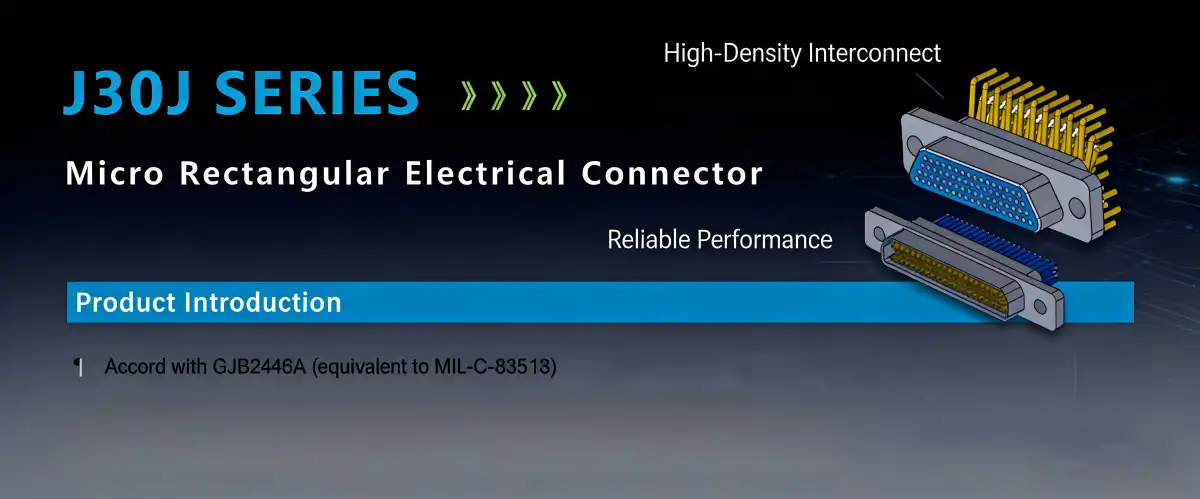
There are two different types of high-density interconnect options available in the connector scene for industrial robotics and aerospace uses. Each technology meets different needs for signal integrity, mechanical longevity, and resistance to the climate.
J30J Rectangular Connector Specifications and Applications
The J30J rectangular connector is a high-tech micro-rectangular electrical solution that meets GJB2446A standards, which are the same as the MIL-C-83513 standards used in American MDM series goods. Elastic stranded pin contacts, which are widely known as "twist pins," are used in this family of connectors to make sure that electrical links stay strong even in harsh environments.
With 1.27 mm of lateral spacing and 1.1 mm of row spacing, these connections have a very high number of contact points for their small size. The metal shielding shell design protects against electromagnetic fields, and metal tail caps can be added to make it last longer in tough situations. These connectors come in eleven different sizes, with nine to 144 cores (9, 15, 21, 25, 31, 37, 51, 66, 74, 100, and 144). They can be used for a wide range of system needs, from simple control circuits to complex multi-signal ones.
Aerospace systems, military electronics, semiconductor testing tools, and precision measuring instruments are all industries that use these connections. The different types of welding plates have changed tail shapes that are made to work with printed circuit boards. This makes them perfect for integrating PXIe frames and automatic test equipment.
Micro-D Connector Technology and Market Position
Micro-D connectors are another type of high-density interconnect that is commonly used in situations with limited space. Most of the time, these connectors have D-subminiature form factors that are smaller than normal D-sub connections. The technology focuses on making things smaller while keeping the signal strong across multiple channels.
Micro-D connections are often used in medical devices, portable instruments, satellite communications, and aircraft systems. Because they are made of light materials and are small, they are perfect for uses where weight is important, and every gram counts. Most of the time, the covers of connectors are made of lightweight materials that still do a good job of shielding for most business and some defense uses.
Structural and Technical Differences Between J30J and Micro-D Connectors
When you understand the basic design ideas that make these connection technologies different, you can figure out what their best uses are.
Physical Design and Dimensional Analysis
A rectangular shape is used by the J30J rectangular connector to fit as many pins as possible into a given space. Traditional circular or D-shaped designs don't give engineers as many touch points in tight spaces as this geometric method does. The 1.27mm contact space is the best compromise between how easy it is to make and how well it works electrically.
Micro-D connections use the well-known D-subminiature shell shape, but they are smaller to fit in smaller spaces. However, this method usually leads to less contact density than rectangular options, even though it works with current D-sub tools and building methods. The size of the shell changes based on the number of contacts. For bigger setups, the benefits of smaller footprints might not be enough.
The way these tools build materials is very different. The J30J rectangular connector has strong metal shielding plates that are made to handle tough situations like high or low temperatures, vibration, and electromagnetic interference. The stretchy stranded pin contacts make sure that the electrical links stay strong even when they are put under mechanical stress or temperature changes.
Environmental Resistance and Reliability Factors
Environmental performance is a key factor that sets these connection types apart. Because it uses advanced sealing technologies and carefully chosen materials, the J30J line is very resistant to high temperatures, water getting in, and corrosive atmospheres. The electromagnetic protection of the metal shell is better than that of the plastic shells that are often used in business Micro-D implementations.
In military and defense uses, where equipment is put under a lot of mechanical stress, vibration resistance is very important. The twist pin contact technology used in J30J rectangular connector designs keeps the electricity flowing even when there is a lot of shaking. Because the contacts are springy, they can bend without losing electrical contact, which is what gives them their strength.
The corrosion resistance depends on the materials used for the contact covering and the shell. For long-term dependability in harsh settings, military-grade applications usually choose gold plating over nickel barriers. How long these protective layers last and how often they need to be maintained depend on how thick and good they are.
Performance Comparison and Industrial Suitability
The electrical efficiency of a connection determines what uses it can be used for, especially when high-frequency or precise measurement is needed.
Signal Integrity and Electrical Characteristics
The performance of signal integrity rests on many things, such as contact resistance, crosstalk between pins that are next to each other, and impedance control. The J30J rectangular connector design makes the most of these factors by carefully choosing the right materials and shapes. The 1.27 mm contact gap keeps the contact density high while providing enough isolation for most digital and analog uses.
In high-speed digital uses and RF systems, impedance properties are very important. It is easier to control the impedance with rectangular shapes than with circular ones, especially when making differential pairs or structures with controlled impedance. As signal rates rise and timing gaps get smaller, this edge becomes more important.
The amount of current that can flow through a contact depends on its size and how well it loses heat. The elastic stranded pin design has more than one contact point per link, which lowers contact resistance and makes it easier to handle current. This way of designing also makes it more reliable by giving the current two paths in case one strand gets broken.
Durability and Lifecycle Considerations
The mechanical and electrical life of a connector under working stress is considered to be durable. Because the J30J series connectors are built to last, they don't need to be maintained as often and have a lower total cost of ownership. The metal shell design keeps it from breaking during installation and service, and the protected design keeps out electromagnetic interference that could slow down the system.
Mating cycle details tell you how many times the connector can be connected and disconnected before it starts to lose its function. Military-grade connectors usually list hundreds or thousands of joining cycles, but this can change based on the needs of the application. The flexible contact design makes the connection work well for a long time by adjusting to wear and keeping the electrical contact pressure steady.
Environmental testing makes sure that connectors work well in harsh situations like changing temperatures, high and low humidity, salt fog, rust, and shaking stress. These uniform tests give us numbers that we can use to compare different connection technologies and pick the best ones for each environmental problem.
Procurement Guidance for J30J Rectangular Connectors and Micro-D Connectors
To make good buying plans, you need to know about the skills, certifications, and supply chain issues that affect the success of the project.
Supplier Selection and Quality Assurance
To find suitable suppliers, you have to look at their production skills, quality certifications, and expert help resources. Authorized wholesalers work directly with producers to make sure they only sell real goods and give them access to technical information. Factory certifications like ISO 9001, AS9100, or military specs show that quality control methods that are right for important uses are being used.
The terms of the warranty and the level of professional help have a big effect on how well the project turns out in the long run. Responsive technical support teams help solve problems with integration and give advice on how to put things correctly. A full warranty guards against problems with the way the product was made and makes sure that new parts are always available throughout the product's lifecycle.
Quality and availability of documentation affect how well designs work and how easily they can be checked for compliance. Engineers can check for compatibility and performance before integrating by using full datasheets, assembly directions, and test results. Drawings and CAD models help with engineering design and cut down on the number of times prototypes need to be made.
Ordering Process and Supply Chain Management
Buying in bulk can save you money on large-scale deployments and make sure that the quality of the product stays the same throughout production runs. Volume price levels encourage bigger sales, but they need careful inventory management to keep costs down for items that are no longer useful. Planning for lead times is very important for making schedules for projects, especially when working with unique designs or standard goods that are in high demand.
Different suppliers and product groups have different minimum order amounts, which makes it harder for smaller projects to get what they need. Some sellers offer small amounts as samples for testing, so engineers can make sure the products work together before committing to large numbers. When planning logistics, you need to think about things like how to package fragile computer parts and how to ship the goods in a way that keeps their integrity during travel.
To handle a global supply chain, you need to know about foreign shipping rules, customs procedures, and possible delivery delays. Most of the time, domestic sourcing means faster shipping and easier handling, but it may limit your choices for suppliers or raise costs. Strategic connections with suppliers help make sure that the right supplies are sent to the right places at the right time and give you access to new products as they come out.
Choosing the Right Connector for Your Industrial Needs
Selecting optimal connector solutions requires systematic evaluation of application requirements, environmental conditions, and system constraints.
Application-Specific Requirements Analysis
Conditions in the environment have a big effect on how connectors are chosen. For aerospace uses, connections need to be able to handle big changes in temperature, low air pressure, and a lot of vibration. The J30J rectangular connector line solves these problems with a strong design that has been tested and shown to work well in tough situations.
Connector specifications are based on the types of signals and the energy needs of the device. Controlled impedance and low crosstalk are needed for high-speed digital data, while contact resistance and current-carrying ability are important for power distribution circuits. Rectangular connectors have a lot of contacts, which is good for mixed-signal uses because it separates sensitive analog data from noisy digital circuits.
In mechanical stress analysis, installation forces, shaking loads, and the effects of heat expansion are all taken into account. When choosing connectors, it's important to think about these technical factors so that the system works reliably for its whole life. J30J connectors have elastic contact technology that can handle mechanical stress while keeping electrical continuity. This means they can be used in places where there is a lot of natural stress.
Decision Framework and Trade-off Analysis
A cost-effectiveness analysis looks at the original costs of buying something, the costs of installing it, and the long-term upkeep that will be needed. Even though premium connections may cost more at first, their higher dependability and longer service life often make them more cost-effective in the long run than cheaper options that need to be replaced or maintained more often.
Things to think about when it comes to compatibility are the mechanical fit, the electrical input needs, and the compatibility of the assembly tools. Standardized link families make it easier to keep track of supplies and train technicians, and they also make it possible to make changes to the system in the future. Because the J30J rectangular connector works with NI products, it can be easily added to test and measurement tools that are already in use.
A supplier dependability review looks at how much a company can make, how consistent its quality is, and how long it will support its customers in the future. People who buy from well-known companies that have worked with mission-critical apps in the past can be sure that their products will be available and that they will provide expert help throughout the lifecycle of the system. Companies like MXTD show how reliable they are by having been in business for over 12 years and offering a wide range of customer service options.
Conclusion
Whether to use a J30J rectangular connector or a Micro-D connector depends on the needs of the application, the surroundings, and the limitations of the system. J30J connectors work great in situations that need a lot of contacts, better protection for the environment, and stability that has been tested in harsh conditions. Because they are built to last and meet military standards, they are perfect for use in aircraft, defense, and accurate measurement. Micro-D connectors are better for uses that need to be light, but J30J rectangular connectors are better for mission-critical industrial automation and test equipment because they have more contacts, work better in harsh environments, and have been proven to be reliable.
FAQ
What are the key environmental resistance features of J30J connectors?
J30J rectangular connector systems provide exceptional environmental resistance through metal shielding shells, advanced sealing technologies, and corrosion-resistant materials. These connectors withstand extreme temperatures, vibration stress, moisture ingress, and electromagnetic interference while maintaining reliable electrical performance throughout their operational lifecycle.
How do pin configurations differ between J30J and Micro-D connectors?
The J30J line uses twist pins that are elastically stranded and are organized in rectangular patterns with 1.27mm lateral spacing. This allows for a higher contact density than with regular Micro-D designs. J30J rectangular connector offerings provide more pin count options than normal Micro-D choices because they come in eleven specifications ranging from 9 to 144 cores.
Where can I access official datasheets and assembly guides?
Official technical documents, such as detailed datasheets, assembly directions, and CAD models, can be bought from makers and approved dealers. These tools give you all the specs, installation instructions, and compatibility data you need to properly integrate your system and check for compliance.
Partner with MXTD for Your J30J Rectangular Connector Requirements
With our large collection of J30J rectangular connector units and scientific know-how, MXTD is ready to help you with your connector buying needs. We are a reliable provider with more than 12 years of experience in the field. We offer a wide range of services, such as standard goods, OEM/ODM customization, and quick technical support. Our team answers all of our customers' questions within an hour, and we offer full supply chain solutions that include shock- and moisture-proof packing for precision tools. Get in touch with manager03@mxtdinfo.com to talk about your unique needs and find out how our tried-and-true connection solutions can help your project succeed by providing reliable performance and expert support.
References
1. Military Specification MIL-C-83513: General Specification for Connectors, Electrical, Circular Miniature, High Density, Quick Disconnect (Bayonet, Threaded, and Breech Coupling), Environment Resistant, Removable Crimp Contacts
2. GJB2446A Standard: Chinese Military Standard for Electrical Connectors, Rectangular, Miniature, High Reliability, Quick Disconnect, Environment Resistant
3. Institute of Electrical and Electronics Engineers Standard 1326: IEEE Standard for Interconnection of Computing Elements via the PXI Express Standard
4. Society of Automotive Engineers AS50881: Wiring Aerospace Vehicle Standard for Installation of Electrical Wiring Interconnection Systems
5. International Electrotechnical Commission Standard 61076: Connectors for Electronic Equipment - Product Requirements and Test Methods
6. American National Standards Institute/Electronic Industries Alliance Standard EIA-364: Electrical Connector/Socket Test Procedures Including Environmental Classifications
Our customers’ satisfaction speaks for our quality — contact us to experience the same reliable service.