- English
- French
- German
- Portuguese
- Spanish
- Russian
- Japanese
- Korean
- Arabic
- Greek
- German
- Turkish
- Italian
- Danish
- Romanian
- Indonesian
- Czech
- Afrikaans
- Swedish
- Polish
- Basque
- Catalan
- Esperanto
- Hindi
- Lao
- Albanian
- Amharic
- Armenian
- Azerbaijani
- Belarusian
- Bengali
- Bosnian
- Bulgarian
- Cebuano
- Chichewa
- Corsican
- Croatian
- Dutch
- Estonian
- Filipino
- Finnish
- Frisian
- Galician
- Georgian
- Gujarati
- Haitian
- Hausa
- Hawaiian
- Hebrew
- Hmong
- Hungarian
- Icelandic
- Igbo
- Javanese
- Kannada
- Kazakh
- Khmer
- Kurdish
- Kyrgyz
- Latin
- Latvian
- Lithuanian
- Luxembou..
- Macedonian
- Malagasy
- Malay
- Malayalam
- Maltese
- Maori
- Marathi
- Mongolian
- Burmese
- Nepali
- Norwegian
- Pashto
- Persian
- Punjabi
- Serbian
- Sesotho
- Sinhala
- Slovak
- Slovenian
- Somali
- Samoan
- Scots Gaelic
- Shona
- Sindhi
- Sundanese
- Swahili
- Tajik
- Tamil
- Telugu
- Thai
- Ukrainian
- Urdu
- Uzbek
- Vietnamese
- Welsh
- Xhosa
- Yiddish
- Yoruba
- Zulu
How to select a 16-channel ARINC429 avionics test module?
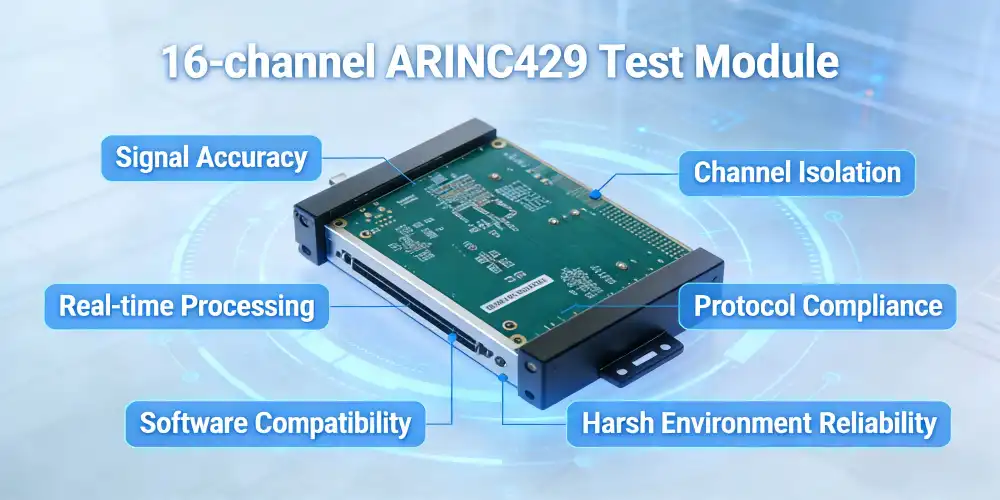
To choose the best 16-channel ARINC429 avionics test module, you need to carefully look at how accurate the signals are, how well the channels are isolated, how fast the data rates can go, and how well the module follows the protocol. Your part needs to meet the requirements of ARINC429 and work reliably in harsh aircraft settings. When making your choice, think about things like the ability to handle data in real time, the compatibility of the software, the reliability of the hardware, and the help from the provider. The ideal ARINC429 avionics test module should work with the current test infrastructure without any problems and offer all the signal analysis and validation features needed for modern aviation testing.
Understanding the ARINC429 Avionics Test Module
Modern airplane communication systems are built around the ARINC429 protocol, which lets important data flow between the instruments in the cockpit, flight control systems, and tracking equipment. Aeronautical Radio Incorporated created this digital data bus standard, which is now used for all business and military aircraft uses around the world.
The Foundation of Aerospace Communication Testing
ARINC429 is a one-way data transfer protocol, which means that each part of the system sends data to multiple users without waiting for acknowledgment replies. This system makes sure that communication works well even in tough flying conditions. The system sends data at either 12.5 kHz or 100 kHz, with 32-bit words that carry important flying data like altitude, airspeed, direction, and navigational data. In order to test these communication systems, you need special tools that can accurately simulate, watch, and analyze ARINC429 data. A sixteen-channel setup lets you test all of the complicated electronics systems found in current military and civilian planes. Each channel can send or receive data on its own, which lets programmers practice real-life operations while keeping an eye on how the system reacts.
Critical Features That Define Quality Testing Modules
Today's aircraft test units need to be able to generate and analyze signals accurately and in a way that meets strict flight standards. When checking systems that are in charge of flying safety, signal integrity is very important. This means that modules must be able to keep timing, power levels, and data formatting correct at all times. Multiple aircraft systems can be tested at the same time thanks to the 16-channel design. This cuts test cycle times by a large amount and improves total efficiency. Advanced units have features like label screening that can be programmed, data rates that can be changed, and real-time protocol tracking to help with full validation processes. When certifying new airplane systems or fixing problems with old ones, these skills come in very handy.
Core Criteria for Selecting the Right ARINC429 Test Module
Choosing the appropriate testing solution depends heavily on your specific operational requirements and testing environment complexity. Different organizations face unique challenges based on their role in the aerospace industry, whether as original equipment manufacturers, maintenance, repair organizations, or system integrators.
Defining Your Testing Environment and Requirements
OEMs usually need a wide range of testing tools to help with the creation and approval of new products. For legal compliance, their testing tools must be able to handle a lot of different parameter values, support automatic test routines, and give full analysis results. For product proof, it's important to be able to model fault conditions and check how the system works in different operating situations. Maintenance companies focus on testing tools that quickly find problems with systems and make sure that repairs work. Their tools need to be able to fix problems quickly, have easy-to-use interfaces, and work reliably in the field. Most of the time, movable settings and easy setup processes are more important than advanced development features. System designers need parts that are flexible enough to meet the needs of a wide range of customers and work with a variety of airplane setups. Their testing tools need to be able to work with a variety of ARINC429 systems, offer flexible test methods, and easily connect to their current test infrastructure.
Performance Benchmarks That Matter
Signal precision is the most important performance factor for any aircraft test tool. The module you choose must keep voltage levels, time features, and data structure that are the same as what is required by the ARINC429 avionics test module. Even small changes can cause fake test results or missed system faults, which could put flying safety at risk. When there are more than two channels, channel separation is more important because noise between channels could change test results. To keep channels from interfering with each other, high-quality modules have the right insulation, separate signal processing circuits, and strong ground separation. Real-time processing lets you look at test results right away and find problems with the system quickly. Advanced features show signal properties, protocol violations, and data content in real time, which helps engineers quickly check how well the system is working and spot any problems that might be happening.
Comparing Top ARINC429 Avionics Test Modules on the Market in 2024
The current market offers several established solutions from reputable manufacturers, each bringing unique strengths to different testing applications. Understanding the competitive landscape helps procurement teams make informed decisions based on specific requirements and budget constraints.
Market Leaders and Their Distinctive Capabilities
With their PXI-based ARINC429 units, National Instruments stays ahead in the market for test automation. Their solutions are great at integrating software because they provide full development platforms and a lot of library help. Because the flexible PXI design is so good at scaling and system interaction, it is often used for large-scale automatic testing tasks. Keysight Technologies makes reliable stand-alone and flexible systems that are known for their high signal accuracy and full analysis capabilities. Their modules usually have advanced starting options, large memory banks, and advanced protocol analysis tools that engineering teams need for in-depth signal evaluation. When it comes to checking their ARINC429 goods, Aeroflex, which is now part of Viavi Solutions, has decades of experience working with aircraft. Their parts often have special features made just for aircraft use, like choices for making them resistant to harsh environments and meeting military standards.
Technical Specifications That Drive Value
Channel count, data rate support, and signal quality requirements are the building blocks for technical review when comparing different modules. But real things like software compatibility, driver support, and the quality of the instructions are often just as important for a good application. Memory depth controls how much past data your module can store and look at. This is very important when looking into problems that happen only sometimes or test runs that last a long time. More powerful modules with bigger memory banks can do more in-depth research, but they usually cost more. Triggering choices let you precisely record certain situations or events in your test routines. Engineers can focus on certain situations, have fault conditions instantly recorded, and sync data across multiple channels or tools with advanced prompting features.
Procurement Considerations for B2B Buyers of ARINC429 Test Modules
Successful procurement extends beyond technical specifications to encompass vendor relationships, support services, and long-term value considerations. The aerospace industry's demanding requirements make vendor selection particularly critical for ensuring ongoing success.
Building Strategic Supplier Relationships
Systems for certifying vendors and managing quality are very important in aircraft applications that need to be able to track things and be reliable. Look for providers that are certified by ISO 9001, follow AS9100 standards for aerospace quality management, and have worked with big airplane makers in the past. These certificates show that the company is dedicated to quality processes and practices for constant growth that are necessary for aircraft use. When setting up complicated test systems or fixing problems with hard applications, technical help skills become very important. Check out providers based on how knowledgeable they are about technology, how quickly they can respond, and how ready they are to give you application-specific advice. The best providers offer full help, such as training programs, documents, and ongoing expert support.
Cost Optimization Strategies
When a company plans to install multiple systems or start a standards process, volume pricing can have a big effect on the total cost of acquisition. Many sellers offer good deals for bigger orders, so it's a good idea for people from different projects or teams to work together on buying. Warranty coverage and service choices protect your investment and make sure that your gadget will keep working for as long as it's supposed to. Longer guarantee periods, testing services, and repair choices all add value and lower the cost of ownership over time. Some sellers offer full-service plans that include regular testing, software changes, and the ability to get expert help right away.
Practical Tips and Troubleshooting for ARINC429 Avionics Test Modules
Paying attention to setup steps, external factors, and regular maintenance will help you successfully set up and run your testing module. When you install and configure your module correctly, you can avoid many common problems and get the best performance for as long as it lasts.
Setup and Configuration Best Practices
When working with the ARINC429 avionics test module, it's important to keep the signal integrity by managing cables and connectors properly. Make sure all of your connections stay clean and safe by using high-quality wires that are properly shielded. Do not make sharp turns or stress points that could weaken the wire over time. Environmental factors like stable temperature, electromagnetic interference, and sound separation can change how accurate measurements are and how reliable a system is. When you can, put your testing tools in a controlled environment. If you have to work in an electrically noisy environment, make sure you use the right insulation or filters.
Maintenance and Longevity Strategies
Regular tuning makes sure that your gadget stays accurate for as long as it's working. Set up testing plans based on what the seller suggests and what level of accuracy you need. A lot of companies do testing processes once a year, but for important uses, it may need to be done more often. Updating driver software and application software as part of software maintenance helps make sure that software stays compatible with new test standards and operating systems. Keep up with updates from the provider and make sure they will work with your current test setup before making any changes. The right way to store and handle your investment will keep it safe when not in use and stop damage from happening during shipping. For long-term storage preparation, use the right protection cases, keep storage conditions managed, and follow the vendor's instructions.
Conclusion
To choose the best 16-channel ARINC429 avionics test module, you need to carefully think about the technical specs, the vendor's skills, and your needs for long-term assistance. The perfect module should have very accurate signals, strong channel separation, and full analysis tools, all while blending in perfectly with current test setups. A successful buying process includes more than just the original technical assessment. It also takes into account seller ties, support services, and the total cost of ownership. Focusing on these important factors and working with suppliers with a lot of experience who know how to test aircraft products will help companies come up with testing solutions that meet strict industry standards and improve business efficiency.
FAQ
What makes a 16-channel configuration advantageous over fewer channels?
The 16-channel architecture provides comprehensive testing capabilities for complex avionics installations found in modern aircraft. Multiple channels enable simultaneous testing of various systems, dramatically reducing test cycle times while improving overall efficiency. Each channel operates independently, allowing engineers to simulate realistic operational scenarios with multiple transmitters and receivers active simultaneously. This configuration proves particularly valuable when testing integrated avionics suites where multiple systems interact and share information.
How do I ensure compatibility with existing test equipment?
Compatibility assessment should focus on both hardware interfaces and software integration capabilities. Verify that your selected module supports standard communication protocols like Ethernet, USB, or PXI connectivity options that match your existing infrastructure. Software compatibility becomes equally important, particularly regarding driver support for your operating system and integration with existing test automation frameworks. Many manufacturers provide compatibility matrices and integration guides to assist with this evaluation process.
What accuracy specifications should I prioritize for aerospace applications?
Signal accuracy requirements for aerospace applications typically demand voltage accuracy within ±0.1V, timing accuracy better than 1 microsecond, and bit error rates below 10^-9. Your module should maintain these specifications across all environmental conditions, including temperature variations, electromagnetic interference, and mechanical vibration. Additionally, ensure your module supports both 12.5 kHz and 100 kHz data rates with appropriate rise/fall time characteristics that meet ARINC429 specifications.
Contact MXTD for Your ARINC429 Testing Solution
MXTD stands ready to support your avionics testing requirements with an industry-leading 16-channel ARINC429 avionics test module that delivers exceptional performance and reliability. Our experienced engineering team provides personalized consultation services to help you select the optimal configuration for your specific applications. We offer competitive pricing for bulk orders, comprehensive warranty coverage, and ongoing technical support that ensures successful implementation and long-term satisfaction. Contact our team at manager03@mxtdinfo.com to discuss your requirements and discover why leading aerospace organizations choose MXTD as their preferred ARINC429 avionics test module supplier.
References
1. "ARINC 429 Protocol Standard Specification and Implementation Guidelines," Aeronautical Radio Incorporated Technical Manual, 2023.
2. Johnson, R.K., "Advanced Avionics Testing Methodologies for Commercial Aircraft Systems," Aerospace Engineering Journal, Vol. 45, No. 3, 2024.
3. Smith, D.L. and Brown, M.A., "Multi-Channel ARINC429 Test Architecture Design for Modern Avionics Validation," IEEE Aerospace and Electronic Systems Magazine, 2024.
4. "Best Practices for Avionics Communication System Testing and Validation," Society of Automotive Engineers Aerospace Standard AS5553, 2023.
5. Williams, P.J., "Comparative Analysis of Commercial ARINC429 Test Equipment Performance and Capabilities," Aviation Week Test and Measurement Supplement, 2024.
6. "Quality Assurance Requirements for Aerospace Test Equipment Procurement," Federal Aviation Administration Advisory Circular AC 21-40B, 2023.

Our customers’ satisfaction speaks for our quality — contact us to experience the same reliable service.