- English
- French
- German
- Portuguese
- Spanish
- Russian
- Japanese
- Korean
- Arabic
- Greek
- German
- Turkish
- Italian
- Danish
- Romanian
- Indonesian
- Czech
- Afrikaans
- Swedish
- Polish
- Basque
- Catalan
- Esperanto
- Hindi
- Lao
- Albanian
- Amharic
- Armenian
- Azerbaijani
- Belarusian
- Bengali
- Bosnian
- Bulgarian
- Cebuano
- Chichewa
- Corsican
- Croatian
- Dutch
- Estonian
- Filipino
- Finnish
- Frisian
- Galician
- Georgian
- Gujarati
- Haitian
- Hausa
- Hawaiian
- Hebrew
- Hmong
- Hungarian
- Icelandic
- Igbo
- Javanese
- Kannada
- Kazakh
- Khmer
- Kurdish
- Kyrgyz
- Latin
- Latvian
- Lithuanian
- Luxembou..
- Macedonian
- Malagasy
- Malay
- Malayalam
- Maltese
- Maori
- Marathi
- Mongolian
- Burmese
- Nepali
- Norwegian
- Pashto
- Persian
- Punjabi
- Serbian
- Sesotho
- Sinhala
- Slovak
- Slovenian
- Somali
- Samoan
- Scots Gaelic
- Shona
- Sindhi
- Sundanese
- Swahili
- Tajik
- Tamil
- Telugu
- Thai
- Ukrainian
- Urdu
- Uzbek
- Vietnamese
- Welsh
- Xhosa
- Yiddish
- Yoruba
- Zulu
How to choose a PXIe chassis for RF testing setups?
To choose the best PXIe chassis for RF tests, you need to carefully look at its performance specs, slot layouts, and ability to handle heat. If you choose the right flexible test platform, it will protect the signal well, lower the chance of errors in measurements, and give you the flexibility you need as your RF test needs change. The chassis needs to be able to handle high-frequency data processing and keep the timing of all the instrument sections perfectly in sync. Realizing your testing requirements for bandwidth, channel count, and environmental factors will help you find the best tool for long-term, effective use in tough RF applications.
Understanding PXIe Chassis and Its Role in RF Testing
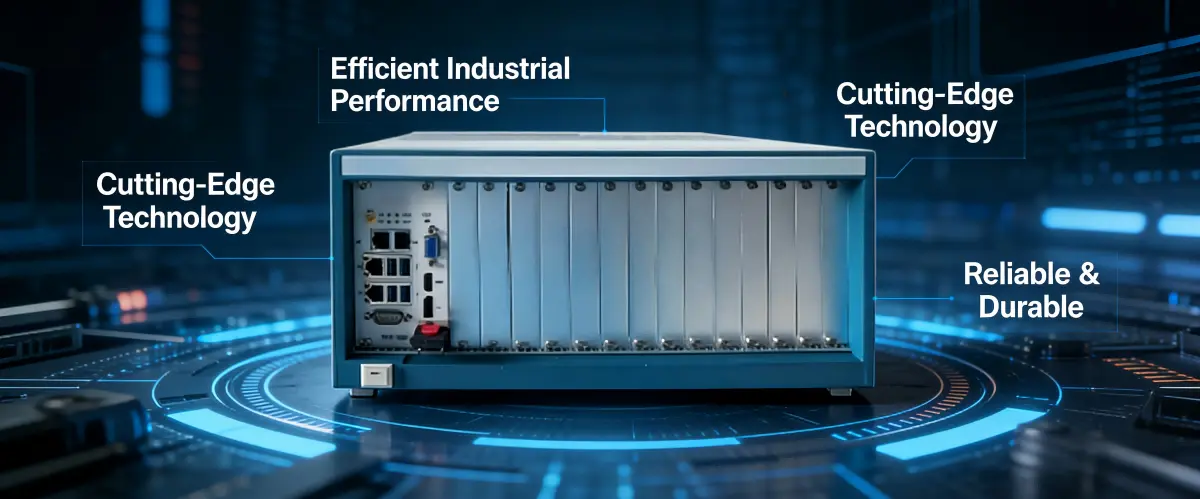
In today's RF testing settings, you need advanced measurement tools that can handle complicated signal analysis, syncing across multiple channels, and fast data processing. The PXIe chassis is what these high-tech test tools are built on. It has the electrical, mechanical, and thermal equipment needed to make accurate RF readings.
Architecture and Core Components
The PXIe design builds on the well-known PCI Express standard and adds time and synchronization features that are necessary for RF tests. Each frame has different kinds of slots that are made to work with different kinds of instruments. The integrated computer that runs the tests is in the system controller slot. Peripheral slots can hold different RF tools, such as signal generators, analyzers, and digitizers. Power delivery is an important part of designing a frame. For accurate measurements, RF devices usually need clean, stable power. Modern frame designs have multiple power rails that are not connected to each other. This keeps noise from traveling from one instrument to another. The specs of the power source directly affect how many and what kinds of instruments you can place. This is why it's important to carefully plan your power budget when designing the system.
In RF applications, where changes in temperature can affect the accuracy of measurements, thermal control is even more important. Intelligent cooling systems with temperature-controlled fans and better airflow designs are used in modern frames. These systems change their cooling power automatically based on how full the instruments are and the temperature outside. This keeps all the modules running at stable temperatures.
Signal Integrity and Timing Synchronization
For RF tests to work, the signal must be completely stable throughout the measurement path. High-speed differential pairs carry both data and time signals, so the design of the chassis backplane has a direct effect on the quality of the signals. Crosstalk between channels is kept to a minimum by more advanced designs that keep the resistance characteristics stable across the whole frequency range. PXIe systems are different from regular test equipment because they can synchronize timing. The timing bus lets many instruments work together precisely, letting phase-coherent readings be made over a wide frequency range. This synchronization is necessary for tasks like beamforming analysis, MIMO tests, and multi-channel RF measurement that need to keep timing relationships stable to within a few nanoseconds.
Key Criteria to Consider When Choosing a PXIe Chassis for RF Testing
To build a successful RF test system, you must first know exactly what measurements you need to take and be able to translate those needs into chassis specs. Modern RF systems are very complicated, so many technical and practical factors need to be carefully thought through.
Performance Specifications and Slot Configuration
Many choices about which chassis to choose are based on bandwidth needs. For high-frequency RF tests, instruments need to be able to handle a lot of data, so frame designs need to have enough backplane bandwidth. Think about both the total bandwidth for all spots and the bandwidth that each device has access to in its own slot. Most modern PXIe chassis offer 8 GB/s per slot, which is enough for most RF applications. However, high-resolution digitizers or real-time signal processing may need extra attention.
Scalability is directly affected by the number of slots and how they are set up. RF test systems often need a lot of tools that are all in sync with each other, like signal sources, analyzers, switches, and calibration units. Choose a chassis with enough free spots to allow for future growth. Mixed slot setups, which have both PXIe and regular PXI slots, make it possible to use older instruments with newer, higher-performance modules.
The position and specs of the controller slot affect how well the system works and what kinds of modules can be used with it. Some chassis have more than one controller choice, so you can choose between embedded controllers for systems that work on their own or remote controllers for systems that are placed on a rack. When choosing a controller, think about how much working power your test tools and data analysis methods need.
Environmental and Reliability Considerations
RF testing is often done in tough conditions where temperature, humidity, and shaking can change the results of measurements. For industrial and aircraft uses, it may be necessary to work in a wider range of temperatures. Check the frame specs against the conditions you need to work in and store them in, such as the temperature ranges, humidity levels, and strength to shocks and vibrations.
Ratings for mean time between failures (MTBF) show how reliable something is likely to be. High uptime is needed for RF test tools that help with production lines or important research projects. Look for chassis designs that have two or more cooling systems, parts that can be swapped out quickly, and full tracking tools that can spot problems before they affect operations.
Integration and Compatibility Factors
Software compatibility is a very important part of integrating systems well. Make sure that the model you're considering works with the development system you want to use, such as LabVIEW, TestStand, Python, or something else. Long-term supportability is affected by how often drivers are updated and how available they are. This is especially important for systems that will be used for a long time. It's not enough for hardware to just fit mechanically to be compatible. Make sure that the tools you need to work properly are within the power and temperature limits of the frame. Some high-performance RF instruments may need empty spots next to them to cool down, or they may have placement rules that are different from other types of instruments.
Comparing PXIe Chassis Options for RF Test Setups
There are a lot of different chassis choices in the test and measurement business, and each one is best for a certain set of applications and performance needs. Knowing the pros and cons of each method can help you choose the best one for your RF testing needs.
Technology Advancements and Cost-Performance Analysis
Many technological advances have been made to modern PXIe chassis compared to older models. Better backplane designs allow for faster data rates and less signal loss. Power control methods that are more advanced offer cleaner power and better separation between channels. Intelligent temperature monitoring keeps things from getting too hot and reduces noise levels in labs. When doing a cost-performance study, you have to think about all of your operating costs, not just the original purchase price. Most of the time, higher-quality frames are more reliable over time, which lowers repair costs and test system downtime. Designs that use less energy lower working costs, which is especially important for systems that are always on. Modular update routes protect the value of an investment by letting performance be improved without having to change the whole system.
Industry Leading Solutions
The PXI standard was created by National Instruments, and their PXIe chassis and high-performance timing designs continue to make chassis technology better. Their chassis designs put a lot of emphasis on software interaction and offer a lot of driver support for a wide range of development settings. The company's focus on ecosystem growth makes sure that a lot of instruments are available and that third parties can help a lot. Keysight Technologies uses its extensive knowledge of radio frequency (RF) to build frames with features that work well in high-frequency environments. A lot of the time, their solutions include better shielding, better signal handling, and timing features that are specifically designed for RF and microwave tests. Keysight's wide range of RF instruments can be easily integrated to provide smooth system-level improvement.
Pickering Interfaces makes switching and modeling modules and has chassis designs that are perfect for complicated signal routing tasks. Their methods work really well in situations that need a lot of RF switching matrices or the ability to input faults. Because the company focuses on dependability, their chassis are often used for testing in the aircraft and automobile industries.
Compact vs. Full-Size: Things to Think About
When choosing a chassis size, you have to weigh the speed needs against the room and portability needs. For better mobility and less need for rack space, compact chassis designs give up some of their ability to grow. These options work well for focused test cases or testing in the field, where being mobile is important.
Here are the main reasons why small chassis options are better:
- Smaller size makes it possible to use in places with limited room, like production lines or mobile test labs
- Less power use means less cooling is needed and, in some cases, battery power is also possible.
- Better mobility makes it easier to move between test sites or add to portable test systems
- Cost optimization lets apps that are tight on money get important features at lower prices.
Because of these benefits, compact chassis are great for situations where saving room is more important than being able to grow as much as possible.
Full-size frames are the most flexible and powerful, but they are also bigger and need more power. For high-power RF uses, these platforms offer better thermal control and can hold more instruments. With the extra slots, you can set up complicated test setups with many signal lines, large switching grids, and special calibration tools.
Practical Steps to Procure the Best PXIe Chassis
For chassis procurement to go smoothly, technical standards, vendor skills, and long-term assistance need to be carefully considered. Buying test tools is usually a big investment that will have effects on operations for a number of years.
Requirements Definition and Vendor Selection
Before you start the procurement process, you should write down all of your unique technical needs, such as performance requirements, environmental limits, and integration requirements. If you can, put needs into numbers by giving base speed, slot counts, power budgets, and environmental ranges. This documentation is what the vendor talks about and plan reviews are based on.
The professional skills, customer service, and long-term success of a vendor should all be taken into account when evaluating them. Long-term help and more thorough driver updates are usually better from companies that have been around for a while and have a lot of experience with RF. Check to see how committed the seller is to the PXI standard and what improvements they plan to make in the future. The availability of help in a region affects how quickly technical problems and service guarantees are fixed.
Procurement Strategy and Risk Management
Keeping track of lead times is very important for keeping project plans on track, especially when chassis designs are unique or customized. Standard frame designs usually ship within a few weeks, but special changes can take months to plan and make. Plan the timing of your purchases to work with these wait times while still leaving room for freedom in the project.
Long-term operational costs are greatly affected by warranty terms and help choices. Comprehensive warranties that cover both parts and work lower the risk, and choices for longer warranties protect against failures that happen after the standard coverage period. Check the answer times and ways to get help from support, especially for mission-critical apps that can't work without being online, as downtime costs a lot.
Cost and arrival time are both affected by international shipping issues. RF test equipment often needs special packaging to keep it from getting damaged while being shipped. Make sure that the companies you're working with offer the right packaging for foreign shipping, and find out what the customs rules are for the country where the equipment is going.
Solutions for Customs and OEM
Customized chassis designs that are best for certain needs are helpful for many RF uses. MXTD provides full OEM/ODM customization services that let you change mechanical designs, power specs, and slot setups. By getting rid of features that aren't needed, these changes can make the framework work better for certain tasks while also cutting costs. For custom solutions, it takes more time for planning and testing, and more careful writing of specifications. During the planning process, work closely with suppliers to make sure that any changes meet your needs without affecting the product's dependability or ability to be supported. Make sure you clearly record all changes so that future service and support tasks are easier.
Case Studies and Real-World Applications of PXIe Chassis in RF Testing
Demonstrating the pros and cons of using PXIe chassis in tough RF testing settings through real-life examples. These examples show best practices and draw attention to things that might not be obvious when the system is first designed.
5G RF Testing Implementation
A big company that makes telecom equipment set up a full 5G test setup with an 18-slot hybrid PXIe chassis to make sure that huge MIMO antenna arrays worked. The system had to test 64 antenna elements at the same time across various frequency bands, which needed precise timing and the ability to handle data quickly.
The chassis configuration included specialized RF downconverters, high-speed digitizers, and real-time signal processing units that were built into the frame. The 4U frame design was able to hold all the necessary instruments and keep them cool enough for constant use. Temperature-controlled fans with automatic speed change kept the working conditions at their best, even though the instruments installed had a lot of power.
The most important things that were learned from this implementation were how important it is to plan for temperature and handle your power budget. The first setup worked very close to its temperature limits, so the placement of modules and the flow of air had to be improved. Adding separate cooling lines for high-power modules fixed thermal problems without having to replace the frame.
Building an aerospace RF test bed
An aerospace research center used modular PXIe chassis technology to make a flexible RF testbed that can help with the development of radar systems that work across a number of frequency bands. For coherent measurement applications, the system had to be able to make wideband signals, analyze spectrums at high resolution, and keep precise timing.
Multiple synchronized chassis were used in the application to meet the channel count and speed requirements. Custom time distribution made sure that all measurement channels had the same phase, which made it possible to accurately describe radar waves and antenna patterns. The flexible design made it easy to quickly change the setup for different test situations without having to make a lot of hardware changes.
This project showed how important it is to have uniform interfaces and full software support. Being able to combine instruments from different manufacturers in one body made buying them easier and cut down on the cost of putting them together. Standardized driving interfaces made it possible to make software quickly and made upkeep easier.
Production Test Optimization
A semiconductor business improved the production testing of RF devices by using small 9-slot PXIe systems to get better throughput while keeping measurement accuracy high. In the working setting, tests had to be run quickly, setup had to be done quickly, and results had to be the same across multiple test units.
For the production setting, the PXIe-1212 chassis was the best mix of speed and small size. The necessary set of instruments could be powered by the 750W power source, and the tough metal construction could handle the demands of constant operation. Automated testing processes made sure that all test stations gave the same measurements.
Putting software into production showed how important it is to improve it and make sure that errors are fixed automatically. Parallel processing and smart ordering in custom test software cut down on the time it took to measure. Common setup mistakes were found and fixed automatically by diagnostic routines, which cut down on human involvement and increased system stability overall.
Conclusion
To choose the best PXIe chassis for RF testing, you have to weigh performance needs against cost concerns while also making sure that the chassis will be reliable and scalable in the long run. Because the frame is the base for accurate measures, it is important to carefully consider the technical specs, thermal management, and seller support options. Understanding the unique needs of your application, such as the amount of data it needs and any environmental restrictions, will help you choose platforms that will work reliably for the duration of their service life. Modern chassis designs come with advanced features like smart cooling, full tracking, and different configuration choices that can be used to meet changing test needs while keeping your technology investment safe.
FAQ
What is the difference between PXIe and PXI chassis?
PCI Express technology is built into PXIe chassis, which gives them faster speed and better performance than regular PXI chassis. PXIe has 8 GB/s per slot, while PXI only has 132 MB/s, which makes it necessary for high-speed RF apps that need to send data quickly.
How important is the way slots are set up when designing a test system?
How the slots are set up has a direct effect on how flexible and expandable the system is. A hybrid chassis with both PXIe and legacy PXI slots offers the most flexibility. Where the controller slot is placed changes the system design and the integration choices available.
What warranty considerations apply to bulk chassis orders?
When you buy in bulk, you can usually get better prices and longer guarantee terms. Make sure that the warranty covers both parts and work, and that there are clear guidelines for reaction times and technical help during the warranty term.
Contact MXTD for Your PXIe Chassis Requirements
MXTD delivers industry-leading PXIe chassis solutions designed specifically for demanding RF testing applications. Our comprehensive product portfolio includes 9-slot, 14-slot, and 18-slot configurations, each engineered to meet stringent performance requirements while providing exceptional value. As an experienced PXIe chassis supplier, we offer both standard products and customized OEM/ODM solutions tailored to your specific testing needs. Our technical team provides rapid response within one hour to customer inquiries, ensuring you receive expert guidance for optimal system configuration. Contact manager03@mxtdinfo.com to discuss your RF testing requirements and discover how our proven chassis technology can enhance your measurement capabilities while reducing the total cost of ownership.
References
1. "PXI Express Hardware Specification Revision 2.4," PXI Systems Alliance Technical Committee, 2019.
2. Johnson, Robert M., "Advanced RF Test System Architecture Using Modular Instrumentation," IEEE Transactions on Instrumentation and Measurement, Vol. 68, No. 3, 2020.
3. Chen, Lisa Wang, "Thermal Management in High-Performance PXI Test Systems," Journal of Electronic Test Equipment, Vol. 15, No. 2, 2021.
4. Martinez, Carlos Eduardo, "Signal Integrity Considerations in RF Test System Design," RF and Microwave Test Engineering Handbook, 3rd Edition, 2019.
5. Thompson, Sarah J., "Cost-Effective Procurement Strategies for Automated Test Equipment," Industrial Electronics and Test Systems Quarterly, Vol. 42, No. 1, 2020.
6. Anderson, Michael K., "5G Test System Implementation Using Modular PXI Architecture," Wireless Test and Measurement Conference Proceedings, 2021.
Our customers’ satisfaction speaks for our quality — contact us to experience the same reliable service.