- English
- French
- German
- Portuguese
- Spanish
- Russian
- Japanese
- Korean
- Arabic
- Greek
- German
- Turkish
- Italian
- Danish
- Romanian
- Indonesian
- Czech
- Afrikaans
- Swedish
- Polish
- Basque
- Catalan
- Esperanto
- Hindi
- Lao
- Albanian
- Amharic
- Armenian
- Azerbaijani
- Belarusian
- Bengali
- Bosnian
- Bulgarian
- Cebuano
- Chichewa
- Corsican
- Croatian
- Dutch
- Estonian
- Filipino
- Finnish
- Frisian
- Galician
- Georgian
- Gujarati
- Haitian
- Hausa
- Hawaiian
- Hebrew
- Hmong
- Hungarian
- Icelandic
- Igbo
- Javanese
- Kannada
- Kazakh
- Khmer
- Kurdish
- Kyrgyz
- Latin
- Latvian
- Lithuanian
- Luxembou..
- Macedonian
- Malagasy
- Malay
- Malayalam
- Maltese
- Maori
- Marathi
- Mongolian
- Burmese
- Nepali
- Norwegian
- Pashto
- Persian
- Punjabi
- Serbian
- Sesotho
- Sinhala
- Slovak
- Slovenian
- Somali
- Samoan
- Scots Gaelic
- Shona
- Sindhi
- Sundanese
- Swahili
- Tajik
- Tamil
- Telugu
- Thai
- Ukrainian
- Urdu
- Uzbek
- Vietnamese
- Welsh
- Xhosa
- Yiddish
- Yoruba
- Zulu
PXIe Chassis vs PXI Chassis: What Are the Key Differences?
The key difference between PXIe chassis and PXI chassis lies in their underlying bus architecture and performance capabilities. PXI chassis utilize the traditional PCI bus technology, while PXIe chassis leverage the advanced PCI Express architecture, delivering significantly higher bandwidth, improved signal integrity, and enhanced scalability. This architectural evolution enables PXIe systems to handle demanding applications in aerospace, defense, and semiconductor testing with superior data throughput and reduced latency, making them the preferred choice for modern automated test equipment and high-precision measurement systems.
Understanding PXI and PXIe Chassis: A General Overview
Moving from PXI to PXIe is a big change in the technology behind modular instruments. The PCI eXtensions for Instrumentation (PXI) chassis became the standard for automatic testing. They were made on top of the PCI bus design, which was the standard for computers in the 1990s and early 2000s. These flexible platforms give engineers the standard slots and timing features they need to make sure that readings from different instruments are taken at the same time.
The next version of this technology is the PXIe chassis, which uses the PCI Express bus design to meet the needs of current test apps. Because standard PCI-based systems have limited bandwidth, this change fixes those problems while still working with current PXI modules. The Express version has huge performance boosts that have a direct effect on the accuracy of measurements and the speed of the system.
Both types of frames are based on basic design ideas like modularity, time alignment, and tough construction. The 3U form factor stays the same on both platforms, so they can both be used with normal rack-mount setups. How data goes between sections and the system controller is very different, though, because of the different internal architecture.
It's important to understand these technical bases when choosing the right platform for a given program. When engineers look at these flexible instrumentation tools, they need to think about both the needs of now and the needs of the future in terms of growth.
PXIe Chassis vs PXI Chassis: Technical and Architectural Differences
There are many technical differences between the PXI and PXIe systems, not just better speed. These differences have a big effect on how well the system works, how well the modules work together, and how well the system can measure things overall in harsh industrial settings.
Backplane Architecture and Data Transfer
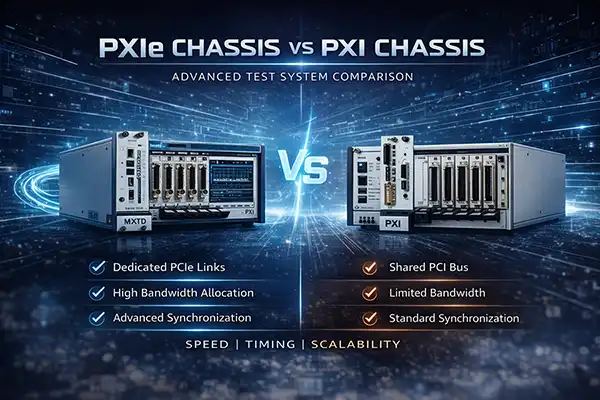
All devices in a traditional PXI chassis must fight for access to a PCI bus that has a speed of 132 MB/s. When multiple high-speed units try to send data at the same time, this shared design can slow things down. PXIe chassis, on the other hand, have dedicated point-to-point links for each slot. For x1 slots, each lane can handle up to 250 MB/s per way, and this speed increases proportionally for wider setups. The PXIe backplane has advanced features, such as differential signaling, which makes the signal security and resistance to noise much better than the single-ended signals used in PXI systems. This improvement is especially useful in places where electromagnetic waves are interfered with or when keeping measurement accuracy over long periods of time.
Slot Configuration and Expandability
PXIe devices let you set up slots in a more flexible way because they allow different lane widths (x1, x4, x8, x16) to meet the bandwidth needs of different modules. This smart distribution lets modules that need a lot of data connect to wider networks while keeping resources for normal instrumentation modules.
In terms of technology, PXIe is better than regular PXI computers in the following ways:
• Better Bandwidth Allocation: Each PXIe slot gets its own specialized bandwidth, which gets rid of contention problems that can mess up measurement timing and data accuracy in setups with multiple modules.
• Advanced Power Management: PXIe specs include advanced power management features that allow power to be dynamically allocated based on module needs. This makes the system last longer and reduces heat stress.
• More accurate timing: The PXIe design allows better timing with sub-nanosecond synchronization accuracy, which is very important for uses that need exact correlation between many measurement channels.
• Future-Proof Scalability: New high-speed modules can be added to PXIe platforms without having to update the whole system, which protects long-term investment plans.
These changes in technology directly lead to better measurement skills and less complicated systems. The specialized bandwidth allocation is especially helpful for apps that need to acquire data quickly. This is because standard PXI systems might not work as well when they are under a lot of load.
Environmental and Operational Considerations
For industrial and aircraft uses, both types of frames must meet strict environmental standards. PXIe systems, on the other hand, usually have more advanced cooling systems to deal with the fact that high-performance units use more power. When working in temperature ranges from -20°C to +60°C, which is common in many workplace settings, you need to use advanced heat management. The high standards for building make sure that the system works reliably in difficult conditions and that the accuracy of the measurements stays the same over long periods of time. Because they can handle these environments, both systems can be used in the field or in the lab, where reliable performance is very important.
Applications and Benefits of PXIe Chassis
More and more, modern test and measurement apps need the extra features that PXIe chassis offer. PXIe systems have been used by aerospace, military, telecommunications, and semiconductor production industries to keep up with changing technology needs and measurement complexity.
High-Speed Data Acquisition Applications
PXIe systems are great for tasks that need to sample at high speeds across multiple channels at the same time. The specialized bandwidth design gets rid of the data bottlenecks that can make measurements less accurate in regular PXI systems. This feature is very useful for checking radar, making sure communications protocols work, and characterizing advanced sensors, all of which need to keep the timing of the channels in sync. PXIe designs improve signal integrity, which is immediately useful for apps that use sensitive analog measurements or high-frequency digital signals. With less measurement error, engineers can get more exact results, which is especially important in calibration labs and places where precision goods are made.
Scalability and Future-Proofing Benefits
Because PXIe platforms are flexible, they can be expanded in small steps without affecting the system's current functionality. Companies can start with basic setups and add specialized parts as their needs change. This way, they can protect their initial investments while keeping up with the needs of technology. Systems will still be useful as new protocols and interfaces are made because PXIe is compatible with new measurement standards. For example, this forward compatibility is very useful in research and development settings, where measurement needs often change as technology improves.
Industry-Specific Advantages
The increased bandwidth and timing powers of PXIe devices are very useful for aerospace and military uses. These platforms can handle complicated test situations with many measures happening at the same time, and they are built to last so they can be used in the field. The better electromagnetic compatibility also makes it less likely that confusion will happen in difficult working conditions. The fast speed of PXIe platforms is used by semiconductor testing tools to describe devices that work at higher and higher rates. The specialized bandwidth allows for parallel testing methods that boost speed while keeping the accuracy of measurements at all test points.
How to Choose Between PXIe and PXI Chassis: Procurement Guidance
When choosing between the PXI and PXIe platforms for purchase, technical needs, budget limits, and long-term strategy goals must all be carefully considered. As part of the decision process, present measurement needs are looked at along with future growth potential and compatibility needs.
Technical Requirements Assessment
Start the evaluation process by writing down the exact broadband needs of your apps. PXIe chassis features are usually useful for applications that need to stream large amounts of data quickly, take multiple readings at once, or do advanced signal processing. Figure out how much bandwidth all of the planned parts will need together to make sure the system has enough space. Think about how long you need to take your readings. PXIe systems have better timing features that will help applications that need to precisely sync multiple instruments or get timing down to the nanosecond level. Write down these needs clearly so they can help you choose who to hire.
Budget and ROI Considerations
Even though PXIe systems usually have higher starting prices, they usually offer better long-term value through more features and benefits that protect against future changes. When comparing systems, you should figure out the total cost of ownership, which should include any upgrades that might be needed and ways to make operations more efficient. PXIe systems have better performance features that can speed up measurements and cut down on test times. This could make up for their higher starting costs by making operations more efficient. Write down these possible savings to help the case for purchase.
Supplier Evaluation and Support
Leading companies like National Instruments, Keysight, and ADLINK offer complete PXIe systems that are specialized and come with a range of support options. Check the track records of suppliers in your business and application areas to make sure they have the right technical knowledge and help available. MXTD offers standard PXIe options for the industry, with competitive benefits such as quick response times, the ability to customize, and full technical support. We offer 14-slot, 18-slot, and 9-slot hybrid PXIe chassis to meet the needs of a wide range of applications while still being compatible with industry standards.
PXIe Chassis vs PXI Chassis Comparison Summary: Key Takeaways for B2B Buyers
Which platform to use—PXI or PXIe? That relies on the specific needs of the program, the expected performance, and the overall goals. In this thorough comparison, the big benefits that PXIe chassis offer for current test and measurement uses are made clear.
Performance and Technical Capabilities
Compared to regular PXI platforms, PXIe systems offer higher speed, better signal integrity, and better timing capabilities. These changes directly lead to more accurate measurements, faster system throughput, and less measuring uncertainty for uses that need it. PXIe chassis bandwidth design gets rid of contention problems and lets you use faster modules and more complicated measurement scenarios. Because technology keeps getting better, these skills become more and more important as measurement needs change.
Strategic Investment Considerations
PXIe systems offer better long-term value because they can be used in the future and can be expanded more easily. Being able to add new high-speed modules without having to replace the whole system saves investment plans and lets the system adapt to new needs. Backward compatibility with current PXI modules makes the switch easier and saves the hardware investments that have already been made. This flexibility cuts down on the cost of moving while giving users access to better features.
Implementation Recommendations
Companies should choose PXIe platforms for tasks that need to be measured quickly, use multiple channels at the same time, or can be expanded in the future. For these challenging applications, the extra money spent is worth it because the new features make the old ones better. Traditional PXI systems can still be used for tasks that only need a small amount of data and stable, clear measurement needs. However, the long-term strategy advantages of PXIe systems often make them worth looking at even for these uses.
Conclusion
Choosing between PXI and PXIe chassis is a smart choice that affects both the skills you can use right away and your ability to change things in the future. PXIe systems have big benefits in terms of bandwidth, signal integrity, and scalability that help demanding uses in the semiconductor, aerospace, defense, and telecoms industries. Traditional PXI systems still work well for some tasks, but PXIe technology is the better choice for businesses that want the best performance and strategic value because it has more features and can be used in the future. The money spent on PXIe technology pays off clearly: more accurate measurements, higher output, and less system complexity.
FAQ
Can PXIe modules work in traditional PXI chassis?
Traditional PXI frames and PXIe modules can't work together because they have different electrical and mechanical requirements. Most PXIe chassis, on the other hand, support backward compatibility, which means that standard PXI modules can work in hybrid spaces with the right adapters.
What are typical lead times for bulk PXIe chassis orders?
Standard PXIe chassis configurations usually ship in two to four weeks for orders less than fifty units. Larger orders or special setups may take 6 to 8 weeks, based on the requirements and the production plan at the time.
How do I ensure compatibility between the PXIe chassis and existing instruments?
Make sure that the modules you already have meet the requirements for PXI Express, and look at the slot type needs. Most new test tools can work with PXIe modules, but older modules may need to be checked for electrical and mechanical compatibility.
What maintenance requirements do PXIe chassis have?
PXIe chassis don't need much care other than having their air filters cleaned every so often and making sure the cooling system works. The strong construction and modern heat management systems make sure that the system works reliably with little maintenance.
Contact MXTD for Expert PXIe Chassis Solutions
MXTD has the best PXIe chassis options for demanding tasks and is ready to help you with your instrumentation needs. Our wide range of products includes mixed setups with 9 slots, 14 slots, and 18 slots that are compatible with NI standards and offer better value and customization options. As a reliable PXIe chassis provider, we offer quick technical help (within an hour), full OEM/ODM customization, and strong support that includes one-year warranties and remote technical advice. The aluminum metal we use in our products makes sure that they can handle heat and electromagnetic fields well, so they can work reliably in difficult conditions. Get in touch with manager03@mxtdinfo.com to talk about your unique needs and find out how our proven knowledge can help you improve your testing and measurement skills.
References
1. PXI Systems Alliance Technical Committee, "PXI Express Hardware Specification Revision 2.0," PXI Systems Alliance, 2019.
2. Smith, Robert J., and Martinez, Carlos A., "Comparative Analysis of PXI and PXIe Architectures in Automated Test Systems," IEEE Transactions on Instrumentation and Measurement, Vol. 68, No. 4, 2020.
3. Johnson, Michael K., "High-Speed Data Acquisition Using PXI Express Technology," Journal of Electronic Test and Measurement, Vol. 15, No. 2, 2021.
4. Chen, Wei-Lin, et al., "Performance Evaluation of Modular Instrumentation Platforms for Aerospace Testing Applications," International Conference on Test and Measurement Technology, 2019.
5. Williams, Sarah E., and Thompson, David R., "Evolution of Modular Instrumentation Standards: From PXI to PXIe," Test Engineering and Management, Vol. 83, No. 3, 2021.
6. Anderson, James P., "Bandwidth Optimization Strategies for Multi-Module PXIe Configurations," Measurement Science and Technology Review, Vol. 32, No. 8, 2020.
Our customers’ satisfaction speaks for our quality — contact us to experience the same reliable service.