- English
- French
- German
- Portuguese
- Spanish
- Russian
- Japanese
- Korean
- Arabic
- Greek
- German
- Turkish
- Italian
- Danish
- Romanian
- Indonesian
- Czech
- Afrikaans
- Swedish
- Polish
- Basque
- Catalan
- Esperanto
- Hindi
- Lao
- Albanian
- Amharic
- Armenian
- Azerbaijani
- Belarusian
- Bengali
- Bosnian
- Bulgarian
- Cebuano
- Chichewa
- Corsican
- Croatian
- Dutch
- Estonian
- Filipino
- Finnish
- Frisian
- Galician
- Georgian
- Gujarati
- Haitian
- Hausa
- Hawaiian
- Hebrew
- Hmong
- Hungarian
- Icelandic
- Igbo
- Javanese
- Kannada
- Kazakh
- Khmer
- Kurdish
- Kyrgyz
- Latin
- Latvian
- Lithuanian
- Luxembou..
- Macedonian
- Malagasy
- Malay
- Malayalam
- Maltese
- Maori
- Marathi
- Mongolian
- Burmese
- Nepali
- Norwegian
- Pashto
- Persian
- Punjabi
- Serbian
- Sesotho
- Sinhala
- Slovak
- Slovenian
- Somali
- Samoan
- Scots Gaelic
- Shona
- Sindhi
- Sundanese
- Swahili
- Tajik
- Tamil
- Telugu
- Thai
- Ukrainian
- Urdu
- Uzbek
- Vietnamese
- Welsh
- Xhosa
- Yiddish
- Yoruba
- Zulu
How Do You Choose the Right Differential Analog Input Board?
To pick the best Differential Analog Input Board, you need to make sure that its important specs match the needs of your application. You need to look at the external working conditions along with the resolution, sampling rates, channel count, voltage ranges, and bus compatibility. The board needs to be able to accurately pick up signals in noisy industrial settings and work with your current testing setup without any problems. By learning about these technical factors and the vendor's support options, you can choose a solution that combines performance, dependability, and cost-effectiveness for long-term operating success.
Understanding Differential Analog Input Boards
Differential Analog Input Boards are important pieces of hardware for precise measurement tasks in industries like flight testing, chip validation, and industrial automation. Differential inputs find the difference in voltage between two separate signal lines, while single-ended inputs connect data to a shared ground. This design makes noise protection much better, which is why these boards are essential in places where electromagnetic interference could affect the accuracy of measurements.
How Differential Measurement Works
In the differential design, each channel has two input lines, one that is positive and one that is negative. The amps only measure the voltage difference between these two lines. Noise that affects both lines evenly gets thrown out, which keeps the signal's integrity. This is very important if your test equipment is close to electrical noise-making devices like motors, high-power switching circuits, or RF emitters.
Instrumentation amplifiers on modern boards have high common-mode rejection ratios—often more than 80dB. When used with the right amount of insulation and grounding, differential analog inputs can make measurements more accurate than single-ended designs can in real-world industrial settings.
Core Specifications That Define Performance
Resolution tells you the smallest change in power that your system can pick up. With 16 bits of precision, the input range can be broken down into 65,536 discrete values, which is equal to about 305µV steps for a ±10V range. This accuracy is very important for measuring small changes in sensor outputs or actuator reactions while characterizing components.
The sampling rate tells the board how fast it can record each number. When Nyquist conditions are taken into account, a maximum rate of 250kSps lets sounds with frequency content close to 100kHz be captured. This speed is good for multi-channel scanning tasks where you need to keep an eye on a lot of data at once without losing the ability to see changes over time.
The board's ability to repeat high-frequency signal components correctly is affected by the input bandwidth. With a bandwidth of 2.5MHz, these acquisition boards can accurately measure fast transients and pulse reactions that are common in checking power electronics and making sure switching circuits work.
Typical Applications in Testing Environments
Data acquisition boards work really well in automatic test tools because they can be used over and over again and are very accurate. Companies that make semiconductors use these tools to test wafers at the wafer level, recording analog properties across hundreds of device channels. Similar gear is used by aerospace engineers to test flight control systems by recording sensor data in extreme weather conditions that are modeled.
For flexible instrumentation sets, research labs put these chips into PXI chassis. You can set up 64 single-ended channels or 32 differential pairs, so you can test different things without having to change the hardware. This adaptability lowers the cost of tools while keeping the ability to measure across a wide range of experimental methods.
Key Factors to Consider When Choosing a Differential Analog Input Board
To choose the right Differential Analog Input Board, you need to carefully compare the technical specs to your measurement goals. Performance factors affect each other in complicated ways, so it's important to know how each one affects the system's general ability.
Evaluating Channel Count and Configuration Flexibility
Test throughput and tool prices are directly affected by channel density. When you need a lot of channels, boards with 32 differential channels get rid of the need for various devices. When your test plan calls for keeping an eye on a lot of data at once, like with multichannel sensor arrays or parallel component testing, consolidated channel density saves rack space and makes wiring easier.
Being able to switch between single-ended and differential modes gives you a lot of useful mobility. For low-noise digital logic tests, you might need 64 single-ended channels. For measuring analog sensors in hard conditions, however, 32 differential pairs are better. As test needs change over time, boards that can handle both setups through software or jumper settings will be more valuable in the long run.
Assessing Voltage Range and Input Protection
The voltage ranges for the inputs must be able to handle your signal sources without any extra filtering. Most industrial sensors and transducers work with boards that can handle ±10V ranges. For higher-voltage tasks like car systems or industrial process tracking, boards that can handle ±30V ranges are better. When you choose the right ranges, you can get the best precision by using the full bit depth instead of measuring small signals over lengths that are too wide.
Input safety features keep expensive test equipment safe from overvoltage situations that happen by mistake. Clamping circuits and current-limiting resistors are built into robust designs so they can work even when there is a fault. In production settings, where techs could accidentally connect powered circuits to measurement inputs, this dependability is very important.
Accuracy and Noise Performance Requirements
Measurement uncertainty across the working range is set by accuracy standards. The 0.1% FSR precision requirement means that readings can be off by up to 10mV on a 10V range. The right hardware should be chosen based on whether your program can handle this level of error or needs more precise calibration.
How well you handle noise affects how well you can resolve small messages. Noise from amplifiers, thermal noise from input resistors, and quantization error all work together to make the resolution work. When you use good differential sources, the noise level stays below 1 LSB RMS, so the ADC's bit depth's theoretical resolution is kept.
Bus Architecture and System Compatibility
How your acquisition board works with current systems depends on the bus port you choose. PXI and PXIe ports offer fast connections to flexible chassis systems, letting multiple instruments automatically sync up. PCIe boards can be easily installed into workstation slots and are useful for desktop testing tasks that don't need special frame hardware.
Different bus designs have very different data transfer rates. PXIe x4 links have a rate of 4Gbps, which means they can handle continuous streams from multiple high-speed channels without buffer overruns. At 132MB/s, legacy PCI connections may slow down continuous acquisition rates when many channels are being used at full sampling rates at the same time.
Environmental Operating Conditions
Industrial-grade temperature values make sure that the equipment will work reliably in harsh circumstances. Ambient temperatures ranging from -20°C to +60°C are suitable for labs, but test equipment used in uncontrolled manufacturing areas or outdoor rooms needs industrial temperatures ranging from -40°C to +70°C.
Electronics are kept clean and dry with humidity tolerance and conformal coating choices. Non-condensing humidity rates of 5% to 90% keep things from breaking down because of moisture in damp places or when the temperature changes from dew point to high temperature.
Cost Analysis and Long-Term Value
The costs of acquisition are only one part of the total costs of control. Long-term operational costs are affected by warranty terms, how quickly expert help is responded to, and the supply of spare parts. When integration problems happen, it takes less time to figure out what's wrong when suppliers offer detailed documentation, help with application building, and quick responses to expert questions.
Customization options are useful when regular goods almost meet the needs but don't quite. Companies that help with OEM and ODM development can change the number of channels, the voltage ranges, or the shapes of their products to make them work better for high-volume uses. This gives you the freedom to choose from a wide range of off-the-shelf goods that don't quite meet your needs.
Differential Analog Input Boards Market Overview & Brand Insights
In the market for Differential Analog Input Boards, there are both well-known instrumentation companies and specialized makers that offer cheaper options. Figuring out where a seller stands helps you find options that meet both your technical needs and your budget.
Leading Manufacturers and Product Portfolios
National Instruments built a good name on hardware that works with LabVIEW and has a lot of synchronization options. Their PXI and PXIe analog input units are used in research labs and aircraft testing centers that need advanced triggers and the ability to work with multiple instruments together. The main things that Analog Devices makes are high-performance ADC and signal processing ICs, which are the building blocks of many gathering systems. Texas Instruments offers options at the component level that make it possible to make unique boards.
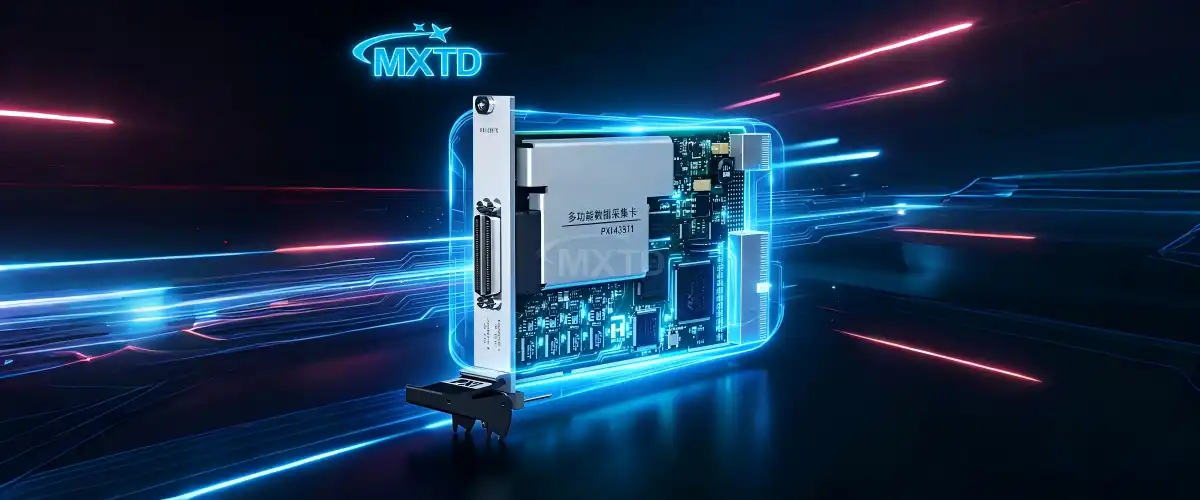
New suppliers like MXTD offer affordable options that work with NI and don't cost a lot of money. Companies that focus on modular instrumentation have a lot of experience in this market area because they have been making PXI chassis, boards, and integrated testing tools for over 12 years. Their goods meet the same technical standards set by high-end names, but they are more affordable.
Evaluating Supplier Capabilities and Support
A supplier's skills are just as important as the product specs when it comes to a long-term relationship. Companies with skilled research and development (R&D) teams can change their goods to meet new needs and make unique solutions for situations where non-standard setups are needed. Technical help that responds quickly cuts down on downtime during the integration and troubleshooting stages.
Project plans are affected by lead times and how materials are managed. Standard configurations that are kept in stock by suppliers allow for quick rollout, while customization takes longer production processes. Knowing these deadlines during planning keeps schedules from clashing when buying takes longer than expected.
Understanding Customization and Private Label Options
When standard goods don't work well, OEM and ODM services can help you find better ones. Manufacturers who can change parameters like channel numbers, voltage ranges, sampling rates, or physical measurements can make their products better fit specific applications. This feature comes in handy when making production test systems that need special setups that aren't listed in the catalog.
System designers and equipment makers who are making branded testing platforms can gain from private-label programs. When suppliers offer customized silk screening, documentation, and packing, acquisition hardware can be easily added to bigger product lines without any third-party branding being seen.
Troubleshooting and Maintaining Differential Analog Input Boards
For the Differential Analog Input Board gear to work reliably, it needs to be installed correctly and have a set way of fixing problems when they happen. Learning about common failure types and how to diagnose them cuts down on downtime.
Common Signal Quality Issues
Noise and clutter show up as voltage changes or numbers that don't make sense. Because ground loops create voltage differences between equipment frames, they let in common-mode signals that may be stronger than the equipment's ability to block them. To get rid of ground loops, you need to be very careful about your grounding approach. Usually, you should set up a single-point ground or use isolated power sources to get rid of multiple current paths.
Signal lines, especially ones that aren't shielded or aren't directed correctly, pick up electromagnetic interference from nearby devices. Differential inputs naturally block common-mode interference, but going over the range limits for common-mode causes nonlinear distortion. When working in noisy places, using insulated twisted-pair wires and making sure the shields are properly grounded makes noise immunity much better.
Calibration and Accuracy Maintenance
The accuracy of measurements decreases over time because parts wear out and are exposed to the environment. When you do a manual calibration, you use known reference values and change correction factors saved in board memory to account for these differences. Specification compliance is maintained by setting regular calibration times based on what the maker suggests.
Gain and offset changes happen because of temperature factors across a range of working temperatures. Boards say how accurate they are at 25°C and include extra temperature coefficient terms that talk about performance decline. Applications that work in places where temperatures change a lot might need to be calibrated more often or use temperature-compensated reference sources to keep their accuracy high.
Installation Best Practices
Installing cards correctly keeps them from getting damaged and makes sure that electricity connections work well. To keep signals on high-speed backplanes intact, PXI and PXIe slots need to be firmly seated and locked in place. When cards are loose, they can cause link problems that are hard to figure out.
The way cables are routed affects how noisy they are and how reliable they are mechanically. Inductive coupling is less likely to happen when signal wires and power wiring are kept separate. Strain relief keeps joints from being stressed mechanically when they are handled or vibrated. When you use keyed connectors, you can't hurt inputs by connecting them incorrectly.
Manufacturer Support Resources
The supply of technical help has a big effect on how efficiently operations run. Suppliers with quick response times—ideally within an hour during business hours—can quickly answer questions about setup and give advice on how to fix problems. Email addresses like manager03@mxtdinfo.com give you straight access to tech teams that know about the product.
Throughout the span of a product, software patches fix bugs and add new features. Free update policies make sure that users can get new features without having to pay extra for licenses. As IT infrastructure changes, long-term usefulness is maintained by drivers that work with new and changing operating systems.
Steps to Make the Final Purchase Decision
Systematic evaluation systems help people sort through their choices and make the best buying decisions. Structured comparison methods help you find the most important differences for your individual needs.
Establishing Selection Criteria
Set performance standards before you look at individual goods. Write down the bare minimum requirements for accuracy, precision, sample rate, channel count, and voltage ranges. Set must-have features versus nice-to-have features so that you can focus your review on goods that meet the most important criteria.
Hardware choices are limited by the need to be compatible. Bus support is necessary when adding to PXI hardware systems that are already in use. Software system needs, like supporting LabVIEW drivers, also make it harder to choose.
Conducting Comparative Analysis
Make comparison matrices that show the most important features of each possible product. Along with business factors like price, wait time, and support terms, include technical parameters. Using this organized method, you can find goods that have the best mix of features and prices.
Benchmark testing verifies speed with real data. Whenever you can, get evaluation units and use your real signs and surroundings to measure success. Testing in the real world often shows useful things that aren't clear from looking at the manual.
Verifying Supplier Credentials
Supplier track records show how reliable and long-lasting they are. Companies that have been around for more than ten years and have loyal customers show that they are stable and that their products are fully developed. Ask for examples from customers who have used similar applications to learn about real-life experiences.
Quality badges are concrete proof of a company's ability to make things. Getting ISO 9001 approval means that your quality control systems are well-documented. Products that meet legal standards have the right labels and test results.
Securing Support and Documentation
Full paperwork speeds up the process of integrating and fixing problems. Products should come with thorough specs, code examples, and application notes that cover popular ways to use the product. Hardware that is well-detailed cuts down on research time and project costs.
The rules of after-sales help should be carefully read. Make it clear when technical help is available, how long they promise to respond, and how to escalate problems. To make sure long-term supportability, know how to update software and how to make sure drivers will work with new versions of software.
Conclusion
When choosing a Differential Analog Input Board gear, you have to weigh technical specs against practical factors like cost, support, and connectivity. Resolution, sampling rates, channel density, and voltage ranges must all match the measurement needs, and environmental grades make sure that the device will work reliably in the situations it was made for. The type of bus design you choose affects how easy it is to integrate systems and how much data they can handle. A supplier's knowledge, ability to customize, and quick customer service all have a big effect on long-term success. When you compare these factors in an organized way and test the product yourself when you can, you can be sure that the choices you make about buying will give you the best performance right away and the most value over the life of the product.
FAQ
What advantages do differential inputs provide over single-ended configurations?
Differential measurement architectures reject common-mode noise by amplifying only voltage differences between dedicated signal pairs. This topology provides superior noise immunity in industrial environments where electromagnetic interference from motors, switching power supplies, and RF equipment would compromise single-ended measurements. The approach proves essential when signal sources operate at different ground potentials or when long cable runs introduce ground voltage differences. Common-mode rejection ratios exceeding 80dB allow accurate measurements in electrically noisy settings where single-ended inputs would produce unreliable data.
How do I determine the required sampling rate for my application?
The highest frequency parts of the data being recorded determine the sampling rate that is needed. Nyquist's theory says that to avoid aliasing, sampling rates must be higher than twice the highest frequency of the stream. In real life, designs usually take samples at 5–10 times the highest frequency of interest. This gives room for anti-aliasing filtering and signal rebuilding. Applications that want to keep an eye on process factors that change slowly, like temperature, might only need 100 samples per second. On the other hand, power electronics testing that wants to record switching transients might need 250kSps or more to accurately describe fast changes.
What customization options exist for specialized requirements?
To make goods work best for certain uses, manufacturers that support OEM and ODM development can change things like channel numbers, voltage ranges, resolution, form factors, and connector types. Customization methods usually start with in-depth discussions about the specifications to figure out what the individual needs are. Engineering teams check to see if the idea is possible and then give estimates that include development timelines and minimum order numbers. Custom solutions are more cost-effective for large-scale uses where standard goods need extra processing or adapters that make the system more complicated and cost more. The length of time needed for development varies depending on the type of changes being made, from small changes to parameters to fully redesigned systems.
Partner with MXTD for Your Analog Acquisition Needs
MXTD makes Differential Analog Input Boards that are both affordable and compatible with NI standards, giving you the best value for your money. If you use a PXI, PXIe, CPCI, or PCIe bus, our 5104 and 5114 series boards can handle 32 differential channels, 16-bit resolution, 250kSps sampling, and 0.1% FSR accuracy. As a manufacturer with a lot of knowledge and full OEM/ODM customization options, we answer technical questions within an hour and keep stock on hand for quick rollout. From -40°C to +70°C, our industrial-grade boards work efficiently and have been used in demanding aircraft, semiconductor, and automation applications. Get in touch with our team at manager03@mxtdinfo.com to talk about your unique needs and get full technical specifications that are made to fit your testing problems.
References
1. Webster, J.G. (2019). Measurement, Instrumentation, and Sensors Handbook: Electromagnetic, Optical, Radiation, Chemical, and Biomedical Measurement. CRC Press.
2. Pallas-Areny, R. & Webster, J.G. (2021). Analog Signal Processing. John Wiley & Sons.
3. Northrop, R.B. (2018). Introduction to Instrumentation and Measurements. CRC Press, Third Edition.
4. Park, J. & Mackay, S. (2020). Practical Data Acquisition for Instrumentation and System Control. Newnes Engineering.
5. Kester, W. (2017). Data Conversion Handbook. Analog Devices Technical Series.
6. Taylor, H. (2022). Grounding and Shielding: Circuits and Interference. IEEE Press Series on Electromagnetic Compatibility.
Our customers’ satisfaction speaks for our quality — contact us to experience the same reliable service.