- English
- French
- German
- Portuguese
- Spanish
- Russian
- Japanese
- Korean
- Arabic
- Greek
- German
- Turkish
- Italian
- Danish
- Romanian
- Indonesian
- Czech
- Afrikaans
- Swedish
- Polish
- Basque
- Catalan
- Esperanto
- Hindi
- Lao
- Albanian
- Amharic
- Armenian
- Azerbaijani
- Belarusian
- Bengali
- Bosnian
- Bulgarian
- Cebuano
- Chichewa
- Corsican
- Croatian
- Dutch
- Estonian
- Filipino
- Finnish
- Frisian
- Galician
- Georgian
- Gujarati
- Haitian
- Hausa
- Hawaiian
- Hebrew
- Hmong
- Hungarian
- Icelandic
- Igbo
- Javanese
- Kannada
- Kazakh
- Khmer
- Kurdish
- Kyrgyz
- Latin
- Latvian
- Lithuanian
- Luxembou..
- Macedonian
- Malagasy
- Malay
- Malayalam
- Maltese
- Maori
- Marathi
- Mongolian
- Burmese
- Nepali
- Norwegian
- Pashto
- Persian
- Punjabi
- Serbian
- Sesotho
- Sinhala
- Slovak
- Slovenian
- Somali
- Samoan
- Scots Gaelic
- Shona
- Sindhi
- Sundanese
- Swahili
- Tajik
- Tamil
- Telugu
- Thai
- Ukrainian
- Urdu
- Uzbek
- Vietnamese
- Welsh
- Xhosa
- Yiddish
- Yoruba
- Zulu
How Do Hermetically Sealed Insulator Connectors Ensure Long-Term Reliability?
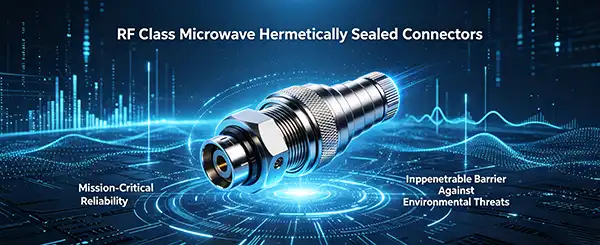
When system failures are not an option, the choice of interconnect components becomes mission-critical. RF Class Microwave Hermetically Sealed Insulator Connectors deliver unmatched long-term reliability by creating an impenetrable barrier against environmental threats that degrade signal integrity and compromise performance. These precision-engineered components employ glass-to-metal sealing techniques that eliminate moisture ingress, oxidation, and contamination—three leading causes of connector failure in high-frequency applications. By maintaining stable impedance characteristics and minimal signal loss across demanding temperature ranges, hermetically sealed designs protect your investment in testing systems, aerospace instrumentation, and defense electronics where downtime carries severe consequences.
Understanding Hermetically Sealed Insulator Connectors and Their Role in Reliability
A special type of connection device called microwave hermetically sealed insulator plugs is made to work in the toughest conditions and keep the integrity of the signal. In contrast to regular RF connections, these parts have a sealed seal that keeps the internal wire contacts from contacting the outside environment.
An RF Class Microwave Hermetically Sealed Insulator Connector is made up of a glass-like material that keeps out noise and perfectly matched metal wires. Our links use a special kind of low-dielectric-constant glass that keeps its electrical properties stable even when the temperature goes from -65°C to +165°C. Iron-cobalt-magnesium alloys with very low thermal expansion coefficients are used for both the inner and outer wires. This thermal compatibility between the metal wires and glass insulator stops stress-induced micro-cracking during thermal cycling, which is a common way for badly designed connections to break.
How Glass-to-Metal Sealing Technology Works
High-temperature mould sintering creates the airtight seal. This is when the glass material chemically joins with the metal conductors at the molecular level. This makes a frame that is one piece instead of a mechanical part. Controlled heating processes are used to make the joint, which lets the glass run and fully wet the metal surfaces. Differential thermal contraction makes the glass shrink as the unit cools. This makes the seal stronger and better able to handle changes in pressure.
Critical Performance Parameters That Define Reliability
Maintaining stable electrical properties throughout the connector's service life is important for ensuring reliable RF transfer. Our microwave plugs are completely sealed and have a characteristic resistance of 50±2Ω across their full frequency range, from DC to 40 GHz. This small limit stops impedance mismatches that cause standing waves and signal echoes. The voltage standing wave ratio (VSWR) stays at or below 1.2 over the frequency range that was given. This means that there is very little power loss and the information is sent very efficiently.
Dielectric withstand voltage exceeding 300V in RF Class Microwave Hermetically Sealed Insulator Connectors ensures the insulator can handle high-power applications without breakdown or arcing. The glass insulating material maintains its dielectric properties across the entire operating temperature range, unlike polymer-based insulators that can degrade or change properties with temperature cycling. Surface gold-plating treatment on the conductors provides superior corrosion resistance and low contact resistance, maintaining signal quality even after years of service in corrosive atmospheres.
Key Design Features and Industry Standards Ensuring Long-Term Reliability
The longevity of hermetic RF connectors stems from deliberate engineering choices that address specific failure mechanisms observed in field deployments. Procurement managers evaluating suppliers should understand these critical design elements that separate truly reliable components from those that merely meet minimum specifications.
Hermetic Sealing Technologies That Prevent Environmental Degradation
When non-hermetic RF links are used outside or in places with a lot of humidity, moisture entry is the most common way they fail. When water molecules get into standard connections, they break down in a number of ways, including electrolytic corrosion on the surfaces of conductors, changes in the dielectric properties of shielding materials, and galvanic corrosion at the points where two different metals meet. Because its glass-to-metal contact is impermeable, an RF Class Microwave Hermetically Sealed Insulator Connector gets rid of these risks.
Our fittings' hermeticity is put through strict helium leak tests to make sure the seal is solid. This non-destructive testing method can find leak rates below 1×10⁻ atm·cc/sec, which means that even molecular-level channels for water to get in are not present. As a point of reference, this level of hermeticity is higher than what is needed for many vacuum-sealed electronics and medical equipment that are implanted.
Testing Protocols That Validate Real-World Performance
Comprehensive testing simulates the cumulative stresses that connectors experience throughout their operational lifetime. Here are the validation protocols we employ:
- Thermal Cycling Testing: Connectors undergo repeated temperature excursions between the specified operational extremes. Our standard protocol includes 500 cycles from -65°C to +165°C with specified dwell times at temperature extremes and controlled ramp rates. Electrical parameters, including impedance, VSWR, and insertion loss, are measured before and after cycling to verify performance stability. The hermetic seal integrity is verified through helium leak testing post-cycling to confirm no degradation has occurred.
- Vibration and Shock Testing: Military and aerospace applications subject connectors to substantial mechanical stresses. We perform vibration testing across multiple axes using frequency sweeps that encompass the resonant frequencies of typical mounting structures. Random vibration profiles simulate the complex vibration spectra encountered in aircraft and ground vehicle installations. High-G shock testing verifies mechanical integrity under impact conditions. Throughout these mechanical stress tests, the connectors maintain electrical continuity and hermetic seal integrity.
- Humidity and Salt Fog Exposure: Even hermetically sealed connectors feature external surfaces that can experience corrosion. Our gold-plated finish provides exceptional corrosion resistance, validated through salt fog testing per MIL-STD-810 standards. Connectors are exposed to 5% salt solution fog for extended periods, then examined for corrosion products or finish degradation. The hermetic seal prevents internal corrosion regardless of external exposure, ensuring the critical signal path remains protected.
These testing protocols provide empirical evidence of long-term reliability, giving procurement teams confidence that connectors will perform throughout the intended service life. Our quality documentation includes test data and certificates of conformance for each production batch, supporting traceability requirements in regulated industries.
Comparing Hermetically Sealed vs. Non-Hermetic Microwave Insulator Connectors
Understanding the performance trade-offs between hermetically sealed and non-hermetic connector designs for RF Class Microwave Hermetically Sealed Insulator Connectors helps procurement professionals make cost-effective decisions aligned with application requirements. While hermetic connectors command premium pricing, their superior reliability often delivers lower total cost of ownership in demanding environments.
Protection Against Moisture and Oxidation
Non-hermetic RF connectors typically employ polymer insulators such as PTFE (polytetrafluoroethylene) or other plastics. While these materials offer excellent dielectric properties initially, they are inherently permeable to water vapor. Over time, moisture diffuses through the insulator and accumulates at metal interfaces. This moisture facilitates electrochemical corrosion that degrades conductor surfaces and increases contact resistance.
In contrast, glass insulator materials in hermetically sealed connectors are completely impermeable to moisture. The glass-metal seal creates an absolute barrier that prevents any water ingress to internal conductor surfaces. This fundamental difference in moisture protection translates to dramatically extended service life in humid, outdoor, or marine environments where non-hermetic connectors fail prematurely.
Total Cost of Ownership Analysis
While hermetically sealed connectors require a higher initial investment, a comprehensive cost analysis reveals their economic advantage in demanding applications. The total cost of ownership calculation should include:
- Initial procurement cost: Hermetically sealed connectors typically cost 40-60% more than comparable non-hermetic designs.
- Installation labor: Installation procedures are similar for both types, representing equivalent labor costs.
- Maintenance and replacement: Non-hermetic connectors in harsh environments may require replacement every 2-5 years, while hermetically sealed versions can operate for 15-20+ years without degradation.
- System downtime: Connector failures trigger unplanned downtime with associated productivity losses and emergency service costs.
- Performance degradation impacts: Gradual parameter drift in non-hermetic connectors can compromise test data validity, potentially leading to acceptance of defective products or rejection of good units.
When amortized across the connector's operational lifetime, the higher initial cost of hermetically sealed components becomes negligible compared to the cumulative costs of multiple replacements, downtime events, and performance uncertainty associated with non-hermetic alternatives.
Real-World Applications and Benefits for B2B Clients
The unique capabilities of hermetically sealed insulator connectors make them indispensable in applications where reliability directly impacts mission success, safety, or regulatory compliance. Understanding these application contexts helps procurement teams identify scenarios where investing in hermetic technology delivers strategic value.
Aerospace and Defense Systems
Radar sites, military communications gear, aircraft electronics, and missile guiding systems all work in harsh conditions with big changes in temperature, shaking, humidity, and altitude. When parts of these systems break, the results can be disastrous. In phased array radar systems, electronic warfare equipment, and satellite communication platforms where performance loss is not acceptable, our RF Class Microwave Hermetically Sealed Insulator Connectors are used as important data paths.
Because our links are small and light, they can be used in aircraft applications that have strict space and weight limits. We can make small form factors without sacrificing electrical performance or industrial strength by using glass insulators and optimised wire shapes. The steady operation in temperatures ranging from -65°C to +165°C can handle the wide range of temperatures that are found in many places, from high-altitude flights to work in the desert.
Semiconductor Testing and Electronics Manufacturing
Production test systems for RF and microwave components require measurement accuracy and repeatability that depend entirely on the stability of test fixturing and interconnects. Test engineers deploying automated test equipment (ATE) systems rely on hermetically sealed microwave connectors to maintain calibration integrity across thousands of device insertions and extended operational periods.
Our connectors meet NI product model requirements, enabling seamless integration into PXIe-based modular instrumentation systems widely used in semiconductor fabs and electronics manufacturing facilities. The 50±2Ω impedance tolerance and VSWR ≤1.2 specification ensure that measurement uncertainties remain within acceptable bounds for characterizing high-frequency devices. The broad frequency coverage from DC to 40 GHz accommodates testing requirements spanning baseband digital signals through millimeter-wave RF performance verification.
Procurement Insights: Selecting, Sourcing, and Partnering with Trusted Suppliers
Successful procurement of hermetically sealed insulator connectors requires evaluating suppliers against criteria that extend beyond pricing to encompass technical capability, quality systems, and long-term partnership potential. The decision carries strategic implications since connector reliability directly impacts system performance and total cost of ownership.
Evaluating Supplier Capabilities and Certifications
Technical competence represents the primary qualification criterion. Xi'an Mingxi Taida Information Technology Co., Ltd. (MXTD) brings over 12 years of specialized experience in RF and microwave connector design and manufacturing. Our in-house capabilities span the complete development cycle from initial concept through precision machining, hermetic sealing, testing, and final inspection. This vertical integration ensures quality control at every production stage and enables rapid response to custom design requirements.
Our quality management system aligns with international standards, providing procurement teams with confidence in process consistency and traceability. Each production batch undergoes rigorous testing, including electrical parameter verification, hermetic seal validation, and dimensional inspection. We provide comprehensive test reports and certificates of conformance with each shipment, supporting customer quality assurance and regulatory compliance requirements.
Understanding Lead Times and Inventory Availability
Standard catalog products from our RF Class Microwave Hermetically Sealed Insulator Connector line are maintained in inventory for immediate shipment. This stock availability supports rapid prototype development and emergency replacement situations where extended lead times are unacceptable. We respond to customer inquiries within one hour, providing technical specifications, pricing, and delivery information that enables fast procurement decisions.
Custom connector designs require engineering collaboration to define specifications, followed by tooling development and production setup. Depending on design complexity, custom product lead times typically range from 6-12 weeks from design finalization to first article delivery. Our engineering team works closely with customers during the specification phase to optimize designs for manufacturability, potentially reducing development time and production costs. We arrange production schedules based on customer requirements, accommodating both prototype quantities and volume production runs.
Pricing Transparency and Value Optimization
Our pricing structure reflects the sophisticated materials, precision manufacturing processes, and rigorous testing required to deliver genuinely reliable hermetic connectors. While our products command premium positioning relative to non-hermetic alternatives, they offer exceptional value when evaluated against competing hermetically sealed connector suppliers. We provide cost-effective alternatives to traditional suppliers while maintaining equivalent or superior performance specifications.
Custom OEM/ODM projects receive dedicated engineering support and transparent quotations that detail material costs, tooling investments, and per-unit pricing across various order quantities. This pricing transparency enables procurement teams to perform accurate cost modeling and identify the optimal order quantities that balance inventory carrying costs against volume discounts.
Conclusion
The quality and design of connection components are very important for the long-term dependability of RF and radio systems. RF Class Microwave Through impermeable glass-metal sealing, thermally matched materials, and thorough approval testing, Hermetically Sealed Insulator Connectors have been shown to work well in the toughest aircraft, defence, telecommunications, and research uses. The original investment in hermetic technology pays off over many years with stable operation, low upkeep needs, and signal integrity that non-hermetic options can't match. If procurement workers want to keep the total cost of ownership as low as possible while still getting the most out of their systems, they should focus on tightly sealed designs from companies that have a history of engineering excellence and strong quality systems.
FAQ
1. What materials are used in microwave hermetically sealed insulator connectors?
Our connectors utilize special low-dielectric-constant glass as the insulating medium, chosen for its stable electrical properties and impermeability to moisture. The inner and outer conductors are manufactured from iron-cobalt-magnesium alloy materials specifically selected for their thermal expansion coefficients that closely match the glass insulator. This thermal matching prevents stress-induced seal failures during temperature cycling. The conductor surfaces receive gold plating treatment, providing superior corrosion resistance and low contact resistance for stable electrical performance.
2. How does hermetic sealing enhance reliability in challenging environments?
Hermetic sealing creates an absolute barrier preventing moisture, gases, and contaminants from reaching internal conductor surfaces. This protection eliminates the primary failure modes that degrade non-hermetic connectors: electrochemical corrosion, dielectric property changes, and oxidation. The monolithic glass-metal seal maintains integrity across temperature extremes from -65°C to +165°C, through vibration and shock exposure, and throughout decades of service. This environmental protection ensures stable impedance, consistent VSWR, and reliable signal transmission regardless of external conditions.
3. What are typical lead times for custom connector manufacturing?
Standard RF Class Microwave Hermetically Sealed Insulator Connector products maintained in our inventory ship immediately upon order confirmation. Custom connector designs require engineering collaboration to finalize specifications, typically followed by 6-12 weeks for tooling development and first article production. Lead times depend on design complexity, special material requirements, and current production schedules. We work closely with customers to understand project timelines and prioritize urgent requirements when possible. Contact our team for specific lead time estimates based on your technical requirements.
Partner with MXTD for Superior RF Connector Solutions
System architects and procurement managers who demand uncompromising reliability should consider MXTD as your strategic RF Class Microwave Hermetically Sealed Insulator Connector supplier. Our 12-year track record in precision connector manufacturing, combined with extensive PXIe integration experience, positions us to deliver both standardized products and custom-engineered solutions tailored to your specific requirements. We support OEM/ODM development partnerships, offering competitive pricing that challenges incumbent suppliers while maintaining the quality standards your applications demand. Contact our technical team at manager03@mxtdinfo.com to discuss your connector requirements, request detailed specifications, or obtain project-specific quotations with a rapid one-hour response time.
References
1. Blackwell, G.R. (2018). The Electronic Packaging Handbook: Fundamentals and Enabling Technologies. CRC Press Engineering Standards Series.
2. Gilmour, A.S. (2020). Microwave and Millimeter-Wave Connector Technology: Design Principles and Applications. Artech House Microwave Library.
3. Harper, C.A. (2017). High-Reliability Connectors for Aerospace and Defense Systems. McGraw-Hill Professional Engineering Standards.
4. Institute of Electrical and Electronics Engineers (2019). IEEE Standard for Hermetic Sealing of Electronic Components: Testing Methods and Performance Criteria. IEEE Standards Association Publication.
5. Military Specifications and Standards Department (2021). MIL-PRF-39012: Performance Specification for Radio Frequency Connectors, General Specification. U.S. Department of Defense Standards.
6. Worden, R.P. & Chen, L. (2019). Glass-to-Metal Sealing Technologies in High-Frequency Applications: Materials Science and Manufacturing Processes. Journal of Electronic Materials Technology, Volume 47, Issue 3.
Our customers’ satisfaction speaks for our quality — contact us to experience the same reliable service.