- English
- French
- German
- Portuguese
- Spanish
- Russian
- Japanese
- Korean
- Arabic
- Greek
- German
- Turkish
- Italian
- Danish
- Romanian
- Indonesian
- Czech
- Afrikaans
- Swedish
- Polish
- Basque
- Catalan
- Esperanto
- Hindi
- Lao
- Albanian
- Amharic
- Armenian
- Azerbaijani
- Belarusian
- Bengali
- Bosnian
- Bulgarian
- Cebuano
- Chichewa
- Corsican
- Croatian
- Dutch
- Estonian
- Filipino
- Finnish
- Frisian
- Galician
- Georgian
- Gujarati
- Haitian
- Hausa
- Hawaiian
- Hebrew
- Hmong
- Hungarian
- Icelandic
- Igbo
- Javanese
- Kannada
- Kazakh
- Khmer
- Kurdish
- Kyrgyz
- Latin
- Latvian
- Lithuanian
- Luxembou..
- Macedonian
- Malagasy
- Malay
- Malayalam
- Maltese
- Maori
- Marathi
- Mongolian
- Burmese
- Nepali
- Norwegian
- Pashto
- Persian
- Punjabi
- Serbian
- Sesotho
- Sinhala
- Slovak
- Slovenian
- Somali
- Samoan
- Scots Gaelic
- Shona
- Sindhi
- Sundanese
- Swahili
- Tajik
- Tamil
- Telugu
- Thai
- Ukrainian
- Urdu
- Uzbek
- Vietnamese
- Welsh
- Xhosa
- Yiddish
- Yoruba
- Zulu
How Accurate Is a PXIe Digital Multimeter in Industrial Testing?
When measures that can make or break the quality of a product are used in industry, accuracy is a must. A PXle digital multimeter can measure DC voltage with an accuracy of within ±0.003% to ±0.015%, which is much better than standard portable tools. This level of accuracy is used for checking semiconductor wafers, validating aerospace parts, and diagnosing defense systems. In these areas, measurement mistakes could cause catastrophic failures or expensive production delays. The modular design and 6½-digit resolution of these tools make it possible to measure consistently, which is what quality standards and legal systems require.
Introduction
In industrial testing settings, every important decision is based on how accurate the measuring tools are. Whether we're checking the performance of circuit boards in the electronics industry or making sure that military uses follow the rules, the measurement tools we choose have a direct effect on how things work. The way engineering teams approach testing problems has changed because modular equipment lets them work together in ways that separate meters can't.
Modern automated test equipment needs tools that can give the same data over and over again, even after thousands of measurement rounds. This need is met by the PXI Express technology, which has synchronized timing, high-speed data flow through PCIe Gen 2 design, and rack-mount form factors that work well in industrial settings. Test engineers look at measurement solutions and consider more than just the original accuracy requirements. They also consider long-term stability, testing intervals, and the benefits of integrating the solution into the whole system. This study helps procurement managers and technical leaders get the most out of the money they spend on testing infrastructure.
Understanding Accuracy in PXIe Digital Multimeters
Defining Measurement Accuracy vs. Precision
Accuracy in measurements means how close a reading is to the real number, while precision means how often the measurement can be made. The PXIe3400 is a modular multimeter from the current generation. Its 6½-digit precision is made possible by improved analog-to-digital conversion methods. This sensitivity lets the instrument tell the difference between voltage changes as small as 1 microvolt in some ranges, which is very important for figuring out how low-noise amps or precise voltage references work.
When you look at specs, accuracy claims usually include both gain and offset error parts. A gadget that measures DC voltage at ±300V might say that its accuracy is ±(0.0035% of reading + 0.0005% of range), which means that the uncertainty of the measurement grows with both the recorded value and the range chosen. Knowing these specs helps test engineers match the powers of a tool with the needs of an application.
Key Specifications Driving Performance
Modern modular digital multimeters have a technology structure that combines a lot of different factors. Resolution at 6½ digits gives enough dynamic range for most industry uses without the higher cost of systems with 7½ or 8½ digits. The ±300V DC voltage range can handle testing power supplies, making sure motor drives work, and checking battery management systems, which are popular in the aerospace and car industries.
When measuring voltage, the input impedance is higher than 10GΩ. This reduces the effects of circuit loading that could change results in high-impedance circuits. Instruments like the PXIe3400 can handle common-mode voltage because they are designed to be isolated. This means that readings can be made in grounded systems without creating ground loops. When measuring milliohm-level resistances in power distribution components or contact resistance in connector assemblies, four-wire measurements are essential because they get rid of lead resistance mistakes.
Environmental and Technical Factors
Temperature coefficients show how the accuracy of a measurement changes as the environment changes. In the -40°C to +85°C temperature range that is common in production test cells, industrial-grade parts keep to stricter standards. Initial accuracy is affected by the amount of time it takes to warm up. Most modular instruments need 30 to 60 minutes to reach thermal balance before they can meet published standards.
In places with a lot of electrical noise, the ability to block out noise is important. With different integration times and filtering choices, engineers can trade off measurement speed for low noise. Longer integration periods lower interference without the need for a lot of protection when testing on production lines close to motor drives or switching power sources.
Comparative Accuracy Analysis: PXIe vs Other Popular Digital Multimeters
Modular Systems vs. Handheld Instruments
Handheld digital multimeters from companies like Fluke are still necessary for field service and repair, but they can't be used for automatic testing. When measuring DC voltage with a small device, the accuracy requirements are usually ±0.05%, which is lower than the ±0.003% that can be reached with modular tools. When defining precision analog circuits or verifying secondary standards, this five-fold difference becomes important.
The difference is more than just a matter of numbers. Standard application programming interfaces (APIs) let modular digital multimeters, such as PXle digital multimeter, connect to test sequencing software. This gets rid of the need for human recording mistakes and lets you manage the statistical process. Automation through modular instruments cuts test time from hours to minutes while improving data accuracy when R&D centers check 500 measurement points per device across 100 units every day.
Different uses have different cost concerns. Handheld meters are useful for technicians who are trying to figure out occasional problems because they are portable and can run on batteries. Multiple instruments sharing a PXI Express chassis allow for parallel testing, which is better for production settings because it lowers the cost per channel compared to buying comparable independent meters.
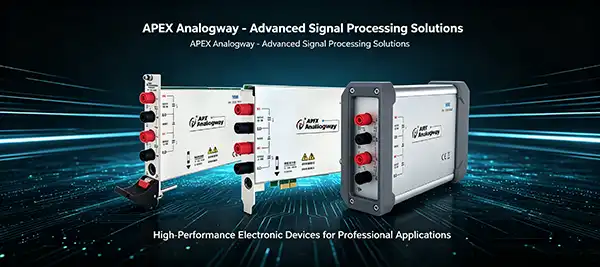
Digital vs. Analog Measurement Approaches
Even though analog meter moves are important to history, they are not as accurate or detailed as digital conversion methods used today. Analog meters are only useful for a few specific tasks because they have problems like parallax mistakes, mechanical wear, and a limited range. Digital multimeters get rid of these problems by measuring electronically and showing numbers.
The PXle digital multimeter works better because it has high-resolution ADCs that sample input data at speeds that let you measure frequencies up to 300kHz. This feature makes the instrument useful for more than just measuring DC. It can also be used for AC waveform analysis, pulse timing, and frequency counting, which are common tasks in checking communications equipment and making sure sensors work.
Benchmarking Against Generic Solutions
Generic or low-cost multimeters may look good because they are cheap, but they pose risks in situations where quality is important. When standards for accuracy are lowered, measurement uncertainty bands get bigger. This could let bad parts get through inspection or cause yield loss through false rejects. When military suppliers have to keep Cpk numbers above 1.67 for important parameters, measurement uncertainty has a direct effect on how well the process can work.
When you buy instruments that work with National Instruments designs, you can be sure that they will be available for a long time and that they meet national standards for accuracy and testing. The PXIe3400 can be customized to meet OEM/ODM needs. System designers can choose measurement ranges, triggering choices, and interface methods that are best for their applications. This gives you the freedom to choose instead of having to make expensive choices when trying to fit standard tools into unique test needs.
Practical Applications: Accuracy Impact on Industrial Testing Outcomes
Voltage and Resistance Measurements in Production
When describing integrated circuits across process corners, semiconductor makers depend on accurate voltage readings. The threshold voltages, bandgap standards, and regulator output voltages of a device must all be within millivolt limits. The ±300V range and microvolt precision make it possible to test everything from low-level analog signals to high-voltage power control circuits with just one tool.
Using four-wire methods to measure resistance gets rid of mistakes that happen when measuring contact resistance for car connectors. When the specs say that the contact resistance has to be less than 10mΩ, two-wire readings would include lead resistance that is higher than the allowed range. Four-wire methods that can handle up to 10MΩ resistance accurately characterize over 60 years of resistance, which can be used for everything from checking the current switch to testing the insulation resistance.
The flexible digital multimeter style lets you test in parallel. A 4-slot PXI Express chassis can hold several measurement units, which lets you characterize power use, signal voltages, and timing factors all at the same time. This parallelization cuts down on the time needed to test each device, which speeds up production without lowering the quality of the measurements.
Fault Detection and Diagnostic Efficiency
Accurate tests that quickly find broken parts help maintenance operations in industrial robotics. Technicians check power levels, control signals, and sensor outputs to figure out what's wrong with motor drive systems that have faults that happen from time to time. The difference between measurement errors of 0.01% and 0.1% can mean the difference between replacing a broken but working part and finding the real problem.
Instruments like the PXIe3400 and the PXle digital multimeter have advanced prompting features that allow readings to be made across multiple channels that are time-correlated. Engineers record voltage levels that are in sync with data changes when they are trying to figure out why communication is failing in industrial networks. This helps them find problems with signal integrity that random readings might miss. With this feature, testing time can be cut from hours to minutes, which cuts down on the costs of production downtime that can reach thousands of dollars per hour.
It can measure frequencies up to 300kHz, which helps fix problems with PWM motor drives, switch-mode power sources, and sensor connections. Getting accurate readings of the frequency helps find time problems, oscillator drift, or interference problems that are stopping the system from working. Having features for measuring DC, AC, resistance, and frequency all in one package cuts down on the number of instruments needed and makes setting up test stations easier.
Safety Considerations in Electrical Testing
During high-voltage system tests, the safety of the people working directly depends on how accurate the electrical readings are. To make sure that safety interlocks properly stop dangerous voltages, you need instruments that can measure up to their rated limits. The ability to handle ±300V DC and AC RMS covers normal voltage levels in the industry while keeping safety limits.
Isolated designs protect against ground flaws and lower the risk of shock. Isolation stops measurement loops that could power up unexpected paths when testing three-phase motor systems or distributed power designs with more than one ground reference. Modular instruments have a high common-mode voltage tolerance that saves both the object being tested and the system being used to measure it.
The possibilities of a tool are enhanced by using it correctly. Before engineers link to live circuits, they make sure the voltage range settings are correct, the probe values are correct, and the grounding arrangements are correct. The digital readout gets rid of the chance of misunderstanding that comes with traditional meter scales. This is especially helpful when you are in a hurry while fixing.
Procurement Insights for B2B Clients: Ensuring You Get Accurate PXIe Digital Multimeters
Evaluating Models Based on Application Requirements
System architects selecting measurement instrumentation begin by defining accuracy requirements based on device specifications and test margins. It takes a different kind of device to measure a 5V source with a ±2% tolerance than it does to characterize a 10V voltage reference with a ±0.01% tolerance. The PXle digital multimeter has a resolution of 6½ digits, which is good for situations where four to five decimal places of accuracy are useful but not when the higher-resolution systems are too expensive.
Range needs determine if a single type of tool can meet all test requirements. The ±300V range checks the voltage of the power source, the backplane, and the motor drive. Power usage analysis and load tests can be done with current measurements accurate to ±3A. Resistance ranges from two wires to 100MΩ and from four wires to 10MΩ can be used for both low-resistance contact testing and high-resistance insulation testing.
Working with Authorized Suppliers and Support Networks
Working with well-known providers has benefits that go beyond the original purchases. With more than 12 years of experience, Xi'an Mingxi Taida Information Technology Co., Ltd. provides both standard goods that can be bought right away and unique solutions with set production times. Their promise to answer customer questions within an hour meets the needs of engineering development and production ramp activities that need to happen quickly.
Support services and warranties protect the money you spend on tools. Total cost of ownership goes down with standard one-year guarantees that can be expanded in certain situations. Remote video technical support can help with setup problems and answer questions without having to send someone to the site for service, which cuts down on downtime. Free program updates make sure that instruments can still work with new test platforms and operating systems.
Customization and Compatibility Considerations
Integrating PXle digital multimeter into OEM/ODM tailoring lets system designers request changes that meet the specific needs of each application. Custom software can add unique measurement modes, adjust trigger behavior, or introduce proprietary communication methods. Hardware customization may include modifying connector configurations, improving resistance to weather exposure, or adding signal processing capabilities.
Integration possibilities are wide because it works with National Instruments systems. Engineers who are familiar with NI's software development tools can use current code packages and drivers that work with different hardware. The benchmarking equivalence gives procurement managers a range of competitive buying choices that balance low costs with proven performance. When a product's performance stays the same over multiple years of production, it's not necessary to go through expensive requalification processes to replace old test equipment.
Future Trends: Accuracy Innovations in PXIe Digital Multimeters and Industrial Testing
Sensor Technology and Signal Processing Advances
New architectures for analog-to-digital converters offer better resolution without costing more or using more power. When the oversampling ratio for a delta-sigma converter is more than 1000x, it can achieve practical resolutions higher than 24 bits while still keeping measurement speeds fast enough for automated tests. With these improvements, the next wave of modular digital multimeters will be able to get close to the performance of specialist calibration tools.
Digital signal processing methods make it easier to get rid of noise and let you use more advanced measurement modes. Real-time digital filtering changes based on interference patterns so that accuracy is kept even in harsh electrical settings. Waveform capture settings save unprocessed digital signals, which lets later processing pull out several factors from a single measurement. This feature cuts down on test time because it gets rid of the need for different measurement passes for DC level, AC content, and noise characterisation.
IoT and Industry 4.0 Integration
Predictive maintenance strategies are possible with connected measurement systems that send data to centralized analytics platforms. When test equipment keeps an eye on its own performance indicators, like tracking calibration drift, usage patterns, and environmental conditions, repair teams know when accuracy standards are being met before the equipment stops working as well as planned. This proactive method cuts down on unplanned downtime and stops the expensive problems that come from measures being out of range without being found.
When machine learning programs look at data from production tests, they find small links between measurement trends and how reliable a product is. When certain voltage traits seen during a functional test match up with field failures months later, makers tighten test limits to catch weak devices before they ship. The PXle digital multimeter isn't just a tool for measuring; it's also a source of data that helps processes that are always getting better.
Preparing for Next-Generation Systems
Companies that buy test equipment now should think about how it can be expanded in the future. As the need for bandwidth grows, chassis platforms that handle both current PXI Express Gen 2 and future Gen 3 standards will protect the tools you already have. With a modular design, you can make small changes over time, like replacing measurement cards instead of whole test units.
Software abstraction layers separate test code from individual hardware implementations. This makes it easier to upgrade instruments in the future. Well-architected test programs don't need many changes when switching between modules that are the same but from different suppliers. This flexibility cuts down on the engineering work and proof testing that needs to be done when equipment is changed, which lowers the total cost of ownership over a product's lifecycle, which can last for many years.
Conclusion
In the aerospace, automobile, semiconductor, and electronics industries, accurate measurements used in industrial tests are key to quality results, efficient output, and following rules. The PXle digital multimeter platform offers accuracy, freedom in integration, and low cost that can't be found in separate instruments. With features like six-digit precision, measurement ranges of ±300V, and the ability to measure four-wire resistance, these modular systems can handle a wide range of challenging tasks, from R&D characterization to high-volume production. Strategic relationships with experienced suppliers give you access to both standard solutions that are in stock and unique designs that meet your specific needs. As measurement technology improves by becoming more intelligent and connected, companies that build their test infrastructure on flexible platforms are ready to use new technologies while protecting the investments they have already made.
FAQ
How does PXIe digital multimeter accuracy compare to handheld instruments?
DC voltage accuracy of modular instruments is usually between ±0.003% and ±0.015%, which is about five times better than the quality of mobile meters' accuracy of ±0.05%. This difference in accuracy is very important when describing precise analog circuits, adjusting secondary standards, or keeping tight control over the production process. The PXIe digital multimeter also works better with automatic test systems, so mistakes in recording are not made by hand, and thousands of readings can be analyzed statistically.
What calibration practices maintain measurement accuracy over time?
Most industrial uses only need to be calibrated once a year, but important defense and aircraft projects may need to be checked every six months. Drift rates are changed by how the instruments are used. Instruments that are used constantly in controlled settings are less stable than those that are moved around a lot or where the temperature changes quickly. Automated calibration management systems keep track of the history of each device and make plans more efficient based on how well they are working. Choosing providers whose calibration services are traceable to national standards makes compliance paperwork easier and makes sure that all of an instrument fleet's measurement sources are the same.
Can PXIe systems meet safety-critical testing standards?
When chosen correctly, modular digital multimeters meet the safety and EMC standards for workplace test tools. The PXIe3400 and other instruments like it have an isolated design, a high common-mode voltage tolerance, and voltage range specs that make them suitable for checking systems that are already powered up. For regulated sectors, qualification methods are backed up by paperwork like safety data sheets, CE certifications, and compliance statements. When engineers set up test stations, they make sure that the right safety interlocks, grounding practices, and operational processes are used along with the instruments' powers to protect everyone who works there.
Contact MXTD for Your PXIe Digital Multimeter Requirements
MXTD can help you with your industrial testing needs because they have a lot of experience with modular instruments. Our PXle digital multimeter products meet the requirements for accuracy, customization, and integration that are needed for high-stakes applications. The PXIe3400 has a resolution of 6½ digits, an isolated design for high common-mode rejection, and industrial-grade parts that make sure it works reliably in research, aircraft, semiconductor, and car electronics. As an established PXIe digital multimeter seller with more than 12 years of specialized experience, we offer quick expert support, full warranties, standard goods from stock, and unique solutions that meet your exact parameter needs. You can email our engineering team at manager03@mxtdinfo.com to talk about how our measurement tools can help you improve the accuracy and speed of your tests.
References
1. National Institute of Standards and Technology. "Guidelines for Digital Multimeter Calibration." NIST Special Publication 1700-22, 2019.
2. Institute of Electrical and Electronics Engineers. "Standard for Precision Measurement of AC and DC Parameters with Digital Multimeters." IEEE Standard 1057-2017.
3. International Organization for Standardization. "Test and Measurement Equipment—Specification and Verification Requirements." ISO 10012:2003.
4. Society of Automotive Engineers. "Measurement Systems Analysis for Electrical Test Equipment in Automotive Applications." SAE J1211, 2018.
5. Aerospace Industries Association. "Calibration and Measurement Requirements for Electronic Test Equipment." AIA NAS-410 Revision 4, 2020.
6. Semiconductor Equipment and Materials International. "Specification for Automated Test Equipment Measurement Accuracy and Repeatability." SEMI E133-0717, 2017.
Our customers’ satisfaction speaks for our quality — contact us to experience the same reliable service.