- English
- French
- German
- Portuguese
- Spanish
- Russian
- Japanese
- Korean
- Arabic
- Greek
- German
- Turkish
- Italian
- Danish
- Romanian
- Indonesian
- Czech
- Afrikaans
- Swedish
- Polish
- Basque
- Catalan
- Esperanto
- Hindi
- Lao
- Albanian
- Amharic
- Armenian
- Azerbaijani
- Belarusian
- Bengali
- Bosnian
- Bulgarian
- Cebuano
- Chichewa
- Corsican
- Croatian
- Dutch
- Estonian
- Filipino
- Finnish
- Frisian
- Galician
- Georgian
- Gujarati
- Haitian
- Hausa
- Hawaiian
- Hebrew
- Hmong
- Hungarian
- Icelandic
- Igbo
- Javanese
- Kannada
- Kazakh
- Khmer
- Kurdish
- Kyrgyz
- Latin
- Latvian
- Lithuanian
- Luxembou..
- Macedonian
- Malagasy
- Malay
- Malayalam
- Maltese
- Maori
- Marathi
- Mongolian
- Burmese
- Nepali
- Norwegian
- Pashto
- Persian
- Punjabi
- Serbian
- Sesotho
- Sinhala
- Slovak
- Slovenian
- Somali
- Samoan
- Scots Gaelic
- Shona
- Sindhi
- Sundanese
- Swahili
- Tajik
- Tamil
- Telugu
- Thai
- Ukrainian
- Urdu
- Uzbek
- Vietnamese
- Welsh
- Xhosa
- Yiddish
- Yoruba
- Zulu
High-Reliability Military Connector Solutions for Critical Systems
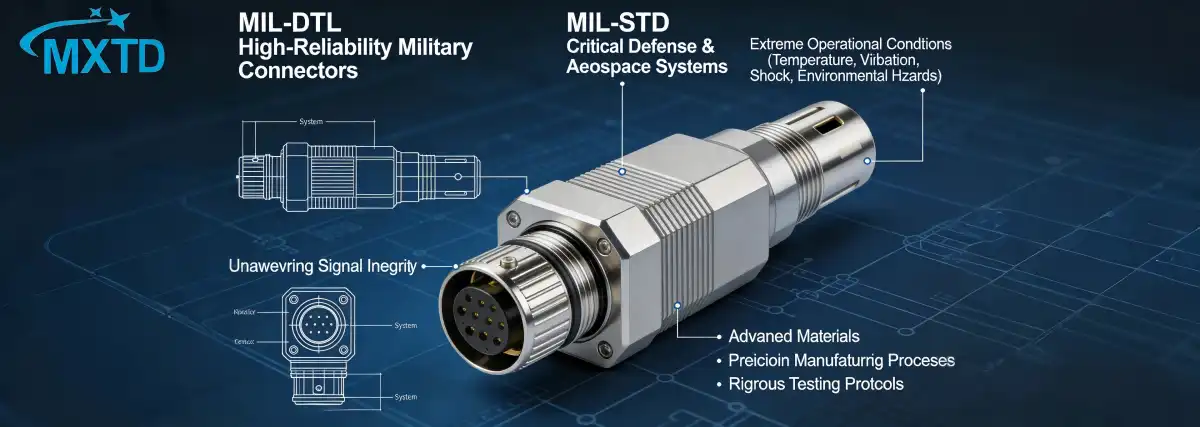
High-reliability military connector solutions represent the backbone of critical defense and aerospace systems, engineered to withstand extreme operational conditions while maintaining unwavering signal integrity. These specialized components adhere to stringent military specifications such as MIL-DTL and MIL-STD standards, ensuring exceptional performance in mission-critical applications where failure is not an option. Unlike commercial counterparts, military-grade connectors incorporate advanced materials, precision manufacturing processes, and rigorous testing protocols that guarantee operational excellence across temperature extremes, vibration, shock, and environmental hazards.
Understanding High-Reliability Military Connectors
The most important defense and aircraft systems depend on high-reliability military connector options that are built to work in harsh circumstances and keep the integrity of the signals. These unique parts are made to strict military standards like MIL-DTL and MIL-STD, which makes sure they work perfectly in mission-critical situations where failure is not an option. Unlike commercial connections, military-grade connectors are made with advanced materials, precise production processes, and strict testing procedures that make sure they work perfectly in harsh environments with high and low temperatures, vibration, shock, and other environmental dangers.
Technical Standards and Specifications
When compared to normal market parts, military connectors have to meet a lot more strict requirements. The MIL-DTL-38999, MIL-DTL-5015, and MIL-STD-1760 standards spell out exactly what these plugs must do to meet their contact resistance, insulation resistance, and environmental protection grades. The requirements in this document make sure that defense contractors and system designers get parts that can keep signals safe in situations where regular connections would fail. These connections are made with complex metallurgy. The contacts are usually gold-plated over nickel barriers to keep them from rusting and to ensure long-term transmission. Aluminum alloys or stainless steel are often used as shell materials because they are lightweight and protect against electromagnetic interference while keeping the structure's integrity under dynamic stress.
Environmental Protection and Durability Features
Military links are different from business ones because they can withstand harsh environments. These parts can handle temperature changes from -65°C to +200°C, humidity levels of up to 95%, and changes in elevation of more than 70,000 feet. Resistance to salt spray, vibration, and shock absorption ensures effective performance in military, airborne, and ground-based uses. Using advanced elastomer compounds and precision-machined contacts, these connections have sealing technologies that keep wetness and contamination out. This amount of environmental protection is very important for aircraft systems, since a broken connector could hurt the mission or put people in danger.
Comparing High-Reliability Military Connectors and Commercial Connectors
Performance and Material Differences
There is a big difference between military and business connectors that goes beyond simple specs and into the theory behind their design. When it comes to military connectors, durability and dependability are more important than cutting costs. This means that the parts will keep working well for a long time. Commercial links are useful for many tasks, but they often trade longevity for cost-effectiveness. The choice of materials is a key difference. Military connections are made of aerospace-grade aluminum, stainless steel, and special polymer materials that don't break down when exposed to chemicals, UV light, or wear and tear. Contact systems use valuable metal plating with controlled thickness parameters to keep signal loss to a minimum and to protect against rust over many years of use.
Testing Rigor and Compliance Standards
For High-reliability military connector approval, there are strict testing procedures that market parts don't usually go through. Thermal cycling tests speed up the time it takes to operate and mimic years of changing temperatures. Vibration and shock testing mimics the conditions that planes, ships, and vehicles on the ground face when they are working in battle zones. Electromagnetic compatibility testing makes sure that these connectors don't mess up sensitive electronic systems, and salt spray testing proves that they won't rust after being exposed to water for a long time. These thorough evaluation methods give procurement managers faith in the dependability of parts for important uses.
How to Choose the Right Military Connector for Your System
Mission Requirements and Environmental Analysis
To choose the right military connectors, you need to carefully look at tactical factors and mission-specific needs. The first guidelines for choosing a connection are based on environmental factors such as temperature ranges, humidity levels, chemical exposure, and mechanical stress factors. To find the right contact setups, system builders have to look at the types of signals, the amount of current that needs to be carried, and the density needs of the connectors. Contact arrangements are very different between military connector families. There are choices for low-density power configurations as well as high-density signal uses that can support hundreds of separate connections. By knowing about these trade-offs, you can make smart choices that balance the needs of the system with the limitations of room and weight.
Brand Comparison and Procurement Factors
Different uses benefit from different types of military connectors made by top companies. ITT Cannon specializes in high-density configurations that can be used in avionics systems, while Amphenol has a wide range of products that have been tested and shown to work reliably in flight uses. TE Connectivity offers complete solutions for protecting the environment, and Glenair works on making designs that are light for uses where weight is important. Concerns about procurement go beyond the initial cost of the parts; they also include the dependability of the seller, the level of professional help they offer, and the promise of long-term availability. Warranty terms, which are usually between one and five years, show that the company that made the product is confident in its quality and reduces the risk of deploying important systems.
Procurement and Supply Chain Considerations for High-Reliability Military Connectors
Distribution Channels and Custom Manufacturing
To get a military connection, you have to find your way through special distribution networks that keep track of the security clearances and quality certifications needed for defense uses. Authorized dealers sell original parts that come with the right paperwork and can be tracked back to their source, which is necessary to keep the system's approval status. Custom manufacturing lets you meet the specific needs of your system in a way that regular goods can't. Depending on how complicated the answer is, the minimum order quantity for these items is usually between 100 and 1,000 units, and the lead time is between 12 and 20 weeks. For custom connector creation, tech teams work together to set requirements, test prototypes, and decide how to make the connectors.
Pricing Trends and Supply Chain Risk Management
As the market stands now, there is a growing need for High-reliability military connectors, which is being driven by projects to modernize the military and the growth of the aircraft industry. Prices are likely to go up slightly in 2024 because of the cost of raw materials and problems in the supply chain. This is especially true for unique alloys and valuable metal contacts. Managing supply chain risk can be done by building relationships with several qualified providers, keeping strategic inventory levels, and putting in place long-term supply deals. These methods help buying professionals deal with changing costs and make sure that parts are available for important production plans.
Case Studies and Industry Examples of Military Connector Solutions
Aerospace System Applications
Recent space projects show how important high-reliability connections are to the success of a system. There are thousands of connector ports on modern fighter planes that help with avionics, engine control systems, and integrating weapons. For these uses, connections need to be able to handle G-forces greater than 9G while still keeping the signal integrity for fly-by-wire control systems. When used in satellites, connections have to deal with extreme changes in temperature, pressure conditions, and radiation exposure over the course of decades-long missions. Specialized materials and design features in space-qualified connections keep their efficiency even in the most demanding operating profiles.
Ground Vehicle Communication Systems
Strong connection systems are needed for military ground vehicles to communicate, find their way, and handle their weapons. Connectors in these places are subject to pressure, shock, dust, and moisture that would quickly break down commercial options. High-reliability military connectors keep working throughout the lifecycle of a car and help with repair needs in the field. Recent test results show that connectors work well in temperatures ranging from -40°C to +85°C and keep their contact resistance below 5 milliohms for 10,000 joining cycles. These performance measures show that investing in military-grade connection technology is worth it because it makes things more reliable.
Conclusion
High-reliability military connector that are very reliable are very important for defense and space systems because they provide the strong connections that are needed to complete missions. When you mix the high level of engineering that went into making these parts with strict testing and qualification procedures, you get reliable performance even in the toughest operating circumstances. Understanding the technical features, performance traits, and supply chain issues of military connections helps procurement managers and system designers make smart choices that improve system reliability while keeping costs and schedules in check.
FAQ
What standards govern military connector specifications?
Different MIL-DTL and MIL-STD standards must be met by military connectors. For example, MIL-DTL-38999 covers circle connectors, MIL-DTL-5015 covers general-purpose uses, and MIL-STD-1760 covers electrical connections in aircraft stores. The performance objectives, testing methods, and quality assurance steps are all spelled out in these guidelines.
Can military connectors be customized for specific applications?
Specialized materials, changed contact arrangements, or better weather protection can be used to make custom military connection solutions that fit the needs of each system. Custom development usually needs tech teams to work together and has long lead times and minimum order sizes.
How do environmental ratings affect connector selection?
Ratings for the environment, like IP67 or IP68, show how well the security protects against dust and water getting in. For military uses, connectors often need to be able to handle higher temperatures, vibrations, shocks, and chemical contact than most market parts can.
Partner with MXTD for Superior Military Connector Solutions
MXTD makes the most High-reliability military connector in the business, designed for use in important defense and aerospace applications. Our wide range of products, along with our more than 12 years of experience in the field, gives your systems the speed and dependability they need. Get in touch with our engineering team at manager03@mxtdinfo.com to talk about your unique needs and find out how our high-reliability military connector maker services can help your next project.
References
1. Department of Defense Interface Standard, "Aircraft/Store Electrical Interconnection System," MIL-STD-1760E, 2018.
2. Military Specification, "Connectors, Electrical, Circular, Miniature, High Density, Quick Disconnect," MIL-DTL-38999K, 2019.
3. Institute of Electrical and Electronics Engineers, "Military Connector Reliability Standards and Testing Procedures," IEEE Aerospace and Electronic Systems Magazine, 2023.
4. Society of Automotive Engineers, "Environmental Testing of Military Electronic Connectors," SAE AS85049 Standard, 2022.
5. American National Standards Institute, "Connector Contact Performance and Qualification Requirements," ANSI/EIA-364-100, 2021.
6. International Electrotechnical Commission, "Connectors for Electronic Equipment - Reliability Testing Methods," IEC 61076-4-101, 2020.
Our customers’ satisfaction speaks for our quality — contact us to experience the same reliable service.