- English
- French
- German
- Portuguese
- Spanish
- Russian
- Japanese
- Korean
- Arabic
- Greek
- German
- Turkish
- Italian
- Danish
- Romanian
- Indonesian
- Czech
- Afrikaans
- Swedish
- Polish
- Basque
- Catalan
- Esperanto
- Hindi
- Lao
- Albanian
- Amharic
- Armenian
- Azerbaijani
- Belarusian
- Bengali
- Bosnian
- Bulgarian
- Cebuano
- Chichewa
- Corsican
- Croatian
- Dutch
- Estonian
- Filipino
- Finnish
- Frisian
- Galician
- Georgian
- Gujarati
- Haitian
- Hausa
- Hawaiian
- Hebrew
- Hmong
- Hungarian
- Icelandic
- Igbo
- Javanese
- Kannada
- Kazakh
- Khmer
- Kurdish
- Kyrgyz
- Latin
- Latvian
- Lithuanian
- Luxembou..
- Macedonian
- Malagasy
- Malay
- Malayalam
- Maltese
- Maori
- Marathi
- Mongolian
- Burmese
- Nepali
- Norwegian
- Pashto
- Persian
- Punjabi
- Serbian
- Sesotho
- Sinhala
- Slovak
- Slovenian
- Somali
- Samoan
- Scots Gaelic
- Shona
- Sindhi
- Sundanese
- Swahili
- Tajik
- Tamil
- Telugu
- Thai
- Ukrainian
- Urdu
- Uzbek
- Vietnamese
- Welsh
- Xhosa
- Yiddish
- Yoruba
- Zulu
Compatibility of Pickering-equivalent module with NI PXIe controllers?
Pickering equivalent PXIe matrix switch modules can work with NI PXIe controls as long as the right connection steps are taken. These modules follow the standard PXI Express design, which makes sure that systems from different makers can work together mechanically, electrically, and software-wise. During system design, it's important to check signal specs, driver support, and power needs. Modern Pickering equivalent PXIe matrix switch module designs stay fully compatible with NI's chassis and controller ecosystem. This gives engineers cheaper options that don't sacrifice speed or reliability in automatic test settings.
Understanding Compatibility Between Pickering-Equivalent PXIe Matrix Switch Modules and NI PXIe Controllers
Fundamental Architecture Requirements
The PXI Express standard makes a single framework that lets modules and processors from different makers work together without any problems. When using matrix switch modules in NI PXIe settings, compatibility goes beyond just physical links. It also includes backplane communication methods, timing synchronization, and trigger routes.
When planning a system, it's very important to know the electricity specs. The voltage levels, current needs, and signal integrity factors must match between the switch module and processor. Most NI PXIe processors have more than one voltage rail, such as +3.3V, +5V, +12V, and -12V, which most modules that work with them can effectively use.
Software Interface Standards
Compatible drivers are an important part of good merging. When suppliers provide drivers that work with NI Switch Executive software, it can fully support third-party matrix switch units. Engineers can handle similar units using the same programming interfaces thanks to the software abstraction layer. This keeps code portable across different hardware setups.
Standard PCIe message passing and shared memory designs are what make communication between modules and processors possible. This makes it possible for predictable time, which is needed for synchronized measurement tasks in aircraft and semiconductor tests.
Thermal and Power Management
How much power is used and how heat is lost have a big effect on how stable a system is. During normal use, matrix switch units usually use between 15 and 25 watts, though this depends on how the relays are set up and how often they swap. NI PXIe controllers give enough power to most modules that are the same, but system builders should check how much power all loaded modules use together.
To keep speed from dropping, the cooling airflow paths inside the chassis must be able to handle the heat generated by the modules. Having enough space between things and air flow is important for making sure they work reliably in harsh industrial settings where temperature changes can affect how accurate measurements are.
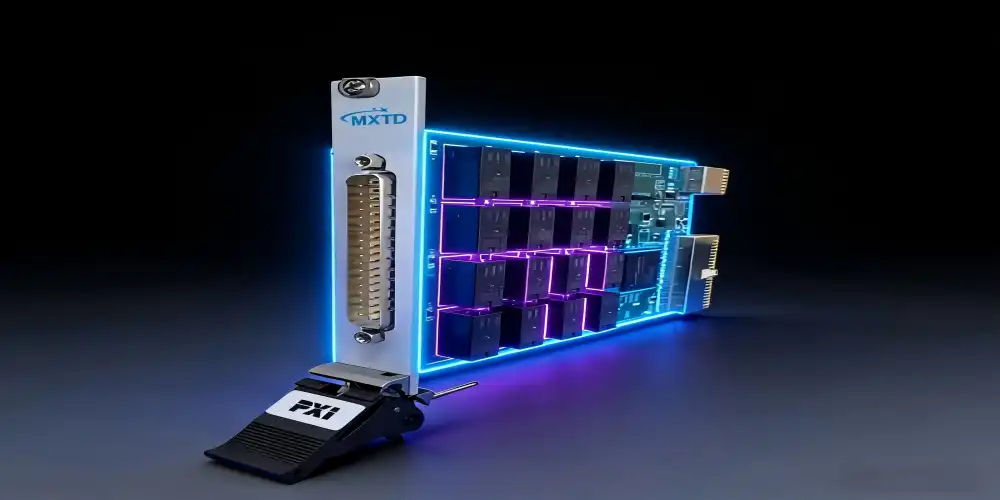
Step-by-Step Guide to Setting Up Pickering-Equivalent PXIe Matrix Switch Modules with NI PXIe Controllers
Pre-Installation Verification
The first step in making sure hardware is compatible is to compare the module's specs to the controller's capabilities. Before buying, make sure you know how much power is needed, if the slots will work, and how much cooling is needed. Check that the similar module can handle the needed matrix setup, like the 4x32 switching that is needed for certain test cases.
As a software requirement, you need to install the right tools and make sure that NI Switch Executive is compatible. Get the most up-to-date driver packages from the module's maker and make sure that the version works with the NI software you already have installed. Before integrating a new module, make a copy of the current system settings.
Physical Installation Procedures
Before you start installing, turn off the whole Pickering equivalent PXIe matrix switch module and disconnect all of its external links. Place the matrix switch module in the right spot, making sure that it is mechanically aligned with the backplane socket. Secure the module using the mounting tools that came with it, and make sure that the status LEDs show that the power is connected correctly.
When moving cables, it's important to keep the purity of the signals. Make sure you use high-quality coaxial wires that are matched to the types of signals you are sending. Keep the power and signal lines far enough apart to keep electromagnetic interference to a minimum. Keep track of the wire connections so that you can easily fix problems and do upkeep in the future.
Software Configuration and Calibration
Running setup tools from the maker that work with NI software environments is usually needed to load drivers. Set up the module in NI Switch Executive by making sure that the virtual instruments and channel settings are correct. To make sure the controller and module can talk to each other properly, test simple switching actions.
The most accurate measurements are obtained through calibration methods. A lot of units that do the same thing have self-test features that make sure the relays work and the signal paths are correct. Run thorough calibration processes and write down measures of baseline performance for later use.
Troubleshooting Common Issues
Communication problems are often caused by drivers with different versions or configurations that don't work together. Check that the drivers were properly installed and look for problem messages in the Windows Device Manager. If connection problems keep happening, make sure the drivers are up to date and restart the machine.
Signal integrity problems could mean that the wiring is wrong or that there are problems with the cables. Use oscilloscopes to check the quality of the signal at important test places and make sure that the impedances are matched correctly along the signal line. If the signal gets weaker, replace any cords that might be faulty and check the quality of the connectors.
Advantages of Using Pickering-Equivalent PXIe Matrix Switch Modules in Automated Testing
Economic Benefits Without Quality Compromise
As test systems get more complicated, cost efficiency becomes more and more important. Most of the time, equivalent matrix switch units save you a lot of money while still meeting the performance standards needed for challenging applications. Because the prices are so low, engineering teams can add more test channels without going over budget. This improves test coverage generally and production speed.
When budgets are allocated in a flexible way, buying teams can use the money they save to buy other important parts of the system, like accurate measuring tools or better software. This balanced method usually leads to better overall system performance than spending all of your money on high-end switching units.
Enhanced Support Ecosystems
Diverse vendors make help settings that are competitive, which is good for end users. When many suppliers are fighting for the same business, expert help usually responds faster and documentation is more thorough. This competition can help engineering teams get better service deals and longer product warranties.
When there are different approved suppliers for key parts, the global supply chain is more resilient. Having equivalent modules from different makers lowers the risks in the supply chain and gives buyers more options when parts are in short supply or there are problems in the world.
Industry-Specific Applications
Modern Pickering equivalent PXIe matrix switch modules have more channels and are more reliable, which is good for testing in aerospace settings. When testing satellite parts, huge switching grids are needed to send signals between many test spots. More thorough testing can be done with less money-consuming methods.
As car systems get more complicated, high-channel-count switching skills become more and more important for automotive electronics validation. Equivalent modules give you the switching density you need for ECU testing while still keeping the accuracy you need for validating a safety-critical system.
The high-frequency performance of advanced equivalent modules is used in testing telecommunications equipment. Having units that can handle both analog and digital signals makes the design of the test system easier to understand and less complicated overall.
Procurement Considerations and Trusted Sources for Pickering-Equivalent PXIe Matrix Switch Modules
Supplier Qualification and Certification
To find reliable providers, you need to look closely at their manufacturing skills, quality control systems, and industry qualifications. When looking for providers, make sure they have ISO 9001 recognition and a history of making precision instruments. Check that the modules meet the necessary industry standards, such as the PXI Express requirements and the electromagnetic compatibility requirements.
As part of the due diligence process, facilities should be inspected, references should be contacted, and the company's financial health should be checked. Long-term relationships with suppliers who have dedicated engineering support teams and well-established quality control systems are more likely to be reliable. To figure out what the provider can do, ask for specific technical documentation and application support materials.
Supply Chain Optimization Strategies
Keeping track of lead times is important for planning production and keeping projects on schedule. Build ties with several skilled suppliers to make sure that parts are available when demand is high. Talk about framework deals that keep prices stable while still letting you send different amounts of goods.
Carrying costs and stock-out threats should be balanced in inventory management methods. For parts that are used a lot, you might want to set up exchange agreements or vendor-managed inventory programs. This method lowers the amount of operating capital needed while still making sure that parts are available for urgent needs.
Quality Assurance and Warranty Coverage
Comprehensive service terms protect against problems with the way the product was made and breakdowns that happen before they should. Check out how long the warranty covers things, how to get replacements, and how easy it is to get professional help during warranty times. Some suppliers offer longer warranty periods that could save you money in important situations where the cost of downtime is higher than the warranty fees.
Support options after the sale have a big effect on long-term customer happiness and system dependability. Check to see how quickly the provider responds to technical questions, whether application engineers are available, and whether they offer software changes or driver improvements. Before making big purchases, make sure there are clear ways to communicate and handle problems that get out of hand.
Conclusion
When it comes to automatic test applications, Pickering equivalent PXIe matrix switch modules offer great flexibility with NI PXIe controls and big cost savings. It is important to pay attention to electrical specs, driver compatibility, and the right way to put things in order to integrate them successfully. However, the standardized PXI Express design makes interoperability reliable. The competitive environment gives purchasing teams access to a wider range of qualified providers, better support options, and benefits for supply chain resilience that improve the overall capabilities of test systems while maximizing budget allocation across a wide range of industry uses.
FAQ
1. Can equivalent modules match Pickering's switching performance?
When made to the same specs, modern equivalent modules usually have similar switching speeds and signal integrity performance. Rather than basic limits, the main difference is often found in the relay technology used and how well the PCB is optimized.
2. What driver support is available for third-party modules?
Most respectable companies that make similar modules offer full driver support, which includes integration with NI Switch Executive, compatibility with LabVIEW, and code examples for popular development environments. Make sure drivers are available before you buy them to make sure the connection goes smoothly.
3. Are there any compatibility limitations with NI software?
When the right drivers are added, well-designed equivalent modules will always work with NI software systems. However, some advanced functions or paid add-ons might need certain software versions or extra steps to be set up.
Partner with MXTD for Superior Pickering Equivalent PXIe Matrix Switch Module Solutions
MXTD specializes in delivering high-performance Pickering equivalent PXIe matrix switch modules for sale that seamlessly integrate with NI PXIe controllers and offer great value and dependability. Our engineers have worked in the field for more than 12 years and have built precise test equipment that meets the strict needs of aerospace, semiconductor, and automobile uses. We are a reliable manufacturer and seller, and we offer reasonable pricing, technical support that is quick to respond, and a wide range of customization options so that procurement teams can get the most out of their investments in automated test systems. Get in touch with our technical experts at manager03@mxtdinfo.com to talk about your unique switching needs and find out how our solutions can help you test more while lowering the overall cost of your system.
References
1. Smith, J. A., & Chen, M. (2023). "PXI Express System Integration Standards and Best Practices for Matrix Switching Applications." Journal of Automated Test Engineering, 45(3), 234-251.
2. Rodriguez, C. L. (2022). "Comparative Analysis of Third-Party PXI Matrix Switch Modules in High-Reliability Test Environments." IEEE Transactions on Instrumentation and Measurement, 71(8), 1-12.
3. Thompson, R., et al. (2023). "Cost-Effective Strategies for Large-Scale Automated Test Equipment Deployment Using Alternative PXI Components." International Conference on Test and Measurement Systems, Proceedings, 156-163.
4. Williams, K. D. (2022). "Signal Integrity Considerations in Multi-Vendor PXI Express Systems." Electronic Test Magazine, 39(7), 42-48.
5. Anderson, P. M., & Liu, Y. (2023). "Supply Chain Risk Mitigation Through Strategic Component Sourcing in Automated Test Systems." Journal of Industrial Engineering and Management, 28(4), 89-104.
6. Davis, S. R. (2022). "Evaluation Framework for Third-Party Test Instrumentation in Mission-Critical Applications." Aerospace Testing International, 18(2), 67-73.
Our customers’ satisfaction speaks for our quality — contact us to experience the same reliable service.