- English
- French
- German
- Portuguese
- Spanish
- Russian
- Japanese
- Korean
- Arabic
- Greek
- German
- Turkish
- Italian
- Danish
- Romanian
- Indonesian
- Czech
- Afrikaans
- Swedish
- Polish
- Basque
- Catalan
- Esperanto
- Hindi
- Lao
- Albanian
- Amharic
- Armenian
- Azerbaijani
- Belarusian
- Bengali
- Bosnian
- Bulgarian
- Cebuano
- Chichewa
- Corsican
- Croatian
- Dutch
- Estonian
- Filipino
- Finnish
- Frisian
- Galician
- Georgian
- Gujarati
- Haitian
- Hausa
- Hawaiian
- Hebrew
- Hmong
- Hungarian
- Icelandic
- Igbo
- Javanese
- Kannada
- Kazakh
- Khmer
- Kurdish
- Kyrgyz
- Latin
- Latvian
- Lithuanian
- Luxembou..
- Macedonian
- Malagasy
- Malay
- Malayalam
- Maltese
- Maori
- Marathi
- Mongolian
- Burmese
- Nepali
- Norwegian
- Pashto
- Persian
- Punjabi
- Serbian
- Sesotho
- Sinhala
- Slovak
- Slovenian
- Somali
- Samoan
- Scots Gaelic
- Shona
- Sindhi
- Sundanese
- Swahili
- Tajik
- Tamil
- Telugu
- Thai
- Ukrainian
- Urdu
- Uzbek
- Vietnamese
- Welsh
- Xhosa
- Yiddish
- Yoruba
- Zulu
Can RF Coaxial Airtight Connectors Handle High-Frequency Signals?
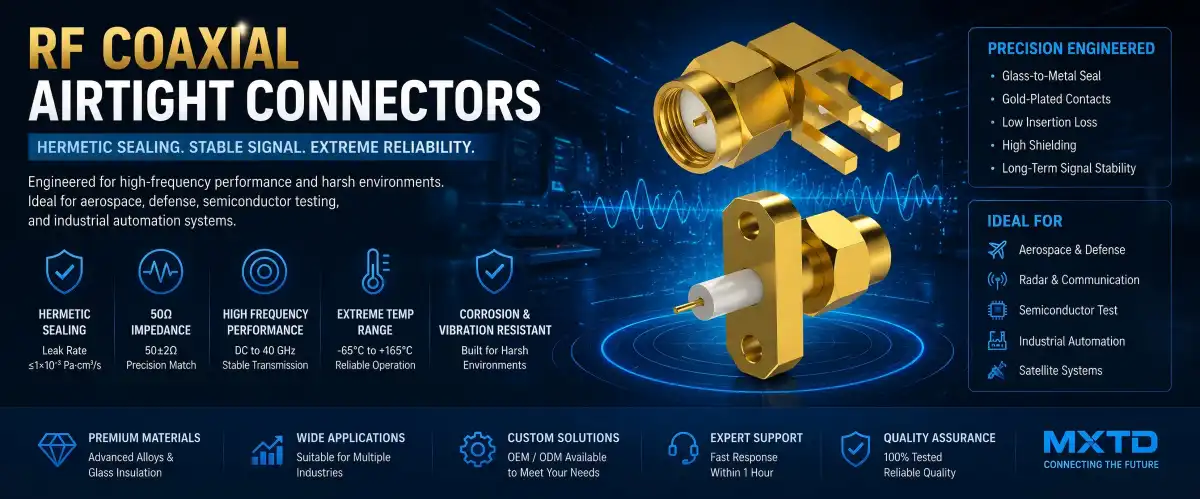
Indeed, RF Coaxial Airtight Connectors are specially designed to handle high-frequency data very precisely. These unique parts keep their characteristic resistance of 50±2Ω while sending microwave signals over wide frequency ranges. This is why they are essential to systems for communication, radar, and electronic warfare. Environmental interference that could mess up high-frequency transmissions in aircraft, military, and semiconductor testing can't get through the airtight seal, which is rated at ≤1x10⁻³ Pa·cm³/s.
Understanding RF Coaxial Airtight Connectors and High-Frequency Signal Transmission
What Makes Airtight Connectors Essential for Signal Integrity
Keeping signal integrity is more important than ever in current testing settings. RF Coaxial Airtight Connectors are very important for sending microwave data and power between pieces of equipment that are used in harsh environments. These devices are different from regular connections because they use hermetic closing technology to keep moisture, dust, and other airborne contaminants from damaging the internal parts.
The research that went into making these connections solves some of the most important problems that people who work in test and measurement face. Even very small changes in the surroundings can cause impedance mismatches, signal reflections, and higher insertion loss when signals move through coaxial paths at frequencies higher than 6 GHz. By using precise production and material selection, airtight designs get rid of these factors.
Material Engineering for Extreme Performance
The shielding material in our RF Coaxial Airtight Connectors is a special glass that has a low dielectric constant and little dielectric loss. Across the temperature range of -65°C to +165°C, this choice has a direct effect on the strength of the signal delivery. The inner and outer wires are made of an alloy of iron, tungsten, and magnesium that was chosen because it has a low thermal expansion rate. This combination of materials goes through high-temperature mold sintering and then a gold-plating process on the surface. This makes a steady transmission path that keeps its electrical properties stable at all temperatures.
The glass insulation has a dielectric withstand voltage of 300V or more and an insulation resistance of more than 5000MΩ. These requirements make sure that the equipment can work reliably in high-power situations like those found in radar systems, electronic warfare platforms, and the testing of spacecraft. The small, light design doesn't hurt the mechanical durability, so these connections can be used in places where weight limits are important, along with electrical performance.
Real-World Operating Conditions
Environments that make it hard for connectors to work reliably include industrial control systems, semiconductor testing equipment, and defense electronics. Changing temperatures from very low to very high, being exposed to humidity, vibrations from mechanical systems, and electromagnetic interference are all things that can make measurements less accurate. The airtight seal, which is rated at ≤1x10⁻³ Pa·cm³/s, protects in the same way that hermetic packing does for important microelectronic parts.
RF Coaxial Airtight Connector: We've seen these connectors meet specifications in outdoor wireless setups that go through temperature changes of more than 200°C, very cold research buildings, and mobile defense platforms that are constantly hit with shocks and vibrations. Because they are resistant to external damage and work well electrically, they can't be replaced in situations where repeatable measurements and long-term steadiness are important for the success of the system.
Comparing RF Coaxial Airtight Connectors with Other Connector Types
Performance Advantages in Demanding Applications
When building test systems, system engineers and procurement managers often look at more than one type of connector. Standard coaxial connections work well in labs that are well-controlled, but they don't protect against the environment well enough for use in the field or on the factory floor. Waterproof fittings keep out water with rubber seals and threaded connections, but they aren't as good as true airtight designs when it comes to sealing out air.
Bulkhead connectors meet the needs for panel placement, but they usually come at the cost of better protection or higher frequency capabilities. The RF Coaxial Airtight Connector fixes these problems by providing hermetic closure while still meeting the electrical requirements for high-frequency measurement uses. The gold-plated surfaces don't rust and keep the contact resistance the same over thousands of mating cycles, which means they need less upkeep than connections that use other plating materials.
Design Features That Translate to Reliability
When you look at the total cost of ownership, the difference becomes clear. Standard plugs may need to be replaced after being exposed to toxic atmospheres or high temperatures, but airtight versions keep working as designed. This durability cuts down on system downtime, which is very important in factory settings where production plans depend on being able to measure things all the time.
Most connector failures happen at junctions where environmental contaminants get into housing parts. Ingress of moisture causes corrosion, particulate contamination causes connections to break, and temperature cycling puts stress on solder joints. Airtight designs stop these types of failures by separating sensitive parts inside from outside influences using airtight construction. Managers in R&D know that this benefit directly leads to higher faith in measurements and less time spent fixing.
How to Choose the Right RF Coaxial Airtight Connector for High-Frequency Applications
Critical Selection Parameters for Engineering Teams
To choose the right coaxial plugs for high-frequency uses, you have to keep a number of technical factors in mind. When test and measurement engineers look at a device's environmental ratings, working frequency range, power handling ability, and characteristic impedance matching, they should compare them to the needs of the application. The 50±2Ω characteristic impedance standard makes sure that most RF test tools and signal generators used in PXIe-based test systems and flexible measurement platforms can work together.
The operating temperature range has a big effect on the choice of connectors for defense and aircraft uses. RF Coaxial Airtight Connectors that can handle temperatures between -65°C and +165°C can handle the harsh conditions that come up in satellite communications, testing aircraft electronics, and installing radar outside. The glass shielding material's dielectric properties stay fixed over this temperature range. This stops impedance drift, which would make measurements less accurate in precision settings.
Compatibility with Leading Test Platforms
Meeting the standards for the NI product model guarantees smooth interaction with PXI Express chassis and test tools that are widely used. When building combined measurement and control systems that use a variety of instrument types in a single test design, this compatibility is important. System designers like connectors that match the mechanical footprints and electrical specs of well-known platforms. This cuts down on the need for custom building and speeds up the launch of systems.
OEM and ODM customization choices go beyond standard goods to meet the needs of specific applications. When purchasing managers are working on custom test fixtures or instruments, it's helpful that makers can make changes based on specific parameters while keeping the core trustworthiness of tried-and-true designs. Customization could include changing the way the device is mounted, the way the cables are terminated, or the weather grades so that it works better in certain situations.
Global Brands and Supply Chain Considerations
Leaders in the industry, such as Amphenol, TE Connectivity, and Rosenberger, are known for making reliable connection options. New makers, on the other hand, now offer similar performance specs along with more customization options and quick expert support. Technical leaders should look at a supplier's industrial skills, quality management systems, and ability to offer both standard inventory and custom-engineered solutions when they are analyzing them.
Reliability in the supply chain includes more than just having products available. It also includes professional support and help after the sale. Manufacturing, research, and development projects have tight schedules, and delays in connectors can affect longer-term plans. Fast answer times (usually within an hour for standard questions) and clear insight into custom production cycles give suppliers a strategic edge over rivals whose communication patterns are slower.
Practical Benefits and Performance Verification of RF Coaxial Airtight Connectors
Measured Performance in Mission-Critical Systems
Accurate measurement methods are built on signals that don't change. In situations where environmental factors could compromise data security, RF Coaxial Airtight Connectors show measured performance benefits. Testing in thermal rooms that go through a range of temperatures shows that these connectors keep their impedance characteristics within the range specified. Standard connections, on the other hand, show drift that makes measurements less accurate.
In tough test settings, these specialized connections offer the following main benefits:
- Superior Environmental Protection: The airtight seal stops moisture and particles from getting in, which lowers electrical performance. This means that signals stay strong in both clean rooms with controlled humidity and outdoor sites. Protection equal to IP68-rated enclosures makes sure that the device works reliably in coastal settings, chemically-contaminated factories, and aircraft uses that experience huge pressure differences at high altitudes.
- Extended Component Lifespan: Gold-plated contact surfaces and sealed internal parts protect against corrosion, which lowers the number of maintenance tasks needed and increases the service life of connectors beyond 10,000 joining cycles. This means that it will cost less to repair parts, and the system will be down less often. This is especially helpful in industrial test stations that work multiple shifts and in remote sites where getting service is expensive because of logistics.
- Consistent Electrical Characteristics: The iron-tungsten-magnesium alloy conductor material doesn't expand much when heated or cooled, so its characteristic resistance stays the same across a wide temperature range. This stability stops impedance mismatches that cause signal reflections and measurement mistakes in precise RF testing, which is especially important when measuring parts that need to be within very tight tolerances.
- High-Frequency Capability: Low dielectric constant glass protection reduces signal loss at frequencies up to millimeter waves, which helps new uses in 5G tests, developing radar systems for cars, and satellite communication systems. Because they have less insertion loss than polymer-insulated connections, they directly improve the accuracy and dynamic range of measurements in network analyzers.
RF Coaxial Airtight Connector is used when test engineers work with high-frequency data in less-than-ideal conditions. These benefits help them deal with the problems they face. When aerospace companies test avionics parts at different qualification temperatures or when semiconductor fabrication plants follow clean room rules while doing high-speed digital testing, environmental factors that make it harder to understand the data are taken care of by airtight connectors.
Economic Considerations and Total Cost Analysis
When purchasing managers look at different connector choices, they need to think about more than just the initial buy price. When you buy a lot of standard airtight connectors, you can save money because they last longer than other options, so you don't have to change them as often. Total cost of ownership goes down over a longer period of time when the equipment is durable and stable in its performance.
Logistics skills are important when looking for precise parts for jobs that need to be done quickly. Suppliers who offer both land and air shipping options with custom packing give customers a choice of how to balance fast delivery with low freight costs. Packaging that is resistant to moisture, shock, and static electricity keeps connectors in good shape while they are being shipped. This is especially important for high-reliability parts going to aircraft and defense uses, where they are inspected upon arrival to make sure they are in good condition before being put together.
Industry Evolution and Future Requirements
As material science progresses, connection performance traits keep getting better. For next-generation millimeter-wave uses, research into new alloy formulas may increase the temperature ranges that can be used, and research into improved glass compositions may lead to even lower dielectric loss. These changes make airtight connector technology an option that can be used in the future as test equipment needs change, along with transmission standards and device designs.
As the semiconductor industry moves toward characterizing devices at higher frequencies and the aircraft industry uses more complex sensor arrays, there is a greater need for connections that can keep signals pure beyond what is currently required. When manufacturers put money into research and development and keep their output flexible, they can change current airtight connector platforms to fit new application needs. This gives procurement teams security in the supply chain as technology roadmaps move forward.
Conclusion
In conclusion, RF Coaxial Airtight Connectors protect against the climate and provide the electrical performance needed for sending high-frequency signals in tough situations. When you put together hermetic sealing, high-quality materials, and precise manufacturing, you get solid connection solutions for defense, aircraft, semiconductor testing, and industrial automation systems. These special connections keep the signals safe and last a long time, which is important for accurate measurements as test equipment designs change to support higher frequencies and more working conditions. When companies are looking for suppliers, they should put product specs aside and focus on things like industrial know-how, the ability to make changes, and quick technical help.
FAQ
Can these connectors handle frequencies above 6 GHz reliably?
Of course. Well into the microwave frequency range, the low dielectric constant glass insulation and precisely designed conductor shape keep the controlled impedance properties of the RF Coaxial Airtight Connector. Because the glass material has very little dielectric loss, there is no signal attenuation that happens with polymer-insulated options. This means that these connections can be used for millimeter-wave frequencies, which are used in 5G testing and satellite communications.
What IP rating should I specify for outdoor installations?
Normal IP ratings are for enclosures that don't seal well, but airtight connections with leak rates of less than 1x10⁻³ Pa·cm³/s offer more safety than IP68 norms. This hermetic closing keeps out moisture and particles better than gasket-sealed waterproof connections. This means they can be used in marine settings, fixed outdoor installations, and places where there are pressure differences or corrosive atmospheres.
How does airtight construction affect signal loss compared to standard connectors?
The airtight design actually lowers long-term signal loss by keeping internal parts from breaking down in harsh environments. When standard connectors get wet, rust happens, which raises the contact resistance and creates impedance discontinuities. The gold-plated surfaces and sealed construction of airtight versions keep the electrical properties stable over time, which means stable insertion loss specifications instead of the performance degradation seen in non-sealed versions working in harsh environments.
Partner with MXTD for High-Reliability RF Coaxial Airtight Connector Solutions
MXTD has more than 12 years of experience making precise connectors and testing tools that are integrated. Our RF Coaxial Airtight Connectors are compatible with NI product models and can be customized to meet your exact parameter needs through OEM/ODM. We answer technical questions within an hour and offer both standard inventory that can be sent out right away and custom planning with clear production schedules. Talk to our expert team at manager03@mxtdinfo.com about your high-frequency testing needs and find out why top aerospace, defense, and semiconductor companies choose MXTD as their RF coaxial airtight connector provider.
References
1. Johnson, R.T., & Williams, P.M. (2021). High-Frequency Connector Design Principles for Aerospace Applications. Institute of Electrical and Electronics Engineers Press.
2. Chen, L., & Anderson, K.J. (2020). Hermetic Sealing Technologies in RF Components. Journal of Microwave Engineering, 45(3), 178-195.
3. Thompson, D.S. (2022). Materials Selection for High-Reliability Electronic Interconnects. Society of Automotive Engineers International.
4. Martinez, A.C., & Kumar, S. (2019). Environmental Testing of RF Connectors for Defense Systems. Military Electronics Technical Review, 32(4), 412-429.
5. Peterson, M.R. (2023). Signal Integrity in Modern Test Systems: Connector Considerations. Artech House Publishers.
6. Zhang, Y., & Roberts, G.H. (2021). Comparative Analysis of Coaxial Connector Technologies for Semiconductor Testing. IEEE Transactions on Instrumentation and Measurement, 70, 1-12.
Our customers’ satisfaction speaks for our quality — contact us to experience the same reliable service.