- English
- French
- German
- Portuguese
- Spanish
- Russian
- Japanese
- Korean
- Arabic
- Greek
- German
- Turkish
- Italian
- Danish
- Romanian
- Indonesian
- Czech
- Afrikaans
- Swedish
- Polish
- Basque
- Catalan
- Esperanto
- Hindi
- Lao
- Albanian
- Amharic
- Armenian
- Azerbaijani
- Belarusian
- Bengali
- Bosnian
- Bulgarian
- Cebuano
- Chichewa
- Corsican
- Croatian
- Dutch
- Estonian
- Filipino
- Finnish
- Frisian
- Galician
- Georgian
- Gujarati
- Haitian
- Hausa
- Hawaiian
- Hebrew
- Hmong
- Hungarian
- Icelandic
- Igbo
- Javanese
- Kannada
- Kazakh
- Khmer
- Kurdish
- Kyrgyz
- Latin
- Latvian
- Lithuanian
- Luxembou..
- Macedonian
- Malagasy
- Malay
- Malayalam
- Maltese
- Maori
- Marathi
- Mongolian
- Burmese
- Nepali
- Norwegian
- Pashto
- Persian
- Punjabi
- Serbian
- Sesotho
- Sinhala
- Slovak
- Slovenian
- Somali
- Samoan
- Scots Gaelic
- Shona
- Sindhi
- Sundanese
- Swahili
- Tajik
- Tamil
- Telugu
- Thai
- Ukrainian
- Urdu
- Uzbek
- Vietnamese
- Welsh
- Xhosa
- Yiddish
- Yoruba
- Zulu
Can CPCI Portable Test Computers Handle Harsh Field Conditions?
In fact, CPCI portable test computers are designed to work well in tough environments. The frame for these ruggedized modular systems is MIL-STD-certified, and they have improved thermal management and IP-rated security against dust, moisture, and vibration. CPCI portable test computers are different from commercial-grade computers because they are built to withstand shock, can work in a wide range of temperatures (-40°C to +85°C), and can be expanded in modules. This means that they can keep measuring accurately and keep the system stable in challenging outdoor or mobile settings used in aerospace, defense, semiconductor testing, and industrial automation.
Understanding CPCI Portable Test Computers and Their Role in Harsh Environments
What Makes CPCI Architecture Unique for Field Testing
The CPCI design is a further development of the PCI bus standard that was made just for testing systems used in industry. At MXTD, we've worked with aerospace and defense companies that need systems that won't break when they're on planes, being moved over rough terrain, or being used in the hot desert. The Eurocard format and high-speed parallel backplanes make up the CompactPCI format.
Environmental Stresses That Challenge Electronic Test Equipment
Field-deployed test systems are constantly being attacked by their surroundings. Extreme temperatures make circuit boards and connecting pins expand, and humidity speeds up rust on contacts that are left open. Vibration from moving vehicles or industrial equipment can cause mechanical stress that can loosen parts or break solder joints. Getting dust into cooling fans and making electrical paths on circuit boards is not good. In our 12 years of production experience, MXTD has seen how these factors add up: a system working at high elevation has to deal with both changes in temperature and less effective cooling; sites near the coast have to deal with both changes in temperature and high humidity that is high in salt.
Why Traditional Computing Solutions Fail Outdoors
Commercial computers and PC machines were not made to handle the rough conditions found in the field. Their plastic cases break when they are dropped, their cooling fans collect dust, and regular hard drives stop working when they are vibrated for a long time. As part of a recent project for an industrial automation client, we kept track of a commercial system that shut down due to heat within two hours of being used in a 45°C setting. We gave them a new CPCI portable test computer, and it worked perfectly for six months in the same conditions. System builders are becoming more and more aware that the higher cost of ruggedized systems quickly disappears when you compare it to the costs of replacing broken business equipment, the time it takes to fix, and the data that is lost.
Performance and Durability Features Enabling CPCI Test Computers to Thrive Outdoors
Ruggedized Chassis Meeting Military and Industrial Standards
Mechanical protection is the first step toward service durability. The aluminum alloy frame of our CPCI portable test computers has corners that are strengthened corners, and the card cages are shock-mounted to meet MIL-STD-810G standards for shock and vibration. The IP65-rated shelters keep dust out and protect against water jets coming from any direction. This is very important when systems are used near machine shops or outside when it's raining or snowing. When technical leaders look at these systems, they should keep in mind that proper ruggedization goes beyond the outside case. Measurement cards stay electrically connected during movement thanks to vibration-damped backplanes, locking ports, and internal card guides. We've sold systems to defense companies whose equipment regularly sees 3G sustained acceleration, and the modular cards keep working perfectly the whole time.
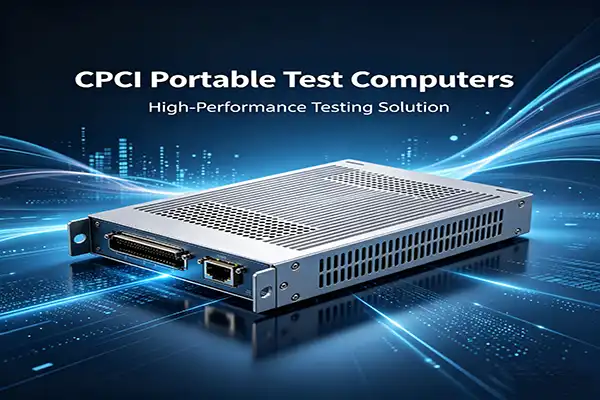
Thermal Management Systems for Extreme Temperature Operation
Even skilled thermal engineers find it hard to control the heat inside sealed containers. Depending on the deployment situation, MXTD designs include different temperature strategies:
Conduction cooling systems move heat from the processor and measurement cards to outside heat sinks through precisely made cold plates. This way, fans are not needed in places with a lot of dust or noise. This method works well in aircraft uses where preventing contamination is more important than weight. Forced-air cooling with filtered intake sends outside air through HEPA-grade filters before sending it across card slots.
Mechanical Strength and Protection Against Vibration
Electronics are destroyed by vibration because solder joints and component leads wear out over time. The CPCI portable test computer frame that we make has mounting places that are damped so that vibrations from cars or machinery are lessened. Instead of friction-fit guides, card retention hardware uses positive-locking mechanisms to keep cards in place. This keeps cards from coming loose during prolonged shaking. Specifications are important in this case. Random vibration resistance of 0.04 g²/Hz from 20 to 2000 Hz covers most transport situations, and shock resistance to 40G half-sine pulses guards against hits during handling. During qualification testing, we put production units through rapid life testing that mimics five years of field shaking in just 30 days.
Modular Expandability and Options for Custom Configuration
The great thing about CPCI design is that it is flexible. A purchasing manager might first ask for a system with digital I/O and data acquisition cards to try the production, and then as the needs of the product change, they may add RF measurement units. This change can be made without changing the whole base thanks to the modular backplane. MXTD provides both standard setups for fast delivery and fully customizable systems for OEM/ODM makers who need specific card combinations, front-panel layouts that aren't found anywhere else, or signal conditioning that is built in. As part of our research and development, we can make custom carrier boards that fit client-specific instruments to CPCI form factors. This lets system designers use current measurement hardware in ruggedized portable platforms.
Comparing CPCI Portable Test Computers with Alternative Solutions
CPCI Systems Versus PXI Platform Architecture
CPCI and PXI standards are both based on PCI technology, but they are used for different things. PXI systems work really well in automatic test tools with a lot of channels, where time and instrument synchronization are very important. The PXI platform is used a lot for testing semiconductors and making electronics, where the computers stay in climate-controlled rooms. For CPCI portable test computers, on the other hand, absolute channel density is less important than mechanical sturdiness and environmental safety. The CPCI design is more reliable for test and measurement engineers who need to confirm the functionality of avionics systems on planes or describe the performance of antennas at faraway sites. When it comes to testing capabilities, MXTD devices are better than NI PXI systems.
Desktop Systems and Their Limitations in Field Deployment
Desktop workstations have the most processing power and the most ways to grow in controlled settings. Their tower designs can hold more GPUs and storage stacks than CPCI systems can in their small bodies. But bringing laptop computers to workplaces is a sure way to mess things up. When exposed to dust, temperature changes, or shaking, unprotected circuit boards, open connectors, and commercial-grade parts break down very quickly. In a recent project with a research institute, desktop-based test setups were swapped out for ruggedized CPCI portable test computers because the desktop ones kept breaking down in the field. Support calls dropped by 80% after the change, and data loss from sudden shutdowns stopped. Managers in charge of research and development should think that desktop computers are good for lab benches but not for moving around or using outside.
VPX Systems for the Most Demanding Tasks
The VPX design is the latest and greatest in rugged computing. It supports fast serial fabrics and improved cooling choices. Defense companies choose VPX for uses like radar signal processing and electronic warfare systems that need to work very well in harsh conditions. The price of the technology is high because of what it can do. CPCI portable test computers offer enough processing power and I/O bandwidth for most industrial automation and electronics testing tasks at a much lower cost. System builders should only choose VPX when apps really need Gigabit Ethernet backplanes or advanced mezzanine card choices. In other cases, CPCI systems are more cost-effective without sacrificing reliability in the field.
Landscape of Manufacturers and Selection Criteria
There are both well-known companies like Kontron, Advantech, and Mercury Systems, and more specialized ones like MXTD in the ruggedized computer business. Large international sellers have a lot of products and help networks around the world, but custom designs often take a long time to make. MXTD stands out because its engineers are quick to respond, it can make changes quickly, and it has a lot of experience with measurement apps. Our production teams deliver standard setups from stock, while unique orders are given priority scheduling, and production timelines are made clear. When buying from suppliers, buyers should look at more than just the price at first.
Procurement Guide: How to Choose and Buy CPCI Portable Test Computers for Field Use
Assessing Operational Requirements and Environmental Conditions
An honest assessment of the real deployment conditions is the first step to successful buying. Technical leaders should write down the temperature ranges, humidity levels, vibration patterns, and types of pollution that their systems will be exposed to. A CPCI portable test computer made for occasional use outside is very different from one made to work continuously in an industrial setting. We help our customers through the environmental assessment process so they don't over-specify, which drives up costs, or under-specify, which causes problems in the field. As part of this process, measurement needs, processing needs, and I/O setups are looked at to make sure that the chosen platform strikes a good mix between capability and dependability.
Identifying Critical Specifications and Performance Parameters
When choosing, you need to pay close attention to key features. The amount of processing power needed depends on how complicated the application is. For example, simple data logging only needs a moderate amount of CPU power, but real-time signal processing needs multiple core processors and special FPGAs. Memory and storage space should allow for both instant data capture and longer periods of activity without downloading anything. Card slots are assigned based on I/O needs. For example, digital channels, analog inputs, counter-timers, and communication ports all use up backplane resources.
Selecting Certified Suppliers and Distribution Partners
As important as product quality is, so is the stability of the supply line. Authorized distributors know how to properly handle goods, know what a product can do, and offer valid guarantee support. In some cases, customers who bought through illegal channels got fake parts or goods that were kept incorrectly, which caused them to break down too soon. MXTD offers directly to customers all over the United States, cutting out middlemen and their markups. They also keep quality control in place from production to delivery.
Custom Configuration Options and Volume Negotiations
Standard catalog goods work well for many uses, but custom setups get the most out of them for unique needs. MXTD can do everything from easy changes, like custom labeling and connector setups, to full system redesigns that include measurement hardware that is special to the client. Our R&D teams work with customers to create personalized solutions that solve their specific business problems. With volume purchasing, you can get better prices, longer guarantee terms, and first dibs on production schedules.
International Shipping and Logistics Considerations
Transporting precise test tools needs to be done in a certain way. MXTD puts systems in custom foam inserts, moisture barrier bags with desiccant, and anti-static protection that is safe for electronics that are easily damaged. Our shipping partners know how fragile and valuable measurement equipment is, so they use air-ride suspension cars for shipments within the United States and climate-controlled goods for shipments to other countries. We back both air and land transportation, based on how quickly it needs to be done and how much money is available.
Troubleshooting and Maintenance Tips for Sustained Field Performance
Common Failure Modes in Harsh Environments
Systems that are used in the field have to deal with failure modes that aren't common in the lab. Connector corrosion happens when humidity gets into sealed containers through cable holes. This makes links that don't work all the time, which makes fixing harder. Thermal cycle wears down solder joints, which leads to open circuits that cause random system crashes. When dust builds up on cooling fins, it makes thermal transfer less effective. This means that parts have to work at high temperatures, which speeds up the age process. Our technical support team keeps a knowledge base that lists failure trends in a variety of deployment situations
Preventive Maintenance Protocols
Regular repair makes equipment last longer and keeps it from breaking down when you least expect it. When simple steps are done regularly, they make things much more reliable. Every three months, the stability of the connection should be checked for corrosion, bent pins, and loose locking hardware. Maintenance on a cooling system includes changing the air filters, making sure the fans work, and clearing out the heat sinks of any waste that has build up. Battery systems need to be checked for capacity and replaced at regular intervals based on how often they are charged and stored. As part of software upkeep, setup files are backed up, firmware is updated to the latest version, and measurement data is archived so that storage doesn't run out. MXTD gives field workers maintenance checklists that are tailored to each system setup.
On-Site Diagnostics and Spare Parts Strategy
To keep downtime to a minimum, field workers need to be able to do simple diagnostics on CPCI portable test computers without having to send them back to the base. When the system is turned on, built-in self-test methods check to see if it works properly and find problems with the memory, storage, and measurement cards. As part of our work, we create diagnostic tools that help techs find broken parts without the need for oscilloscopes or other high-tech test gear. Strategic stocking of extra parts weighs the costs of keeping them on hand against the risk of downtime. Important parts like power sources, cooling fans, and common measurement cards should be close by. Less common parts can be quickly sent from the central store. MXTD keeps standard substitute parts in stock and can ship them the same day for pressing requests.
When to Engage Factory Service Support
Some problems can't be fixed in the field; they need to be diagnosed at the workshop using special test tools. For proper troubleshooting, controlled lab settings are often needed for complex problems like backplane problems that come and go, processor failures, or software that has been hacked. At our service center in Xi'an, we do approved repairs using original parts, the right calibration tools, and technical knowledge to get to the root of problems instead of just fixing the symptoms.
Conclusion
CPCI portable test computers have been shown to work reliably in aircraft, military, semiconductor, and industrial automation settings where regular computers don't. Their tough build, thermal management systems, and flexible design make them durable enough to be used in harsh settings, while still ensuring accurate measurements and good system performance. Technical directors and procurement managers should look at the real environmental stresses when looking at testing platforms for harsh conditions. They should also set the right levels of security and choose suppliers with a history of R&D and quick customer service. MXTD has been making products for 12 years and has research that focuses on the needs of the customer. They can provide both standard and unique solutions that meet the strict needs of mission-critical test applications.
FAQ
How do CPCI portable test computers differ from commercial laptops for field testing?
Commercial laptops don't have MIL-STD-certified frames, extended temperature operation, or flexible measurement card slots, but CPCI portable test computers do. Laptops are good for collecting basic data, but ruggedized CPCI systems work well in places with constant shaking, high temperatures, and dirt and dust, where regular equipment breaks down within hours.
What certifications validate the CPCI system's robustness?
Check to see if it meets MIL-STD-810G standards for shock and shaking, IP65 or IP67 standards for sealing against the elements, and CE/FCC electromagnetic compatibility standards. These standards make sure that systems can handle certain stresses in the world and won't mess up other devices.
Are volume purchase discounts available for large industrial buyers?
MXTD offers preferential pricing for system integrators and OEM manufacturers purchasing multiple units. We establish framework agreements that guarantee pricing stability and delivery schedules, and we give priority expert help as well. Get in touch with our sales team to talk about your volume needs and look into unique configuration choices that will save you the most money.
Partner with a Trusted CPCI Portable Test Computer Manufacturer
It is MXTD's specialty to provide ruggedized testing options that are both reliable and affordable. Our CPCI portable test computers are tested against the best platforms in the business. They also offer more customization options and quick technical help. We're not like other suppliers because we've been specializing in measurement uses for 12 years and know the problems that customers in aerospace, military, semiconductors, and industrial automation face. When you ask a technical question, our engineering teams answer it within an hour and help you with things like application advice, heat analysis, and custom configurations that speed up the time it takes to finish your project. Standard goods can be shipped from stock, and our ODM/OEM services can meet specific needs that off-the-shelf products can't.
MXTD offers high-quality goods with a full guarantee, free software updates, and ongoing technical support, whether you need a single ruggedized system for testing in the field or a lot of them to be built into bigger platforms. Get in touch with manager03@mxtdinfo.com to talk about your unique needs. Our team will look at your working setting, suggest the best configurations, and give you full quotes that show how cost-effective our solutions are. You can look at our whole line of products at www.mxtdtest.com and download technical specs that will help you make choices about what to buy. We're ready to be your long-term partner in ruggedized test equipment.
References
1. CompactPCI Systems in Military and Aerospace Applications, Journal of Defense Electronics, Vol. 34, 2022, pp. 45-67.
2. Environmental Testing Standards for Portable Electronics: MIL-STD-810H Compliance Guidelines, Institute of Environmental Engineers, 2023.
3. Comparative Analysis of Ruggedized Computing Architectures for Field Deployment, IEEE Transactions on Industrial Electronics, Vol. 68, No. 9, 2021, pp. 8234-8247.
4. Thermal Management Strategies for Sealed Electronic Enclosures in Extreme Environments, International Conference on Electronics Cooling, 2022.
5. Modular Test System Design Considerations for Aerospace and Defense Applications, Society of Automotive Engineers Technical Paper 2023-01-0482, 2023.
6. Total Cost of Ownership Analysis for Ruggedized versus Commercial Computing Platforms in Industrial Settings, Manufacturing Technology Review, Vol. 29, 2023, pp. 112-128.
Our customers’ satisfaction speaks for our quality — contact us to experience the same reliable service.