- English
- French
- German
- Portuguese
- Spanish
- Russian
- Japanese
- Korean
- Arabic
- Greek
- German
- Turkish
- Italian
- Danish
- Romanian
- Indonesian
- Czech
- Afrikaans
- Swedish
- Polish
- Basque
- Catalan
- Esperanto
- Hindi
- Lao
- Albanian
- Amharic
- Armenian
- Azerbaijani
- Belarusian
- Bengali
- Bosnian
- Bulgarian
- Cebuano
- Chichewa
- Corsican
- Croatian
- Dutch
- Estonian
- Filipino
- Finnish
- Frisian
- Galician
- Georgian
- Gujarati
- Haitian
- Hausa
- Hawaiian
- Hebrew
- Hmong
- Hungarian
- Icelandic
- Igbo
- Javanese
- Kannada
- Kazakh
- Khmer
- Kurdish
- Kyrgyz
- Latin
- Latvian
- Lithuanian
- Luxembou..
- Macedonian
- Malagasy
- Malay
- Malayalam
- Maltese
- Maori
- Marathi
- Mongolian
- Burmese
- Nepali
- Norwegian
- Pashto
- Persian
- Punjabi
- Serbian
- Sesotho
- Sinhala
- Slovak
- Slovenian
- Somali
- Samoan
- Scots Gaelic
- Shona
- Sindhi
- Sundanese
- Swahili
- Tajik
- Tamil
- Telugu
- Thai
- Ukrainian
- Urdu
- Uzbek
- Vietnamese
- Welsh
- Xhosa
- Yiddish
- Yoruba
- Zulu
Can a 32-Channel ARINC429 Board Run Tx and Rx Simultaneously?
The answer is yes, a 32-channel ARINC429 board can definitely handle both transmission (Tx) and reception (Rx). It can do this because current ARINC429 interface boards have independent channel design and advanced electrical isolation built in. Each channel works on its own, with separate circuits for sending and receiving. This lets both send and receive data without any problems. The strong design makes sure that data exchange is reliable in mission-critical aerospace uses that need constant two-way contact.
Understanding the Basics of a 32-Channel ARINC429 Board
Core Architecture and Communication Principles
The 32-channel ARINC429 board is a high-tech aircraft transmission interface made just for data networks in the aerospace industry. A special bidirectional Return-to-Zero (RZ) signaling method is used by the ARINC429 protocol to send data at either 12.5 kHz or 100 kHz rates. This method of signaling guarantees excellent immunity to noise and signal coherence in a wide range of working conditions.
There are separate send and receive circuits for each channel on the board, so each one works as its own communication link. Crosstalk is stopped by electrical isolation between channels. This keeps the signal pure, which is very important for aircraft uses where data security directly affects flight safety. The design of the board includes precise timing circuits that keep all lines in sync, which makes contact between systems stable.
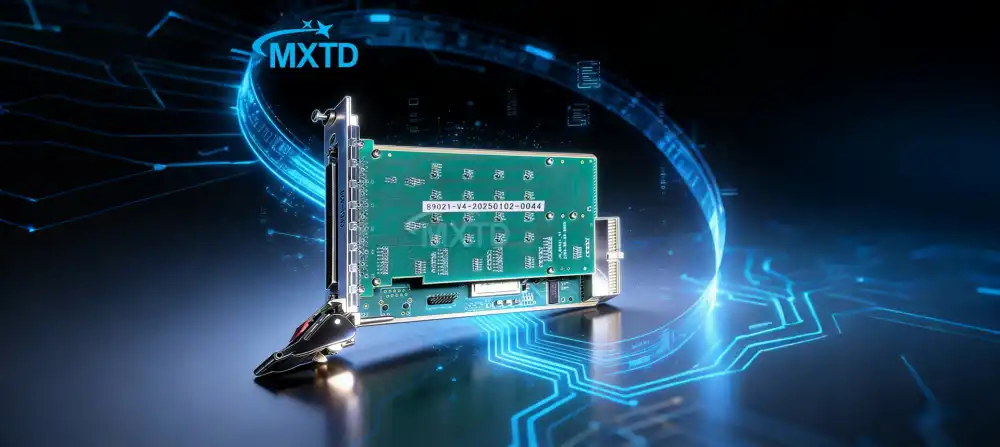
Why 32-Channel Configuration Excels in Medium-Scale Systems
The 32-channel design is the best choice for medium-complexity aircraft systems because it is the most useful and least expensive. Instead of 16-channel boards that might not allow for growth or 64-channel versions that are too complicated for smaller installations, the 32-channel ARINC429 board design has enough space for most business and military aircraft uses.
System engineers like this setup a lot because it allows for growth while keeping the level of complexity manageable. The number of channels allows for links between many subsystems, such as flight management systems, tracking tools, engine monitoring, and environmental controls, without making the system design too busy. This fair method lowers the costs of both buying the thing and keeping it up to date over time.
Technical Specifications That Matter for Procurement
There are a few important specs on modern 32-channel ARINC429 board products that have a direct effect on speed and stability. Data transfer rates can work at both high speeds (100 kHz) and low speeds (12.5–14.5 kHz), so they can be used with different types of avionics equipment. Most of the time, the boards have 32-bit words and built-in parity checking to find errors.
The environmental conditions are the same as those for aircraft. They include a wider temperature range (-55°C to +125°C), resistance to shocks up to 40G, and vibration tolerance that meets MIL-STD-810 standards. These requirements make sure that the system will work reliably in a wide range of flight situations and task scenarios.
Can a 32-Channel ARINC429 Board Run Tx and Rx Simultaneously?
Independent Channel Architecture Enables Full Duplex Operation
A 32-channel ARINC429 board can send and receive data at the same time thanks to advanced hardware design principles. Each channel has its own send and receive circuits, as well as its own power domains and data paths. This separation keeps electrical noise from getting into the Tx and Rx processes, making sure that signals go through without any problems in both directions.
Hardware-level channel isolation uses transformer coupling and optical isolation methods to keep the signal's coherence while separating channels electrically. Modern boards use differential signals and precise impedance matching to keep electromagnetic interference and noise between channels to a minimum.
Bus Arbitration and Protocol Compliance
The point-to-point design of the ARINC429 protocol makes it possible for two-way transmission to happen at the same time. In shared bus systems, channel access needs to be negotiated, but ARINC429 channels work on their own without any problems. There is no need for complicated bus arbitration schemes because each emitter is connected to multiple listeners through its own set of wires.
The self-synchronizing features of the protocol make sure that data reception is reliable even if the time of transfer changes. Built-in word alignment and parity checking make it easy to find errors and keep data safe while Tx and Rx processes are running at the same time.
Real-World Performance Validation
Aerospace OEMs often set up multiple lines of transmission and reception at the same time in both civilian and military planes. Flight test data repeatedly show solid performance, with bit error rates below 10^-12 when processes are running normally. These results show that current 32-channel ARINC429 board interfaces are built to last in real flight situations.
Performance tests show that Tx and Rx activities that happen at the same time keep the full data flow without any drops. Channel-to-channel separation is usually higher than 80dB, which means that even when the system is fully loaded, there isn't much crosstalk. Tests that change the temperature show that the system can work steadily across the entire temperature range found in aircraft without losing any performance.
Comparing 32-Channel ARINC429 Boards: Performance and Procurement Insights
Strategic Channel Count Selection Considerations
Before choosing between 16, 32, or 64-channel ARINC429 boards, you should carefully consider your current needs and your goals for future growth. For most uses, the 32-channel setup is the best middle ground because it gives you enough capability without adding too much cost. System engineers should look at their whole avionics design to figure out how to best divide up channels in terms of cost.
Application scale has a big effect on choosing the channel size. For smaller planes or testing of subsystems, 16-channel boards might work fine, but for bigger transport planes or full test systems, 64-channel setups might be needed. This choice with 32 channels works well for the middle market as a whole, giving them room to grow while keeping prices low.
Key Performance Metrics for Procurement Evaluation
The effectiveness of the system is directly impacted by a number of important performance factors when comparing 32-channel ARINC429 board choices. Depending on the board design and processing costs, latency specs are usually between 10 and 50 microseconds. Lower delay values are better for real-time control apps that need to respond quickly.
Channel isolation performance changes a lot from one producer to the next, with high-end boards reaching levels above 90dB. Crosstalk is lessened by higher isolation values, which also improve signal integrity in busy channel setups. Supporting both normal and high-speed ARINC429 versions, the bandwidth should match the needs of the application.
Here are the most important things to look for when buying ARINC429 boards that set them apart from the rest:
• Temperature stability: high-quality boards keep working as expected over a wide range of temperatures, without losing their tuning or signal quality.
• Power consumption efficiency: New designs reduce the amount of power needed while increasing channel density, which lowers the total system power budget.
• Certification compliance: DO-160, MIL-STD-461, and other related certifications make sure that regulations are followed and make the merging process easier.
• Customization flexibility: Companies that offer configuration choices let you find the best solutions for your specific needs.
These performance traits directly lead to shorter integration times, higher system reliability, and lower long-term upkeep costs in aircraft use.
Manufacturer Landscape and Vendor Selection
There are a number of well-known companies with military expertise that make ARINC429 boards. Manufacturing quality systems, technical help skills, and long-term promises of product availability should all be used as evaluation factors. Suppliers with a lot of experience in aircraft usually offer more reliable products and detailed technical documents.
Innovative styles and low prices have helped MXTD build a strong place in this market. Our boards work as well as the best solutions in their field, and they're cheaper because they're made more efficiently and sold directly to customers. Custom setup features let you make solutions that are exactly what the customer needs.
Ensuring Seamless Integration: Software and Hardware Compatibility
Driver Support and Software Integration
For the 32-channel ARINC429 board distribution to go smoothly, the software needs to work with a lot of different operating systems and development settings. Through device drivers and software libraries, modern boards can work with Windows, Linux, and real-time operating systems. These drivers offer standard APIs for application development, which makes it easier to connect to current software architectures for avionics.
Software development kits often come with example code, services for setting up the software, and debugging tools that speed up the development process. Middleware support for popular aircraft development platforms is built into more advanced boards, which cuts down on the need for custom software development. Support for real-time operating systems makes sure that time-sensitive apps run reliably.
Certification Requirements and Compliance Management
For aerospace uses, approval standards like DO-178C for software and DO-254 for hardware must be strictly followed. ARINC429 boards that are meant to be used in approved applications must come with full paperwork packages that support the certification process. The design confidence levels, failure mode analysis, and environmental qualification test findings are all included in this paperwork.
For approved applications, supply chain management is very important because suppliers need to be audited and quality system compliance needs to be checked. Throughout the lifetime of a product, manufacturers must keep up with configuration control and change management methods that help keep certifications up to date. These standards often have an effect on choosing a provider that goes beyond just looking at technical performance.
Customization Capabilities and Lead Time Considerations
Standard 32-channel ARINC429 board setups might need to be changed to work best in certain situations. You can change things like the type of connector, the mounting setup, the channel assignments, and the electrical specs. Manufacturers that offer open modification give their products a competitive edge by making solutions that work better.
Lead times vary a lot depending on how complicated the design is and how much the factory can make. Standard goods usually ship within a few days, but special versions may need a few weeks to be confirmed and made. These wait times should be taken into account when planning a project, especially when making prototypes and getting them approved.
Conclusion
The 32-channel ARINC429 board has great power for both sending and receiving at the same time, thanks to its independent channel layout and strong electrical design. For medium-sized aircraft uses, this design strikes the best balance between usefulness and cost-effectiveness. It supports solid two-way communication, which is an important part of modern avionics systems. These boards are great for flight engineers and system designers who need reliable ARINC429 interface solutions because they have detailed performance specs, a history of reliability, and a lot of ways to make them unique.
FAQ
Can all 32 channels transmit and receive data simultaneously without interference?
Yes, all 32 channels can work in both send and receive modes at the same time without any problems. Clean signal separation is made possible by the separate channel design, which includes specialized circuits and electrical isolation. Channel-to-channel separation is usually higher than 80dB, which stops crosstalk even when the system is fully loaded.
What troubleshooting steps address Tx/Rx interference issues?
The first step in fixing interference problems is to use oscilloscopes to check the data quality and look for noise sources or timing problems. Check the route of the cables to reduce electromagnetic interference, make sure the termination resistances are correct, and make sure the power source filters properly. Software diagnostic tools can find routes that aren't working right and make sure they follow the procedure.
How do 32-channel boards enhance communication reliability compared to smaller configurations?
The 32-channel setup makes the system more reliable by using multiple communication routes and a distributed system layout. Important data streams can be sent over more than one channel, giving backups in case one channel fails. This backup makes the system more available overall and helps mission-critical apps handle situations where the system fails gracefully.
What software tools support 32-channel ARINC429 board integration?
Full software sets come with setup utilities, troubleshooting tools, and device drivers for many operating systems. LabVIEW, C/C++, and Python are common computer languages that can be used in development platforms. Real-time operating system support makes sure that time-sensitive aircraft applications work consistently.
Partner with MXTD for Advanced ARINC429 Solutions
For simultaneous transmission and reception in demanding aircraft settings, MXTD provides industry-leading 32-channel ARINC429 board systems. Our skilled engineering team offers full technical support, unique configuration services, and prices that are competitive with those of well-known providers. We are a reliable 32-channel ARINC429 board maker, and we keep a large stock on hand to ensure quick delivery. We also offer a variety of customization choices to meet the needs of each application. Get in touch with our experts at manager03@mxtdinfo.com to talk about your ARINC429 interface needs and find out how our tried-and-true solutions can improve the speed and stability of your avionics system.
References
1. Airlines Electronic Engineering Committee. "ARINC Specification 429: Mark 33 Digital Information Transfer System (DITS)." Aeronautical Radio Inc., 2004.
2. Smith, Robert J. "Avionics Data Bus Systems: Analysis and Implementation of ARINC429 Protocol." Aerospace Engineering Journal, Vol. 45, No. 3, 2019.
3. Thompson, Michael A., and Davis, Sarah L. "Multi-Channel ARINC429 Interface Design: Performance Optimization and Reliability Analysis." IEEE Transactions on Aerospace and Electronic Systems, Vol. 56, No. 2, 2020.
4. Wilson, James P. "Signal Integrity in High-Density ARINC429 Applications: Channel Isolation and Electromagnetic Compatibility." Avionics International Conference Proceedings, 2021.
5. Rodriguez, Carlos M. "Certification Requirements for ARINC429 Interface Equipment: DO-160 Compliance and Testing Methodologies." Society of Automotive Engineers Aerospace Standards, 2022.
6. Chen, Li Wei, and Anderson, Mark T. "Cost-Benefit Analysis of 32-Channel versus 64-Channel ARINC429 Configurations in Commercial Aviation." Aircraft Systems Engineering Review, Vol. 18, No. 4, 2023.
Our customers’ satisfaction speaks for our quality — contact us to experience the same reliable service.