- English
- French
- German
- Portuguese
- Spanish
- Russian
- Japanese
- Korean
- Arabic
- Greek
- German
- Turkish
- Italian
- Danish
- Romanian
- Indonesian
- Czech
- Afrikaans
- Swedish
- Polish
- Basque
- Catalan
- Esperanto
- Hindi
- Lao
- Albanian
- Amharic
- Armenian
- Azerbaijani
- Belarusian
- Bengali
- Bosnian
- Bulgarian
- Cebuano
- Chichewa
- Corsican
- Croatian
- Dutch
- Estonian
- Filipino
- Finnish
- Frisian
- Galician
- Georgian
- Gujarati
- Haitian
- Hausa
- Hawaiian
- Hebrew
- Hmong
- Hungarian
- Icelandic
- Igbo
- Javanese
- Kannada
- Kazakh
- Khmer
- Kurdish
- Kyrgyz
- Latin
- Latvian
- Lithuanian
- Luxembou..
- Macedonian
- Malagasy
- Malay
- Malayalam
- Maltese
- Maori
- Marathi
- Mongolian
- Burmese
- Nepali
- Norwegian
- Pashto
- Persian
- Punjabi
- Serbian
- Sesotho
- Sinhala
- Slovak
- Slovenian
- Somali
- Samoan
- Scots Gaelic
- Shona
- Sindhi
- Sundanese
- Swahili
- Tajik
- Tamil
- Telugu
- Thai
- Ukrainian
- Urdu
- Uzbek
- Vietnamese
- Welsh
- Xhosa
- Yiddish
- Yoruba
- Zulu
16-channel SPDT universal switch
2.Switching Type:SPDT
3.Max Switching Voltage (Resistive Load):220VDC/250VAC
4. Max Switching Current (Resistive Load):3A(DC)/3A(AC)
5. Max Switching Power (Resistive Load):60W/62.5VA
6. Max Relay Contact Resistance:≤50mΩ
7. Channel DC Resistance:≤500mΩ
8.Operating Temperature:0°C~50°C
16-channel SPDT universal switch - High power and high precision
16-channel SPDT Universal Switch PXIe2910 is a product that combines high power and high precision. It possesses industrial-grade power handling capability (220V/3A) while maintaining the low contact resistance (50mΩ) required for test and measurement applications. Additionally, it leverages the high-bandwidth advantages of the modern PXIe bus to ensure real-time control and long-term system reliability.
Description
The general-purpose SPDT series switch products are mainly used in various test and control systems to allocate signal channels for high, medium, and low-power signals, enabling the switching of power signals between different circuits.
16-Channel SPDT Universal Switch PXIe2910 is a 3U single-slot module based on the PXIe bus, primarily used for signal routing and switching in automated test systems
Specifications
| Model | PXI2910 | PXIe2910 | PXI2913 |
|---|---|---|---|
| Bus | PXI | PXIe | PXI |
| Switching Type | SPDT | SPDT | SPDT |
| Max Switching Voltage (Resistive Load) | 220VDC/250VAC | 220VDC/250VAC | 30VDC/125VAC |
| Max Switching Current (Resistive Load) | 3A(DC)/3A(AC) | 3A(DC)/3A(AC) | 1A(DC)/0.5A(AC) |
| Max Switching Power (Resistive Load) | 60W/62.5VA | 60W/62.5VA | 30W/62.5VA |
| Max Relay Contact Resistance | ≤50mΩ | ≤50mΩ | ≤60mΩ |
| Channel DC Resistance | ≤500mΩ | ≤500mΩ | ≤300mΩ |
| Relay Operating Life (Resistive Load) | 5x10⁶ cycles | 5x10⁶ cycles | 2x10⁶ cycles |
| Relay Pickup Time (Operate) | ≤3ms | ≤3ms | ≤3ms |
| Relay Release Time | ≤5ms | ≤5ms | ≤3ms |
| Max Relay Operating Frequency | 1800 cycles/hour | 1800 cycles/hour | 3600 cycles/hour |
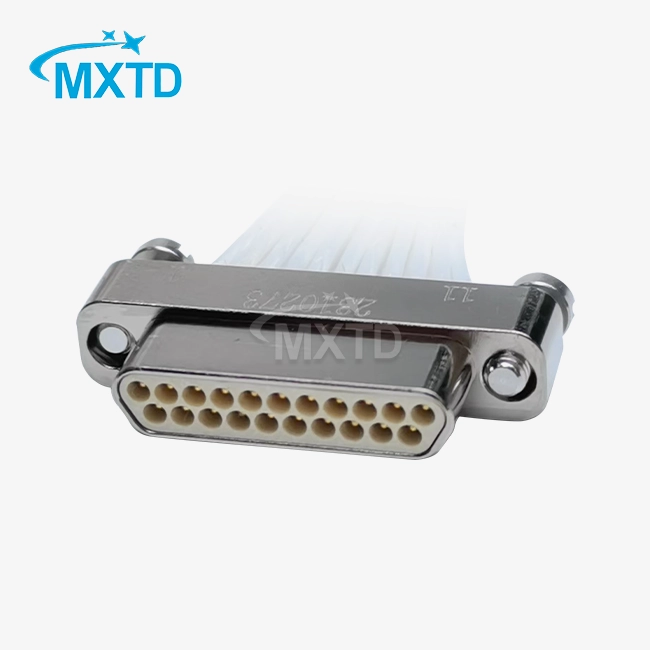
| Connector Type | J30JA-51ZK (FL) | DB-50 (Male) | SCSI100 (FL) |
| Operating Temperature | 0°C~50°C | ||
| Storage Temperature | -40°C~+70°C | ||
| Operating Humidity | 10%~90%, Non-condensing | ||
| Storage Humidity | 5%~95%, Non-condensing | ||
| Dimensions / Form Factor | PXI Single-slot 3U Standard Module | PXIe Single-slot 3U Standard Module | PXI Single-slot 3U Standard Module |
Applications
Automotive Electronics Testing: Used for switching vehicle batteries, sensor signals, or the power and control lines of actuators.
Semiconductor Testing: Used for signal routing between the board under test and the test instrument during burn-in tests or parameter tests.
Aerospace Cable Testing: Used for channel switching in continuity tests and insulation tests.
Industrial Automation Control: Serves as the signal hub in automation equipment to control solenoid valves, indicator lights, etc.
Functionality
-
High-Density Signal Switching:16-channel independent SPDT: Each channel is of a single-pole double-throw structure, and supports flexible configuration as normally open, normally closed or signal switching mode.
-
High-Power Load Capacity : Supports a maximum switching voltage of 220VDC / 250VAC, suitable for industrial-grade power supplies, batteries, and actuator control.
-
High Signal Fidelity:The maximum contact resistance of the relay is ≤ 50 mΩ, which reduces signal transmission loss and ensures measurement accuracy.
-
Fast Response & Long Lifespan:The clamping time is ≤ 3ms and the release time is ≤ 5ms, meeting the requirements for rapid switching in the automated testing sequence.
-
Modern PXIe Bus Architecture:Based on the PXI Express bus, the instruction issuance and status reading are fast, ensuring real-time performance. It is compatible with PXI hybrid slots, facilitating system upgrades and expansions.
-
Standard Interface & Environmental Adaptability:Using DB-50 (needle) connectors, the wiring is convenient and it is compatible with standard cables.Supports a working temperature range of 0°C to 50°C and a storage temperature range of -40°C to +70°C, suitable for harsh industrial environments.
Key Features
Driver isolation and contact protection ensure more stable and reliable control and switching performance.
Wide power range supports low, medium, and high-power requirements to meet diverse user needs.
Fully localized programming manuals, development documentation, and software interfaces tailored for domestic users.
Industrial-grade components deliver enhanced environmental adaptability and superior reliability.
Custom Design
1.Modular PXIe Architecture 2.Relay Array & SPDT Topology 3.Drive Isolation & Contact Protection
4.Low Contact Resistance Design (Signal Fidelity) 5.Power Path Design (High-Power Handling) 6.Environmental Adaptability Design
The essence of the PXIe2910 design lies in the "separation and collaboration between high-power and low-power circuits":
The low-power side (FPGA, bus) handles intelligent control and communication. The high-power side (relays, contacts) manages the switching of power signals.
The isolation layer (optocouplers, transformers) provides protection and ensures safety.

Why Choose MXTD?
Deep Industry Encounter: With over 12 years in estimation and control frameworks, we get it the challenges you confront and convey arrangements that work.
Expert Designing Group: Our gifted R&D experts drive persistent advancement while providing specialized bolster all through your venture lifecycle.
Quality Affirmation: Thorough testing and quality control forms guarantee each item meets tall benchmarks for unwavering quality and performance.
Comprehensive Bolster: From beginning discussion through continuous upkeep, our group gives the skill you require for effective extend completion.
Flexible Arrangements: Whether you require standard items or custom plans, we provide arrangements that coordinate your particular prerequisites and budget.

FAQ
Q: What is the maximum switching voltage and current for this switch?
A: It supports a maximum voltage of 220VDC / 250VAC and a maximum current of 3A (same for AC and DC), meeting the switching needs of most industrial-grade loads.
Q: How long is the relay's lifespan?
A: The electrical life is up to 5 million cycles (5×10⁶ operations), making it suitable for long-term, continuous operation in automated test systems.
Q: What is the contact resistance? Will it affect small signal measurements?
A: The contact resistance is ≤ 50mΩ, which is very low and has minimal impact on the measurement accuracy of weak signals (such as from sensors or thermocouples).
Q: Is it easy to wire? What connector does it use?
A: It uses a standard DB-50 (Male) connector. Accessories are easy to find, and wiring is simple.
Q: How many channels does one module have? Can they be switched simultaneously?
A: It has 16 independent SPDT channels. Each channel can be controlled independently, supporting simultaneous or separate switching.

Contact Us
Choosing the PXIe2910 means solving the two major challenges of high-power switching and high-precision measurement with a single module. It combines high density, long lifespan, and ease of use, making it an ideal core component for complex automated test systems.
Contact our sales team at manager03@mxtdinfo.com to discuss your requirements, request detailed specifications, or arrange product demonstrations. We look forward to helping you achieve your measurement and control objectives with our reliable switching technology.
Our customers’ satisfaction speaks for our quality — contact us to experience the same reliable service.