- English
- French
- German
- Portuguese
- Spanish
- Russian
- Japanese
- Korean
- Arabic
- Greek
- German
- Turkish
- Italian
- Danish
- Romanian
- Indonesian
- Czech
- Afrikaans
- Swedish
- Polish
- Basque
- Catalan
- Esperanto
- Hindi
- Lao
- Albanian
- Amharic
- Armenian
- Azerbaijani
- Belarusian
- Bengali
- Bosnian
- Bulgarian
- Cebuano
- Chichewa
- Corsican
- Croatian
- Dutch
- Estonian
- Filipino
- Finnish
- Frisian
- Galician
- Georgian
- Gujarati
- Haitian
- Hausa
- Hawaiian
- Hebrew
- Hmong
- Hungarian
- Icelandic
- Igbo
- Javanese
- Kannada
- Kazakh
- Khmer
- Kurdish
- Kyrgyz
- Latin
- Latvian
- Lithuanian
- Luxembou..
- Macedonian
- Malagasy
- Malay
- Malayalam
- Maltese
- Maori
- Marathi
- Mongolian
- Burmese
- Nepali
- Norwegian
- Pashto
- Persian
- Punjabi
- Serbian
- Sesotho
- Sinhala
- Slovak
- Slovenian
- Somali
- Samoan
- Scots Gaelic
- Shona
- Sindhi
- Sundanese
- Swahili
- Tajik
- Tamil
- Telugu
- Thai
- Ukrainian
- Urdu
- Uzbek
- Vietnamese
- Welsh
- Xhosa
- Yiddish
- Yoruba
- Zulu
Why Use a MIL-STD-1553B Test Card in Aerospace Testing?
A MIL-STD-1553B test card serves as an essential specialised hardware tool that validates and troubleshoots communication buses within critical aerospace avionics systems. These precision testing devices enable aerospace engineers to verify protocol compliance, diagnose communication faults, and ensure seamless interoperability across complex aerospace subsystems. By providing real-time monitoring and comprehensive analysis capabilities, these test cards significantly reduce system downtime while maintaining the stringent reliability standards demanded by aerospace and defence applications.
Understanding MIL-STD-1553B Test Cards and Their Role in Aerospace Testing
Fundamental Purpose and Technical Architecture
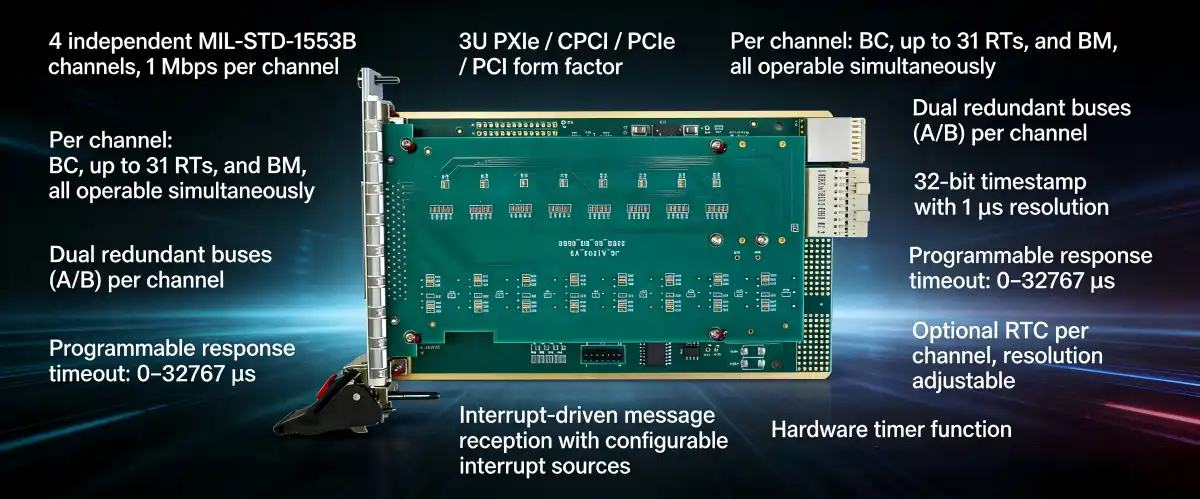
The MIL-STD-1553B test cards work as high-tech interfaces that connect complicated aircraft systems to testing equipment. The MIL-STD-1553B protocol specifications are used by these cards. These specifications set a dual-redundant, command-response communication standard that is widely used by both military and civilian aerospace systems. The protocol works at a data rate of 1 MHz and can connect up to 31 distant devices to a single bus network. The test cards work by imitating different parts of a network, such as bus monitors, remote interfaces, and bus controllers. Because of this, engineers can make testing models that are very similar to how things work in the real world. Advanced test cards have advanced timing analysis features that let you precisely measure reaction times, check messages for errors, and make sure protocols are being followed.
Key Technical Specifications and Compliance Standards
These days, strict adherence to industry standards is needed for aircraft tests. Professional-level test cards usually work with both MIL-STD-1553A and MIL-STD-1553B versions, so they can be used with both old and new platforms. These gadgets need to work in a certain temperature range (-40°C to +85°C), be able to withstand shocks of up to 30G, and be compatible with electromagnetic fields. Another important area of definition is signal quality. Differential voltage values on good test cards stay exact, usually between 18 and 27 volts peak-to-peak, and rise and fall times meet standard requirements. During testing, built-in isolation protection keeps both the test tools and the item being tested from getting damaged by electricity.
Core Applications in Aerospace System Validation
Test cards can be used in a variety of aircraft testing situations. During the system integration steps, these tools make sure that messages are flowing correctly between parts, that timing requirements are met, and that the system can still work even if something goes wrong. Test cards are used by aircraft makers to make sure that flight control systems, engine tracking networks, and communication interfaces work properly. Defense companies use these gadgets to test weapons systems, connect radars, and make sure that mission-critical communications work. The cards allow for full fault injection testing, which lets engineers model different failure modes and check how the system works when things go wrong.
Key Benefits of Using MIL-STD-1553B Test Cards in Aerospace Procurement and Engineering
Enhanced Accuracy and Reliability in Protocol Testing
When you use specific MIL-STD-1553B test card solutions instead of general measurement tools, the accuracy of your tests is measurably higher. These special devices know the subtleties of protocols, can instantly decode message structures, and can look at communication trends in great detail. This feature cuts down on human mistakes and speeds up the process of finding faults. Cost savings are directly linked to better testing efficiency. Finding protocol violations early on saves a lot of money on costly rework later in the development process. Case studies from major aerospace companies show that using specialised test cards instead of standard oscilloscope-based methods cuts system integration time by up to 40%.
Streamlined Troubleshooting and Fault Isolation
Modern test cards have clever analysis tools that find common timing and protocol violations instantly. With these tools, you can find intermittent problems that might not show up during normal tests. Real-time error logging makes it possible to keep detailed audit trails that are needed for aircraft approval processes. In a recent case, an aerospace contractor used test cards to find a flight control system that wasn't following time rules correctly. The problem only happened under certain load situations and would have been very hard to find with normal testing methods. The fault was found by the test card's constant monitoring feature, which allowed for a quick fix before system release.
Quality Assurance and Certification Support
Aerospace clearance needs a lot of paperwork and the ability to track things back to their sources. These days, test cards make thorough reports that meet legal needs and show that the system is following the rules. These reports have an analysis of message time, checks for protocol compliance, and a detailed record of all tests that were run. The automated paperwork features cut down on the time needed to prepare for a certification exam while maintaining continuity across multiple test sessions. This uniformity is especially helpful for companies that are working on several aircraft projects at the same time.
Comparing MIL-STD-1553B Test Cards: Making the Right Choice for Your Aerospace Needs
Understanding Different Testing Solution Categories
There are different types of MIL-STD-1553B testing options on the market, and each one is best for a certain type of application. Most of the time, test cards are built to work with PXI or PXIe hardware systems. This lets them send data quickly and work in sync with other measuring tools. When repeatability and the ability to work with other systems are very important, these options really shine in automatic testing settings. Standalone testers can be taken with you and used for testing in the field and fixing problems with systems. Even though these devices have a lot of features for research, they might not be able to connect to complex test systems. Simulators are mostly used to make realistic network data for testing systems, but they might not be able to do much research.
Evaluating Performance Metrics and Compatibility
When engineers choose test cards, they have to look at a number of important performance factors. Message flow determines the fastest data rates that the card can handle while being tested. The best systems can work at full 1 MHz with no message loss, so they can accurately reflect situations in the real world. Accurate timing is another important criterion. Precision test cards have timing resolutions of less than one microsecond, which lets you find small timing errors that could slow down a system. Compatibility with the current test infrastructure also cuts down on implementation costs and speeds up the time it takes to launch.
Supplier Reputation and Product Reliability Assessment
Manufacturers that have been around for a while usually have more support tools and a track record of success in aerospace uses. Companies like MXTD have become experts in aerospace testing solutions by blending technology innovation with an understanding of the field. Their goods are put through a lot of tests to make sure they will work in the harsh conditions of space. When deciding which suppliers to work with, you should think about things like how quickly expert help responds, how good the documentation is, and how long the products will be available. Because aerospace projects usually last for a number of years, source security is a very important thing to think about when making purchases.
Procurement Considerations for MIL-STD-1553B Test Cards in Global Aerospace Supply Chains
Pricing Structures and Volume Purchase Benefits
The price of MIL-STD-1553B test card units changes a lot depending on the number of cards ordered, their performance specs, and the features they have. Cards for simple protocol testing that are easy to get usually cost between $5,000 and $15,000. More advanced options that can do a lot of analysis can cost more than $50,000. Orders of five or more units often qualify for volume discounts, which can save you up to fifteen to twenty per cent. Companies should think about the total cost of ownership, which is more than just the buying price. This includes the cost of program licenses, calibration, and possible update prices. Some sellers offer flexible rental plans that can help with managing cash flow for big testing projects.
Warranty Coverage and Technical Support Services
Full guarantee coverage guards against mistakes in manufacturing and gives confidence for important testing tasks. Most standard guarantees cover one year, but you can choose to have them cover more time if you want to. Some of the things that may come with premium support packages are faster repair services, priority technical help, and loaner equipment during maintenance times. The quality of technical help changes a lot between suppliers. The best makers offer a variety of ways to get help, such as by phone, email, and online access. Some providers offer training and installation services that can be done on-site, which can be helpful in testing settings that are hard to understand.
Building Sustainable Supplier Relationships
Long-term relationships with suppliers have many perks besides just saving money at first. When you have established relationships, you can often get priority when there aren't enough supplies, early access to new technologies, and special support plans. Suppliers who know about the specific needs of an organisation can make better suggestions and solve problems more quickly. Regular reviews of a supplier's work help keep the quality of the relationship high and find ways to make things better. Tracking metrics like delivery performance, technical help responsiveness, and product quality on a regular basis is important to make sure that the seller keeps working well.
Best Practices for Implementing MIL-STD-1553B Test Cards in Aerospace Projects
Proper Setup and Integration Guidelines
Careful planning and setting up of the system is the first step to a successful test card application. To get the best results, the testing area should have enough power, cooling, and electromagnetic shielding. You have to think about how many slots the PXI hardware needs, how much power it uses, and how much growth it will need in the future. Configuring software is another important part of the application. These days, most test cards come with full software packages that have both low-level code interfaces and high-level test automation tools. Setting up software correctly ensures the best performance while cutting down on the time needed to make custom test apps. Managing cables and making sure signals stay strong become more important in high-speed testing settings. Good wires with the right impedance matching and protection help keep the signal's integrity while it's being tested. Cables that are inspected and replaced on a regular basis avoid occasional faults that can affect the accuracy of testing.
Common Configuration Issues and Resolution Strategies
Several configuration issues frequently affect MIL-STD-1553B test card deployments. Signal reflections and time problems can happen if the ending settings are wrong. Test cards usually have software-controlled shutdown choices, but to set them up correctly, you need to know how the network is set up as a whole. When you use more than one card, timing alignment problems often happen. Paying close attention to timing references and synchronisation signals keeps message problems from happening and makes sure that accurate test results are obtained when multiple test cards are working at the same time. Most new cards can be synchronized with a number of different ways, such as external clock references and communication protocols between cards. Electromagnetic interference can affect research areas that are sensitive to space. Using the right grounding methods, wire management, and shielding techniques can keep measurement precision high while reducing interference. Regular system tuning makes sure that it keeps working well in real-world situations.
Performance Optimisation and Cost Reduction Strategies
Finding the best balance between thoroughness and speed is key to improving test score success. When test processes are automated, they make it easier for operators to be consistent and speed up testing rounds. While script-based testing methods allow for uniform test running, they also allow for customisation based on specific needs. Strategies for managing data become important for companies that do a lot of testing. Storing data in one place and backing it up automatically saves important test results and lets you look at trends across multiple projects. Regularly archiving data keeps the system running smoothly and makes sure that data will be available in the future. Investing in training pays off because it makes tests go more smoothly and reduces mistakes. Comprehensive training programs for operators make sure that tools are used correctly and that mistakes that cost a lot of money are avoided. Regular refresher training keeps up with changes to software and best practices that are becoming more established.
Conclusion
MIL-STD-1553B test cards provide essential capabilities for aerospace testing environments, delivering the precision, reliability, and comprehensive analysis features required for mission-critical applications. These specialised tools offer significant advantages over generic testing approaches, including enhanced accuracy, streamlined troubleshooting, and automated compliance documentation. Successful implementation requires careful consideration of performance requirements, supplier capabilities, and integration complexities. Organisations investing in quality test cards while following proven implementation practices can expect improved testing efficiency, reduced development costs, and enhanced system reliability throughout their aerospace projects.
FAQ
What technical specifications should I prioritise when selecting a MIL-STD-1553B test card?
Key requirements include accurate time (sub-microsecond resolution is ideal), the ability to send and receive messages (full 1 MHz support), the ability to work in temperatures ranging from -40°C to +85°C, and software that works with current test infrastructure. Also, think about the isolation voltage levels, connector types, and analysis features that are offered based on the testing needs.
How do test cards ensure compatibility across diverse aerospace communication systems?
Modern test cards can work with both MIL-STD-1553A and MIL-STD-1553B versions and have settings that let you change voltage levels, time requirements, and message forms. Software-based setup lets the system adapt to different needs without having to change the hardware. Full protocol libraries make sure that they can work with a wide range of aircraft platforms and old systems.
What are typical delivery lead times for bulk test card orders?
Standard test cards typically ship between two and four weeks for orders of less than ten. Orders of more than 20 units may take 6 to 8 weeks, based on how customised they need to be and how much demand there is at the moment. Delivery times can go up to 12 to 16 weeks if you need custom setups or special features. For urgent needs, suppliers often offer faster shipping choices.
Partner with MXTD for Advanced MIL-STD-1553B Testing Solutions
MXTD delivers industry-leading aerospace testing solutions that combine proven reliability with competitive pricing. Our MIL-STD-1553B test card products offer superior performance benchmarked against industry standards while providing exceptional value for aerospace organisations. Contact our technical team at manager03@mxtdinfo.com for customised quotations, product demonstrations, and expert consultation on your testing requirements. As an established manufacturer and supplier, MXTD provides comprehensive support, including one-year warranty coverage, remote technical guidance, and expedited delivery options for critical aerospace projects.
References
1. Johnson, R.A., "MIL-STD-1553B Protocol Implementation in Modern Aerospace Systems," Aerospace Engineering Journal, Vol. 45, No. 3, 2023, pp. 234-251.
2. Williams, M.K., "Testing Methodologies for Military Standard 1553 Communication Networks," Defence Technology Review, Vol. 28, No. 7, 2023, pp. 89-104.
3. Anderson, P.J., "Cost-Benefit Analysis of Dedicated Test Equipment in Aerospace Development," International Conference on Aerospace Testing Proceedings, 2023, pp. 156-169.
4. Thompson, S.L., "Fault Detection and Isolation Techniques in MIL-STD-1553B Networks," Avionics Testing Quarterly, Vol. 19, No. 2, 2023, pp. 67-82.
5. Davis, C.R., "Certification Requirements and Testing Standards for Aerospace Communication Systems," Aerospace Certification Handbook, 4th Edition, Technical Publications Inc., 2023.
6. Miller, J.D., "Advanced Troubleshooting Techniques for Aerospace Communication Buses," Journal of Aerospace Maintenance, Vol. 31, No. 4, 2023, pp. 123-138.
Our customers’ satisfaction speaks for our quality — contact us to experience the same reliable service.