- English
- French
- German
- Portuguese
- Spanish
- Russian
- Japanese
- Korean
- Arabic
- Greek
- German
- Turkish
- Italian
- Danish
- Romanian
- Indonesian
- Czech
- Afrikaans
- Swedish
- Polish
- Basque
- Catalan
- Esperanto
- Hindi
- Lao
- Albanian
- Amharic
- Armenian
- Azerbaijani
- Belarusian
- Bengali
- Bosnian
- Bulgarian
- Cebuano
- Chichewa
- Corsican
- Croatian
- Dutch
- Estonian
- Filipino
- Finnish
- Frisian
- Galician
- Georgian
- Gujarati
- Haitian
- Hausa
- Hawaiian
- Hebrew
- Hmong
- Hungarian
- Icelandic
- Igbo
- Javanese
- Kannada
- Kazakh
- Khmer
- Kurdish
- Kyrgyz
- Latin
- Latvian
- Lithuanian
- Luxembou..
- Macedonian
- Malagasy
- Malay
- Malayalam
- Maltese
- Maori
- Marathi
- Mongolian
- Burmese
- Nepali
- Norwegian
- Pashto
- Persian
- Punjabi
- Serbian
- Sesotho
- Sinhala
- Slovak
- Slovenian
- Somali
- Samoan
- Scots Gaelic
- Shona
- Sindhi
- Sundanese
- Swahili
- Tajik
- Tamil
- Telugu
- Thai
- Ukrainian
- Urdu
- Uzbek
- Vietnamese
- Welsh
- Xhosa
- Yiddish
- Yoruba
- Zulu
What Industries Still Use Serial Port Conversion Cards?
Serial port conversion cards are still used in many different industries to connect older serial devices to more recent computer systems. Even though USB and Ethernet are more popular, RS-232, RS-422, and RS-485 serial connections are still used in fields that need strict reliability, low latency, and tried-and-true communication methods. These adapter cards are used every day in aerospace testing, manufacturing automation, energy tracking, healthcare diagnostics, and transportation systems to keep operations running smoothly, protect current equipment investments, and meet strict performance standards.
Introduction
Industries around the world have to make a big choice: do they replace old equipment that still works or fix it up so it can connect to current networks? For decades, serial connections have been the backbone of industrial communications. This technology is still used in many mission-critical systems today. Procurement managers and test engineers know that serial communication is the most stable way to send data in places with a lot of electrical noise, where newer methods have trouble. Because they are so reliable, factories, defense companies, and research centers keep buying serial port conversion cards instead of changing their whole testing systems.
Manufacturing, transportation, energy production, medical diagnostics, and safe payment systems are all areas that are looked at here. They all need deterministic communication time, galvanic separation, and the ability to work with equipment that is decades old. Technical leaders and system engineers can make better buying choices when they know which industries need these tools. Choosing the right serial port hardware has a direct effect on system uptime, measurement accuracy, and long-term upkeep costs. Anyone who is in charge of planning industrial infrastructure needs to know this.
Understanding Serial Port Conversion Cards and Their Industrial Role
What Serial Port Conversion Cards Do
With RS-232, RS-422, or RS-485 protocols, serial port conversion cards let computers that don't have built-in serial lines talk to industrial tools, PLCs, and test equipment. These cards fit into PCI or PXIe slots and offer several separate serial lines with hardware buffers. Dedicated adapter cards, unlike software-based USB-to-serial converters, use DMA transfers to take communication handling off the CPU. This keeps time stable even when the system is busy. This design is very important in automated test settings where measurements depend on timing accuracy down to the microsecond level.
RS-232, RS-422, and RS-485 Protocol Differences
RS-232 lets two devices talk to each other up to 50 feet away and can send data at up to 1 Mb/s. RS-232 is used to run instruments in industrial test systems where single-master setups are enough. RS-422 uses differential signals to increase transmission ranges up to 4,000 feet. It supports faster speeds of up to 3 Mb/s and is better at blocking noise. RS-485 builds on RS-422 by letting up to 32 devices share a single bus. This makes it perfect for networks of sensors and tools on the plant floor. Each protocol solves a different kind of industry communication problem.
PCI and PXIe Form Factors
Standard PCI cards can be used with both desktop computers and industrial PCs. They are a cheap way for standalone workstations to add more serial ports. PXI and PXIe cards can be put into flexible instrumentation frames that are used in research labs, aircraft testing, and validating semiconductors. Through PCI Express connection, the PXIe design offers more bandwidth and more stable timing, while still being physically compatible with test systems that are placed on racks. Engineers are making automated test tools like PXIe serial cards because they make it easier to integrate systems and keep multiple measurement units in sync.
Critical Performance Features
Serial ports made for industrial use have 128-byte FIFO buffers that keep data from being lost during burst transfers. Support for non-standard baud rates lets private tools work with speeds that aren't standard. Computers are safe from ground loops and electrical surges that happen a lot in factories, thanks to galvanic separation up to 2000V. These standards directly meet the needs of high-reliability applications where lost communications cause production to stop or test data security to be compromised. Supporting standard Windows API and VISA drivers makes it easier to make software and ensures that it works with other automation tools.
Industries That Still Rely on Serial Port Conversion Cards
Manufacturing and Industrial Automation
Communication over a serial bus is needed for PLC programming, machine control, and quality checks on production lines. RS-232 or RS-485 interfaces that were added decades ago let old CNC machines, robotic controls, and inspection systems talk to each other. When serial adapters cost a small part of the cost of new equipment, it rarely makes financial sense to buy new, useful equipment just to improve communication. Automobile assembly plants, electronics factories, and processing plants keep track of thousands of serially connected devices. This means that there is a constant need for reliable serial port conversion cards that work well with central control systems.
Aerospace and Defense Testing
PXIe-based measurement devices are used in aerospace test labs to make sure that flight hardware works, to test it in different environments, and to make sure that parts are qualified. A lot of aircraft parts and satellite systems talk to each other using serial connections that are set by military standards. Defense companies need adapter cards that meet strict standards for electromagnetic compatibility and can support secure, separate communication lines. Because the PXI platform is modular, engineers can put together synced test setups with serial interface cards, digitizers, signal generators, and power sources.
Energy and Utilities Infrastructure
Through serial communication networks, power plants keep an eye on turbines, transformers, and safety switches. RS-485 multi-drop networks that cover big areas are used by grid control tools to get data from substations. The serial connection is what holds these systems together, even though the equipment is from different decades. They have been used for decades with few changes. Serial interfaces are now standard in energy systems because utility companies value dependability and tried-and-true technology over cutting-edge connectivity.
Medical Diagnostics and Laboratory Equipment
Analyzers, imaging tools, and patient monitors used in clinical labs were made over a number of decades. Regulations in healthcare say that equipment must be tested for performance before it can be used in a clinical setting. This makes it very hard to replace tools that work. A lot of medical equipment, from blood chemistry analyzers to ECG tools, can talk to each other using serial interfaces. Hospitals keep up with their serial connectivity systems to support the tools they already have and to slowly add new technologies.
Transportation and Fleet Management
Serial communication is used a lot in train signals, marine navigation systems, and diagnosing problems with vehicles. RS-232 connections are used by auto repair shops to connect scan tools to diagnostic lines on vehicles. For setting up and fixing problems, railway repair facilities join the train control systems through serial ports. Serial procedures set out in aerospace standards allow aviation ground support tools to talk to aircraft systems.
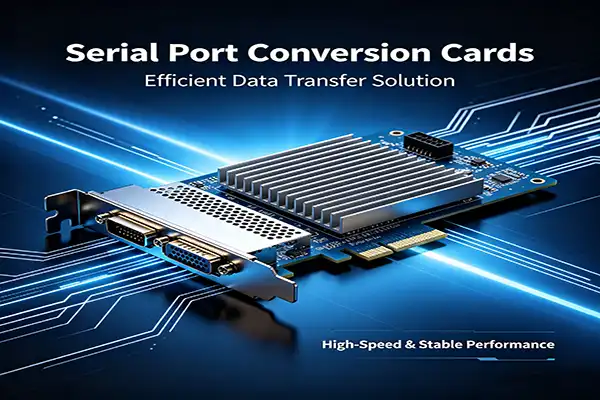
Choosing the Right Serial Port Conversion Card for Your Industry Needs
Evaluating System Compatibility Requirements
Knowing your computer platform is the first step in choosing the right serial port gear. Standard PCI or PCI Express slots are used by most desktop computers and industrial PCs. PXI or PXIe frames are used by monitoring systems. Check the types of slots that are available and the bus voltage compatibility before you buy. To avoid delays in integration, engineers using National Instruments or similar test platforms should make sure that the current chassis hardware is mechanically and electrically compatible.
The type of adapter card that is best for your application depends on the protocol needs. For simple point-to-point contact, RS-232 equipment needs different gear than RS-485 equipment, which needs to connect to multiple drops. For some uses, the same card needs to be able to switch between RS-422 and RS-485 modes, which requires hardware with termination and biasing that can be set. Finding out about these needs during the design phase saves a lot of money on changes that need to be made after the installation.
Port Count and Expansion Considerations
Four-port serial port conversion cards, such as the PXI50101 and PCI50101 types, are a good mix of complexity and ease of use. Multiple ports use fewer chassis slots than single-port cards, which is helpful in setups with limited room. When choosing port numbers, think about both your current communication needs and your plans for future growth. When future needs are underestimated, chassis room is limited, and when they are overestimated, money is wasted on capacity that isn't used.
Before you finalize the specs, you should think about whether your application would gain from isolated or non-isolated ports. Computer systems are safe from ground loops and electrical transients when galvanic separation reaches 2000V, but it costs more. The separation extra is worth it for situations where equipment is grounded at different levels or where there is a lot of electrical noise. In safe labs with short cable runs, non-isolated cards may work consistently, which lowers the cost of purchase.
Performance Metrics That Matter
The maximum transfer rate has a direct effect on how well an application works. Most industrial instruments can communicate with RS-232 cards that can handle 1 Mb/s, while RS-422 and RS-485 cards that can handle 3 Mb/s can handle faster devices. The size of the FIFO buffer changes the chance of losing data during burst transfers. In most industrial settings, the 128-byte buffers on the PXI50101 and PCI50101 cards keep overflows from happening. However, high-throughput situations may need larger buffers or faster asking rates.
Non-standard baud rate support lets you use private equipment that works at speeds that aren't standard. This flexibility is very helpful when adding specialty instruments that use transmission speeds that are specific to the maker. Support for drivers also affects usability. Cards that work with standard Windows API and VISA make software development easier and make sure that applications can run on a wide range of test systems and automation settings.
Supplier Selection Criteria
Long-term flexibility comes from working with makers that offer both standard goods and the ability to make changes to them. Suppliers who know a lot about engineering can change cards to fit specific needs, such as custom connection setups or specific isolation standards. Check the guarantee terms and how quickly you can get help from technical support. These are the things that affect the total costs of ownership after the initial purchase price. When manufacturers offer free software updates and remote expert support, engineering teams don't have to do as much upkeep.
When planning projects, you should think about the lead times for standard items versus customized goods. Standard serial interface cards can be sent out fast from stock, but personalized versions need more time to be made because the specifications are more complicated. By making these dates clear during buying, plan delays can be avoided. Suppliers whose products meet NI's standards help companies that use National Instruments platforms stay compatible, which makes the integration and support processes easier.
Specialized Serial Interface Solutions from MXTD
For industrial automation and test measurement to work, the serial interface cards need to be built to be reliable and perform well. MXTD has a wide selection of adapter cards that can be used with a variety of applications and are compatible with standard systems in the industry.
Our PXI50101 four-port isolated PXI-RS-232 serial port conversion card has 2000V isolation between each port and can send data at 1 Mb/s through DB-37 female connections. This setup works well for PXI-based test systems that need more than one RS-232 link to handle instruments. The four-port isolated PXI-RS-422/RS-485 version that goes with it can handle faster industrial networks with the same level of isolation safety and connection standard. It can reach 3 Mb/s. For maximum versatility, both PXI types have 128-byte FIFOs and support for non-standard baud rates.
For desktop and industrial PC uses, the PCI50101 line offers the same features in a normal PCI form factor. The PCI-RS-232 card with four isolated ports and its RS-422/RS-485 version have the same performance specs as their PXI counterparts. They support 2000V isolation, DB-37 connection, and all baud rates. This group of products lets you use the same serial connection design on all of your facility's computers.
Future Trends and Industry Adaptations Regarding Serial Port Conversion Cards
Why Serial Interfaces Persist
Legacy equipment is a huge investment in capital that still works, even though connection standards are getting old. Millions of serial-equipped gadgets are already in use across all industries, which means that port adapters will always be in demand. In regulated businesses, equipment lasts for decades, which means that serial connection will still be useful a long time from now. Serial interfaces don't go away; instead, they get better through serial port conversion cards that work with current computers and offer better speed.
Integration with IoT and Smart Manufacturing
Gateway design makes it easier for modern industrial IoT systems to connect devices serially. Smart manufacturing projects increase the value of current equipment by connecting it to a network without changing hardware that works. Serial interface cards with better driver support and software packages make it easy for old devices to work with cloud-based data systems. This architectural method protects investments in equipment while getting the benefits of Industry 4.0 connections.
Recent Technical Improvements
Manufacturers improve serial interface cards by adding features that meet the needs of modern industries. Multi-port systems with separate isolation lines give you options for complicated setups. As companies update their IT infrastructure, better driver support for newer operating systems makes sure that everything stays compatible. Better diagnostic tools and LED lights make it easier to find problems in big setups with lots of serial links. These small changes make serial technology more useful for longer without affecting operations that are already in place.
Strategic Procurement Guidance
Purchasing departments should keep working with providers who offer both standard goods and the ability to make changes to them. This two-pronged method makes sure that routine needs are met quickly and gives people access to expert answers for special problems. Check how responsive and skilled the supplier's engineers are; these are the things that decide how well normal hardware can be changed to meet new needs. When companies decide on a standard set of test tools, they should choose sources that work well with their existing instrumentation environment.
Conclusion
Even though many people use newer connection standards, serial interface technology is still an important part of many industry processes. RS-232, RS-422, and RS-485 communication standards are still used in manufacturing automation, flight tests, energy infrastructure, medical diagnostics, and transportation systems because they have been shown to be reliable and have a huge base of installed equipment. To maintain compatibility between modern systems and legacy equipment, the Serial port conversion card plays a key role by providing stable data transmission and flexible interface integration. Companies can protect their current investments and keep operations running smoothly by using high-performance adapter cards with galvanic isolation, adjustable baud rates, and strong driver support. When procurement managers choose the right serial interface hardware, they make sure that systems will work together for a long time and that the total cost of ownership is kept as low as possible over decades of equipment lifecycles.
FAQ
What distinguishes serial port cards from USB-to-serial adapters?
Dedicated serial port conversion cards handle communication through native UARTs and DMA transfers, making sure that time is stable even when the CPU is busy. Software drivers are needed for USB adapters, and they share the USB bus speed with other devices, which causes delays to vary. Industrial apps that need exact time or that work in places with a lot of electrical noise can benefit from specialized adapter cards' better noise immunity and isolation features. Cards also have more ports and separate channels for each one compared to USB options.
What kind of guarantee and customer service should I expect from suppliers?
Manufacturers with a good reputation usually offer one-year guarantees that cover problems with the materials or the work. Check to see if the company you buy from offers free software changes for as long as the product is supported by the operating system. Video coaching and remote technical support cut down on the time needed to fix problems and keep production running smoothly. Make sure you understand how long you say you will respond—leading sellers answer complex questions within an hour during business hours. For important uses where downtime costs a lot, extended warranty choices and advance replacement plans are very helpful.
How do I ensure compatibility with existing hardware?
Before you buy, make sure that the chassis has enough room and that the hardware slots are compatible with PCI, PCI Express, PXI, and PXIe. Make sure that your devices meet the interface needs (RS-232, RS-422, RS-485). Check the types of connectors—cable systems need to be different for DB-37, DB-9, and terminal block designs. Make sure that the drivers you need work with your operating system and program software. This evaluation is made easier when suppliers give thorough specification sheets and compatibility grids. If you're not sure, ask for expert advice before making a buy to avoid problems with integration.
Partner with MXTD for Your Serial Connectivity Solutions
For test measurement and industrial automation, you need serial interface hardware that works well and has quick expert help. MXTD has 12 years of technical experience and a wide range of products that meet the needs of RS-232, RS-422, and RS-485 connections. Our PXI50101 and PCI50101 families of serial port conversion cards give your apps the speed, isolation, and freedom they need.
We keep standard goods in stock so they can be sent out right away, and we can also help you come up with custom solutions that fit your specific needs. Our research team answers complex questions within an hour, which is very important for the success of the project. Our OEM and ODM services can make solutions that fit your needs, whether you need serial interface cards that work with NI systems or unique connector configurations. Email our team at manager03@mxtdinfo.com to talk about what you need. As an experienced maker of serial port conversion cards, we offer detailed specification guides, driver software, and application help to make sure that the cards work well with your system. You can see all of our products at www.mxtdtest.com and learn how our low-cost options can improve your test and automation systems. We offer free software updates, one-year warranties, and choices for longer assistance for certain applications.
References
1. Jones, R. (2021). Protocols for industrial communication: old systems used in modern manufacturing. Press for Automation Technology.
2. López-Martínez and Chen, L. (2020). Standards for serial interfaces used in test and measurement applications. No. 45(3), pp. 287–304, Journal of Industrial Electronics.
3. The National Electrical Manufacturers Association is a group. (2022). Advice on how to use serial communication in business settings. A publication of NEMA standards.
4. Thompson, D. (2023). PXI and PXIe Platform Design for Test Systems That Run Automatically. Publishers of Instrumentation Engineering.
5. Williams, K. (2022). Smart manufacturing projects include the use of old equipment. 60(8), 2456–2473, in the International Journal of Production Research.
6. It's Zhang, H., and Patterson, M. (2021). Serial communication reliability in places with a lot of electrical noise. Technical Report from the Industrial Electronics Society.
Our customers’ satisfaction speaks for our quality — contact us to experience the same reliable service.