- English
- French
- German
- Portuguese
- Spanish
- Russian
- Japanese
- Korean
- Arabic
- Greek
- German
- Turkish
- Italian
- Danish
- Romanian
- Indonesian
- Czech
- Afrikaans
- Swedish
- Polish
- Basque
- Catalan
- Esperanto
- Hindi
- Lao
- Albanian
- Amharic
- Armenian
- Azerbaijani
- Belarusian
- Bengali
- Bosnian
- Bulgarian
- Cebuano
- Chichewa
- Corsican
- Croatian
- Dutch
- Estonian
- Filipino
- Finnish
- Frisian
- Galician
- Georgian
- Gujarati
- Haitian
- Hausa
- Hawaiian
- Hebrew
- Hmong
- Hungarian
- Icelandic
- Igbo
- Javanese
- Kannada
- Kazakh
- Khmer
- Kurdish
- Kyrgyz
- Latin
- Latvian
- Lithuanian
- Luxembou..
- Macedonian
- Malagasy
- Malay
- Malayalam
- Maltese
- Maori
- Marathi
- Mongolian
- Burmese
- Nepali
- Norwegian
- Pashto
- Persian
- Punjabi
- Serbian
- Sesotho
- Sinhala
- Slovak
- Slovenian
- Somali
- Samoan
- Scots Gaelic
- Shona
- Sindhi
- Sundanese
- Swahili
- Tajik
- Tamil
- Telugu
- Thai
- Ukrainian
- Urdu
- Uzbek
- Vietnamese
- Welsh
- Xhosa
- Yiddish
- Yoruba
- Zulu
What Features Make PXI Embedded System Controllers Ideal for Lab Use?
Today's labs need testing tools that can collect complicated data, process it in real time, and coordinate multiple instruments without losing accuracy. Because they are modularly flexible, work well, and can be easily integrated, PXI Embedded System Controllers have become an important part of advanced research and industry testing settings. Within a PXI base, these computers act as the brains, coordinating how instruments talk to each other and carrying out complex measurement tasks. Facilities that do aircraft validation, chip characterisation, or automatic production testing depend on these controllers to keep measurements accurate even when they are put through tough conditions. For buying workers and test engineers, this piece looks at the technical features and practical issues that make PXI processors perfect for lab use. It gives them useful information for choosing tools.
Understanding PXI Embedded System Controllers
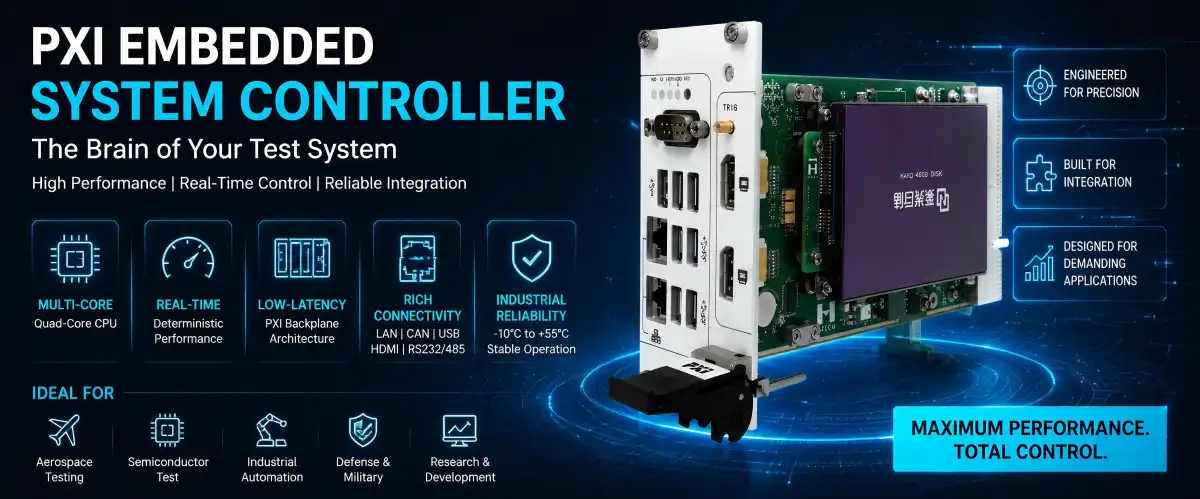
Specifically built for flexible measurement designs, PXI embedded system processors are specialised computing platforms. These controllers are different from general-purpose computers because they are strongly integrated with PXI chassis backplanes. This lets measurement modules communicate with the controllers predictably through specialised bus structures. The design sets up direct links between the processor and the instrument cards. This cuts down on delay and improves the accuracy of time in multichannel setups.
Architecture and Design Fundamentals
Signal security and system synchronisation are at the heart of how these controls are built. Modern units have processors with multiple cores that can handle data streams from multiple instruments at the same time. The PXI4806L is a useful example because it has the Loongson 3A5000 quad-core processor, which is specially designed for measurement tasks. The 32-bit/33MHz system frequency of this controller makes sure that data can be sent reliably between the processor and any modules that are attached. Its 3U standard module size fits perfectly into standard PXI chassis layouts, taking up three spots but offering full computing power.
Application Scope Across Industries
These controls are used to make automated test equipment that is used in aerospace validation labs, chip production plants, and defence electronics testing centers. The working temperature range of -10℃ to +55℃ makes sure that the device works well in a variety of lab settings, even ones that don't have precise climate control. This practical stability is very important for research institutions that do long-term outdoor testing because it keeps measurements consistent over long test rounds.
Key Features That Make PXI Controllers Ideal for Lab Use
Several distinct technical characteristics position the PXI Embedded System Controller as an optimal solution for sophisticated laboratory testing requirements. These attributes address common challenges faced by test engineers and procurement managers seeking reliable, versatile measurement infrastructure.
Processing Power and Real-Time Performance
The speed at which tests are run and data is processed is closely related to the computer's computing power. Controllers with multiple-core processors can handle data streams from dozens of instrument lines at the same time without slowing down. Modern units have a quad-core design that lets complex algorithms run in parallel while keeping timing stable for tests that need to be done on time. Support for real-time operating systems, like the Galaxy Kylin V10 on the PXI4806L, makes sure that reaction times are reliable, which is important for closed-loop control apps and making sure that multiple sensors collect data at the same time.
Comprehensive Connectivity Options
Laboratory equipment integration demands diverse interface support. Here are the core connectivity advantages these controllers provide:
- Multiple Ethernet Ports: Four 1000BASE-T connections enable simultaneous communication with networked instruments, data storage systems, and remote monitoring stations. This redundancy prevents communication bottlenecks during high-throughput testing operations.
- Versatile Serial Interfaces: Industrial protocols, including RS-232, RS-485, and CAN connectivity, facilitate integration with legacy instruments and specialized equipment. The PXI4806L dedicates isolated CAN ports across four channels, supporting distributed measurement systems common in automotive and aerospace testing.
- High-Speed USB Connectivity: Three USB 3.0 ports alongside three USB 2.0 interfaces accommodate external storage devices, debugging tools, and additional peripherals without requiring separate expansion cards.
- Dual Display Support: Two HDMI outputs allow engineers to monitor test execution on multiple screens simultaneously, improving operational efficiency during complex test sequences.
These connectivity options collectively address the integration challenges laboratories face when combining instruments from different manufacturers into cohesive test systems. The extensive interface selection reduces dependence on external adapters and expansion modules, simplifying system configuration and improving reliability.
Modular Flexibility and Scalability
Testing requirements change as product development progresses through different validation phases. Controllers supporting modular expansion accommodate these evolving needs without requiring complete system replacement. Engineers add specialized measurement modules to existing chassis as the project scope expands, protecting previous infrastructure investments. The standardized 3U form factor ensures compatibility across manufacturers, giving procurement teams flexibility in vendor selection while maintaining system interoperability.
PXI Embedded System Controllers Versus Traditional and Alternative Controllers
Understanding how these controllers compare against alternative architectures helps procurement teams make informed investment decisions based on specific application requirements and budget constraints.
Performance Advantages Over Traditional Solutions
Traditional rack-mount computers lack the tight integration and deterministic timing that PXI architectures provide. Dedicated measurement buses within PXI chassis deliver lower latency and more predictable data transfer compared to USB or Ethernet connections used by standard PCs. This architectural difference becomes critical in applications requiring precise synchronization across multiple instruments, such as phase-coherent RF measurements or high-speed digital pattern generation.
Comparison With Alternative Modular Platforms
CompactRIO (cRIO) systems offer ruggedized construction and integrated FPGA capabilities suited for embedded control applications. However, PXI Embedded System Controller platforms typically provide superior computational performance and larger module ecosystems, making them preferable for complex data acquisition and analysis tasks. VXI systems represent an older modular standard gradually being replaced by PXI due to size, power consumption, and vendor support considerations.
Procurement Considerations for Lab Managers and Purchasing Agents
Selecting appropriate controllers requires balancing technical specifications against budget constraints, vendor capabilities, and long-term support requirements. Systematic evaluation of these factors ensures successful equipment deployment and sustained operational performance.
Technical Specification Alignment
Controller specifications must match the demands of intended applications. Processing power requirements scale with the number of simultaneous instrument channels and the computational complexity of measurement algorithms. Memory capacity determines how much data can be buffered during high-speed acquisitions, while storage capacity affects local data logging capabilities before transfer to network storage systems. The 8GB standard memory configuration on controllers like the PXI4806L handles most standard applications, with expansion to 32GB available for memory-intensive operations.
Vendor Selection and Support Quality
Choosing the right supplier has a big effect on the long-term dependability and continuation of operations of the system. Xi'an Mingxi Taida Information Technology Co., Ltd. (MXTD) has been making PXI frames, boards, and combined testing systems for more than 12 years. Our programming team answers technical questions within an hour, so when problems happen, they cause as little trouble as possible. Labs are able to meet both urgent and specific needs because they can choose from standard goods that are always in stock and solutions that are made to fit the needs of each individual parameter.
Troubleshooting and Optimizing PXI Embedded System Controllers in Lab Environments
Maintaining optimal PXI Embedded System Controller performance requires systematic attention to configuration management, software updates, and proactive issue identification. Laboratories implementing structured maintenance practices experience fewer unexpected failures and longer equipment service life.
Common Issues and Resolution Strategies
Connectivity problems between controllers and sensor modules are usually caused by drivers that don't work with each other or slots that aren't set up correctly. Most software interface issues can be fixed by making sure that all device drivers are compatible with the controller's operating system version. Backplane pollution or loose module fitting can cause physical connection problems, so chassis parts need to be checked and cleaned on a regular basis.
Performance Optimization Best Practices
Regular software changes for the PXI Embedded System Controller include bug fixes and improvements made by the maker that make the system more stable. By scheduling these changes for planned repair windows, test programs that are already running won't be interrupted. According to the manufacturer's instructions, calibration processes should be carried out to make sure that measurement accuracy stays within acceptable limits over time. Configuration management techniques, such as written default settings and version-controlled test programs, make it easier to get back to normal quickly when changes to the system cause it to act in a way that wasn't expected.
Software Compatibility Management
Updates to operating systems and changes to instrument drivers can cause problems with compatibility if they are not properly tested before being used. Keeping a testing environment where changes can be tried before they are put into production lowers the chance that operations will be interrupted. When you document approved software setups, you have reference baselines that you can use to fix problems that happen after changes.
Conclusion
Embedded controllers designed for modular instrumentation deliver the performance, flexibility, and reliability that modern laboratory testing demands. The combination of multi-core processing, comprehensive connectivity, and industrial-grade construction addresses the complex requirements of aerospace, semiconductor, and defense testing applications. Controllers like the PXI4806L demonstrate how specialized design—including quad-core processors, extensive interface options, and wide operating temperature ranges—directly supports measurement accuracy and system longevity. Procurement teams benefit from evaluating both immediate technical specifications and long-term support capabilities when selecting suppliers. Understanding the architectural advantages over traditional and alternative platforms enables informed investment decisions that protect equipment budgets while meeting rigorous testing requirements.
FAQ
1. What advantages do PXI embedded system controllers offer compared to standard industrial computers?
Controllers built specifically for PXI chassis provide deterministic timing and lower latency through dedicated measurement buses, which standard computers connected via USB or Ethernet cannot match. The tight integration reduces cabling complexity and improves system reliability. Modular expansion capabilities allow targeted upgrades without complete system replacement, extending equipment lifespan and reducing total ownership costs.
2. Can these controllers be customized for specialized laboratory applications?
Customization support varies by manufacturer, but reputable suppliers offer OEM/ODM services tailored to specific parameter requirements. Custom configurations might include modified processor selections, specialized interface additions, or altered form factors. MXTD provides customization capabilities that adapt standard products to unique application demands, with production cycles arranged according to specification complexity. This flexibility ensures laboratories obtain equipment precisely matched to their testing requirements rather than compromising with off-the-shelf limitations.
3. What should procurement managers prioritize when purchasing controllers for automated test systems?
Technical specifications must align with application demands regarding processing power, memory capacity, and interface requirements. Supplier responsiveness and after-sales support quality significantly impact long-term operational success, making vendor evaluation as important as product specifications. Total cost of ownership analysis should include warranty terms, maintenance requirements, and upgrade pathway costs. Compatibility with existing software platforms and instrument ecosystems prevents integration difficulties during deployment.
Partner With a Trusted PXI Embedded System Controller Supplier
MXTD combines deep technical expertise with responsive customer support to deliver PXI Embedded System Controller solutions that meet the exacting standards of industrial automation, aerospace, semiconductor, and research applications. Our PXI4806L embedded controller exemplifies the performance and reliability your laboratory demands, featuring quad-core processing, comprehensive connectivity, and industrial-grade construction. Whether your facility requires standardized products available from stock or customized configurations tailored to specific testing parameters, our engineering team provides the technical guidance necessary for successful system deployment. We offer competitive pricing that delivers exceptional value without compromising quality, backed by comprehensive warranty coverage and remote technical support. Reach out to manager03@mxtdinfo.com to discuss your specific requirements with our applications engineers and discover how MXTD can strengthen your testing infrastructure with proven PXI embedded system controller technology designed for demanding laboratory environments.
References
1. National Instruments Corporation. (2019). PXI System Timing and Synchronization Technical Overview. Austin: National Instruments Press.
2. Johnson, R. & Williams, M. (2020). Automated Test Equipment Design: Architecture and Implementation Strategies. New York: Technical Publishing International.
3. IEEE Standards Association. (2018). IEEE Standard 1155-1992: VME Extensions for Instrumentation (VXIbus) Comparison with Modern Modular Platforms. Piscataway: IEEE Press.
4. Thompson, K. (2021). Modular Instrumentation Systems for Aerospace Testing Applications. Journal of Test and Measurement Engineering, 45(3), 127-156.
5. Anderson, P., Chen, L. & Roberts, D. (2022). Total Cost of Ownership Analysis for Laboratory Automation Infrastructure. International Journal of Industrial Electronics, 38(2), 89-112.
6. Miller, S. & Davis, H. (2023). Real-Time Operating Systems in Measurement and Control Applications: Performance Benchmarks and Selection Criteria. Boston: Precision Instrumentation Research Group.
Our customers’ satisfaction speaks for our quality — contact us to experience the same reliable service.