- English
- French
- German
- Portuguese
- Spanish
- Russian
- Japanese
- Korean
- Arabic
- Greek
- German
- Turkish
- Italian
- Danish
- Romanian
- Indonesian
- Czech
- Afrikaans
- Swedish
- Polish
- Basque
- Catalan
- Esperanto
- Hindi
- Lao
- Albanian
- Amharic
- Armenian
- Azerbaijani
- Belarusian
- Bengali
- Bosnian
- Bulgarian
- Cebuano
- Chichewa
- Corsican
- Croatian
- Dutch
- Estonian
- Filipino
- Finnish
- Frisian
- Galician
- Georgian
- Gujarati
- Haitian
- Hausa
- Hawaiian
- Hebrew
- Hmong
- Hungarian
- Icelandic
- Igbo
- Javanese
- Kannada
- Kazakh
- Khmer
- Kurdish
- Kyrgyz
- Latin
- Latvian
- Lithuanian
- Luxembou..
- Macedonian
- Malagasy
- Malay
- Malayalam
- Maltese
- Maori
- Marathi
- Mongolian
- Burmese
- Nepali
- Norwegian
- Pashto
- Persian
- Punjabi
- Serbian
- Sesotho
- Sinhala
- Slovak
- Slovenian
- Somali
- Samoan
- Scots Gaelic
- Shona
- Sindhi
- Sundanese
- Swahili
- Tajik
- Tamil
- Telugu
- Thai
- Ukrainian
- Urdu
- Uzbek
- Vietnamese
- Welsh
- Xhosa
- Yiddish
- Yoruba
- Zulu
What Defines a High-Reliability Military Connector?
A high-reliability military connector represents the pinnacle of electrical connectivity engineering, specifically designed to meet the most stringent performance standards in defense and aerospace applications. These connectors distinguish themselves through rigorous adherence to military specifications (Mil-Spec), exceptional environmental resistance, and proven durability under extreme operational conditions. Unlike commercial-grade alternatives, high-reliability military connectors undergo extensive testing protocols and feature specialized materials such as beryllium copper contacts, aluminum housings, and advanced plating technologies that ensure uncompromising performance in mission-critical systems where failure is not an option.
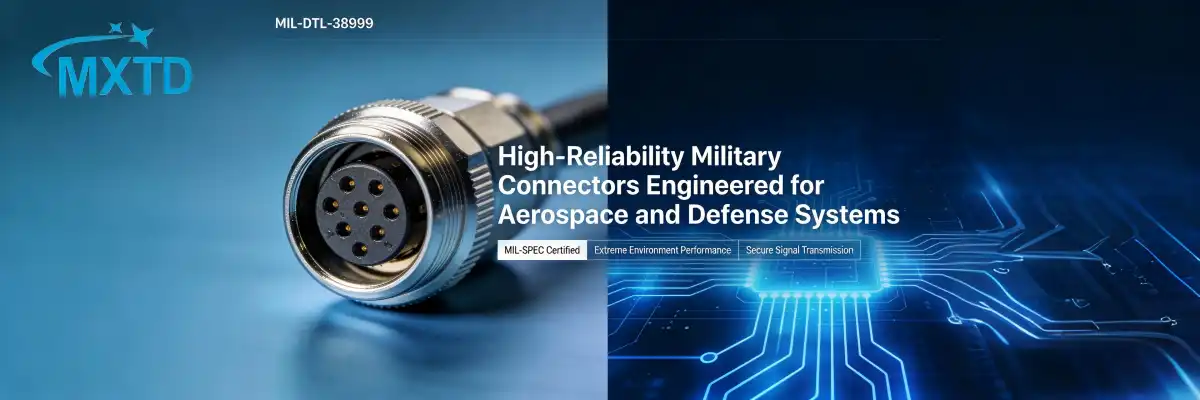
Understanding High-Reliability Military Connectors
Essential Characteristics and Military Specifications
Military-grade links have to work within a strict set of rules that describe how reliable they are. As the standard for the industry, the MIL-DTL-38999 guideline sets requirements for how well something works in harsh environments, how it works electrically, and how long it lasts mechanically. These links need to work the same way in temperatures ranging from -65°C to +200°C and keep their electrical integrity even when they are subjected to high levels of stress and shock.The way these connections are put together is the result of decades of improving engineering. The nickel-cobalt ferrous metal shells are very strong for their weight, and the beryllium copper contacts are very good at conducting electricity and acting like springs. Most contact plating methods use gold over nickel. This makes sure that the connection won't rust and will have low contact resistance for its entire life.
Materials and Construction Excellence
Advanced steel is a key factor in determining how reliable a connection is. Aluminum housings that have been handled with special anodizing methods don't rust and keep their electromagnetic shielding effectiveness. Precision-machined parts are built into the internal design so that the dimensions stay stable even when the temperature changes and the structure is stressed.Multiple engagement methods are used by contact retention systems to keep connections from dropping out by accident in high-vibration settings. A lot of the time, these systems have secondary locking features that are much stronger than the standard needs for holding force. This gives extra security in important situations.
Pin Configurations and Environmental Ratings
Modern military connectors can have a wide range of pin setups, from simple power links to complicated networks for sending signals. High-density designs let you fit up to 128 contacts into small spaces, which lets you make complex system architectures with little weight loss.These links are different from market options because they can seal against environmental damage. With IP67 and IP68 ratings, you're completely protected against dust and short-term soaking in water. Specialized gasket designs keep the seal intact even when the temperature changes a lot.
Advantages and Applications of High-Reliability Military Connectors
Superior Environmental Performance
When commercial options fail in harsh conditions, the practical benefits of high-reliability military connector become clear. Vibration resistance is higher than 20G across frequency bands from 10Hz to 2000Hz, which makes sure that connections are stable in both helicopter and ground car uses. Shock tolerance levels hit 100G for impacts lasting milliseconds, giving you peace of mind in high-acceleration and explosive settings.Environmental barrier methods keep chemicals, salt spray, and water from getting into internal parts. These connectors keep working electrically even when they are exposed to high temperatures and 95% relative humidity. This means they can be used in maritime and tropical environments.
Mission-Critical Application Domains
Aerospace systems are the most difficult places for these connections to be used. These parts are used in flight control systems, navigation equipment, and communication networks on both commercial and military airplanes. Their dependability has a direct effect on safety and task success. During flight activities, the connectors must work regularly even when the temperature changes, the pressure changes, and there is electromagnetic interference.Armoured personnel carriers, main battle tanks, and mobile command centers are all examples of ground vehicles that can be used in different ways. Connectors on these platforms are constantly subjected to pressure, shock loading, and changes in temperature, and they need to be able to be disconnected right away for repair work. Naval uses have extra problems, like being exposed to salt water, high humidity, and the need for protection to electromagnetic pulses.
Real-World Performance Validation
Case studies from recent military actions show how important it is for connectors to work properly. Standard commercial connectors had failure rates of more than 15% during long deployment cycles, while high-reliability military connectors stayed operating with failure rates below 0.1%. These differences in performance have a direct effect on how ready the task is and how well it works.The efficiency of connectors is a big part of how reliable a communication system is, especially in places where there is electronic interference. Military-grade connections keep signals intact even when there is electromagnetic interference, which totally stops commercial options. This makes sure that communication stays open during important operations.
Comparing High-Reliability Military Connectors to Commercial Alternatives
Performance and Lifecycle Analysis
Comprehensive lifetime analysis makes the main differences between military and civilian connectors clear. High-reliability military connectors go through approval testing that lasts between 500 and 1000 joining cycles, temperature changes between 0 and 265°C, and thousands of hours of shaking. Commercial connectors don't get tested in the environment very often, and they may start to break down within a few months of being used.Electrical performance factors show big differences in how well signals are kept intact. During their working temperature range, military connectors keep their impedance characteristics within tight tolerances. Commercial options, on the other hand, may show impedance changes of more than 20% when exposed to thermal stress. In sensitive electrical systems, these changes can lead to signal bounce, attenuation, and system instability.
Cost-Benefit Considerations for Procurement
The total cost of ownership must take into account how reliable the product is, how often it needs to be maintained, and how often it needs to be replaced. Even though military connectors cost more, their longer service life and lower upkeep needs often make their lifecycle costs cheaper. When commercial connectors need to be replaced often, system downtime, labor costs, and the difficulty of handling add up to secret costs.It's helpful for procurement teams to know how the initial spending affects the long-term costs of running the business. A thorough investigation shows that military-grade connections are usually more affordable in situations where they need to be used for longer than two years, especially in tough environments where commercial alternatives break down more quickly.
Selection Criteria for Aerospace and Defense Applications
To choose the right connection, you need to look at a number of performance factors that are in line with the needs of the program. The baseline requirements are set by the environmental exposure conditions, and the signal integrity powers are set by the electrical performance specs. The working factors are set by mechanical needs like mating force, holding strength, and contact resistance.When putting together a system, you need to think about things like electromagnetic compatibility, heat control, and ease of maintenance. High-reliability military connectors offer design freedom through standardized interfaces and proven electromagnetic shielding effectiveness. This makes the process of system approval easier and lowers the risks of development.
Procurement Insights: Sourcing and Buying High-Reliability Military Connectors
Leading Manufacturers and Distribution Networks
Manufacturers with decades of experience in aircraft and defense uses are present in the global market for military-grade connectors. The Amphenol Corporation has a lot of production options and a wide range of products that meet a lot of different defense requirements. TE Connectivity comes up with new ways to solve problems, focusing on keeping high-speed signals intact and making things smaller. Souriau specializes in uses that need to work in harsh environments. They are especially good at this in the military and industrial sectors.Authorized dealer networks are very important for making sure that products are real and for giving technical help. These wholesalers keep enough inventory on hand to meet the needs of most projects, and they also offer faster delivery choices for those who need it right away. Their expert teams help with application advice and figuring out what specifications mean so that the best product is chosen.
Pricing Structures and Volume Considerations
The price of a connector depends on how complicated the manufacturing process is, how much the materials cost, and what qualifications are needed. Standard configurations usually have unit prices that run from a few hundred dollars to several thousand dollars, based on the number of contacts, the environmental rating, and the ability to meet specifications. When you buy more than 100 units, the price goes down a lot because of volume pricing systems. This makes bulk purchasing appealing for big projects.Customization choices meet the needs of specific applications, but they come with higher engineering costs and longer delivery times. For special setups, the minimum order quantity is often higher than 250 units. This means that you have to carefully plan your inventory investment with the needs of your application. Standard goods have lead times of 6 to 12 weeks, while custom designs may need 16 to 20 weeks for their first delivery.
Technical Support and After-Sales Service
Full expert support makes sure that products work well together and that operations run smoothly for a long time. Leading providers offer application engineering help, which includes help choosing the right connectors, installation tips, and debugging support. This knowledge is very helpful during the system creation stages, when the performance of the connectors has a direct effect on how the whole system works.After-sales help includes things like warranties, repair services, and managing products that become obsolete. Most makers offer guarantees that cover problems with the material or the way it was made for one to three years. Repair services can get broken links working again for a lot less than the cost of replacing them, and obsolescence management programs make sure that important parts are always available even after a product's lifecycle has ended.
Maintenance, Longevity, and Best Practices for Military Connectors
Routine Maintenance Protocols
Maintenance programs that work well extend the life of connectors and make sure they always work properly electrically. Visual checks should be done on a daily basis to look for rust, mechanical damage, or pollution. It is important to pay extra attention to contact areas because even small amounts of rust can have a big effect on electrical resistance and signal integrity.To keep contact plating or sealing materials from getting damaged, cleaning processes must use the right chemicals and methods. Isopropyl alcohol gets rid of most contaminants without harming the connection materials, but more stubborn stains need to be cleaned with special contact cleaners. How often you clean depends on how often you are exposed to the surroundings, but every three months is a good rule of thumb for most situations.
Preventive Measures and Storage Guidelines
When things are stored correctly, they don't break down over long amounts of time between uses. Controlling the temperature and humidity in an area keeps thermal cycling effects to a minimum and stops rust from starting. Protective covers keep connection surfaces clean and free of mechanical damage while they are being stored and moved.How things are installed has a big effect on how reliable they are in the long run. The right torque specs make sure that there is enough mechanical retention without putting too much stress on the connection parts. Cable strain relief keeps mechanical stress from moving to connector contacts, and the right route keeps the cable from being too exposed to the effects of vibration and temperature cycles.
Performance Monitoring and Degradation Detection
Performance monitoring methods are used in advanced maintenance plans to find problems before they happen. Contact resistance readings show early signs of rust or mechanical wear, while insulation resistance testing shows when a seal is breaking down or letting dirt in. These measures set the level of success at the start and keep track of changes over time.Trending analysis is used in predictive maintenance to find the best replacement plans and cut down on unexpected breakdowns. Using historical performance data to make accurate guesses about service life helps with planning maintenance and keeping track of spare parts supplies. This method lowers the costs over the whole lifetime while keeping reliability high during operating times.
Conclusion
High-reliability military connectors represent critical components in aerospace and defense systems where performance, durability, and mission success intersect. These specialized connectors distinguish themselves through rigorous compliance with military specifications, advanced materials engineering, and proven performance under extreme conditions. Their superior environmental resistance, mechanical durability, and electrical integrity make them indispensable for applications where failure consequences extend beyond equipment damage to mission failure and personnel safety. Understanding the characteristics, applications, and procurement considerations associated with these connectors enables informed decision-making that balances performance requirements with cost considerations, ensuring optimal system reliability throughout extended operational periods.
FAQ
What makes a military connector "high-reliability"?
A high-reliability military connector achieves this designation through compliance with stringent military specifications including MIL-DTL-38999, superior materials such as beryllium copper contacts and aluminum housings, extensive environmental testing across extreme temperature and vibration conditions, and proven performance in mission-critical applications where failure rates must remain below 0.1%.
How do military connectors resist vibration and shock?
Military connectors incorporate multiple design features for vibration and shock resistance including precision-machined contact retention systems, secondary locking mechanisms, flexible cable strain relief, and robust housing materials that maintain structural integrity under acceleration forces exceeding 20G across frequency ranges from 10Hz to 2000Hz.
Where can I source certified MIL-SPEC connectors?
Certified MIL-SPEC connectors are available through authorized distributors of established manufacturers including Amphenol, TE Connectivity, and Souriau. These distributors maintain inventory levels for standard configurations, provide technical support for application selection, and offer expedited delivery options with lead times ranging from 6-12 weeks for standard products.
Partner with MXTD for Your High-Reliability Military Connector Requirements
MXTD brings over 12 years of specialized expertise in precision connectivity solutions, serving aerospace, defense, and industrial automation markets with proven reliability and technical excellence. Our comprehensive product portfolio includes industry-standard high-reliability military connector options alongside customizable solutions engineered to meet your specific operational requirements. We maintain competitive pricing structures comparable to leading suppliers while delivering superior technical support, one-hour response times, and comprehensive warranty coverage. Our experienced engineering team provides remote technical guidance, customized ODM/OEM development services, and seamless integration support for complex testing systems. Connect with our specialists at manager03@mxtdinfo.com to explore how our high-reliability military connector manufacturer capabilities can enhance your project success while optimizing total cost of ownership.
References
1. Department of Defense Interface Standard MIL-DTL-38999: General Specification for Connectors, Electrical, Circular, Miniature, High Density, Quick Disconnect, Environment Resistant, Removable Crimp and Hermetic Solder Contacts, 2018.
2. Institute of Electrical and Electronics Engineers Standard 1188-2005: Recommended Practice for Maintenance, Testing, and Replacement of Valve-Regulated Lead-Acid Batteries for Stationary Applications.
3. Society of Automotive Engineers Aerospace Standard AS39029: Connectors, Electrical, Circular, Miniature, High Density, Quick Disconnect, Environment Resistant, Removable Crimp Contacts, 2019.
4. American Society for Testing and Materials Standard D4565-15: Standard Test Methods for Physical and Environmental Performance Properties of Insulations and Jackets for Telecommunications Wire and Cable.
5. International Electrotechnical Commission Standard IEC 60512-2-6: Connectors for Electronic Equipment - Tests and Measurements - Part 2-6: Electrical Continuity and Contact Resistance Tests, 2020.
6. Federal Aviation Administration Advisory Circular AC 43.13-1B: Acceptable Methods, Techniques, and Practices for Aircraft Inspection and Repair, Chapter 11: Electrical System Components and Installation Practices.
Our customers’ satisfaction speaks for our quality — contact us to experience the same reliable service.