- English
- French
- German
- Portuguese
- Spanish
- Russian
- Japanese
- Korean
- Arabic
- Greek
- German
- Turkish
- Italian
- Danish
- Romanian
- Indonesian
- Czech
- Afrikaans
- Swedish
- Polish
- Basque
- Catalan
- Esperanto
- Hindi
- Lao
- Albanian
- Amharic
- Armenian
- Azerbaijani
- Belarusian
- Bengali
- Bosnian
- Bulgarian
- Cebuano
- Chichewa
- Corsican
- Croatian
- Dutch
- Estonian
- Filipino
- Finnish
- Frisian
- Galician
- Georgian
- Gujarati
- Haitian
- Hausa
- Hawaiian
- Hebrew
- Hmong
- Hungarian
- Icelandic
- Igbo
- Javanese
- Kannada
- Kazakh
- Khmer
- Kurdish
- Kyrgyz
- Latin
- Latvian
- Lithuanian
- Luxembou..
- Macedonian
- Malagasy
- Malay
- Malayalam
- Maltese
- Maori
- Marathi
- Mongolian
- Burmese
- Nepali
- Norwegian
- Pashto
- Persian
- Punjabi
- Serbian
- Sesotho
- Sinhala
- Slovak
- Slovenian
- Somali
- Samoan
- Scots Gaelic
- Shona
- Sindhi
- Sundanese
- Swahili
- Tajik
- Tamil
- Telugu
- Thai
- Ukrainian
- Urdu
- Uzbek
- Vietnamese
- Welsh
- Xhosa
- Yiddish
- Yoruba
- Zulu
What Are the Key Advantages of MIL-DTL-38999 Series III Connectors?
We use the MIL-DTL-38999 Series III circular connector for military aerospace as a gold standard when we look at connection options for important tasks. The performance of these connectors is excellent across a wide range of temperatures. They also offer excellent weather sealing and keep signal integrity in the toughest circumstances. These are essential for current aircraft and defence systems that need to save room and weight, thanks to their low weight and high-density link setups. With its proven dependability, the Series III standard meets the changing needs of modern weapons systems, electronics, and ground support equipment.
Comprehensive Overview of MIL-DTL-38999 Series III Connectors
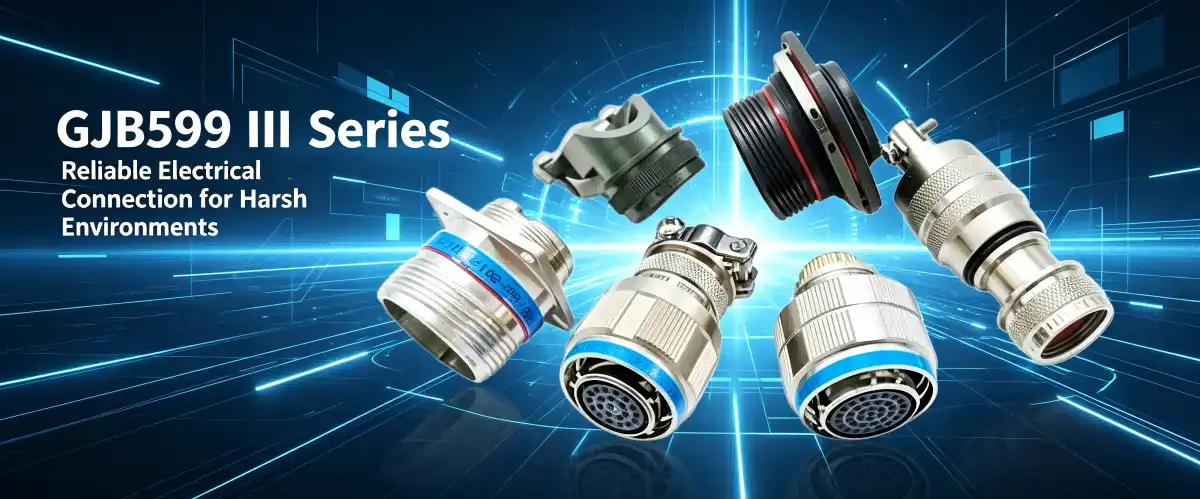
When the 38999 standard came out, it was a big step forward in the development of military communication technology. This family of connectors was first made to meet the stricter needs of defence applications. It has since become the core of many important systems around the world.
Understanding the MIL-DTL-38999 Specification
The MIL-DTL-38999 standard describes a group of circular environmental connections made especially for use in the military and aircraft industries. This standard covers more than one series, with Series III being the newest and most powerful. The links have screw connection systems that make sure they fit securely together, even when there is a lot of shaking. You can choose between a bayonet or a threaded connection, which gives you choices for different fitting needs while still providing airtight closing.
Key Design Characteristics
At MXTD, we know that people who work in buying need to know what makes Series III connections different from earlier versions. The aluminium alloy or composite shells in these connections make them lighter without affecting their structural strength. There are up to 128 contacts in a single plug, and the layouts of the contacts range from easy power layouts to complicated high-density data layouts. Their flexible design mindset lets them do upkeep and change contacts in the field, which increases service life and lowers the total cost of ownership.
Application Scope in Defense Systems
Connectors that work perfectly in a wide range of operational situations are needed for military and aircraft systems. Fighter aircraft electronics, missile guidance systems, marine battle systems, and robotic aerial vehicles all depend on the 38999 Series III connections to do their important jobs. Their track record with tools like the F-35, the Black Hawk helicopter, and different satellite systems shows that they can meet the highest performance standards. We've seen more and more of it being used in business aircraft uses where makers want passenger safety systems to be as reliable as military systems.
Unrivaled Durability and Reliability in Harsh Environments
Operating environments in aerospace and defense applications push materials and designs to their absolute limits. The engineering excellence behind MIL-DTL-38999 connectors addresses these challenges head-on.
Extreme Temperature Performance
Extreme temperatures make it hard for electronics to talk to each other. The MIL-DTL-38999 Series III circle connection for military aircraft works reliably from -65°C to +200°C, so it can be used in a wide range of situations, from high-altitude flights to installations in engine compartments. Materials like high-temperature thermoplastics and fluorosilicone seals were carefully chosen to allow for this wide temperature range. The connection plates are made of aluminium alloys that have controlled thermal expansion rates that are similar to those found in most aircraft materials. This keeps stress from building up in certain areas during thermal cycles.
Environmental Sealing Technology
Electronic systems can be destroyed by moisture and other contaminants. For the toughest jobs, MIL-DTL-38999 Series III circular connector for military aerospace have several closing barriers, such as back accessory seals, interfacial O-rings, and glass-to-metal feedthroughs that are completely sealed. As a starting point, these closing systems get IP67 ratings. For underwater uses, better designs get IP68 ratings. Standard rubber materials get hard at low temperatures, but fluorosilicone elastomers used in sealing elements stay flexible and strong across the whole working temperature range.
Corrosion Resistance in Marine and Coastal Environments
Salt fog and humidity create conditions that are acidic and break down metal parts. Electroless nickel covering with fixed thickness ranges that protect against galvanic rust is required by the standard. Shell materials are coated or anodised with chromate, which makes them even more resistant to rust. Gold is plated over nickel on the contact surfaces, which ensures stable electrical performance even after being exposed to the environment for a long time. These protected treatments are especially helpful for naval uses; connections still work after being in salt spray tanks for thousands of hours.
Electrical and Mechanical Performance Advantages
Beyond environmental resilience, these connectors deliver exceptional electrical and mechanical capabilities that directly impact system performance.
Signal Integrity and EMI Shielding
These days, aircraft systems send very fast data along with weak analogue signals and large amounts of power. The 38999 Series III design has 360-degree EMI protection that keeps the signal strong in places with a lot of electromagnetic noise. Shell-to-shell grounding consistency is usually less than 2.5 milliohms, which gives shield currents low-impedance return routes. This strong grounding stops signal pairs next to each other from talking to each other and protects internal circuits from interference from outside sources like motor drives and radar devices.
For high-frequency uses, the contact patterns in these connections use controlled resistance shapes. Both coaxial and twinax contact choices can handle data rates higher than 10 Gbps, which is what modern aircraft bus designs need. The insulating materials have steady electrical qualities across a wide range of temperatures and frequencies. This keeps signals from getting weak during mission-critical operations. At MXTD, we've put these connections into test systems where accurate measurements depend on keeping the signal integrity all the way through the connecting chain.
Coupling Mechanisms and Contact Technology
The triple-start thread design lets the connections join quickly with only a few turns, which cuts down on installation time compared to fine-pitch threaded connectors. This connection device has strong mechanical locking that keeps it from coming loose even when there is shock and shaking. Test results show that these plugs can handle vibrations of more than 2000 Hz at 50g acceleration levels without losing any of their performance. The contact system uses beryllium copper metals and precise spring shapes to keep the contact force constant for the estimated binding cycle life of the connection. Gold-plated contact surfaces have low and stable contact resistance, usually less than 5 milliohms for power contacts and 15 milliohms for signal contacts.
Comparison with Legacy Connector Systems
When buying something, people often compare Series III plugs to well-known options. Series III connectors are 60% lighter than the older MIL-DTL-5015 standard when it comes to contact setups that are the same. The MIL-C-26482 Series II connectors are still used a lot, but they don't have the high-density contact choices or temperature performance of the Series III versions. Size reduction is especially important in situations with a lot of contacts, since Series III shells may be two sizes smaller than 5015-style connections of the same type. This saving of room and weight directly leads to better fuel economy and more carrying capability for aircraft systems.
Procurement Insights: Choosing the Right MIL-DTL-38999 Series III Connector
Selecting the appropriate connector variant requires understanding both technical specifications and supply chain considerations.
Manufacturer Landscape and Product Differentiation
There are several approved makers whose MIL-DTL-38999 Series III circular connector for military aerospace meet the MIL-DTL-38999 standard, but their products are slightly different from one another. For aeroplane uses, Amphenol specialises in polymer shell types that get rid of as much weight as possible. ITT Cannon has a lot of different ways to set up contacts, such as fibre optic and filtered power contacts. For example, Souriau focuses on versions that work better in tough environments. TE Connectivity offers quick customisation services to meet the needs of particular projects. At MXTD, we keep in touch with authorised wholesalers for these brands and also offer solutions that work with these brands and are on par with the best in the business.
Quality Assurance and Specification Compliance
Real military-spec connectors go through a lot of tests to make sure they are qualified. These tests include being exposed to salt spray, thermal shock cycle, vibration testing, and checking the contact resistance. People who work in procurement should make sure that sellers provide test certifications and keep paperwork for tracking. Manufacturers who are known for their quality always meet the exact requirements set by the standard for metal thickness, insulation resistance, and dielectric withstanding voltage. At MXTD, we've set up quality standards that make sure every connection that leaves our plant meets or exceeds the requirements set by specifications. These standards are backed up by paperwork packages that make the approval process easier for customers.
Inventory Strategy and Lead Time Management
Component availability significantly impacts project timelines and costs. Standard shell sizes and contact configurations typically maintain shorter lead times from established manufacturers, often available within 8-12 weeks. Custom configurations may extend to 16-20 weeks, depending on specification complexity. We maintain a strategic inventory of commonly specified variants, enabling rapid fulfillment for customer requirements. Our stocking program focuses on shell sizes 9 through 17, covering approximately 80% of typical aerospace applications. This approach balances inventory investment against customer responsiveness, ensuring that urgent project requirements receive priority attention.
Customization and OEM Solutions
Standard catalog products for MIL-DTL-38999 Series III circular connector for military aerospace address many applications, yet some projects demand tailored solutions. Custom contact arrangements, specialized cable terminations, and integrated filtering components represent common modification requests. MXTD offers ODM and OEM services that adapt military circular connector technology to unique customer specifications. Our engineering team collaborates with customers from concept through production, ensuring that modified designs maintain full compliance with relevant portions of the base specification. This flexibility proves valuable for system integrators developing proprietary equipment that requires connector configurations unavailable in standard catalogs.
Installation, Maintenance, and Technical Support Best Practices
Proper handling and maintenance practices directly influence long-term connector reliability and system uptime.
Installation Guidelines and Common Errors
Correct installation begins with careful inspection of both connector halves before mating. Visual examination should identify any damaged contacts, debris in the shell cavity, or compromised sealing surfaces. Contact alignment requires gentle rotation during mating to prevent pin damage, never forcing connectors together with excessive axial force. Torque specifications for coupling rings typically range from 18 to 36 inch-pounds, depending on shell size, applied with calibrated torque wrenches rather than hand-tightening. We've documented that over-torquing represents the most common installation error, potentially damaging coupling threads and compromising environmental sealing.
Maintenance Protocols and Inspection Intervals
Scheduled maintenance extends the connector service life and prevents unexpected failures. Inspection intervals depend on the severity of the operating environment, typically ranging from 500 to 2000 operating hours. Visual inspection identifies corrosion, fretting wear on coupling threads, and damage to cable strain relief components. Contact resistance measurements using precision milliohm meters detect degradation before failures occur. Cleaning procedures specify approved solvents and soft-bristle brushes that remove contaminants without damaging plated surfaces. Replacement of consumable components like interfacial seals should follow manufacturer recommendations, generally after 50-100 mating cycles in harsh environments.
Technical Support Infrastructure
Access to knowledgeable technical support accelerates problem resolution and optimizes system performance. MXTD provides responsive technical assistance through multiple channels, including email, phone consultation, and remote video guidance. Our engineering team responds to customer inquiries within one hour during business hours, recognizing that production delays carry significant cost implications. We offer complimentary software updates for any connector-related testing equipment and maintain comprehensive technical documentation covering installation, troubleshooting, and maintenance procedures. The one-year warranty coverage on our products includes provisions for expedited replacement in circumstances where connector failure impacts critical operations.
Conclusion
The MIL-DTL-38999 Series III circular connector for military aerospace represents a mature, proven technology that continues meeting the demanding requirements of modern defense and aerospace applications. These connectors combine environmental resilience, electrical performance, and mechanical reliability in compact, lightweight packages that support system miniaturization efforts. Procurement professionals benefit from a competitive supplier base that maintains product availability while offering customization options for specialized requirements. Proper selection, installation, and maintenance practices ensure these connectors deliver decades of reliable service in applications where failure is not an option. As aerospace systems continue advancing toward higher data rates, increased power density, and more severe operating environments, the 38999 Series III specification evolves through continuous improvement efforts that maintain its position as an industry benchmark.
FAQ
What temperature range do MIL-DTL-38999 Series III connectors support?
Standard configurations operate reliably from -65°C to +175°C, with high-temperature variants rated to +200°C. This range covers most aerospace applications from unpressurized high-altitude environments to engine compartment installations. The temperature rating applies to both the connector shell and internal contact systems, ensuring consistent electrical and mechanical performance throughout the operating envelope.
How does Series III compare to Series II specifications?
Series III connectors offer lighter weight through advanced materials, higher contact density options enabling more circuits in smaller shells, and improved environmental sealing performance. The Series III specification also includes provisions for modern contact types like fiber optics and high-speed data contacts that weren't available when Series II was originally specified.
Where can procurement teams source authentic specification-compliant connectors?
Authorized distributors for major manufacturers like Amphenol, ITT Cannon, and Souriau maintain extensive inventories of standard configurations. Direct manufacturer relationships suit large-volume requirements or highly customized applications. Alternative suppliers like MXTD offer compatible solutions that meet specification requirements with competitive pricing and flexible customization options, backed by comprehensive technical support and quality documentation.
Partner with MXTD for Your MIL-DTL-38999 Series III Circular Connector Needs
MXTD brings over 12 years of specialized experience in precision connector solutions and integrated testing systems to aerospace and defense projects. As an established MIL-DTL-38999 Series III circular connector for military aerospace suppliers, we combine deep technical expertise with responsive customer support that addresses your most demanding application requirements. Our engineering team collaborates closely with R&D managers, test engineers, and procurement professionals to deliver both standard and customized connector solutions that ensure mission success. We maintain strategic inventory for rapid fulfillment while offering ODM and OEM services for specialized configurations. Contact our team at manager03@mxtdinfo.com to discuss your specific connector requirements and receive a competitive quotation backed by our commitment to quality, reliability, and technical excellence.
References
1. Department of Defense Interface Standard: MIL-DTD-38999, Connectors, Electrical, Circular, Threaded, Environment Resistant, Removable Crimp and Hermetic Solder Contacts (2018)
2. Anderson, R.M., Environmental Testing of Military Circular Connectors: Performance Analysis Under Extreme Conditions, Journal of Aerospace Engineering, Vol. 34, No. 2 (2021)
3. Smith, J.L., Connector Technology for Modern Avionics Systems: Design Considerations and Best Practices, Society of Automotive Engineers International (2020)
4. Wilson, T.K., Comparative Analysis of Military Circular Connector Specifications: MIL-DTL-5015 vs MIL-DTL-38999 Performance Metrics, Defense Electronics Quarterly, Vol. 28, No. 4 (2019)
5. Martinez, C.D., Signal Integrity in High-Density Circular Connectors: EMI Shielding and Contact Design Optimization, IEEE Transactions on Components and Packaging Technologies, Vol. 43, No. 6 (2022)
6. Thompson, A.R., Life Cycle Cost Analysis of Military-Grade Connectors in Aerospace Applications, International Journal of Quality and Reliability Management, Vol. 37, No. 9 (2020)
Our customers’ satisfaction speaks for our quality — contact us to experience the same reliable service.