- English
- French
- German
- Portuguese
- Spanish
- Russian
- Japanese
- Korean
- Arabic
- Greek
- German
- Turkish
- Italian
- Danish
- Romanian
- Indonesian
- Czech
- Afrikaans
- Swedish
- Polish
- Basque
- Catalan
- Esperanto
- Hindi
- Lao
- Albanian
- Amharic
- Armenian
- Azerbaijani
- Belarusian
- Bengali
- Bosnian
- Bulgarian
- Cebuano
- Chichewa
- Corsican
- Croatian
- Dutch
- Estonian
- Filipino
- Finnish
- Frisian
- Galician
- Georgian
- Gujarati
- Haitian
- Hausa
- Hawaiian
- Hebrew
- Hmong
- Hungarian
- Icelandic
- Igbo
- Javanese
- Kannada
- Kazakh
- Khmer
- Kurdish
- Kyrgyz
- Latin
- Latvian
- Lithuanian
- Luxembou..
- Macedonian
- Malagasy
- Malay
- Malayalam
- Maltese
- Maori
- Marathi
- Mongolian
- Burmese
- Nepali
- Norwegian
- Pashto
- Persian
- Punjabi
- Serbian
- Sesotho
- Sinhala
- Slovak
- Slovenian
- Somali
- Samoan
- Scots Gaelic
- Shona
- Sindhi
- Sundanese
- Swahili
- Tajik
- Tamil
- Telugu
- Thai
- Ukrainian
- Urdu
- Uzbek
- Vietnamese
- Welsh
- Xhosa
- Yiddish
- Yoruba
- Zulu
UTI320E Handheld Infrared Thermal Imager vs Standard Thermal Cameras
When looking at thermal imaging tools for commercial use, the UTI320E Handheld Infrared Thermal Imager stands out because it has a 320x240 high-resolution detector, can measure temperatures from -20°C to 550°C, and is made to be tough (IP54 rating). Standard thermal cameras often have to choose between low quality and high price. This device, on the other hand, offers professional-grade images with WiFi and Type-C ports at a reasonable cost. For R&D managers and test engineers who need accuracy in HVAC repairs, electrical troubleshooting, and quality control processes, knowing these differences has a direct effect on how well operations run and how reliable measurements are. Choosing the right thermal imaging option affects not only the accuracy of the tests you do right away, but also the cost of care over time and how well the system works with other parts of it. As industrial robotics and semiconductor testing settings get more complicated, they need tools that are both portable and good at their job. This comparison looks at how handheld thermal imagers deal with these issues compared to fixed or lower-resolution options. This helps buying professionals match the technology they choose with their business's long-term needs.
Understanding Thermal Imaging Technology: UTI320E vs Standard Thermal Cameras
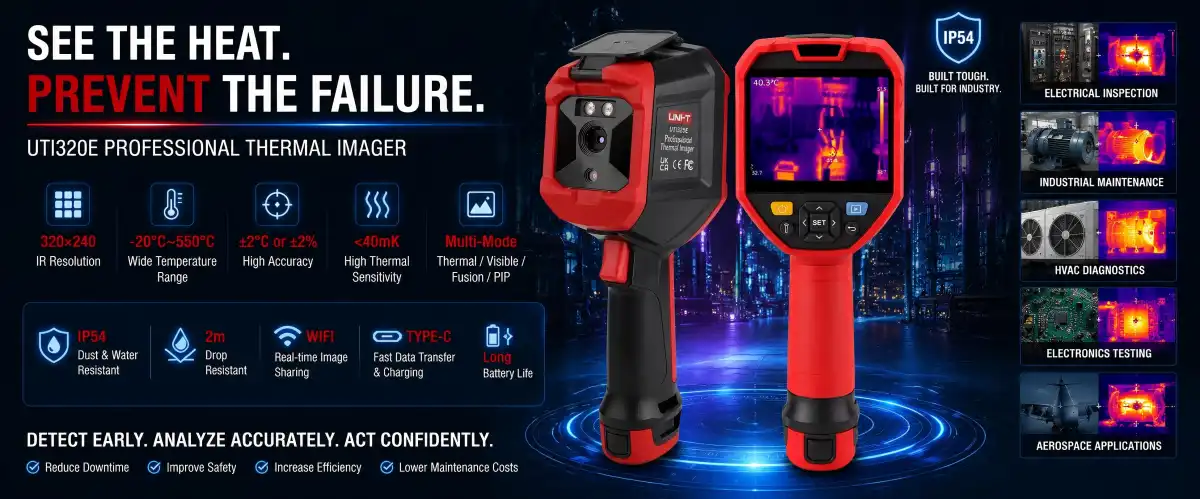
With thermal imaging technology, objects' infrared light can be turned into pictures that can be seen. This lets the temperature of surfaces be measured without touching them. The UTI320E Handheld Infrared Thermal Imager uses a vanadium oxide sensor that is not cooled and has a natural resolution of 320x240 pixels. It can detect changes in temperature with a sensitivity below 40mK at 25°C. Entry-level standard thermal cameras usually have sizes of 160x120 or 80x60, which makes it harder for them to pick up on small temperature changes in electrical systems or when inspecting small parts.
Core Technical Specifications Comparison
Resolution tells us how clear thermal pictures are and how far away we can still make correct readings. The UTI320E Handheld Infrared Thermal Imager's 76,800 infrared pixels give four times the information of 160x120 models. This lets technicians find hotspots on crowded circuit boards or faraway equipment without having to physically reach them. Its 55.0°H×41.3°V field of view lets you see a lot in a single scan, which cuts down on the time needed for inspections when checking out a building or a production line. Professional tools are different from consumer-grade devices in how they measure temperature. The temperature range of the UTI320E Handheld Infrared Thermal Imager is -20°C to 550°C, which makes it useful for a wide range of industrial tasks, from checking on cold systems to inspecting high-temperature furnaces. A measurement accuracy of ±2°C or ±2% reading makes sure that quality control rules are followed in places like testing aircraft parts and making semiconductors. The emissivity settings can be changed from 0.01 to 1.00, which lets you precisely calibrate materials from polished metals to mixed plastics. This works for all the different surfaces you'll find in industrial facilities.
Durability and Operational Reliability
In industrial settings, equipment needs to be more durable than what is required by regular business standards. This handheld thermal imager meets IP54 standards for defense against dust and splashes of water. It can also withstand a 2-meter drop, which is common in a workshop. Standard thermal cameras aren't always built to be tough, which means they can't be used on factory floors or in outdoor repair jobs where they could get damaged by being exposed to the elements. The 3.5-inch IPS monitor with 640x480 resolution lets you see clearly in a range of lighting situations. For low-light inspections, the display has a built-in flashlight. With an operating temperature range of 0°C to 50°C, it can be used in a wide range of climate-controlled facilities and during different seasons. These standards take into account the problems that test engineers face when they have to do measurements in the field instead of controlled tests in the lab.
Comparing UTI320E with Other Handheld Thermal Imagers and Standard Cameras
A competitive analysis shows how this gadget stacks up against well-known names and other product categories. Leading thermal imaging brands make models in a range of prices, but the UTI320E Handheld Infrared Thermal Imager has features that are usually only found in more expensive professional gear. When you put together its resolution, connectivity features, and support for analytical software, you get value that fits with buying goals that focus on the total cost of ownership rather than just the purchase price.
Feature Set Analysis Against Market Leaders
Moving from older models with 160 pixels to ones with 320 pixels is a big step forward in terms of capabilities. Higher image density makes it possible to see smaller changes in temperature from farther away, which is very important for inspecting electrical substations or diagnosing big HVAC systems. Premium names are well-known in the market, but this thermal imager uses the same kind of infrared sensor technology as other professional-grade tools, which includes uncooled vanadium oxide detectors.
Modern thermal imaging tools are different from older systems because they have more ways to connect. WiFi transmission and Type-C connections make it easy to share data right away with tech teams, which helps with group analysis during crucial troubleshooting sessions. It can work with PC software and mobile apps, so it can do more than just run on its own. For example, it can add thermal data to maintenance management systems or quality paperwork processes. Standard cameras that don't have these connection features cause data bottlenecks that make it take longer to make decisions and move files by hand.
Cost-Effectiveness for B2B Procurement
When purchasing managers look at purchases in thermal imaging, they use price-performance metrics and practical lifespan factors to decide what to buy. Professional specs are available on the UTI320E Handheld Infrared Thermal Imager at a price that is much lower than similar resolution options from well-known names. Because these tools are cheaper, companies can give more techs access to high-quality ones instead of just one premium unit. This makes inspections more thorough and avoids schedule problems with equipment.
Here are the core advantages supporting procurement decisions for medium to large enterprises:
- Technical Capability Advantages – The 320x240 clarity gives you a clear picture of the temperature, which is good for precise tasks like testing electronics and checking the quality of semiconductors. Specifications for temperature accuracy meet strict needs for R&D centers that record thermal performance data during product development processes. Different testing methods can be used with different measurement modes, such as point, line, circle, and rectangular region analysis, without the need for extra tools.
- Operational Efficiency Benefits – Four image output modes—thermal, visible, fusion, and picture-in-picture—allow workers to put thermal data in context with visual reference points. This makes it faster to find faults in complicated equipment parts. Seven color palettes make it easier to see heat patterns in a variety of inspection situations, from finding electricity hotspots to analyzing insulator defects. Customizable temperature alarms sound right away when readings go above certain limits, which helps preventative maintenance programs.
- Integration and Support Features – Certifications from CE, FCC, and UKCA make sure that the product meets all the rules for foreign use and sale. A one-year guarantee from the maker and helpful technical support take care of common worries about service after the sale that come up in B2B procurement reviews. Operating systems that are available in both English and Chinese can meet the needs of a global staff in foreign companies and for international projects.
These advantages collectively address the pain points identified by system integrators and technical directors requiring both standardized reliability and customization flexibility. The device bridges the gap between entry-level consumer tools and premium specialized equipment, delivering professional capabilities with accessible operation suitable for diverse technical skill levels within maintenance teams.
Practical Buying Guide: How to Choose Between UTI320E and Standard Thermal Cameras
For strategic procurement to work, technical specs must match up with real-world operating needs. Along with feature lists, other things that go into making a decision are process integration, training needs, and the availability of long-term help. Structured review of application-specific needs against device capabilities helps with the selection process and makes sure that investments pay off by increasing inspection efficiency and lowering equipment failure.
Application-Specific Selection Criteria
Electrical repair applications put a high value on accurate temperature measurements and images that are clear enough to tell apart individual parts in panels that are very closely packed together. The UTI320E Handheld Infrared Thermal Imager's sharpness lets you see overheating circuit breakers, loose electrical connections, or uneven phase loads from a safe distance, which supports safety rules for electrical equipment. Standard cameras with lower resolution have trouble identifying specific heat sources in electrically complex environments. This means that during regular checks, they might miss important signs of faults.
A wide temperature range and quick heat response times help diagnose HVAC systems. The device can work in temperatures ranging from -20°C to 550°C, so it can be used to test everything from cooling systems to boilers. Thermal sensitivity below 40mK can pick up on small changes in temperature that could mean that airflow is being stopped, refrigerant is leaking, or insulation is wearing down before these problems get worse and cause the system to fail. Fusion imaging modes are used in building envelope audits to connect thermal anomalies with structural features. This makes energy efficiency tests and moisture entry investigations go more quickly.
Sourcing Considerations and Procurement Support
Authorized routes of marketing make sure that the goods are genuine and come with valid warranties and access to technical help from the maker. When you buy from a reputable company like MXTD, you can be sure that the units you receive are CE, FCC, and UKCA-certified and meet all international safety and performance standards. When an organization needs to deploy multiple units across building locations or project teams, bulk buying choices can help. Preferential price models can also help the organization save money.
When shipping precise instruments, they need to be handled with care and put in packaging that is resistant to wetness, shock, and static electricity. Reliable sellers use these safety steps all along the supply chain. This lowers the chance that sensors will get damaged or lose their calibration during delivery. Land and air transport choices give you options for when you need to buy something quickly or when you want to refresh your tools on a regular basis. This is made possible by responsive shipping planning.
Total Cost of Ownership Analysis
Aside from the original buy price, procurement managers also look at ongoing running costs, such as the need for calibration, software changes, and accessories that are used up quickly. The UTI320E Handheld Infrared Thermal Imager comes with free software for PCs and mobile devices, so you don't have to pay ongoing licensing fees as you do with expensive brand platforms. The machine is easier to use, which cuts down on training time. Technicians can become proficient quickly by navigating the menus and following simple steps for measuring.
A manufacturer's guarantee that lasts for one year covers flaws and sets the standard for support. Total ownership costs are lowered even more by choices like extended service plans and remote expert advice. This is because they cut down on equipment downtime and prevent the need for unnecessary replacement costs. These things help make good return-on-investment calculations, which is especially important for companies that use thermal imaging across various operating sites or service teams.
Maximizing Value with the UTI320E: Features and Benefits in Detail
By looking closely at certain features, you can see how technical skills translate into real-world business benefits. The UTI320E Handheld Infrared Thermal Imager is made in a way that addresses common problems that come up during field checks, such as short battery life and inefficient data handling. By understanding these features, businesses can use the full potential of the device instead of just using its basic measurement features.
Advanced Infrared Detection Technology
Older thermal imaging systems needed cooling methods. Uncooled vanadium oxide sensor technology gets rid of those needs. This makes the gadget lighter and uses less power while keeping measurement accuracy. This type of sensor has become the standard for professionals because it works well in a wide range of situations and doesn't need as much upkeep as cooled detectors. The 8-14µm infrared bandwidth picks up the heat energy spectrum that is most useful for measuring temperature, making the device as sensitive as possible within its range.
Digital zooming at 2x and 4x magnification increases the lengths that can be inspected without having to move. This helps check equipment that is high up or keep an eye on a dangerous area. Digital zoom doesn't improve the native resolution, but it does make it easier to focus on specific areas of interest during a thorough component analysis. When resolution and zoom are used together, techs can do full scans of the facility and then focus on looking into any problems they find during the same inspection session.
Data Management and Connectivity Solutions
In modern thermal inspection processes, outdoor measurements and analytical tools need to work together without any problems. The ability to transmit data over WiFi lets you share images in real time with experts who are far away during difficult fixing situations. This lets you work together to solve problems without having to wait for travel delays. Type-C connections let you quickly send data to laptops for use with the software tools that come with the laptops to prepare documents and look at trends. This dual-connectivity method works in a variety of field situations, from places with WiFi to remote areas that need a direct device link.
Keeping images in the JPG file makes sure that they can be used with standard document management and quality management tools. The classification features of QR codes help keep files organized across multiple projects or inspection routes. This keeps data from getting mixed up during large-scale assessment campaigns. Picture remark editing lets techs make notes right on thermal pictures about what they see. This makes complete records that make problems clear to maintenance staff and management.
Practical Operational Benefits
How long an inspection lasts between charges depends on how well the batteries work, which has a direct effect on how productive people are during long facility reviews. The UTI320E Handheld Infrared Thermal Imager can work all day with normal workplace checking tasks, but the exact battery life depends on how it is used. Type-C charging lets you use power sources and portable battery packs that are easy to get, which cuts down on the downtime that comes with using proprietary charge systems that are popular in older thermal camera designs.
Some factors, like emissivity, display brightness, and auto-shutdown time, can be changed so that the device can be tailored to specific operating needs and weather conditions. Adjusting the emissivity of dozens of common materials makes sure that temperature readings are correct, whether they are for painted steel, concrete buildings, or electronic parts. Brightness control keeps the screen visible in bright sunlight for outdoor checks or in dimmed settings for easy watching in dark places. Auto-shutdown timers save battery life during inspection patterns with breaks, but they don't affect the device's ability to be ready right away when measurements start up again.
Conclusion
The UTI320E Handheld Infrared Thermal Imager has professional-level thermal imaging features that make it perfect for hard industrial tasks like quality control, electrical repair, and HVAC troubleshooting. It can measure temperatures from -20°C to 550°C and has an IP54 rating, which means it is tough. These features meet the needs of R&D managers and test workers in the automation, aircraft, semiconductor, and research fields. Modern data-driven maintenance processes are supported by connectivity features like WiFi and Type-C ports. CE, FCC, and UKCA certifications make sure that foreign deployments are legal. Compared to regular thermal cameras, this one has a good mix of advanced features, usefulness, and low cost. This makes it a smart choice for businesses that need reliable thermal inspection tools but don't want to pay a lot for name brands.
FAQ
1. What temperature range does the UTI320E measure?
The thermal imager can pick up temperatures between -20°C and 550°C with an accuracy of ±2°C or ±2% of reading, whichever is greater, when the temperature is 25°C. This range can be used for most industrial inspection tasks, from checking cooling systems to checking high-temperature process equipment.
2. How does battery life support typical workdays?
The battery works well enough to be used all day during normal workplace inspections, and Type-C charging lets you quickly charge it up during breaks. The actual length of time depends on the brightness of the screen, how often WiFi is used, and the apps being used.
3. Can this device handle both electrical and mechanical inspections?
The flexible set of specifications can be used for a wide range of tasks, such as checking electrical panels, motor bearings, HVAC systems, and the outside of buildings. Different types of inspections use different surfaces and temperature ranges, so there are different measurement modes and emissivity sets that can be used.
4. Where should organizations purchase UTI320E units?
Buying from approved suppliers makes sure that the goods you get are real, have the right certifications, and are covered by the manufacturer's guarantee. Well-known distributors offer expert help, the chance to buy in bulk, and the right shipping methods to keep precision instruments safe during transport.
Partner with MXTD as Your Trusted UTI320E Handheld Infrared Thermal Imager Supplier
MXTD has been providing high-reliability measurement solutions in UTI320E Handheld Infrared Thermal Imager to research, military, industrial automation, and electronics testing facilities for more than 12 years. As an official provider of thermal imagers, we offer approved UTI320E units with full technical support and a range of purchasing choices that can be adjusted to your needs. Our quick-to-respond team sends quotes within an hour and can handle both standard product shipping and custom setups that meet specific parameter needs. When you buy in bulk, you can get low prices for deployments of multiple units, and our special shipping procedures make sure that your precision instruments get to your building safely. In addition to selling you products, we also offer remote expert support, free software updates, and a one-year guarantee to help your business succeed in the long run. Contact our technical team at manager03@mxtdinfo.com to talk about how the UTI320E enhances your thermal inspection capabilities and request detailed specifications aligned with your application requirements.
References
1. Infrared Training Center. "Principles of Thermography: Understanding Thermal Imaging Technology for Industrial Applications." Professional Thermography Certification Series, 2022.
2. American Society for Testing and Materials. "Standard Test Method for Determining Thermal Resistance Using Infrared Imaging." ASTM International Standards, 2023.
3. National Institute of Standards and Technology. "Temperature Measurement Accuracy in Non-Contact Infrared Thermometry." NIST Technical Publication Series, 2021.
4. International Electrotechnical Commission. "Environmental Testing Standards for Electronic Instrumentation: IP Rating Classifications and Drop Test Protocols." IEC Standards Documentation, 2022.
5. Journal of Industrial Maintenance and Reliability. "Comparative Analysis of Handheld Thermal Imaging Systems in Predictive Maintenance Programs." Volume 45, Issue 3, 2023, pp. 178-194.
6. Institute of Electrical and Electronics Engineers. "Best Practices for Thermal Imaging in Electrical System Diagnostics and Safety Assessments." IEEE Industry Applications Society Guidelines, 2023.
Our customers’ satisfaction speaks for our quality — contact us to experience the same reliable service.