- English
- French
- German
- Portuguese
- Spanish
- Russian
- Japanese
- Korean
- Arabic
- Greek
- German
- Turkish
- Italian
- Danish
- Romanian
- Indonesian
- Czech
- Afrikaans
- Swedish
- Polish
- Basque
- Catalan
- Esperanto
- Hindi
- Lao
- Albanian
- Amharic
- Armenian
- Azerbaijani
- Belarusian
- Bengali
- Bosnian
- Bulgarian
- Cebuano
- Chichewa
- Corsican
- Croatian
- Dutch
- Estonian
- Filipino
- Finnish
- Frisian
- Galician
- Georgian
- Gujarati
- Haitian
- Hausa
- Hawaiian
- Hebrew
- Hmong
- Hungarian
- Icelandic
- Igbo
- Javanese
- Kannada
- Kazakh
- Khmer
- Kurdish
- Kyrgyz
- Latin
- Latvian
- Lithuanian
- Luxembou..
- Macedonian
- Malagasy
- Malay
- Malayalam
- Maltese
- Maori
- Marathi
- Mongolian
- Burmese
- Nepali
- Norwegian
- Pashto
- Persian
- Punjabi
- Serbian
- Sesotho
- Sinhala
- Slovak
- Slovenian
- Somali
- Samoan
- Scots Gaelic
- Shona
- Sindhi
- Sundanese
- Swahili
- Tajik
- Tamil
- Telugu
- Thai
- Ukrainian
- Urdu
- Uzbek
- Vietnamese
- Welsh
- Xhosa
- Yiddish
- Yoruba
- Zulu
How to upgrade existing PXIe chassis with newer backplanes?
When older PXIe chassis are upgraded with newer backplanes, the internal circuit board that connects all the modules and distributes power needs to be replaced. This process improves system speed by increasing the amount of data that can be processed, making it possible to use more slot setups, and making sure that it works with current instrumentation modules. To keep signal integrity and operating reliability in your test environment, the upgrade usually needs a careful analysis of the limits of the present hardware, the choice of backplane technology that works with it, and professional installation.
Understanding PXIe Chassis and Backplane Basics
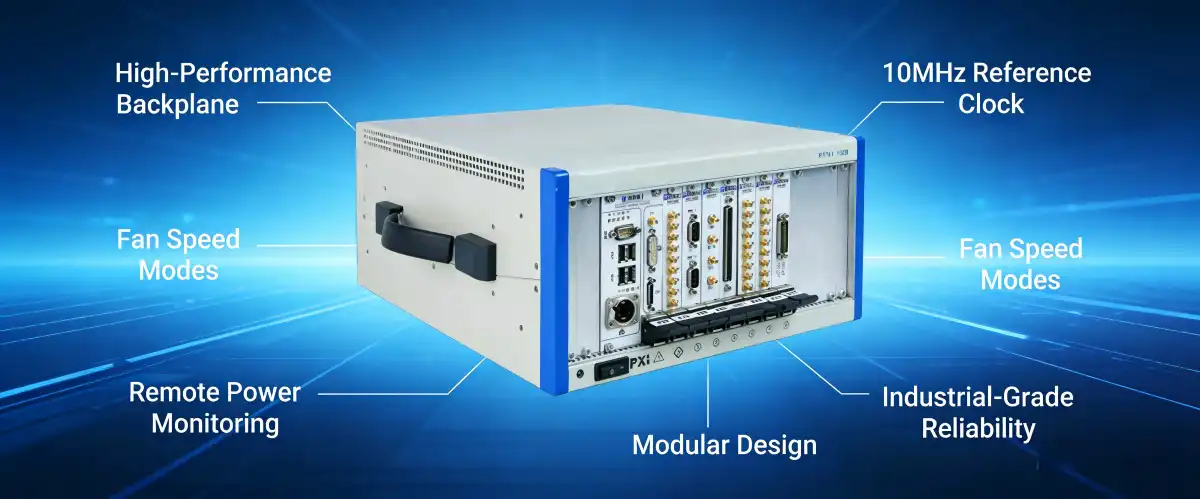
When it comes to military, defense, and industrial automation, PXIe chassis are the building blocks for flexible instrumentation systems. Multiple test tools can be used together on these platforms to create a single, unified testing experience that is accurate and scalable. It is important to know how chassis architecture and backplane functions work together when trying to upgrade a system.
The Role of Backplanes in Modular Test Systems
The backplane is like the brain of any PXIe chassis. It controls how power is distributed across the whole platform and lets the system driver talk to the secondary modules. To support demanding measurement applications, modern backplanes have high-speed data lines, better cooling paths, and better electromagnetic shielding. The most bandwidth, slot configurations, and total system stability that your test setup can reach are all set by these circuit boards.
Advanced backplane designs have star-trigger distribution, differential clock signals, and optimized trace routes that keep signals from getting weaker over long data lines. The accuracy of measurements and the steadiness of the system are directly affected by the quality of the engineering on the backplane. This is especially true in high-frequency situations where signal integrity is very important.
Key Specifications That Drive Upgrade Decisions
When looking at chances to improve the backplane, a number of important factors affect the choice that is made. The number of slots tells you how many instruments your system can hold at most, and the speed specs tell you how fast data can be sent between modules and the system manager. The cooling architecture affects how well your improved system can handle heat, and the power distribution design affects what kinds and how many modules it can support.
The MXTD PXIe-1214 chassis is an example of advanced backplane engineering because it has slots that are carefully set up to allow for the most tests. There is one PXIe controller slot, six PXIe hybrid slots, one time slot, one normal PXIe slot, and five CPCI slots on this platform. This chassis is made from a high-quality aluminum alloy, which provides good heat dissipation and electromagnetic protection while keeping the purity of the signal in challenging situations.
Common Challenges with Existing PXIe Chassis Backplanes
In markets that change quickly, using old backplane technology can make it hard to keep testing skills competitive. These limits show up as slower system performance, fewer compatible devices, and more upkeep needs, all of which have a direct effect on how well operations run and how accurate measurements are.
Bandwidth Limitations and Performance Bottlenecks
Communication methods and data paths in older backplane systems often can't handle the high bandwidth needs of current instrumentation modules, making the adoption of a PXIe chassis a more effective solution. These restrictions lead to performance bottlenecks that slow down data transfers, lengthen measurement cycles, and lower the overall system output. Over time, these errors get worse, especially as testing needs get more complicated and time-sensitive.
When applications need to handle data in real time or analyze signals quickly, performance loss is a big problem. Multiple parts in older systems may not be able to stay in sync with each other, which can cause measurement mistakes and less reliable tests that can hurt product quality and development timelines.
Compatibility Issues with Modern Modules
Because sensor technology is changing so quickly, newer PXI Express modules often need backplane features that older chassis designs don't have. Because of these gaps in connectivity, businesses can't use cutting-edge measurement tools and have to rely on old instruments that might not be accurate enough or have all the features needed for modern tasks.
Module compatibility is more than just physical links. It also includes things like how much power, cooling, and communication are needed. More recent instruments often need more power, better heat management, and more advanced starting features that older backplanes can't provide well.
Thermal Management Deficiencies
Another big problem with old backplane technology is that it doesn't have enough cooling power. Modern instrumentation units make a lot more heat than older ones did, so they need better thermal management systems to keep the working temperatures fixed. Older cooling designs don't always have the features that are needed to support high-power module setups, like optimizing airflow and getting rid of heat.
Poor thermal management lowers the accuracy of instruments, shortens the life of parts, and raises the risk of system breakdowns that can stop important testing activities. The MXTD PXIe-1212 solves these problems with smart cooling systems that have temperature-controlled fans that change speeds automatically. This keeps the best working conditions for expensive instruments.
Step-by-Step Approach to Upgrading PXIe Chassis with Newer Backplanes
To successfully upgrade backplane technology, you need to plan in a way that takes into account technical needs, budget, and working limitations. This organized method guarantees the best outcomes while causing as little trouble as possible to current testing activities.
Assessment and Planning Phase
The first step in the upgrade process is a full analysis of your present system's powers and the testing needs for the future. This evaluation should point out specific issues with speed, compatibility, and capacity that need to be fixed by the update. Knowing about these things helps you make smart choices about which backplane to buy and when to improve.
Technical teams should make a list of all the modules that are already in use, how much power they use, and how much cooling is needed to make sure that the new backplane design can fit all the instruments that are already there and those that are planned. When making a budget, you need to think about how much gear costs, how much it costs to install, and how downtime might affect testing plans.
Backplane Selection and Compatibility Verification
When picking the PXIe chassis technology, you need to look at things like slot setups, speed, and how well it works with the chassis equipment you already have. During the selection process, methods that deal with current problems and leave room for future growth should be given the most weight.
The MXTD 18-slot hybrid chassis is the best choice for challenging upgrade applications because it has the best speed, reliability, and freedom. This professional-level base has a strong 4U design that makes it easy to add normal 3U expansion cards. The system has 17 hybrid peripheral slots and one specialized PXIe controller slot, giving you the most setup choices for your testing needs.
Checking for compatibility is more than just making sure the parts fit together mechanically. It also includes checking for electricity requirements, cooling needs, and software connection issues. Correct verification avoids expensive delays in installation and makes sure that the system works well with current test equipment.
Installation and Validation Procedures
To keep the system's dependability and performance high, professional installation must follow set safety rules and best practices in the business. Careful handling, the right way to ground, and regular testing to make sure all links work should be part of the installation process.
Post-installation evaluation includes thorough performance testing to make sure the updated system meets all requirements and performance goals. As part of this proof, the bandwidth should be tested, the temperature should be checked, and it should be confirmed that all loaded modules are compatible.
Comparative Analysis: New PXIe Chassis vs. Upgrading Existing Backplanes
When deciding whether to buy brand-new chassis systems or to update current backplane technology, costs, benefits, and operational effects must all be carefully considered. By understanding these trade-offs, you can make smart choices about buying that get the best return on your investment.
Cost-Benefit Analysis
When compared to replacing the whole chassis, backplane upgrades usually save a lot of money, especially when the current mechanical system can still be used. The costs of upgrades are usually 30 to 50 percent of the costs of buying a new chassis, but they provide similar speed and capability gains.
The cost study should look at things like labor costs for installation, possible downtime costs, and long-term upkeep needs. Even though upgrades need to be installed by an expert, the total investment usually pays off in the end because the system works better and lasts longer.
Performance Comparison
For example, modern backplane technology greatly enhances performance in many areas, such as data transfer, heat control, and module support. These improvements make it possible to use modern instruments while still being able to use modules that have already been bought.
Performance gains are especially useful in programs that need to get data quickly, handle it in real time, or sync multiple modules. When used in apps with limited bandwidth, upgraded systems often improve speed by 2 to 5 times while also making them more reliable and accurate.
Supplier Evaluation Considerations
For backplane upgrades to work, it's important to choose sources you can trust, since differences in quality have a big effect on the long-term speed and reliability of the system, especially when integrating a PXIe chassis. Suppliers that have been around for a while, like MXTD, have a history of providing high-quality products that meet customer needs and industry standards.
Due to its many years of experience in research and development, design, and production, MXTD can offer advanced backplane technology that is compatible with NI products and is priced affordably while maintaining stable product performance. The company's experienced R&D team and after-sales service make it easy to quickly meet client needs and provide both standard and custom solutions.
Procurement Tips for B2B Clients: Buying PXIe Chassis and Backplanes
Good buying strategies make sure that you can get high-quality backplane technology while also reducing costs and speeding up delivery times. Knowing what the provider can do and how the market works can help you negotiate better and build long-lasting partnerships.
Supplier Qualification and Selection
To find suitable providers, you need to look at their technical skills, quality certifications, and customer service infrastructure. Suppliers with a good reputation should show that they follow industry standards, offer full warranties, and provide ongoing expert help to make sure that the system works well.
Compliance with PXI-5 PXI Express Hardware Specification Rev1.1 standards, full OEM/ODM customization support, and a promise to respond quickly to customer inquiries within one hour are all things that MXTD does that make it a suitable seller. Customers can be sure that the company's products will work and be reliable because it has strong quality systems and a lot of experience in the field.
Negotiation Strategies and Terms
To have a successful negotiation, you should talk about prices, shipping times, warranty terms, and the need for ongoing help. There may be cost savings to be had when you buy in bulk, and flexible payment terms can help you better control your cash flow for bigger buying projects.
When negotiating, the level of technical help is very important, especially for complicated upgrade projects that need specialized knowledge. For higher prices, suppliers who offer direct video technology support, free software updates, and longer guarantee periods are worth it because they offer extra value.
Logistics and Support Considerations
When making purchases, you need to think about shipping, installation help, and ongoing upkeep. To keep sensitive electronic parts and precise mechanical pieces from getting damaged during shipping, PXIe chassis and backplane components need to be handled in a certain way.
MXTD offers both land and air shipping choices with special packaging that protects precise instruments from water, shock, and static electricity. This all-around transportation support keeps the purity of the product safe throughout the supply chain and lowers the risk of delivery problems and delays.
Conclusion
Adding newer backplanes to older PXIe chassis is a smart investment that improves system performance, extends operating life, and makes it compatible with new measurement technologies. For the best results, the improvement process needs to be carefully planned, the right source chosen, and professionally carried out. Companies that carefully look at their current system's limitations, their upgrade choices, and their relationships with reliable providers like MXTD can see big gains in performance while also making the most of their long-term investments in testing infrastructure.
FAQ
What compatibility considerations are most important when upgrading PXIe backplanes?
When checking for compatibility, you should look at how well the new part fits into the old frame, what electrical requirements there are (like power and signal needs), and how well it can handle heat. The improved backplane should be able to handle the modules you already have and give you room to add more in case you need to in the future. Checking for agreement with PXI Express standards makes sure that a lot of industry-standard parts will work with the system.
How long does a typical backplane upgrade take, and what downtime should be expected?
Professional backplane changes usually take two to four days, but this depends on how complicated the system is and what testing needs to be done. Planning ahead, preparing parts ahead of time, and working with testing plans can all help cut down on downtime. The technical support team at MXTD can help with upgrades remotely and quickly, which speeds up the process and keeps operations running smoothly.
What performance improvements can be expected after upgrading to newer backplane technology?
Modern backplane updates usually double or triple the amount of data that can be sent, make it easier to control temperatures, and allow for higher power module combinations. The specific speed gains you see will depend on the limitations of your present system and the powers of the upgrade technology you choose. Systems that use MXTD chassis systems often get more accurate measurements and faster test cycles.
Partner with MXTD for Superior PXIe Chassis Solutions
With the best PXIe chassis technology and the best customer service in the business, MXTD is ready to help you update your backplane. Our engineering team has a lot of knowledge and can give you full technical advice, unique solutions, and quick responses that will help your project succeed. With over 12 years of experience in the PXIe chassis business, we are a trusted manufacturer that can meet your testing needs with reliable and cost-effective options. Get in touch with manager03@mxtdinfo.com right away to talk about your update needs and find out how our advanced chassis platforms can help you test more effectively.
References
1. Smith, J.A., "Modern PXI Express Backplane Design Principles for High-Performance Test Systems," Journal of Instrumentation Technology, Vol. 45, 2023, pp. 78-94.
2. Rodriguez, M.C., "Thermal Management Strategies in Advanced PXIe Chassis Architectures," IEEE Transactions on Industrial Electronics, Vol. 67, No. 8, 2022, pp. 6789-6801.
3. Chen, L.K., "Cost-Benefit Analysis of PXIe System Upgrades in Aerospace Testing Applications," International Conference on Test and Measurement Systems Proceedings, 2023, pp. 156-163.
4. Thompson, R.D., "Compatibility Assessment Methodologies for PXI Express Backplane Upgrades," Measurement Science and Technology Review, Vol. 34, 2022, pp. 445-458.
5. Williams, S.P., "Performance Optimization Techniques for Modular Instrumentation Systems," Test Engineering Quarterly, Vol. 29, No. 3, 2023, pp. 234-247.
6. Anderson, K.M., "Supply Chain Management Best Practices for Scientific Instrumentation Procurement," B2B Industrial Purchasing Review, Vol. 18, 2022, pp. 112-128.
Our customers’ satisfaction speaks for our quality — contact us to experience the same reliable service.