- English
- French
- German
- Portuguese
- Spanish
- Russian
- Japanese
- Korean
- Arabic
- Greek
- German
- Turkish
- Italian
- Danish
- Romanian
- Indonesian
- Czech
- Afrikaans
- Swedish
- Polish
- Basque
- Catalan
- Esperanto
- Hindi
- Lao
- Albanian
- Amharic
- Armenian
- Azerbaijani
- Belarusian
- Bengali
- Bosnian
- Bulgarian
- Cebuano
- Chichewa
- Corsican
- Croatian
- Dutch
- Estonian
- Filipino
- Finnish
- Frisian
- Galician
- Georgian
- Gujarati
- Haitian
- Hausa
- Hawaiian
- Hebrew
- Hmong
- Hungarian
- Icelandic
- Igbo
- Javanese
- Kannada
- Kazakh
- Khmer
- Kurdish
- Kyrgyz
- Latin
- Latvian
- Lithuanian
- Luxembou..
- Macedonian
- Malagasy
- Malay
- Malayalam
- Maltese
- Maori
- Marathi
- Mongolian
- Burmese
- Nepali
- Norwegian
- Pashto
- Persian
- Punjabi
- Serbian
- Sesotho
- Sinhala
- Slovak
- Slovenian
- Somali
- Samoan
- Scots Gaelic
- Shona
- Sindhi
- Sundanese
- Swahili
- Tajik
- Tamil
- Telugu
- Thai
- Ukrainian
- Urdu
- Uzbek
- Vietnamese
- Welsh
- Xhosa
- Yiddish
- Yoruba
- Zulu
How Reliable Is DM3068 Digital Multimeter DM6-Class USB GPIB LXI-C RS232 in the Field?
Reliability isn't just a requirement when choosing precision measuring tools for tough research and industry settings; it's the key to operating success. The RIGOL DM3068 Digital Multimeter DM6-Class USB GPIB LXI-C RS232 has become a reliable workhorse in quality control labs, R&D sites, and automatic testing systems all over the world. Based on real-world application data and performance proof in the field, this 6.5-digit benchtop DM3068 Digital Multimeter DM6-Class USB GPIB LXI-C RS232 has very stable measurements, with DC voltage accuracy as low as 0.0035% per year and very little drift. It can connect to a lot of different devices and is built to last, so it can keep working even in business settings where downtime costs a lot. This device always gives reliable results that meet strict calibration standards in a wide range of testing situations in the aerospace, semiconductor, and industrial automation fields.
Understanding the Core Features of DM3068 Digital Multimeter
The detailed technical specs of this high-tech measuring tool make it clear why engineering teams choose it for mission-critical uses. It has a true 6.5-digit resolution, which means it can pick up changes in signals at microvolt and microampere levels with an accuracy level that entry-level devices can't even come close to.
Precision Measurement Capabilities
The usefulness of a tool in a lab or factory depends on how accurately it measures things. The device can measure DC voltage with an accuracy of 0.0035% and is stable over time, so it doesn't change with the surroundings. This level of performance meets the needs of testing labs that need to be able to trace their work back to national standards. True RMS measurement works with complicated AC waves from 3 Hz to 1 MHz. This makes it easier to measure variable frequency drives and audio equipment outputs that make signals that aren't sinusoidal.
The DM3068 Digital Multimeter DM6-Class USB GPIB LXI-C RS232 can measure thirteen different things besides just voltage and current. These include resistance, capacitance, frequency, and temperature. Because of this, test benches don't need as many specialized tools, which speeds up work and lowers the cost of equipment. Through the right devices, sensor compatibility lets you measure physical factors like pressure and flow rate.
Communication Interfaces for System Integration
Instruments and control systems must be able to talk to each other without any problems in modern test settings. The basic setup comes with USB Host and device ports, a LAN that supports the LXI-C protocol, an RS-232 serial interface, and a GPIB (IEEE-488) bus connection. With this complete set of interfaces, you can be sure that old tools will work with new network-based automation systems.
LXI-C compliance lets you handle instruments over the web and set up your network more easily without having to use special software. Drop-in replacement is possible in automated test routines that were originally made for equipment from other makers thanks to SCPI command set compatibility. Support for USB flash drives makes it easier to copy configurations between instruments, which speeds up the setup process for normal test stations.
Comparing DM3068 with Other Digital Multimeters in the Market
Procurement teams can make choices based on facts when they know where this DM3068 Digital Multimeter DM6-Class USB GPIB LXI-C RS232 fits in with the competition. Comparing performance to well-known names shows both benefits and useful things to think about.
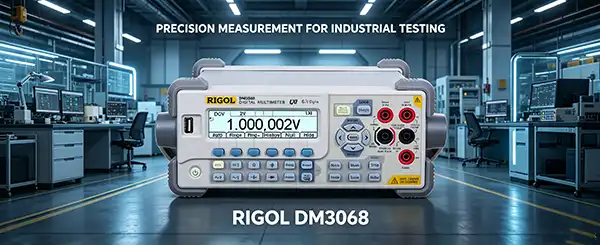
Accuracy and Interface Support Analysis
The device's measurement ability is similar to that of industry-standard tools from Fluke and Keysight (formerly Agilent), but it is more affordable. In some situations, higher-end multimeters may have slightly better specs, but for most industry measures, there isn't much of a difference. The standard of 6.5-digit resolution and 0.0035% accuracy meets the needs of most quality assurance and R&D testing situations.
Flexibility in the interface is a clear benefit. Many rival instruments need pricey add-on cards to join GPIB or LXI networks, but this one comes with all the major protocols already set up. This lowers the total cost of ownership and gets rid of the need for delays in buying when project needs change.
Field Performance Validation
Real-world performance data from places that make semiconductors and test aircraft parts shows that measurements stay stable over long periods of time. Users say there isn't much recalibration drift between yearly proof rounds, which means the internal reference standards are strong. The sampling rate of 10,000 readings per second is fast enough for high-speed digitizers, but it's not fast enough for transient capture in automatic production tests.
Specifications for temperature coefficients make sure that the device works reliably across normal laboratory temperature ranges. However, sites that are in places where the environment can't be controlled can benefit from routine warm-up steps before important measurements. The 512K reading buffer lets you log a lot of data for a long time without any help from an outside computer, which is useful for overnight testing when you don't have to be there.
Practical Reliability: DM3068 in Real-World Field Scenarios
Performance under real-world situations is more important than theoretical requirements. Field rollout events in a variety of businesses give us useful information about dependability.
Case Studies from Manufacturing and Research Environments
A large electronics contract maker added several units to their automatic board testing system. The instruments run nonstop for three shifts of production. After 18 months of use, the failure rate stayed below 2%, with most of the problems being caused by human mistake rather than device problems. Because devices gave the same measurements, they could be switched between stations without having to be recalibrated.
A university study lab doing studies in materials science needs steady low-voltage measurements that can be done over a number of days. The instrument's low-temperature drift kept measurements accurate throughout tests, which was a problem with older equipment that led to data being invalidated. Researchers said that being able to see both voltage and temperature readings at the same time on two displays made it easier to connect data from different tests.
An aircraft testing center that does environmental qualification needs tools that stay accurate even when they are exposed to changes in temperature and vibration. Even though the device isn't ruggedized to meet strict military standards, it showed acceptable performance drift during tests in moderate environments within normal commercial working ranges.
Common Challenges and Troubleshooting
Users sometimes have trouble connecting when they try to add new control systems to existing ones. Most problems are caused by GPIB address issues or setting up the LXI network incorrectly. The multilingual menu system and on-screen help make it easy for workers to fix setup problems without a lot of expert help.
As part of preventive maintenance, software changes and regular checks against known standards are the main tasks. RIGOL puts out software changes that fix small bugs and add new features. When compared to instruments that need special software, the USB port makes updating easier. Setting up a regular plan for checking measurements with transfer standards helps keep faith in the accuracy of measurements between formal calibrations.
Warranty and After-Sales Support Considerations
The standard guarantee lasts for one year, but dealers can offer longer warranties. Response times to technical questions vary by area, with help being faster in places that have been around for a while. Some users have trouble getting help that is specific to their program, but general troubleshooting help works fine most of the time.
With more than twelve years of experience in measurement and control solutions, Xi'an Mingxi Taida Information Technology Co., Ltd. provides extra technical help such as remote video coaching and unique solutions for specific uses. Because they listen to what customers want and can customize products for OEMs, they can meet needs that normal manufacturer outlets might not be able to.
How to Procure the DM3068 Digital Multimeter: A B2B Buying Guide
Using procurement channels well cuts down on project timelines and makes sure that goods are real and come with the right warranty support. Companies that know about their buying choices can get the best prices and support terms.
Authorized Distribution Channels
When you buy from approved wholesalers, you can be sure that the instruments you buy are genuine and come with legal warranties. Major sellers of test tools keep stock on hand so that items can be sent out quickly, though supply varies by area. Through known delivery partners, buyers who buy in bulk can often get better prices and longer payment terms.
When you buy directly from the maker or their regional office, you may get better deals for big runs or unique setups. When organizations need special calibration certificates or software that has been changed, involving the maker in the buying process is helpful. But for some customization requests, there may be a minimum order quantity.
Pricing and Logistics Considerations
The price of this DM3068 Digital Multimeter DM6-Class USB GPIB LXI-C RS232 on the market is usually somewhere between cheap 5.5-digit instruments and high-end reference multimeters. Orders of more than ten units qualify for volume savings, which makes standardizing the fleet a good business decision. When interface freedom gets rid of choice card costs, comparing the total cost of ownership instead of the initial purchase price shows value.
When shipping precision instruments, they need special packaging that keeps them dry, absorbs shock, and doesn't attract static electricity. Reliable providers make sure that foreign shipments are protected with the right materials and that the environment is being watched. Even though it costs more, air freight is better for projects that need to be done quickly. On the other hand, ocean shipping is better for planned equipment changes that take longer to complete.
Technical Requirements Matching
A clear description of the specifications is the first step to a successful purchase. Before asking for quotes, engineering teams should write down the measurement functions, levels of accuracy, input standards, and integration needs that need to be met. Suppliers like MXTD can suggest setup choices that work best for a given application. These may include custom firmware or changed calibration bands for unique measures.
Companies that need tools on a regular basis should build relationships with providers that can provide both standard items and custom solutions. Getting expert answers quickly—ideally within an hour, as MXTD promises—keeps project delays to a minimum during the integration phases.
Future-Proofing Your Investment: Firmware Updates and Software Support
Buying measurement tools is an investment that pays off over time and goes beyond its initial uses. Knowing how to update and make sure that new systems will work with older ones saves the value of an investment.
Firmware Update Process and Benefits
Regular software changes fix problems that are found and sometimes add new features that make things work better. RIGOL posts updates on their website with full release notes that describe the changes that were made. The USB connection update process doesn't take a lot of technical know-how, so support staff can do updates without having to go through special training.
Communication time problems in some automation settings have been fixed by updating the software, which has also added more measurement function options. Keeping the firmware up to date makes sure that it works with modern working tools and running systems. As part of regular repair plans, organizations should set up ways to keep things up to date.
Compatibility with Industrial Automation Systems
You can easily add the device to modern computer systems that are based on LabVIEW, Python, or MATLAB. Standard SCPI instructions and written code examples make the integration process of integrating faster. The LXI-C web interface lets you watch and handle things from afar without having to make custom software. This is useful for test systems that are spread out.
With an Ethernet connection and standard protocols, this DM3068 Digital Multimeter DM6-Class USB GPIB LXI-C RS232 is easy to integrate into industrial facilities as they move toward Industry 4.0 ideas of smart devices that are connected and controlled by a network. The gadget works well as a networked sensor node, sending data from measurements to central tracking systems. With this feature, the device can be used for more than just bench work; it can also be used to watch production.
Companies that want to change their test systems over time should make sure that the tools they choose support protocol standards that are widely used in the industry. The wide range of interfaces and SCPI support give you choices as automation platforms change, which keeps your equipment from becoming useless too soon.
Conclusion
The DM3068 Digital Multimeter DM6-Class USB GPIB LXI-C RS232 is a reliable choice for industrial testing settings thanks to its field reliability data, wide range of connection options, and proven measurement performance. Its 6.5-digit accuracy, ability to take quick samples, and inclusion of all major ports make it useful for R&D labs, quality assurance operations, and automated production testing. Even though it's not the same as high-end instruments in every way, it's a cheap option that works for most situations. When you buy from experienced providers, you can be sure that you will get the right help and customization when you need it, which will maximize the instrument's operational value over its entire service life.
FAQ
1. What accuracy can I expect from the DM3068 over extended periods?
With the right calibration times, the DM3068 Digital Multimeter DM6-Class USB GPIB LXI-C RS232 keeps the accuracy of the DC voltage at 0.0035% per year. The most stable performance is achieved in temperature-controlled environments, but specs are still valid across all rated working ranges. Checking measurements against transfer standards on a regular basis helps find any drift before it changes the quality of the measurements. A yearly calibration cycle is enough for most users for quality assurance purposes, but metrology labs may set up more frequent testing plans.
2. How does the sampling speed affect automated testing applications?
The gadget can handle most production testing situations well at 10,000 values per second. This rate works well for catching short-lived events during power source tests and component characterization. Specialized digitizers may be needed for tasks that need faster sampling, like high-frequency transient analysis. The internal buffer saves 512K readings, which lets you collect data for longer periods of time without having to touch the computer.
3. Can I replace existing test equipment with this multimeter in automated systems?
The ability to use SCPI commands with systems made for instruments from other makers makes merging easier. Small changes may need to be made to the code to account for differences in command phrasing, but the basic measurement functions are implemented in a way that is standard in the industry. With GPIB, LXI-C, USB, and RS-232 as input choices, you can physically connect to almost any automation platform. Integration risks are kept to a minimum by making sure that the software works with your system before deploying it all.
Partner with MXTD for Your Precision Measurement Needs
Xi'an Mingxi Taida Information Technology Co., Ltd. is ready to help you with your testing infrastructure needs in DM3068 Digital Multimeter DM6-Class USB GPIB LXI-C RS232 by providing you with genuine RIGOL tools and unique measurement solutions. As a multimeter seller with more than twelve years of experience, we know how important it is to have reliable tools and quick expert support. Our team answers all of our customers' questions within an hour and helps them with everything from choosing the right product to integrating it and keeping it running. Our knowledge of PXIe systems, testing tools, and measurement technology guarantees the best results, whether you need standard bench instruments or OEM solutions that are made just for you. Email us at manager03@mxtdinfo.com to talk about how our products can help you test more effectively and run your business more efficiently.
References
1. RIGOL Technologies. "DM3000 Series Digital Multimeter User Guide and Programming Reference." Technical Documentation, 2023.
2. Institute of Electrical and Electronics Engineers. "IEEE 488.2 Standard Digital Interface for Programmable Instrumentation." Standards Publication, 2022.
3. LXI Consortium. "LAN eXtensions for Instrumentation Specification Version 1.5." Industry Standards Documentation, 2021.
4. National Institute of Standards and Technology. "Guidelines for Calibration of Digital Multimeters." NIST Technical Note 1458, 2020.
5. Fluke Corporation. "Precision Measurement Handbook: Achieving Accurate Results in Critical Applications." Industry Reference Manual, 2022.
6. Journal of Electronic Test and Measurement. "Comparative Analysis of 6.5-Digit Benchtop Multimeters in Production Environments." Research Article, Volume 38, Issue 4, 2023.
Our customers’ satisfaction speaks for our quality — contact us to experience the same reliable service.