- English
- French
- German
- Portuguese
- Spanish
- Russian
- Japanese
- Korean
- Arabic
- Greek
- German
- Turkish
- Italian
- Danish
- Romanian
- Indonesian
- Czech
- Afrikaans
- Swedish
- Polish
- Basque
- Catalan
- Esperanto
- Hindi
- Lao
- Albanian
- Amharic
- Armenian
- Azerbaijani
- Belarusian
- Bengali
- Bosnian
- Bulgarian
- Cebuano
- Chichewa
- Corsican
- Croatian
- Dutch
- Estonian
- Filipino
- Finnish
- Frisian
- Galician
- Georgian
- Gujarati
- Haitian
- Hausa
- Hawaiian
- Hebrew
- Hmong
- Hungarian
- Icelandic
- Igbo
- Javanese
- Kannada
- Kazakh
- Khmer
- Kurdish
- Kyrgyz
- Latin
- Latvian
- Lithuanian
- Luxembou..
- Macedonian
- Malagasy
- Malay
- Malayalam
- Maltese
- Maori
- Marathi
- Mongolian
- Burmese
- Nepali
- Norwegian
- Pashto
- Persian
- Punjabi
- Serbian
- Sesotho
- Sinhala
- Slovak
- Slovenian
- Somali
- Samoan
- Scots Gaelic
- Shona
- Sindhi
- Sundanese
- Swahili
- Tajik
- Tamil
- Telugu
- Thai
- Ukrainian
- Urdu
- Uzbek
- Vietnamese
- Welsh
- Xhosa
- Yiddish
- Yoruba
- Zulu
How Does a PXIe Digital Multimeter Improve Measurement Speed?
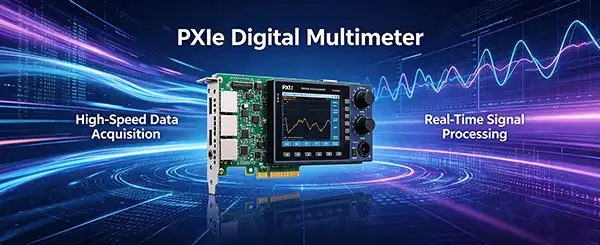
In high-stakes industrial testing environments, measurement speed directly determines production efficiency and product quality. A PXle digital multimeter transforms traditional measurement workflows through advanced bus architecture and parallel processing capabilities. Unlike conventional bench instruments, PXIe-based solutions deliver significantly faster data acquisition rates—often exceeding 1,000 readings per second—while maintaining 6½-digit resolution. This performance leap stems from the PXIe bus's high-bandwidth design, enabling real-time signal processing and synchronized multi-channel operations that eliminate bottlenecks common in legacy USB or GPIB-connected devices.
Understanding the Measurement Speed Challenge in Digital Multimeters
There is steady pressure on testing teams in aerospace, semiconductor manufacturing, and car electronics to cut down on cycle times without losing accuracy. Traditional tabletop multimeters often have trouble meeting these needs because of the way they are built, which causes measurement delays.
Hardware Bottlenecks in Conventional Instruments
Analog-to-digital processors and sequential processing designs that are slower are used in older measuring tools. Most of the time, these instruments only work with one parameter at a time. This creates lines when testing needs to measure voltage, current, and resistance on the same unit. As a result? Longer test runs that add up across production lines which slows down shipping and raise the cost of labor.
Software and Communication Latency
Besides limitations in hardware, communication methods add extra delays. Standard USB and GPIB connections don't have enough space for high-speed data streaming that never stops. When engineers try to speed up measurements, these connections slow down data flow, canceling out any benefits from faster sampling rates. When building automated test equipment for high-volume production settings, test system developers know that this limitation is a key issue.
Impact on Manufacturing Efficiency
Putting limits on speed affects all activities. Adding two seconds to each measurement point on a single instrument means missed hours of work over thousands of test runs. Teams in charge of quality assurance that have to stick to strict performance standards can't afford these wasteful practices, especially when they're checking precision fittings or electronic parts that will be used in mission-critical situations. Manufacturing planners know that measuring speed is directly linked to their goals of controlling costs and getting products to market as quickly as possible.
Key Features of PXIe Digital Multimeters That Enhance Measurement Speed
The PXIe platform completely changes the way measurement instruments are built. The design puts high-throughput data gathering first from the very beginning, rather than speed being an addition.
High-Speed Bus Architecture
The multi-lane PCIe version of the PXIe standard gives the PXle digital multimeter a very high speed. The bus's transfer rates of more than 8 GB/s per slot get rid of the transmission bottlenecks that older systems have. This design lets data move from multiple measurement sources at the same time without any problems, making it possible for tests to be done in real time.
Real-Time Signal Processing with FPGA Integration
Modern PXIe measurement units have field-programmable gate arrays built in that let the device do the math itself. This method is shown by the PXIe3400 six-and-a-half-digit PXIe digital multimeter, which can measure DC voltages up to ±300V, AC voltages (RMS ≤300V), and resistances across two-wire (<100MΩ) and four-wire (<10MΩ) setups without any delays caused by external computations. This internal processing speeds up measurement cycles by getting rid of the need to go back and forth to a host computer to do simple calculations.
Advanced Triggering and Synchronization Capabilities
The PXIe backplane has precise timing mechanisms that let instruments combine readings across multiple channels with a level of accuracy of only a few nanoseconds. When testing needs to characterize both voltage and current at the same time, coordinated triggers make sure that the data is aligned without adding extra work to the software. These skills are very important in tasks like characterizing semiconductor devices, where time relationships between factors show important performance traits.
Modules like the PXIe3400 have a high common-mode voltage range because they are designed to be separate from each other. This lets them keep their measurement speed. Industrial-grade parts make sure that the system can adapt to different environments without slowing down the data collection rates that are needed for production tests. These engineering decisions show that the people who work on them really understand the testing problems that system designers and R&D centers face in the real world.
The optimized software speeds up measurement tasks like DCV, ACV, DCI, resistance testing, frequency measurement (≤300kHz), period analysis, diode testing, and connectivity proof. Engineers are making automatic test systems with this feature because it cuts down on the need for multiple tools and the switching delays that come with them.
Comparing PXIe Digital Multimeters with Other Measurement Solutions
When purchasing managers look at different measurement options, it's helpful to know how PXIe instruments compare to instruments with other designs. The comparison shows why top companies are using modular instruments for production testing more and more.
Performance Advantages Over Benchtop Instruments
Standalone digital multimeters from well-known brands work well for handheld uses, but they can't handle as much data as options that are built into a bus. A normal portable gadget could get 10 to 50 readings per second, but PXIe modules can often get over 1,000 readings per second with the same level of accuracy. When checking hundreds or thousands of units every day, this speed gap is very important.
System Integration Benefits
Integrating the PXIe digital multimeter into PXIe chassis-based options makes building test systems easier. Engineers can use a single software platform instead of managing transmission protocols for multiple separate devices. The PXIe3400 is compatible with current automated test platforms and aligns with NI product model standards. This compatibility speeds up system deployment and simplifies long-term maintenance, which is a major concern for technical directors managing complex test infrastructures.
Cost-Effectiveness for Volume Testing
Even though PXIe modules may cost more per unit than basic tabletop meters, the overall cost of the system is lower when modular instruments are used. Shorter test cycle times make better use of assets, so fewer test units are needed to get the same amount of work done. This business plan is great for companies that support OEM/ODM manufacturing because it lets them increase testing capacity by adding more units instead of replacing the whole system.
The PXIe3400 and other devices like it can measure DC (±3A) and AC (RMS ≤3A), which are both useful for checking electronics. With a precision of 6½ bits across all measurement functions, these specs meet the strict performance needs of teams that test electronics in aircraft, medical devices, and cars.
Practical Procurement Considerations for Acquiring High-Speed Measurement Solutions
To choose the right measuring tools, you need to weigh the technical specs against the supplier's skills and the need for long-term support. It helps procurement workers make these kinds of choices to know what the important evaluation factors are.
Verifying Product Authenticity and Standards Compliance
Working with approved suppliers for PXle digital multimeter makes sure that the goods you buy are real and meet the stated standards. When tools are built into mission-critical test platforms, it's especially important to have access to industrial-grade parts and make sure the systems work with each other. Companies should make sure that the providers they work with provide full paperwork and traceability for all parts used in production.
Evaluating Customization Capabilities
Standard store items can be used for many things, but custom solutions are often needed for testing that is very specific. There is a lot of value in suppliers who offer OEM/ODM customization based on specific parameter needs. Partners who answer technical questions within an hour and can give accurate output schedules for custom setups are valued by manufacturing planners. This response is very important when project deadlines affect the choice of tools to buy.
Support Infrastructure and Service Commitments
The terms of the warranty and the way professional help is provided have a big effect on the total cost of ownership. Suppliers who offer free software updates, online video technical support, and a one-year guarantee show that they care about their customers' success. Companies that have more than one test spot really value companies that can support operations in different places while keeping service quality high.
When buying accurate measuring tools, you need to think about how to get them to you. Sensitive instruments are kept safe during land and air shipping with packing that is resistant to moisture, shock, and static electricity. Managers of procurement should make sure that sellers follow the right handling procedures to keep things from getting damaged in a way that could affect measurements or long-term dependability.
The ability to get new parts and tools, such as the PXle digital multimeter, affects the continuity of operations. Companies that want to keep their equipment's usage rate high need to be sure they can get the parts and supplies they need. Talking about the availability of parts during the seller review stops practical problems from happening in the future.
Troubleshooting and Maintenance Tips to Sustain High-Speed Measurement
To keep measurement performance at its best, you need to regularly do things like calibration, firmware changes, and normal maintenance. Measurement speed and accuracy don't get worse over time when proactive steps are taken.
Calibration Schedule Management
Setting calibration times based on how important the measurements are keeps the accuracy and avoids needless downtime. Instruments that can do automatic testing methods make metrology teams' jobs easier. To find the best intervals based on real performance rather than artificial plans, organizations should keep track of calibration records and measurement drift trends.
Identifying and Resolving Connection Issues
Hardware interface problems for the PXle digital multimeter show up as connection problems that happen from time to time or less data being sent. Many problems in the field can be fixed by making sure the chassis slots are installed correctly and that the cables are securely connected. If the signs don't go away, checking with known-good modules can help figure out if the issue is with the instrument, the chassis backplane, or the controller interface.
Firmware Updates and Performance Optimization
Manufacturers release software updates on a regular basis to fix bugs and improve speed. Setting up a way to test and release changes helps businesses gain from ongoing product development. Testing changes in settings that aren't live before releasing them to everyone lowers the risk and finds speed improvements.
Cleaning connector connections on a regular basis stops measurement mistakes caused by contamination. During routine maintenance, checking units for physical damage finds problems before they cause crashes during important test operations. These precautions protect the big investments that businesses make in measurement systems.
Problems can be solved faster if you know when to call the provider for technical help. Before calling for help, organizations should carefully write down all of the symptoms, such as error messages, working conditions, and steps that have already been tried to fix the problem. When field fixing doesn't work anymore, suppliers with strong R&D skills and industry experience, like Xi'an Mingxi Taida Information Technology Co., Ltd., which was founded in 2014 and has over 12 years of experience in research, development, design, and production, can be very helpful.
Conclusion
Speed of measurement is a competitive edge that has a direct effect on how well products are made, how quickly they can be sold, and how fast the market is. The architectural changes built into PXIe measurement tools, including the PXle digital multimeter, make them orders of magnitude better than older instruments. This lets testing departments keep up with the fast-paced production needs. Companies that invest in high-performance measurement equipment are set up to take advantage of these features, especially when they work with providers that offer both standard products and the ability to make products to specific needs. When you combine tested technology, quick technical help, and low prices, you get a lot of value for procurement workers who handle complicated testing needs in aerospace, semiconductors, industrial automation, and electronics testing.
FAQ
How do PXIe digital multimeters achieve faster measurement speeds than traditional instruments?
The speed advantage comes from changes made to the architecture. The bandwidth of the PXIe bus is much higher than that of the GPIB or USB links. This lets instruments and processors quickly send and receive data. By doing calculations directly on the measurement module, onboard FPGA processing cuts down on calculating delay. Advanced triggering mechanisms combine data across multiple channels without adding extra software, which gets rid of the delays that come with sequential testing.
Can PXIe measurement systems handle simultaneous multi-parameter testing?
Of course. PXIe systems' parallel design lets multiple devices collect data at the same time without slowing down the system. Voltage, current, resistance, and frequency measurement units can all be housed in the same chassis and work at the same time with timed triggers. This feature is especially useful for production testing, where high throughput requires describing many factors without making cycle times longer.
What warranty and support options exist for organizations purchasing multiple PXIe instruments?
Suppliers with a good reputation for PXle digital multimeters offer full warranties that usually cover one year of safety and free software changes. When an organization makes a big purchase, it should talk about choices for extended warranties and dedicated technical help. Suppliers who already have a service framework in place can discuss custom support deals that cover operational needs, reaction times, and on-site help for big installations.
Enhance Your Testing Operations with MXTD PXIe Digital Multimeter Solutions
The Xi'an Mingxi Taida Information Technology Co., Ltd. (MXTD) company makes high-performance measuring tools that are both affordable and up to the standards of modern factories. MXTD has been making PXIe digital multimeters for a long time and can offer the PXIe3400 and full chassis options that work with industry standards. When you have a technical question, our experienced R&D and after-sales service teams answer quickly and offer ODM/OEM solutions that are made to fit your exact testing needs. Get in touch with manager03@mxtdinfo.com to talk about how MXTD's measurement tools can help you increase the speed of your tests while lowering your costs.
References
1. National Instruments Corporation. "PXI Express Hardware Specifications and Performance Characteristics." Technical Documentation Series, 2022.
2. Institute of Electrical and Electronics Engineers. "IEEE 1588 Precision Time Protocol for Networked Measurement and Control Systems." Standards Publication, 2020.
3. Automotive Electronics Council. "AEC-Q100 Reliability Standards for Integrated Circuits." Qualification Guidelines, 2021.
4. International Electrotechnical Commission. "IEC 61010-1: Safety Requirements for Electrical Equipment for Measurement, Control, and Laboratory Use." International Standard, 2020.
5. Society of Automotive Engineers. "SAE J1211: Recommended Practice for Measurement of Whole Vehicle or Suspension Forces and Moments." Engineering Standards, 2019.
6. Semiconductor Equipment and Materials International. "SEMI E164: Guide for Time Synchronization in Equipment Communication Networks." Technical Standard, 2021.
Our customers’ satisfaction speaks for our quality — contact us to experience the same reliable service.