- English
- French
- German
- Portuguese
- Spanish
- Russian
- Japanese
- Korean
- Arabic
- Greek
- German
- Turkish
- Italian
- Danish
- Romanian
- Indonesian
- Czech
- Afrikaans
- Swedish
- Polish
- Basque
- Catalan
- Esperanto
- Hindi
- Lao
- Albanian
- Amharic
- Armenian
- Azerbaijani
- Belarusian
- Bengali
- Bosnian
- Bulgarian
- Cebuano
- Chichewa
- Corsican
- Croatian
- Dutch
- Estonian
- Filipino
- Finnish
- Frisian
- Galician
- Georgian
- Gujarati
- Haitian
- Hausa
- Hawaiian
- Hebrew
- Hmong
- Hungarian
- Icelandic
- Igbo
- Javanese
- Kannada
- Kazakh
- Khmer
- Kurdish
- Kyrgyz
- Latin
- Latvian
- Lithuanian
- Luxembou..
- Macedonian
- Malagasy
- Malay
- Malayalam
- Maltese
- Maori
- Marathi
- Mongolian
- Burmese
- Nepali
- Norwegian
- Pashto
- Persian
- Punjabi
- Serbian
- Sesotho
- Sinhala
- Slovak
- Slovenian
- Somali
- Samoan
- Scots Gaelic
- Shona
- Sindhi
- Sundanese
- Swahili
- Tajik
- Tamil
- Telugu
- Thai
- Ukrainian
- Urdu
- Uzbek
- Vietnamese
- Welsh
- Xhosa
- Yiddish
- Yoruba
- Zulu
How Accurate Is the UTI320E Handheld Infrared Thermal Imager in Industry?
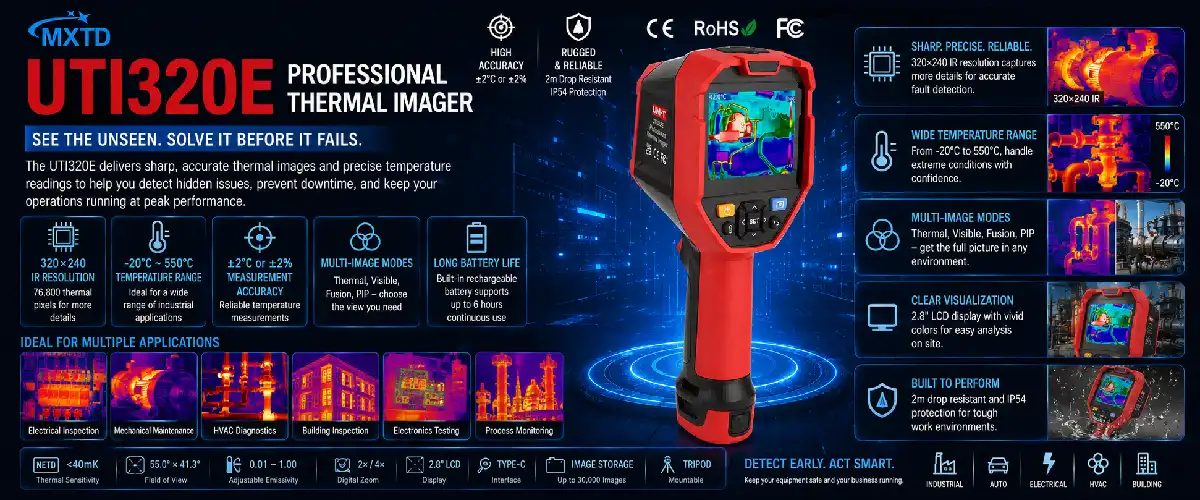
Accuracy in thermal imaging equipment isn't just about numbers on a specification sheet—it determines whether critical failures are detected before costly downtime occurs. In industrial automation, aerospace testing, and electronics manufacturing, a fraction of a degree can signal the difference between optimal operation and imminent equipment failure. The UTI320E Handheld Infrared Thermal Imager addresses these precision demands through a combination of advanced sensor technology and reliable design. Built around an uncooled vanadium oxide detector with 320×240 pixel resolution, this professional-grade thermal camera achieves a measurement accuracy of ±2℃ or ±2% of the reading across a temperature range spanning -20℃ to 550℃. This level of precision, coupled with thermal sensitivity below 40mK at 25℃ ambient temperature, enables detection of subtle temperature variations that often indicate developing issues in critical industrial systems.
Understanding the Accuracy of the UTI320E Handheld Infrared Thermal Imager
The accuracy of thermal imaging rests on three factors that work together: the sharpness of the detector, the accuracy of the temperature measurements, and the sensitivity to heat. Each of these factors is different and affects whether or not a thermal imager can provide useful information in tough industrial settings.
Core Technical Specifications Driving Accuracy
The infrared detector is the most important part of any thermal image device. A 320×240 uncooled vanadium oxide sensor working in the 8-14μm wavelength range gives the UTI320E the ability to make thorough temperature maps. With about 76,800 temperature measurement points per frame, this precision is much higher than what most entry-level devices can do. This density of thermal data is very important for finding hotspots on circuit boards or component groups when checking tools for electronics testing or semiconductor inspection.
In a room that is 25°C, the accuracy of temperature readings is ±2°C or ±2% of the reading, whichever is greater. For predictive maintenance tasks where thermal trends are more important than exact numbers, this design meets industry standards. This device stays accurate over its entire working temperature range, from -20℃ to 550℃. It can be used in cold testing settings or to keep an eye on high-temperature processes in factories.
The smallest temperature difference that a thermal imager can pick up is called thermal sensitivity, which is written as Noise Equivalent Temperature Difference (NETD). The UTI320E Handheld Infrared Thermal Imager can tell the difference between temperature changes as little as 0.04°C, with a NETD of less than 40mK at 25°C. This awareness is very important for keeping an eye on electrical parts because small changes in temperature can show problems with connection resistance before they become damaged. When testing thermal management designs or doing failure analysis, this feature is very useful for research schools and test engineers who work with precise equipment.
Emissivity Adjustment and Material Versatility
To get an accurate reading of the temperature, you need to set the emissivity correctly, since different materials give off infrared energy at different rates. The thermal imager lets you change the emissivity from 0.01% to 1%, and the baseline number of 0.95 works well for most painted or oxidized surfaces. This range works for a variety of materials that are used in industry. For example, polished metals usually have an emissivity between 0.1 and 0.30, while plastics and organic materials are closer to 0.95. When switching between aluminum ductwork, concrete walls, and insulation materials, these factors are often changed by test and measurement experts who are doing HVAC troubleshooting or building envelope checks. Using the right emissivity settings can change the accuracy of measurements by several degrees. Being able to adjust this feature is very important for procurement workers who need equipment that can handle multiple inspection procedures.
Field of View and Measurement Distance Considerations
The UTI320E has a field of view (FOV) of 55.0° horizontally and 41.3° vertically, which is a good balance between measuring detail and covering a lot of space. This wide field of view (FOV) lets you quickly scan electrical panels or mechanical assemblies during regular exams. This cuts down on survey time while keeping the accuracy of the temperature readings. With digital zoom options of 2x and 4x, the thermal camera can adapt to different viewing distances without losing the quality of the thermal data. When setting up regular inspection processes for facilities with different equipment layouts, system builders who create integrated testing systems like this provide this kind of flexibility.
Evaluating UTI320E Accuracy in Practical Industrial Applications
While lab specs give us a general idea of what to expect, how well thermal imaging equipment works in the field is what really shows us if it is useful for industrial processes.
Electrical System Diagnostics and Hotspot Detection
One of the most frequent uses for industrial thermal imaging is in electrical repair. The thermal imager is very good at finding links that are getting too hot, loads that aren't balanced, and parts that are breaking down before they cause major problems. Maintenance teams recently used the device to check a 480V distribution panel that they thought might be having connection problems at a medium-sized manufacturing plant. The 320×240 resolution showed a 15°C temperature difference on one breaker connection compared to circuits next to it that were loaded the same way. This was a clear sign of higher contact resistance that needed to be fixed right away.
When setting standard temperature profiles for important equipment, the accuracy of the measurements is very important. When R&D managers use condition-based maintenance programs, they need to keep track of temperature readings over a number of check rounds in order to spot trends. Even though the ±2° accuracy standard seems low, it is fine for finding important changes in the temperature of motors, transformers, and power distribution equipment that normally operate at temperatures 20 to 40° above room temperature.
HVAC System Performance and Building Diagnostics
For energy efficiency studies of buildings, you need thermal imaging tools that can find problems with the insulation, the ways that air gets in, and the way that the HVAC system distributes heat. Technical leaders who are in charge of building improvement projects have used thermal imaging technology to find energy losses that didn't seem like much on their own, but added up to big running costs. Because it can work in temperatures as low as -20℃, the UTI320E Handheld Infrared Thermal Imager can be used for winter envelope scans, when differences in temperature between the inside and outside make flaws easier to see.
The device's Type-C port and WiFi connection make it easy to record and report right away. Technicians can send thermal images straight to tablets or computers running analysis software after scanning the outside of buildings. This lets them make reports while they are still on-site. This workflow speed solves a major problem for system designers who are working on several projects at the same time and need to turn them around quickly, which hurts the projects' profits.
Mechanical Equipment Condition Monitoring
Thermal pattern identification is a big part of predictive maintenance for rotating machines. As wear happens, bearings, joints, and drive parts create unique thermal fingerprints. The thermal sensitivity below 40mK lets it pick up on small temperature rises that happen before vibrations or sounds become audible. A procurement manager at a company that makes aerospace parts said that using professional-grade thermal cameras for routine inspections cut unplanned downtime by about 30% over 18 months by finding problems with bearings three weeks earlier than traditional vibration analysis showed problems were starting to show.
The IP54 grade for security and the 2-meter drop resistance make it durable enough for industrial settings. Unlike lab tools that need to be handled carefully, this thermal imager can handle the dust, moisture, and occasional bumps that happen during facility checks. When test and measurement engineers work in factories or outside, they need tools that stay accurate even when they are exposed to harsh conditions.
How Does UTI320E Stand Out in the Market? A Rational Choice Analysis
There are a lot of choices in the industrial thermal imaging market, from consumer-grade devices that cost less than $300 to specialized scientific tools that cost more than $10,000. Knowing where a piece of equipment fits in this range helps people who work in buying make smart choices that meet practical needs and stay within budget.
Competitive Positioning and Value Proposition
When it comes to professional thermal imaging, the UTI320E Handheld Infrared Thermal Imager is in a good spot. It's usually priced below $1000, but it performs like more expensive models. Because of this, it's very appealing to middle and large businesses that need reliable thermal imaging tools but don't want to spend a lot of money on premium names. Compared to well-known brands like FLIR or Seek Thermal, the device meets or beats the resolution specs of competitive models that cost about the same, and it has connection features that are usually only found on higher-end products.
Resolution has a direct effect on the ability to check and the trustworthiness of thermal evaluations. The 320×240 detector has four times as many pixels as the 160×120 sensors that are popular in low-end expert gear. This difference is clear right away when looking at small parts or finding exact fault locations on complicated systems. This higher precision is especially helpful for checking electronics, since thermal problems on printed circuit boards can affect areas that are only a few millimeters across.
Functional Capabilities Supporting Diverse Applications
In addition to basic measurement features, the thermal camera has analysis tools that make checks and recording in the field easier. The device has four image output modes: thermal only, visible light only, fusion, and picture-in-picture (PIP). This lets users choose the best way to see things for each inspection job. Thermal-visible fusion helps put thermal anomalies in their proper physical context. This is especially useful when writing down problems for techs who will later fix the equipment but don't know much about it.
Spot meters, line profiles, area averages, and hot/cold spot signs are all types of tools used to measure temperature. With these analysis functions, the thermal imager goes from being a simple temperature sensor to a troubleshooting tool that can show how heat is distributed on complicated surfaces. R&D centers that do thermal validation testing can get quantitative data straight from field readings without having to use external tools for post-processing.
The customizable warning function solves a specific problem with the way work gets done during systematic facility surveys. Users can set upper and lower temperature limits. When recorded values go above or below these limits, the user is notified by both visual and audio signals. This feature comes in handy when surveying a lot of electrical panels, and dozens of circuits need to be looked at individually. The test engineer doesn't have to look at each temperature reading by hand; instead, he or she can quickly scan the system and rely on computerized alerts to show any possible problems.
Practical Limitations and Application Boundaries
Realizing that there isn't a single thermal image gadget of UTI320E Handheld Infrared Thermal Imager that works best for all situations keeps people from setting unrealistic goals. The measurement range of -20°C to 550°C works well for most industrial maintenance and building diagnostic tasks, but it's not good enough for high-temperature processes like metal casting or glass production, which need measurement limits higher than 1000°C. To the same extent, precise scientific tasks that need accuracy better than ±1°C or thermal sensitivity below 20mK need specialist tools that cost a lot more.
Even though the uncooled microbolometer detector technology is reliable and doesn't cost much, it can't match the sensitivity and frame rate of advanced study detection systems that are cooled. When purchasing equipment for high-speed thermal imaging or finding very small differences in temperature, purchasing managers should think about whether the application really needs a cooled detector, which can cost five to ten times more than the thermal imager being looked at.
Knowing these limits helps system builders choose the right tools for the job instead of trying to put tools that aren't right for the job into situations where they can't do the job well. Instead of being a specific scientific tool, the thermal camera can be used for a wide range of tasks, such as workplace maintenance, quality control, and building management.
Supplier Support and Long-Term Considerations
Total cost of ownership is affected by how long an item lasts and how much it costs to maintain. The UTI320E has been certified by CE, FCC, and UKCA, which means it meets safety and electromagnetic compatibility standards in major countries. The maker offers a one-year warranty that covers defects and operating problems. This gives procurement workers peace of mind about the quality of the build and the loyalty of the seller.
Professional equipment sellers are different from consumer product suppliers because they offer firmware updates, calibration services, and expert support. Technical support from companies like MXTD is quick to respond; they usually answer within an hour and help with online troubleshooting through video advice. This level of help solves a major problem for technical directors who need quick solutions when testing equipment breaks down during key project stages.
Procurement Insights: Purchasing UTI320E with Confidence
When buying tools strategically, it's not enough to just compare technical specs. You also need to look at how reliable the seller is, how much they charge, and how they help you after the sale to protect your investment and make sure you're ready to go.
Authorized Distribution Channels and Pricing Considerations
To be sure you're getting a real product with a valid warranty and access to support services, thermal imaging equipment should only be bought from authorized dealers or directly from the makers. There are more third-party buyers in online marketplaces, which means there is a chance of getting fake devices, gray-market imports that don't have help in your area, or used equipment that is sold as new. Verifiable buy records from allowed suppliers are a must during audits for companies that need to show proof of ISO compliance or quality management systems.
Because of the way volume pricing works, buying in bulk is much cheaper than buying one unit at a time. System designers who are putting thermal imaging equipment in more than one place or on more than one project team should talk to sellers about getting discounts for buying in bulk. These discounts usually start at five to ten units. Companies that need equipment on a regular basis should build relationships with trustworthy thermal imager providers who understand their application needs and can offer consistent support across multiple buy cycles.
Warranty Coverage and After-Sales Service
Under normal use, the usual one-year manufacturer's guarantee covers problems with the materials and the way they were put together. Knowing the terms of a guarantee helps procurement managers set reasonable standards for how long an item will last and plan for possible future costs. Damage caused by misuse, unauthorized modifications, or operation outside of certain environmental conditions is usually not covered by warranties. This shows how important it is for operators to be properly trained and follow working guidelines.
In addition to a basic guarantee, full after-sales service gives customers access to technical documents, user guides, and software changes. The UTI320E Handheld Infrared Thermal Imager works with both PC-based analysis tools and mobile apps for Android and iOS devices, so you can choose how to review data and send reports. Regular changes to software can add new research tools, make it easier to connect, or fix problems that were found after the original release. Instead of seeing sales as one-time events, suppliers who constantly keep and improve their software show that they are committed to long-term product support.
Calibration services keep measurements accurate over long periods of time. Even though the thermal camera doesn't need to be recalibrated as often as contact-based temperature monitors, it is still best to have it factory-calibrated every two to three years to make sure it stays accurate. When figuring out the total cost of ownership, people who work in procurement should find out if testing services are available, how long they take to complete, and how much they cost.
Essential Accessories and Operational Optimization
Several extras make devices more useful and protect the investment. When there isn't easy access to charging stations, spare batteries let you keep working in the field for longer. This is especially helpful during thorough building checks or inspections that take place outside. If you have memory cards with enough space, you won't have to worry about running out of space during inspections. However, the device's WiFi feature lets you share images in real time, so you don't have to rely on local storage as much.
Protective carrying cases keep the thermal imager safe while it's being moved from one place to another. This is especially important for system programmers or service companies that move equipment around a lot. The IP54 rating and resistance to drops offer good security while the device is in use, but specialized cases keep damage from happening while the vehicle is being transported or stored. Some companies customize foam inserts inside cases to fit the thermal camera and other commonly used tools, making full inspection kits that are ready to be sent out right away.
Screen covers keep the screen clear by keeping keys and tools from scratching the screen when the device is stored with other tools or equipment in toolboxes or work bags. Lens caps keep the infrared optics clean and safe from physical touch. However, because the detector is not cooled, it is not as fragile as cooled systems that need extra care when handling.
Conclusion
The UTI320E Handheld Infrared Thermal Imager performs well at capturing heat, meeting the accuracy needs of industrial maintenance, quality control, and troubleshooting tasks in a wide range of fields. It can reliably find thermal problems in electrical systems, mechanical equipment, and building surfaces thanks to its 320×240 resolution, ±2°K measurement accuracy, and sub-40mK thermal sensitivity. The device strikes a good mix between technical features and useful ones. It has a WiFi connection, several analysis modes, and a tough design that makes it suitable for use in the field. Procurement professionals looking at thermal imaging solutions for medium to large businesses will find that this thermal camera is a great value in the professional equipment category. It performs just as well as more expensive options, but is still affordable enough for businesses that need cheap diagnostic tools.
FAQ
1. What measurement accuracy can I expect from the UTI320E in actual field conditions?
Under average conditions (0–50℃ atmospheric), the thermal imager stays within its accuracy range of ±2°C, or ±2%, from -20°C to 550°C. The accuracy of the field rests on how well the emissivity settings are set for each object being tested. Lower emissivity numbers (0.1 to 0.3) are needed for metal surfaces, while levels closer to 0.95 are usually used for non-metallic materials.
2. How does the 320×240 resolution compare to lower-resolution thermal cameras?
Resolution has a direct effect on how well you can find small temperature changes and inspect things from a reasonable distance. This thermal camera's 76,800 measurement points give about four times more thermal information than regular 160×120 sensors. This makes it a lot easier to find exact problem areas on complicated equipment or find small parts that are hot during testing electronics.
3. What connectivity options support integration into existing workflows?
The thermal imager has both WiFi and Type-C connections, so you can send pictures right away to your phone, tablet, or laptop. The company that makes the product offers free PC software and mobile apps for both Android and iOS. These apps let you see previews in real time while you're inspecting something and also let you do analysis without an internet connection using measurement tools, create reports, and store data.
Ready to Upgrade Your Thermal Imaging Capabilities with MXTD?
Xi'an Mingxi Taida Information Technology Co., Ltd. (MXTD) has been helping companies that need reliable diagnosis tools for more than 12 years with precise testing and measurement solutions. As a provider of UTI320E Handheld Infrared Thermal Imagers with a lot of experience, we know how important accurate thermal data is in uses like air defense, industrial automation, and electronics testing. Our expert team answers all questions within an hour and offers thorough specification advice, customization options, and application help to make sure that your investment in thermal imaging meets all operational needs. We can deliver standard products from our current stock or make unique configurations that fit your inspection processes. We also offer full after-sales service, including remote technical support, firmware updates, and a guarantee that protects your investment. Get in touch with our team at manager03@mxtdinfo.com to talk about volume pricing for deployments across multiple units, to find out how our services can work with your current testing infrastructure, or to get full technical documentation and compliance certificates for your purchase review.
References
1. Minkina, Waldemar, and Dudzik, Sebastian. Infrared Thermography: Errors and Uncertainties. John Wiley & Sons, 2009.
2. Vollmer, Michael and Möllmann, Klaus-Peter. Infrared Thermal Imaging: Fundamentals, Research and Applications. Wiley-VCH, 2017.
3. Bagavathiappan, S., et al. "Infrared Thermography for Condition Monitoring – A Review." Infrared Physics & Technology 60 (2013): 35-55.
4. Usamentiaga, Rubén, et al. "Infrared Thermography for Temperature Measurement and Non-Destructive Testing." Sensors 14.7 (2014): 12305-12348.
5. Meola, Carosena, and Carlomagno, Giovanni Maria. "Recent Advances in the Use of Infrared Thermography." Measurement Science and Technology 15.9 (2004): R27-R58.
6. Ibarra-Castanedo, Clemente, et al. "Infrared Thermography Applications in Predictive Maintenance." Proceedings of SPIE - The International Society for Optical Engineering (2010): 7661-7673.
Our customers’ satisfaction speaks for our quality — contact us to experience the same reliable service.