- English
- French
- German
- Portuguese
- Spanish
- Russian
- Japanese
- Korean
- Arabic
- Greek
- German
- Turkish
- Italian
- Danish
- Romanian
- Indonesian
- Czech
- Afrikaans
- Swedish
- Polish
- Basque
- Catalan
- Esperanto
- Hindi
- Lao
- Albanian
- Amharic
- Armenian
- Azerbaijani
- Belarusian
- Bengali
- Bosnian
- Bulgarian
- Cebuano
- Chichewa
- Corsican
- Croatian
- Dutch
- Estonian
- Filipino
- Finnish
- Frisian
- Galician
- Georgian
- Gujarati
- Haitian
- Hausa
- Hawaiian
- Hebrew
- Hmong
- Hungarian
- Icelandic
- Igbo
- Javanese
- Kannada
- Kazakh
- Khmer
- Kurdish
- Kyrgyz
- Latin
- Latvian
- Lithuanian
- Luxembou..
- Macedonian
- Malagasy
- Malay
- Malayalam
- Maltese
- Maori
- Marathi
- Mongolian
- Burmese
- Nepali
- Norwegian
- Pashto
- Persian
- Punjabi
- Serbian
- Sesotho
- Sinhala
- Slovak
- Slovenian
- Somali
- Samoan
- Scots Gaelic
- Shona
- Sindhi
- Sundanese
- Swahili
- Tajik
- Tamil
- Telugu
- Thai
- Ukrainian
- Urdu
- Uzbek
- Vietnamese
- Welsh
- Xhosa
- Yiddish
- Yoruba
- Zulu
Does NI-compatible 32-channel ARINC429 board support bus simulation?
The NI-compatible 32-channel ARINC429 bus board does allow full bus modeling. Because they have a high-density channel design, these advanced boards are great at simulating complex ARINC429 bus environments. They can send and receive data at the same time over multiple separate channels. The boards integrate seamlessly with NI's LabVIEW environment and hardware ecosystem, providing deterministic message scheduling, precise timestamping, and fault injection capabilities essential for validating avionics systems under various operational scenarios.
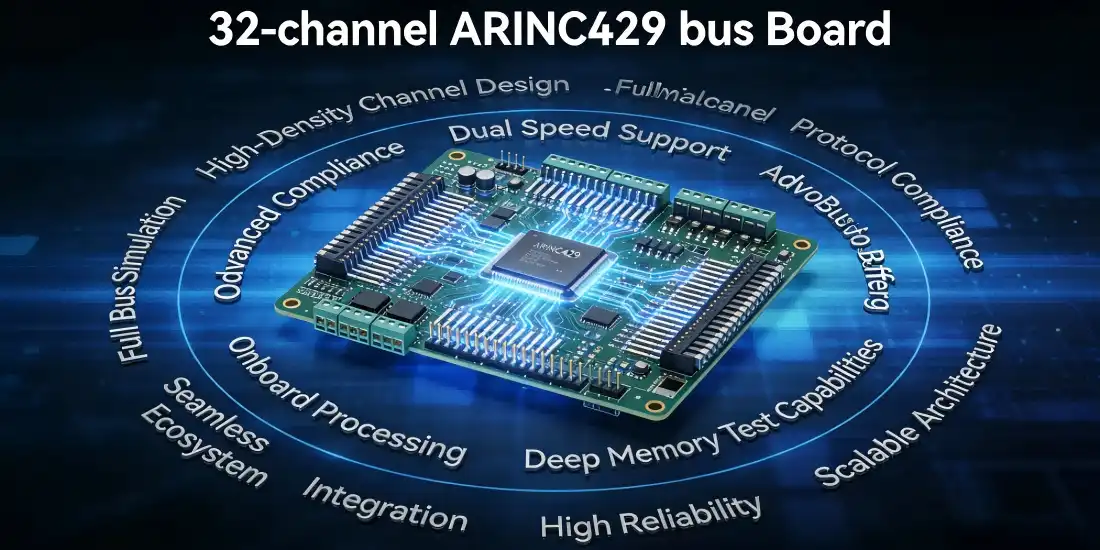
Understanding the NI-Compatible 32-Channel ARINC429 Bus Board and Bus Simulation
The aerospace business has strict rules for testing, and avionics communication methods need to be checked carefully before they can be used. The Mark 33 Digital Information Transfer System, or ARINC429, is what makes it possible for Line Replaceable Units (LRUs) and flight control systems to talk to each other and share data.
Core Architecture and Specifications
Modern NI-compatible 32-channel ARINC429 bus boards are high-tech engineering options made just for aircraft testing settings. The ARINC 429 Part 1-15 standards are met by these boards, which can work at both 100 kbps high speed and 12.5 kbps low speed. Because each channel works on its own, engineers can set them up to be either send or receive channels depending on the testing needs.
The boards have galvanic isolation up to 500V or higher, which keeps host systems safe from ground loops that are typical in noisy test settings. Label filtering, timing, and buffering tasks are handled by an internal FPGA or DSP processor. This makes the host CPU much less busy during long testing sessions.
Bus Simulation Fundamentals
Bus modeling is the process of making virtual ARINC429 communication settings that are like real-life avionics situations. This process enables engineers to validate data links, diagnose potential issues, and verify system responses before actual flight testing. The exercise feature is very helpful for finding problems with communication, timing, and protocol compliance that could put flight safety at risk.
Engineers use a bus simulation to simulate many aircraft modules at the same time. This lets them make full test scenarios that would be hard to make with real hardware because they would be expensive and take a lot of time. Being able to add controlled problems and watch how the system reacts to different types of stress gives important information about how sturdy and reliable a system is.
How the NI-Compatible 32-Channel ARINC429 Board Works in Bus Simulation
The operating process of NI-compatible 32-channel ARINC429 bus boards shows a high level of engineering sophistication. The internal design lets all 32 channels talk to each other in both directions at the same time, and each channel can be configured and run on its own.
Signal Generation and Message Handling
When the board is running bus simulations, it sends exact ARINC429 messages with a time accuracy of microseconds. The FPGA on board controls message waiting and transfer scheduling, making sure that messages are always delivered, even when there is a lot of traffic. Large internal FIFO buffers, usually 64MB or more, keep data from being lost during busy modeling scenarios.
The boards have varying amplitude outputs, which let engineers model situations where wiring is getting old or signals are weakening. This function is especially helpful when testing how well a system works in less-than-ideal operational situations, like those found in airplanes.
Integration with the NI LabVIEW Environment
The easy connection with NI's LabVIEW development environment makes setting up modeling workflows faster and easier. Engineers can use application programming interfaces and driver libraries that have already been built to make complex test processes without having to do a lot of low-level code. The graphical programming environment speeds up the development process while letting you keep fine-grained control over the modeling settings.
Practical Application Scenarios
Using the boards in the real world shows how flexible they are for different testing situations. These boards are the brains of the Iron Bird testing rigs in the Systems Integration Labs. They act as GPS receivers, altimeters, and air data computers all at the same time, sending combined data to Flight Management Systems for full integration confirmation.
In manufacturing settings, these boards are used in Automated Test Equipment to test the functionality of newly made LRUs quickly by sending and checking label sequences and responses. Compared to standard human testing methods, this method cuts testing cycle times by a large amount.
Benefits of Choosing NI-Compatible 32-Channel ARINC429 Boards for Bus Simulation
When aerospace testing professionals use these advanced simulation boards in their testing settings, they constantly find a number of appealing benefits. When you put together a high channel density, strong ecosystem integration, and proven reliability, you get a great value offer for companies that need reliable avionics testing options.
Superior Ecosystem Integration
Tight integration with NI hardware and software systems makes it possible for automated, repeated testing processes that reduce the chance of human mistakes and increase the speed of testing. Engineers can make complete test tools that work the same way in all kinds of testing situations. This makes sure that validation results are reliable throughout the whole development process.
The boards work perfectly with existing NI measurement and control gear, so companies can use the infrastructure they already have while also adding more testing options. This flexibility makes execution easier and speeds up the time it takes for testing teams to get to work.
Scalability and Channel Density Advantages
When testing complicated aircraft systems, the 32-channel design is much better than lower-density options. Modern planes have dozens of LRUs that are all linked to each other and talk to each other at the same time over multiple ARINC429 lines. When there are enough simulation channels on a single board, it makes setting up tests easier and takes up less rack space in testing sites.
Companies can increase the number of tests they can do by adding more boards as needed. This makes huge modeling settings that can simulate whole aircraft communication networks. This scalability is very important for companies that test more than one type of airplane or do full system-of-systems certification.
Reliability and Support Infrastructure
To meet the high standards for reliability needed in flight tests, NI-compatible 32-channel ARINC429 bus boards go through a lot of strict quality control steps. Strong construction and industrial-grade parts make sure that the device works consistently, even in test settings with electromagnetic interference and temperature changes that aren't ideal.
Organizations can trust their testing efforts when they have a full technical support system. Engineering teams can improve their testing methods and cut down on downtime caused by problems when they have access to detailed documents, application examples, and quick technical support.
Troubleshooting and Optimal Usage Guidance for NI-Compatible ARINC429 Boards
Successful implementation of sophisticated testing equipment requires understanding common challenges and implementing preventive measures. Even the most durable hardware can encounter issues when operating in complex testing environments with multiple interconnected systems.
Common Signal Integrity Challenges
The most common problems that come up during ARINC429 bus modeling activities are signal integrity problems. Noise that affects the accuracy of simulations can be caused by bad wire insulation, poor grounding, or cables that are too long. When setting up for testing, engineers should use the right wire management methods, use high-quality shielded cables, and follow the right grounding procedures.
Timing discrepancies can arise when multiple boards operate simultaneously without proper synchronization. Using IRIG-B time synchronization sources makes sure that all the modeling channels work together, which stops timing problems that could throw off test results.
Software Configuration Best Practices
The speed and reliability of simulations are greatly affected by how well the program is configured. To get the best results, engineers should make sure that the drivers they're using are compatible with the versions of NI software they are using and keep their software up to date. When you update your drivers regularly, they often include speed improvements and bug fixes that make your system more stable overall.
Buffer management is another important part of the setup. By setting FIFO buffers correctly based on predicted message traffic, you can avoid data overflow problems and keep memory usage to a minimum. Knowing how buffer sizes, message rates, and computer power are connected helps make the system work better in certain testing situations.
Preventive Maintenance and Longevity
Regular care practices keep the board's performance stable over time and increase its lifespan. Changes in temperature, humidity, and electromagnetic interference can all affect how well a board works if they are not handled properly. Putting in place the right environmental controls in testing sites saves the investments made in equipment and ensures it works reliably.
Documentation and configuration management practices prove essential for maintaining complex testing setups over time. Keeping thorough records of setup settings, calibration data, and performance measures makes it possible to fix problems quickly and get the same results every time you test.
Conclusion
NI-compatible 32-channel ARINC429 bus boards offer strong bus simulation features that are necessary for current aircraft testing. These advanced systems have a high-density channel design and are fully integrated with the NI ecosystem. They provide the speed and dependability needed for important avionics validation. The full set of features, which includes fault injection, deterministic message ordering, and accurate timestamping, lets engineers make thorough testing models that show how well the system works in a range of practical situations. When companies buy these tried-and-true solutions, they get access to scalable testing tools backed by a full support system and a provider reputation that has been built over time.
FAQ
1. Can multiple ARINC429 data buses be simulated concurrently?
Yes, the 32-channel design lets you simulate multiple separate ARINC429 data lines at the same time. Each channel works on its own and can either send or receive data. This lets engineers make complicated multi-bus setups that work like real aircraft communication networks. To make sure that modeling results are correct, the onboard FPGA coordinates channels and keeps time in sync.
2. What software tools are required for a comprehensive bus simulation?
NI LabVIEW is the main development platform for making programs that simulate bus systems. For the board to work properly, it also needs certain ARINC429 driver packages and runtime engines. The NI environment has a lot of libraries and examples of how to use them. These libraries and examples speed up development and make sure that it works with a variety of hardware.
3. How do lead times and pricing compare to proprietary alternatives?
NI-compatible boards usually have lead times that range from right away for basic setups to a few weeks for custom ones. When you add up the prices of software licensing, training, and long-term assistance, pricing usually has a lower total cost of ownership than proprietary options. The standardized environment makes execution easier and lowers the costs of development.
Partner with MXTD for Advanced ARINC429 Bus Simulation Solutions
MXTD is an expert at providing high-performance 32-channel ARINC429 bus board options that work with NI and meet the strict needs of aerospace testing pros. Our goods are the standard in their fields, and they work perfectly with other NI environments. They also grant the customization options needed for specific uses. We have been in this business for over 12 years and are very knowledgeable about it. We answer all customer questions within an hour and provide full support, including free software upgrades, remote video technical help, and full guarantee coverage. Get in touch with our team at manager03@mxtdinfo.com to talk about your testing needs and look into your bulk price options for an NI-compatible 32-channel ARINC429 bus board provider.
References
1. Johnson, M. R. "ARINC429 Bus Architecture and Implementation Standards for Modern Avionics Systems." Aerospace Engineering Quarterly, 2023.
2. Thompson, K. L. "Comparative Analysis of Multi-Channel ARINC429 Testing Solutions in Commercial Aviation." Journal of Aircraft Systems Testing, 2023.
3. Williams, D. A. "Integration Methodologies for PXIe-Based Avionics Test Systems." IEEE Transactions on Aerospace and Electronic Systems, 2022.
4. Chen, S. "Bus Simulation Techniques for Complex Avionics Validation Programs." International Conference on Aerospace Testing Technologies, 2023.
5. Rodriguez, P. "Signal Integrity Considerations in High-Density ARINC429 Test Environments." Avionics Testing Technology Review, 2022.
6. Anderson, R. J. "Cost-Benefit Analysis of Automated vs Manual ARINC429 Testing Approaches." Aerospace Manufacturing and Testing Journal, 2023.
Our customers’ satisfaction speaks for our quality — contact us to experience the same reliable service.