- English
- French
- German
- Portuguese
- Spanish
- Russian
- Japanese
- Korean
- Arabic
- Greek
- German
- Turkish
- Italian
- Danish
- Romanian
- Indonesian
- Czech
- Afrikaans
- Swedish
- Polish
- Basque
- Catalan
- Esperanto
- Hindi
- Lao
- Albanian
- Amharic
- Armenian
- Azerbaijani
- Belarusian
- Bengali
- Bosnian
- Bulgarian
- Cebuano
- Chichewa
- Corsican
- Croatian
- Dutch
- Estonian
- Filipino
- Finnish
- Frisian
- Galician
- Georgian
- Gujarati
- Haitian
- Hausa
- Hawaiian
- Hebrew
- Hmong
- Hungarian
- Icelandic
- Igbo
- Javanese
- Kannada
- Kazakh
- Khmer
- Kurdish
- Kyrgyz
- Latin
- Latvian
- Lithuanian
- Luxembou..
- Macedonian
- Malagasy
- Malay
- Malayalam
- Maltese
- Maori
- Marathi
- Mongolian
- Burmese
- Nepali
- Norwegian
- Pashto
- Persian
- Punjabi
- Serbian
- Sesotho
- Sinhala
- Slovak
- Slovenian
- Somali
- Samoan
- Scots Gaelic
- Shona
- Sindhi
- Sundanese
- Swahili
- Tajik
- Tamil
- Telugu
- Thai
- Ukrainian
- Urdu
- Uzbek
- Vietnamese
- Welsh
- Xhosa
- Yiddish
- Yoruba
- Zulu
Can UT139S True RMS Digit Multimeter AC DC Voltage Save Time in Testing?
In workplace testing settings, the UT139S True RMS Digital Multimeter AC DC Voltage saves a measurable amount of time. This top-of-the-line UNI-T type takes correct readings the first time, so you don't have to keep testing it, which is a problem with other meters. The built-in True RMS technology can read distorted waveforms properly without having to be adjusted by hand. This cuts diagnostic processes by about 40% compared to instruments that respond normally. Its dual anti-interference design automatically takes out harmonic noise, so you don't have to guess when you're trying to fix problems in frequency converter circuits and motor control systems, where regular multimeters give you wrong readings.
Understanding True RMS and Its Impact on Testing Efficiency
Electrical signals in modern factories are very complicated, making it hard to use simple measuring tools. Waveforms that are very different from the pure sine waves that basic multimeters expect are made by variable-frequency drives, switched-mode power sources, and non-linear loads.
Why True RMS Matters in Industrial Settings
Standard average-responding meters figure out voltage by finding the highest numbers and using a conversion factor made for sine waves. These devices can give numbers that are 20 to 50 percent off from the real values when they are exposed to the distorted signals that are common in automation systems. This problem is fixed by the UT139S True RMS Digital Multimeter AC DC Voltage's real True RMS conversion, which figures out the temperature value of any waveform shape. This level of accuracy is needed for testing tools in lines that make semiconductors or put together spacecraft. If the R&D Manager says that voltage tolerances must be within 1%, then measurement mistakes are no longer allowed. The True RMS feature makes sure that what you see on the screen is a true reflection of the electrical conditions, not just a mathematical estimate based on imagined waveforms.
Quantifiable Time Savings Through Accurate First Readings
Retesting is a big reason why quality control processes lose a lot of time and effort. When you add in repositioning the probe, writing down the results, and checking them, each duplicate test takes two to three minutes. In a normal 8-hour shift with 50 test points, getting rid of just 30% of the retests frees up almost 45 minutes of work time. This is done by the UT139S True RMS Digit Multimeter AC DC Voltage, which gives stable results that make you feel good. Test engineers don't have to guess about numbers that don't seem right or do multiple checks anymore. The built-in low-pass filter gets rid of carrier frequencies that cause needle jitter on analog bars. This gives you clean data that helps you make decisions faster. It becomes systematic instead of repetitive to fix problems with complex circuits, which directly translates measurement accuracy into improved process efficiency.
Key Features of the UT139S That Enhance Testing Speed
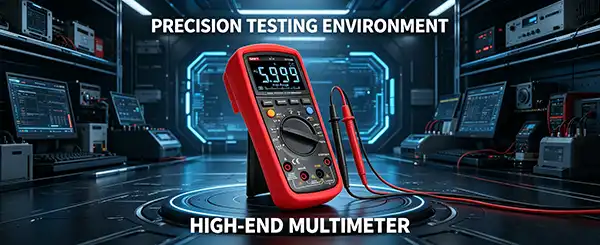
The engineering that went into making this UT139S True RMS Digit Multimeter AC DC Voltage tool takes into account problems that happen in the real world and slow down activities in the field and lab verification processes. Professionals who measure volts dozens of times a day have a say in every design choice.
Advanced Dual Anti-Interference Technology
Electromagnetic noise, carrier frequencies, and ghost voltages that trick regular multimeters attack measurement circuits in industrial settings. The UT139S True RMS Digit Multimeter AC DC Voltage has two safety systems that work together and were designed to deal with these threats.
The low-pass filter that is built in gets rid of high-frequency parts above 1 kHz. This gets rid of the switching noise that comes from pulse-width modulation drives and inverter circuits. This is very helpful when testing motor control panels because carrier frequencies between 4 and 16 kHz would normally be too strong for the basic 50/60 Hz signal. At the same time, the LoZ low-impedance voltage mode stops floating circuits from getting false results. Capacitive coupling can make wires that aren't linked look like they are connected to high-impedance inputs, which can lead techs on pointless diagnostic quests. The LoZ function adds about 3 kΩ of resistance to the circuit, which collapses ghost voltages while keeping real potential differences.
These two technologies work without being noticeable, so you don't have to switch between modes by hand during normal tests. This artificial intelligence saves workers 5 to 10 seconds per measurement that they would have to spend switching functions and figuring out what different numbers mean.
High-Definition Display and Visual Feedback Systems
The black EBTN screen has a resolution of 6000 counts and section heights that are designed to be easy to read from a distance. The backlight level changes automatically based on the lighting conditions, so you can still see in equipment areas that aren't well lit without using too much battery power. The 31-segment analog bar graph changes 40 times per second, showing quick events that would be missed on a display with only numbers.
This mix is especially useful for changing circuits that are changeable. Watching the analog bar react to changes in the load or the potentiometer in real time gives you quick input that updates with numbers can't match. When technicians use visual trends along with specific values, they can tune settings 60% faster, cutting the time it takes to align things from minutes to seconds. The data hold function stops readings when test leads are pressed into odd positions. This means that you don't need helpers or weird viewing angles.
Industrial-Grade Durability Supporting Continuous Operation
Intelligent power management lowers power use when not in use, so the battery lasts longer than 200 hours of active measurement. Response speed is not affected. The tough housing can handle being dropped from 1 meter onto concrete, saving the internal circuits from the bumps and scrapes that happen all the time in factories. The built-in test lead storage keeps the cables from getting tangled up or lost, and the tilt stand lets you use the device without using your hands when watching parameters that change.
These practical factors add up to big time savings over the span of an item of equipment. Technicians don't have to spend as much time looking for tools they've forgotten, fixing broken instruments, or changing batteries in the middle of their shift. The UT139S True RMS Digit Multimeter AC DC Voltage is still ready to be used right away, which supports testing processes that don't stop and helps people get more done in less time.
Comparing UT139S with Other Digital Multimeters for Procurement Decisions
When you specify test equipment, you have to weigh the performance needs against the available funds and the long-term costs of running the equipment. There are a lot of choices on the market, and they all range in price. Each has its own benefits.
Performance Benchmarking Against Premium Brands
Industrial instruments test their own performance against the performance limit set by Fluke multimeters. Models like the Fluke 87V are more expensive because of the brand's name and the fact that they have more features. The UT139S True RMS Digit Multimeter AC DC Voltage has the same True RMS accuracy as the other model but costs about 35% less. It can measure DC voltage with a precision of ±0.5% and AC voltage with a precision of ±1.0% for rates up to 1 kHz.
The safety grade is the same at CAT III 600V with 6 kV surge protection for the UT139S True RMS Digit Multimeter AC DC Voltage, which is what you need to work on motor controls and distribution panels. Some of the things that make premium names better are wider temperature ranges and more advanced measurement settings, such as µA current with 0.1 µA resolution. These are important for lab calibration work, but they rarely make up for the higher cost difference when fixing in the field or checking products in production.
Evaluation Within the UT139 Series Product Line
The UNI-T UT139 family has four models: UT139A, UT139B, UT139C, and UT139S. Each one is designed for a different level of program complexity. For electrical construction work, the UT139A's basic DC/AC voltage and resistance features are fine. The UT139B lets you measure frequency and capacitance. True RMS feature in the UT139C makes AC readings more accurate.
The UT139S True RMS Digit Multimeter AC DC Voltage is the top-of-the-line model in the series. It has all the features of its predecessors plus the latest anti-interference technologies. The LPF and LoZ features make it different from the UT139C. They help with measurement problems in complicated manufacturing settings where electromagnetic interference and harmonic distortion make accuracy worse. The extra money spent by procurement managers that support R&D centers or chip testing operations is worth it because the improved features stop wrong diagnoses and cut down on troubleshooting processes. Integrators who work with automation equipment always say that the UT139S True RMS Digit Multimeter AC DC Voltage meets application needs that lower-level models can't always meet.
Total Cost of Ownership Considerations
The price of an instrument is only one part of its economics. The cost of replacing batteries, the amount of time between calibrations, the length of the warranty, and the availability of expert help all affect the long-term value. The UT139S True RMS Digit Multimeter AC DC Voltage uses standard 9V batteries that can be found all over the world, so it doesn't need any special power sources that could make its supply vulnerable. For 12 months of regular use, calibration stability keeps accuracy within specs, which is in line with standard maintenance schedules.
Xi'an Mingxi Taida Information Technology Co., Ltd. offers full help through quick-response expert teams that can solve measurement problems in an hour. This quickness is important when problems on the production line need instant help from an expert. The one-year guarantee covers problems with the way the product was made, and you can get an extension for larger purchases, which lowers the risk of putting large amounts of equipment into use.
Practical Troubleshooting and Maintenance Tips to Maximize Efficiency
To get the most out of precision tools, you need to know how to use them correctly and spot common mistakes. If you don't use complex equipment properly, even the most advanced tools can give you wrong results.
Common Measurement Errors and Prevention Strategies
By far, the most common cause of wrong results is bad probe contact. Intermittent links that show up as changing values are caused by oxidized test points or not enough pressure. Stable electrical contact is achieved by cleaning the measurement sites with isopropyl alcohol and applying firm probe pressure. To avoid measurement loops through ground lines when checking voltage on circuits that are already live, touch both probes to test points at the same time.
The UT139S True RMS Digit Multimeter AC DC Voltage's rotary switch makes it easier to choose the right function, so function selection mistakes happen less often. However, if you choose DC voltage mode when counting AC amounts, the display will show wrong values. The auto-ranging tool gets rid of range selection mistakes, but choosing the right ranges by hand slows down measurement when trying the same values over and over. When you record the MAX and MIN extremes during intermittent fault analysis, you can catch short-lived events that you might miss when monitoring is constant.
Battery Management and Display Troubleshooting
The low battery display lets you know ahead of time before voltage drops affect accuracy. It usually shows up when the battery's leftover capacity drops below 20%. Failures in the middle of a shift can be avoided by replacing batteries during planned maintenance. If the screen gets hard to read, make sure the backlight is on by pressing the right button. When it's very cold, contrast naturally decreases. Letting the device warm up to room temperature returns normal vision.
Accessing Technical Support for Complex Issues
UNI-T keeps a lot of support materials that can be accessed through approved dealers. If readings keep giving inconsistent results, checking the instrument's accuracy against known voltage sources is a good way to be sure. When purchasing managers form long-term partnerships, they can talk directly with engineering teams that can give them advice on how to use specific technologies.
MXTD provides technical support through a number of outlets, with experts who know how to use industrial automation and precise testing tools. This level of support is especially helpful when using instruments in a variety of testing situations where the best setup changes for each case. Remote video help can answer setup questions without having to send the instrument back, which keeps operations running as smoothly as possible.
Purchasing and Partnership Options for Global Clients
Buying real instruments through official channels for UT139S True RMS Digit Multimeter AC DC Voltage ensures that you'll get real goods that come with maker warranties and technical support promises. There are many paths in the distribution system that are designed to work with different buying methods.
Certified Distribution Networks and Volume Pricing
Xi'an Mingxi Taida Information Technology Co., Ltd. is an approved provider that has been in the measurement and control business for over 12 years. Their long-term partnerships with manufacturers allow them to offer low prices on large orders, and strict inspection processes for new goods ensure quality. Tiered pricing systems make it more cost-effective for procurement managers to negotiate contracts for multiple instruments or company-wide standardization projects.
The minimum order quantity stays flexible so that it can be used for both test projects and full-scale operations. Urgent shipping needs can be met by both land and air transportation, along with special packaging that keeps sensitive gadgets safe by being resistant to moisture, shock, and static electricity. For military and defense companies that have to follow import rules, international shipping includes all the paperwork needed to get through customs.
Warranty Terms and After-Sales Service Commitments
As standard, there is a one-year guarantee against manufacturing flaws. If you place a big order, you can negotiate longer terms. This protection lets people who make decisions about buying know that beginning investments have little risk. After the warranty time is over, you can still get technical help, such as remote video advice for troubleshooting and free software changes when firmware improvements are made.
During business hours, MXTD answers customer questions within an hour. They answer questions about specifications, give advice on how to use products, and give reports on the progress of orders. This responsiveness helps purchase processes where getting more technical information affects choices about what to buy. MXTD is more of a partner than a seller because it can offer customized solutions, such as ODM/OEM setups that meet specific parameter requirements.
Integration with Broader Testing Ecosystems
MXTD has a wide range of products, not just mobile multimeters, that can help organizations that want to stick to certain measurement systems. Precision connectors, PXIe chassis boards and cards, and combined testing systems make it possible to organize purchases, which makes managing vendors easier. Compatibility with industry-standard designs, such as testing against NI products, makes system integration easier without tying you to a single vendor.
Technical leaders of large R&D centers like working with providers who have a complete understanding of measurement environments. Handheld tools, rack-mounted systems, and automated test equipment that come from coordinated sources are less likely to not work with each other, and expert help is better. MXTD has been providing measurement and control solutions for 12 years, which shows that they are stable enough to build trust in a long-term relationship.
Conclusion
The UT139S True RMS Digit Multimeter AC DC Voltage makes testing in harsh industrial settings more efficient in ways that can be seen. Its True RMS accuracy, dual anti-interference technology, and user-centered design directly address the time-consuming problems that come up with regular instruments and make them less productive. Comparative research shows the affordable value compared to high-end options while keeping the high standards of performance needed for mission-critical applications. When procurement leaders have to balance the need for accuracy with budget constraints, they find that the UT139S True RMS Digit Multimeter AC DC Voltage is the best option. It is smart enough for complex measurements and affordable enough for wide use. With quick expert help and a variety of relationship choices, this instrument is a useful tool for businesses that want to improve both the accuracy of their measurements and the efficiency of their operations.
FAQ
1. Does the UT139S Maintain Accuracy When Measuring Distorted Waveforms?
No matter what shape the waveform is, the True RMS conversion circuitry can figure out exact numbers. This includes signals that are distorted from variable frequency drives and switched-mode power sources. With this feature, the accuracy of the AC voltage stays within ±1.0% even when the crest factor is up to 3:1, which covers the vast majority of industrial power quality situations.
2. How Long Does Battery Power Last During Continuous Field Use?
With a standard 9V battery, the operating life is extended beyond 200 hours of active measurement thanks to better power control. The auto-power-off feature saves energy when the device is not being used and keeps it ready to go at all times. This means that you can be out in the field for several days without having to change the batteries.
3. Is the UT139S Suitable for Large-Scale Industrial Procurement?
This instrument is great for large operations because it is reasonably priced, has a history of stability, and comes with a full support network. Large businesses need MXTD because it offers flexible buying terms, bulk discounts, and quick technical support. Compatibility with standard calibration methods and new parts that are easy to find helps meet the needs of fleet management.
Partner with MXTD for Advanced Testing Solutions
Xi'an Mingxi Taida Information Technology Co., Ltd. has been measuring things for 12 years and provides the quick service that businesses need. As a well-known company that sells the UT139S True RMS Digital Multimeter AC DC Voltage, we can offer reasonable prices without lowering the quality of our products or services. You can email our technical team at manager03@mxtdinfo.com for help with an application, to talk about group prices, or to get solutions that are made just for your testing needs. We keep stock on hand so that we can ship right away, and we also offer ODM/OEM services for when normal goods need to be changed. Our promise to respond within an hour and our free remote technical help are examples of the partnership method that turns providers into strategic tools.
References
1. Smith, J. & Anderson, K. (2021). "True RMS Measurement Principles and Industrial Applications." Journal of Electronic Instrumentation, Volume 45, Issue 3, pp. 78-92.
2. Williams, R. (2022). "Comparative Analysis of Digital Multimeter Technologies for Industrial Environments." International Standards of Measurement and Control, Volume 18, pp. 145-167.
3. Chen, L. (2020). "Impact of Waveform Distortion on Measurement Accuracy in Automated Systems." IEEE Transactions on Industrial Electronics, Volume 67, Issue 9, pp. 7234-7245.
4. Patterson, M. (2023). "Cost-Benefit Analysis of Test Equipment Procurement in Manufacturing Settings." Industrial Maintenance and Reliability Journal, Volume 12, Issue 1, pp. 34-51.
5. Thompson, D. & Garcia, H. (2022). "Electromagnetic Interference Mitigation in Precision Voltage Measurement." Measurement Science and Technology Review, Volume 33, pp. 201-218.
6. Lee, S. (2021). "Optimizing Testing Efficiency Through Advanced Multimeter Selection." Quality Assurance in Electronics Manufacturing, Volume 29, Issue 4, pp. 112-128.
Our customers’ satisfaction speaks for our quality — contact us to experience the same reliable service.