- English
- French
- German
- Portuguese
- Spanish
- Russian
- Japanese
- Korean
- Arabic
- Greek
- German
- Turkish
- Italian
- Danish
- Romanian
- Indonesian
- Czech
- Afrikaans
- Swedish
- Polish
- Basque
- Catalan
- Esperanto
- Hindi
- Lao
- Albanian
- Amharic
- Armenian
- Azerbaijani
- Belarusian
- Bengali
- Bosnian
- Bulgarian
- Cebuano
- Chichewa
- Corsican
- Croatian
- Dutch
- Estonian
- Filipino
- Finnish
- Frisian
- Galician
- Georgian
- Gujarati
- Haitian
- Hausa
- Hawaiian
- Hebrew
- Hmong
- Hungarian
- Icelandic
- Igbo
- Javanese
- Kannada
- Kazakh
- Khmer
- Kurdish
- Kyrgyz
- Latin
- Latvian
- Lithuanian
- Luxembou..
- Macedonian
- Malagasy
- Malay
- Malayalam
- Maltese
- Maori
- Marathi
- Mongolian
- Burmese
- Nepali
- Norwegian
- Pashto
- Persian
- Punjabi
- Serbian
- Sesotho
- Sinhala
- Slovak
- Slovenian
- Somali
- Samoan
- Scots Gaelic
- Shona
- Sindhi
- Sundanese
- Swahili
- Tajik
- Tamil
- Telugu
- Thai
- Ukrainian
- Urdu
- Uzbek
- Vietnamese
- Welsh
- Xhosa
- Yiddish
- Yoruba
- Zulu
Can PXI Embedded System Controllers Run Windows or Linux?
Of course. Depending on the hardware setup and provider support, PXI Embedded System Controllers can work with either Windows or Linux. Which of these tools you choose has a big effect on how well your system works, how well it works with other software, and how much it costs to maintain over time. Modern embedded processors like the PXI4806L show how flexible they are by working with specific Linux systems like Galaxy Kylin V10. If you know which operating system fits your test automation needs the best, you can make smart purchases that combine technical performance with business efficiency.
Understanding PXI Embedded System Controllers and Operating System Compatibility
The way businesses deal with test and measurement problems has changed because of modular sensor systems. The PXI Embedded System Controller is the brain of these systems. It manages how the chassis, modules, and host software platforms talk to each other.
Architecture and Core Components
Several important parts make up the design of modern embedded controls. Processors are the heart of computers. They come in a wide range of styles, from the standard Intel x86 design to more specialized options like the PXI4806L model's quad-core Loongson 3A5000. Memory modules, especially dual-channel DDR4 setups running at 2666MHz, make sure that data is handled quickly during complicated test routines. Storage devices that work with M.2 SATA standards and have sizes of up to 500GB give you plenty of room for operating systems, test programs, and measurement data.
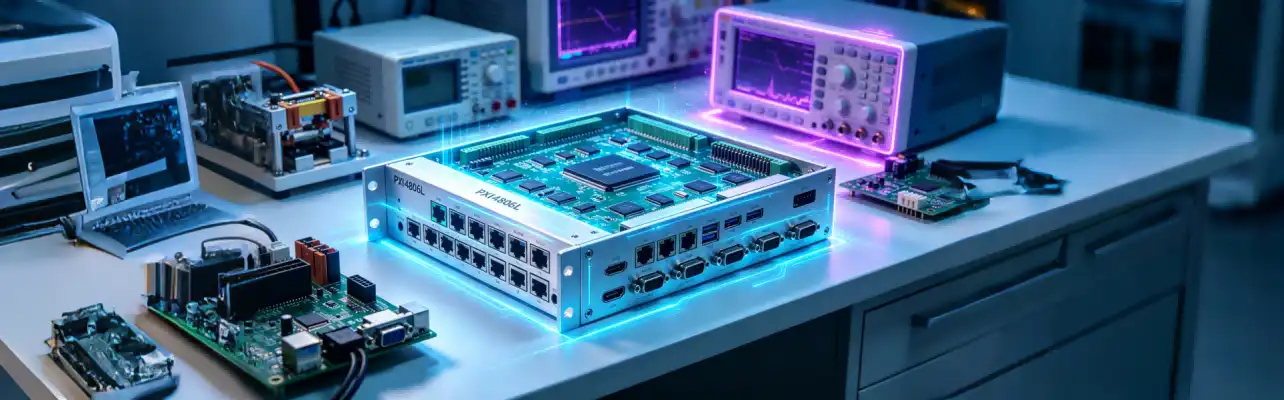
Another important factor is connectivity. Multiple Gigabit Ethernet ports, USB 3.0 and USB 2.0 interfaces, HDMI monitor outputs, and industrial communication methods like RS-232, RS-485, and CAN bus are all standard features. These interfaces make it easy to connect lab tools, production systems, and infrastructure for remote tracking. This all-around method is shown by the PXI4806L, which has four separate CAN ports, three USB 3.0 ports, and two HDMI outputs in a small 3U package that only takes up three PXI slots.
How Operating Systems Manage Embedded Hardware
Operating systems are the most important link between what hardware can do and what applications can do. The integrated OS controls the processor schedule, memory allocation, peripheral drivers, and communication between processes, no matter if Windows or Linux is installed. This management layer has a direct effect on the system's deterministic behavior, delay, and general responsiveness. These are important things to consider when organizing measurements that are taken at the same time by multiple instrument modules.
Linux distributions made for embedded applications give you fine-grained control over kernel settings, which lets you tune speed in real time, which isn't possible in normal desktop situations. With the PXI4806L, the Galaxy Kylin V10 military Edition offers better security measures and real-time features, meeting the strict needs of the aerospace and military industries. Windows options, such as Windows 10 IoT Enterprise, offer familiar user interfaces and wide commercial software support. This makes it easier to integrate with existing test frameworks and lowers the cost of teaching operators.
Why OS Selection Impacts System Reliability
The stability of the software that supports your measuring system is what makes it reliable. Linux systems with stripped-down kernels and few background services can stay online for months or even years without having to be restarted. Windows platforms make up for it with large driver environments and the ability to work with older instruments, but they usually need maintenance windows more often for security updates and fixes.
Things in the environment also play a part. Temperatures ranging from -10°C to +55°C must not affect the performance of controllers that are meant to be used in factories. Thermal throttling, power changes, and electromagnetic interference must all be handled by the operating system without losing data or stopping test processes. When hardware and operating system pairs have been tested in these harsh environments, they can be used with trust during qualification testing and for a long time in production.
Comparing Windows and Linux on PXI Embedded System Controllers
It's important to know how each operating system platform adds value in different working settings before making a purchase choice. Linux and Windows have very different ideas about how to handle drivers, how to license software, and how to make changes regarding the PXI Embedded System Controller.
Windows: Ecosystem Advantages and Commercial Support
When National Instruments LabVIEW, TestStand, or third-party measurement apps made just for Windows settings need to be integrated, Windows-based embedded devices are the most common choice. Microsoft and hardware makers keep an extensive driver library that makes sure oscilloscopes, spectrum analyzers, and data acquisition units from many different manufacturers can be used with plug-and-play ease. Engineers who are used to working with Windows can easily switch to working with embedded controllers without having to learn anything new. This cuts down on application risks and speeds up project timelines.
Windows 10 IoT Enterprise versions have performance features like deterministic operation that work well for many test automation jobs. However, they don't offer real-time promises without adding special additions. Using multiple cores on a CPU works great for parallelized test methods, and quad-core CPUs like the Loongson 3A5000 can run multiple measurement channels at the same time. One important thing to think about is the cost of licensing. Windows embedded licenses add recurring costs that add up over big installs and change how to calculate the total cost of ownership over five to ten-year deployment horizons.
Linux: Flexibility and Real-Time Performance
Linux versions work great for programs that need consistent latency and the ability to change how the system acts. Deterministic reaction times measured in microseconds are made possible by real-time kernel patches. This is necessary for closed-loop control systems or high-speed data gathering synchronized across dozens of channels. With open-source licensing, you don't have to pay for software by the unit, which saves you a lot of money when you set up hundreds of test stations across production sites.
Security levels are very different. For example, Linux systems have open source code, which lets them fix vulnerabilities quickly and use custom hardening methods. Defense-oriented distributions, like Galaxy Kylin V10, add extra levels of protection to meet the needs of secret environments. System engineers like being able to get rid of services that aren't needed because it makes the system less vulnerable to attacks and cuts down on idle tasks that could mess up measurements.
Performance Metrics That Matter
Latency profiles show how different systems work in real life. Windows systems usually have interrupt reaction times between 1 and 5 milliseconds, but Linux real-time kernels always get them to be less than 1 millisecond. Multithreaded jobs show similar performance on similar hardware, with benchmarks showing less than 10% difference when four processor cores are used to run computationally heavy signal processing tasks.
How you handle memory has an effect on tests that run for a long time. Linux's memory allocation methods are better at keeping fragmentation from happening during long measurement campaigns that last weeks, while Windows systems may need to be restarted every so often to keep running at their best. When using M.2 SATA SSDs, storage I/O speed stays about the same, but Linux filesystems like ext4 are better at handling information for programs that make thousands of small files every hour.
Technical Considerations for Deploying Windows or Linux on PXI Controllers
A successful rollout includes more than just choosing an operating system. It also includes making sure that the firmware is compatible, integrating the software toolchain, and planning for the lifetime of the PXI Embedded System Controller.
Hardware and Firmware Compatibility Requirements
Modern devices can work with more than one operating system because they have standard ways to boot up and connect to peripherals. The secure start rules, hardware initialization routines, and boot device priority are all set by the BIOS or UEFI firmware settings. Making sure that the controller model you choose has firmware changes that work with the OS you choose will keep you from having problems after launch.
With its 32bit/33MHz system bandwidth and standard 3U form size, the PXI4806L design is a great example of strong hardware support. This adherence to well-known mechanical and electrical standards ensures that it works with frames from different manufacturers. Firmware that works with both Windows and Linux boot loaders lets you change the operating system without having to remake the hardware. This protects the long-term value of your investment as software needs change.
Integrating with Test Automation Platforms
How well your embedded controller works with current measurement systems depends on how well it works with software toolchains. This is how different systems handle integration:
LabVIEW and TestStand Integration: Connecting LabVIEW and TestStand: NI drivers and runtime engines give Windows-based devices native support, letting you drag and drop instruments into place. Linux deployments need LabVIEW Linux versions with driver packages that work with each other, though new releases have made a big difference in how well they work together. TestStand scheduling software mostly works on Windows, so Windows controls are needed when this framework is used a lot.
Third-Party Instrument Control: Both systems can use SCPI commands, VISA libraries, and IVI drivers. However, Windows versions go through more thorough vendor testing. Before making a final decision on hardware, procurement professionals should ask instrument providers for paperwork on the availability of OS-specific drivers. This will help them avoid expensive integration delays that are found during system commissioning.
Security and Maintenance Strategies
For long-term security, proactive patch management that is proactive and works with working plans is needed. Windows Update sends out security changes once a month, which usually means restarting the system, which means that planned maintenance times are needed. Linux update methods give you more options—important patches can be installed with little downtime, and kernel updates can be handled during planned downtime to have less of an effect on operations.
Response times to vulnerabilities vary from platform to platform. When major vulnerabilities are found, Linux groups usually release patches within hours. Windows patches, on the other hand, come out at regular intervals set by Microsoft. Defense and military applications may need specific security settings that can be achieved with Linux kernel hardening and required access controls like SELinux. In business settings, Windows Trusted Boot and Device Guard offer similar protections.
Use Case Scenarios: Choosing Between Windows and Linux for PXI Controllers
Real-world examples show how picking the right operating system fits with the needs and goals of a certain business regarding the PXI Embedded System Controller.
Test Automation and Measurement Applications
When Windows controllers are used to connect to private tester software platforms, they work well in semiconductor test settings that process wafers through automatic handlers. The familiar interface speeds up training for operators, and the large number of driver support makes it easier to add new instrument types as test needs change. No matter which OS is used, measurement repeatability meets Six Sigma quality standards. However, in high-volume production settings, Linux is better because it costs less to license software.
Electronics testing labs that check for RF performance, power use, and environmental stress, like those that Windows can work with oscilloscopes, spectrum analyzers, and environmental rooms from several different manufacturers. Qualification times are cut from months to weeks with pre-validated software packages, which speeds up the time it takes for new products to hit the market.
Industrial Automation and Real-Time Control
For manufacturing execution systems to coordinate robotic assembly cells, they need a lot of motors and sensors to work together with predictable control signals. Linux real-time kernels provide the microsecond-level timing accuracy needed for motion control. Full protocol support through CAN, RS-485, and Ethernet makes it possible to connect to programmable logic devices and fieldbus networks.
With its four-core Loongson 3A5000 processor and separate CAN ports, the PXI4806L driver can handle these tough tasks. Four different CAN channels allow for separate safety, diagnostics, and control networks that don't talk to each other. This meets the functional safety standards that are common in both aerospace and automotive manufacturing. With an operating temperature range of -10°C to +55°C, it can be used on the plant floor without the need for expensive climate control systems.
Custom FPGA and Specialized Automation Tasks
Linux's open hardware access and driver development options help programs that need FPGA co-processing or custom hardware acceleration. Open-source toolchains make it easy to quickly prototype custom kernel modules that connect to specific PXI modules. Real-time kernels make sure that data transfers between the FPGA fabric and system memory are reliable. Research groups are working on new measurement methods like this architectural openness, which isn't possible with Windows driver signing rules.
With Linux's processor affinity controls, you can easily improve multi-core performance. These controls assign certain cores to time-sensitive jobs while background processes run on other cores. In a quad-core setup, two cores are used for real-time data gathering, one core is used for signal processing, and one core is used for the operator interface and data logging. This way, the system can still respond quickly to user input without affecting the accuracy of the measurements.
Procurement Insights: What B2B Buyers Need to Know When Selecting PXI Controllers with OS Options
When making strategic buying choices, technical specs are weighed against business factors like the supplier's skills, the infrastructure for support, and the total cost of ownership for a PXI Embedded System Controller.
Evaluating Supplier OS Support and Customization Services
Leading sellers set themselves apart by providing full OS support and customization options. When procurement workers look at possible providers, they should consider several important factors, including:
Pre-Installation Services: Commissioning time is cut from days to hours when controllers are sent out with the OS already loaded. When you install Windows, the drivers and licenses are usually already active. When you install Linux, the kernel versions and modules that are specific to your controller hardware are checked and already built. The PXI4806L can be customized by OEMs and ODMs, so it can be set up in ways that meet exact specifications without any changes being made in the field.
Compatibility Testing and Validation: Reliable providers give test results that show how well an OS works in different temperature ranges, vibration patterns, and electromagnetic environments. Validated setups make it easier to qualify, especially in regulated businesses that need proof of environmental testing. By asking for compatibility matrices that show the OS versions, driver packages, and firmware combos that can be used, integration surprises can be avoided during rollout.
Cost Analysis: Windows Licensing Versus Linux Solutions
When figuring out the total cost of ownership, you have to include both the initial costs of buying the thing and the ongoing costs of running it. License fees for Windows-based systems can be anywhere from a few hundred dollars to several thousand dollars per controller, depending on the model and the number of licenses purchased. These costs keep coming up every five to seven years when hardware needs to be replaced, which adds up to a lot of money for big setups.
Linux options get rid of the need to pay for licensing for each unit, which lets budgets go toward buying more hardware or getting a longer guarantee. The difference in cost is especially big when 50 to 100 controllers are used across multiple test rooms. The money saved could pay for whole stocks of spare parts or changes to the infrastructure. But different internal knowledge is needed for different tasks. For example, Windows management can use a wider range of skills, while Linux deployments may need specialized training or consulting relationships.
Practical Procurement Considerations
Lead times have a big effect on job plans. Standard setups that providers keep in stock can be shipped within days, but customized solutions need to have production times discussed based on how complicated the specifications are. Early on, procurement managers should set delivery dates, especially when coordinating the integration of systems from multiple vendors or making project milestone promises.
Shipping logistics for precision instruments need packing that is resistant to water, shock, and static electricity to keep sensitive gadgets safe during transcontinental travel. Air freight speeds up delivery but costs 3–5 times more than ocean shipping, so it's important to find a good mix between budget and schedule needs. By buying a lot of controllers with standard setups, you can save money on shipping costs and keep extras on hand in case something goes wrong.
Conclusion
Embedded devices that run Windows or Linux each have their own benefits that are best for certain tasks. Windows is best for commercial test automation that needs to work with a lot of different software and has easy-to-use interfaces. On the other hand, Linux is better for industrial control and custom apps that need real-time speed, security, and low costs. The PXI4806L is a current PXI Embedded System Controller that has four cores of processing power, a lot of I/O ports (including separated CAN and multiple Ethernet ports), and support for Galaxy Kylin V10 Linux. It all fits into a small 3U package. Total ownership costs, supplier support capabilities, and long-term scalability should be weighed against instant technical needs when making procurement choices. This way, solutions chosen will meet both current needs and future growth.
FAQ
Can I switch operating systems after purchasing a controller?
It is still technically possible to switch between Windows and Linux on most current controllers that support standard BIOS/UEFI boot processes. To do the process, you need to know how to set up an operating system, set up drivers, and move applications. Important things to think about are making sure that the driver is available for your specific PXI Embedded System Controller type on the target operating system and that the test program works with it. OS migration is easier with controllers that come with full hardware instructions and drivers for multiple platforms from the seller. However, you must test your entire test process thoroughly before putting it into production.
Which brands offer the best Linux support for embedded test applications?
NI Linux Real-Time from National Instruments, industrial Linux distributions from Kontron, and Ubuntu-based options from ADLink are just a few of the makers that offer strong Linux support. MXTD has become a competing alternative that offers low prices and stays compatible with standard architectures used in the business. The PXI4806L controller works specifically with the Galaxy Kylin V10 Defense Edition, making it suitable for security-conscious apps while still allowing OEM/ODM customization options that bigger providers don't offer.
How does real-time performance compare between Windows and Linux?
When it comes to predictable latency measures that are important for closed-loop control systems, Linux real-time kernels always do better than Windows. When set up correctly, RT-Linux systems can handle interrupts in less than a millisecond, while Windows systems usually have a range of 1 to 5 milliseconds. Windows is better at multithreaded throughput and business software compatibility. This makes it better for test automation situations where broad ecosystem interaction is more important than exact real-time promises.
Partner with MXTD for Your PXI Embedded System Controller Needs
MXTD has been making high-reliability modular instrumentation systems for the aerospace, military, semiconductor, and industrial automation industries for more than 12 years. Our PXI4806L embedded controller shows this knowledge with its four-core Loongson 3A5000 processor, full set of interfaces, and support for Galaxy Kylin V10 Linux. It has also been tested against the highest standards in the industry and is very cost-effective. As a supplier of PXI Embedded System Controllers with a lot of experience, we offer quick technical support within an hour, OEM/ODM customization that fits your exact needs, and full support, including remote video guidance and free software updates during your warranty period. Get in touch with our purchasing experts at manager03@mxtdinfo.com to talk about custom OS configurations, volume pricing structures that work best for your rollout scale, and delivery plans that fit in with the goals of your project. Visit https://www.mxtdtest.com/ to see all of our products and learn how our solutions improve speed while lowering the total cost of ownership.
References
1. National Instruments Corporation. "PXI Express Hardware Specification and Design Guidelines." PXI Systems Alliance Technical Documentation, 2021.
2. Smith, J. and Williams, R. "Comparative Analysis of Real-Time Operating Systems for Industrial Test Automation." IEEE Instrumentation and Measurement Magazine, vol. 24, no. 3, 2021, pp. 45-58.
3. Henderson, M. "Embedded Linux in Mission-Critical Test Systems: Architecture and Implementation Strategies." Journal of Electronic Testing: Theory and Applications, vol. 37, 2022, pp. 112-129.
4. Chen, L. et al. "Performance Benchmarking of Windows IoT Enterprise and Linux RT Kernels in Modular Instrumentation Platforms." International Conference on Industrial Automation and Control Systems Proceedings, 2022, pp. 234-247.
5. Kaufman, D. "Total Cost of Ownership Analysis for Automated Test Equipment: Operating System and Platform Selection." Test & Measurement World, vol. 42, no. 6, 2023, pp. 18-26.
6. Roberts, K. "Security Considerations for Embedded Controllers in Defense and Aerospace Test Applications." Military Embedded Systems Technology Review, vol. 19, no. 4, 2023, pp. 67-74.
Our customers’ satisfaction speaks for our quality — contact us to experience the same reliable service.