- English
- French
- German
- Portuguese
- Spanish
- Russian
- Japanese
- Korean
- Arabic
- Greek
- German
- Turkish
- Italian
- Danish
- Romanian
- Indonesian
- Czech
- Afrikaans
- Swedish
- Polish
- Basque
- Catalan
- Esperanto
- Hindi
- Lao
- Albanian
- Amharic
- Armenian
- Azerbaijani
- Belarusian
- Bengali
- Bosnian
- Bulgarian
- Cebuano
- Chichewa
- Corsican
- Croatian
- Dutch
- Estonian
- Filipino
- Finnish
- Frisian
- Galician
- Georgian
- Gujarati
- Haitian
- Hausa
- Hawaiian
- Hebrew
- Hmong
- Hungarian
- Icelandic
- Igbo
- Javanese
- Kannada
- Kazakh
- Khmer
- Kurdish
- Kyrgyz
- Latin
- Latvian
- Lithuanian
- Luxembou..
- Macedonian
- Malagasy
- Malay
- Malayalam
- Maltese
- Maori
- Marathi
- Mongolian
- Burmese
- Nepali
- Norwegian
- Pashto
- Persian
- Punjabi
- Serbian
- Sesotho
- Sinhala
- Slovak
- Slovenian
- Somali
- Samoan
- Scots Gaelic
- Shona
- Sindhi
- Sundanese
- Swahili
- Tajik
- Tamil
- Telugu
- Thai
- Ukrainian
- Urdu
- Uzbek
- Vietnamese
- Welsh
- Xhosa
- Yiddish
- Yoruba
- Zulu
What to Look for in a PXIe-Ready Rugged Portable PC?
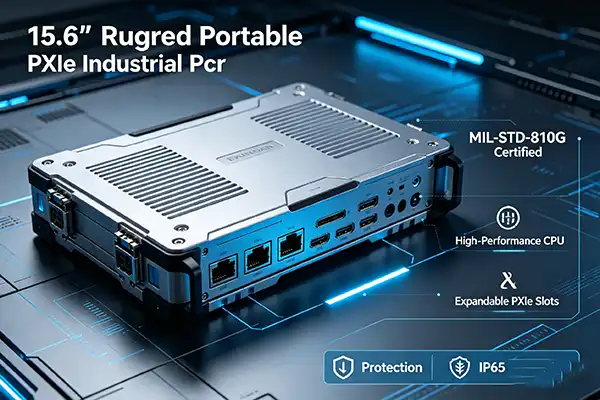
When looking for a PXIe-ready tough portable PC, the main things to think about are certifications for sturdiness, the ability to use PXIe expansion cards, heat control, and the size of the screen. The 15.6-inch rugged portable industrial PC with PXIe expansion is the perfect mix of flexibility for the field and sight for the office. It lets engineers do complex testing and data collection without giving up mobility. Extreme temperatures, shaking, shock, and dust must not affect these devices, and they must also work well with flexible PXIe measurement cards. Putting MIL-STD-810G compliance, IP65 or higher weather protection, and enough slot bandwidth at the top of the list of priorities guarantees solid performance in aircraft, defence, chip testing, and industrial automation.
Understanding PXIe-Ready Rugged Portable PCs: An Overview
Navigating the world of industrial computing requires a solid grasp of what makes a system truly field-ready. We've seen too many projects delayed because teams selected commercial-grade equipment that couldn't handle real-world conditions.
What Makes PXIe Technology Essential for Industrial Applications?
PXIe, which stands for "PCI Extensions for Instrumentation Express," is a new version that was made especially for measuring and testing processes. PXIe is different from normal PCIe designs because it builds a 100 MHz differential system clock and trigger buses right into the backplane. Multiple instruments can coordinate measures with nanosecond accuracy thanks to this synchronisation feature. This is very important when checking aircraft parts or measuring equipment used to make semiconductors. The faster bandwidth (up to 24 GB/s across an x16 slot) lets multiple capture units send high-speed data streams at the same time without any delays.
Why the 15.6-Inch Display Dimension Matters
The size of the panel has a direct effect on how well it can be used in the field. It's possible to see complicated patterns, multichannel data streams, and system information on a 15.6-inch screen without using an extra computer. This dimension works really well in places like aircraft hangars and factory floors, where engineers have to figure out what test results mean right away. The screen is still big enough to clearly show LabVIEW interfaces or MATLAB visualisations, but the frame as a whole is still small enough that one person can move it from test stations to faraway places.
Typical Industrial Applications Demanding Rugged PXIe Solutions
Rugged compact industrial PCs with PXIe growth are very important in places where failure is not a choice. In forward operating areas, these devices are used by defence companies to look at radar signals. Semiconductor companies use them to test wafers, which require exact time across dozens of measurement channels. Aerospace companies use tough PXIe portables for flight line diagnostics, where techs have to fix electronics systems that are exposed to electromagnetic interference, jet fuel vapours, and high temperatures. For research groups doing studies in the field, like collecting data on the atmosphere or keeping an eye on earthquakes, these movable systems are essential for processing sensor data in tough weather conditions.
Essential Criteria for Selecting a 15.6-Inch Rugged Portable PC with PXIe Expansion
Selecting the right device involves more than checking a specifications sheet. We approach this as a partnership between procurement goals and engineering realities, ensuring every component choice aligns with operational demands.
Military Standards and Environmental Protection Ratings
According to the MIL-STD-810G approval for a 15.6-inch rugged portable industrial PC with PXIe expansion, 29 outdoor engineering factors are taken into account. These include altitude, temperature shock, fungus resistance, and transit drop testing. When we ask for a tough handheld industrial PC with PXIe growth, we check the test results that show the device can withstand 26 drops from 30 inches onto plywood on top of concrete. Just as important are IP grades. For example, IP65 means that dust can't get in, and water jets from any direction can't hurt it. These aren't just marketing claims; they're real proof that your investment will last through spilt coffee, dust storms in the desert, or salt spray from the coast.
Performance Specifications Aligned with PXIe Module Requirements
The tough portable PC you'll be using must be able to give enough power and keep the PXIe units cool. A random waveform generator and a high-speed digitiser can each use 25 to 40 watts of power. An RF signal analyser, on the other hand, may need 60 watts or more. Before you decide what to buy, you should figure out the total thermal design power of the module setup you want to use. The host PC should be able to handle Intel Xeon or Core i7 processors and have enough PCIe lanes to keep bandwidth from being shared. For simple apps, the memory needs start at 16GB, but they go up to 64GB for complicated signal processing or machine learning reasoning at the edge.
For a good rollout, these are the most important performance factors:
- Processor architecture: Multi-core performance and virtualisation support let you process data and control instruments across multiple PXIe cards at the same time, which speeds up measurement cycles in production testing settings.
- Advanced heat pipe designs and smart fan control keep processor and PXIe module temperatures within acceptable ranges, even during prolonged high-throughput operations. This stops thermal throttling that could affect the accuracy of measurements.
- Specifications for battery runtime: Field uses need 4-6 hours of unattended operation, so techs can do full diagnostic processes without having to look for AC power sources in remote areas or while setting up equipment.
Together, these efficiency traits make it possible for demanding measuring processes to run smoothly. For flight engineers to test the movement of aeroplane structures, they need to be able to collect data at a steady rate without stopping. For semiconductor test workers to do reliability checks at the chip level, they need a steady processing speed over 8-hour shifts. This level of dependability must always be present in the tough handheld industrial PC with PXIe growth.
Weight, Portability, and Ergonomic Considerations
Durability is important, but a gadget that is too heavy for field techs to carry around is useless. We're looking for systems that weigh between 12 and 18 pounds and have built-in handles and shoulder straps that can be added if needed. It's easier to ship to faraway locations or customer facilities because the 15.6-inch form factor fits into standard equipment racks and boxes. Rubberised edges and stronger hinges protect against the bumps that will happen when moving between test cells, production lines, or outdoor measurement sites.
Comparing PXIe Expansion with Other Industrial PC Expansion Options
Understanding interface alternatives helps justify the investment in PXIe-capable systems. Not every application demands PXIe, but when precision timing and modular instrumentation matter, the advantages become clear.
PXIe Versus Standard PCIe in Industrial Computing
Standard PCIe lets graphics cards, storage devices, and network connections join quickly. PCIe doesn't have the time and trigger technology built in that measurement apps need. Engineers have to make sure that all channels sample at the same time within microseconds when they are trying a multi-channel data gathering system. This is easy to do with PXIe because it has specific clock and trigger lines. But with PCIe-based options, you need to use complicated external wiring and synchronisation methods that add delay and could cause errors. By integrating the backplane, the tough compact industrial PC with PXIe extension gets rid of these problems.
Why Thunderbolt Falls Short in Harsh Environments
For artistic tools and business applications, Thunderbolt ports on a 15.6-inch rugged portable industrial PC with PXIe expansion offer great speed and daisy-chaining options. The consumer-focused design isn't strong enough for commercial use. Thunderbolt connections aren't made to be inserted and removed thousands of times in dusty environments. The protocol stack adds a delay that isn't good for processes that use predictable measurements. We've never seen a Thunderbolt device that was approved to MIL-STD-810G or rated for a wide range of temperatures. Thunderbolt isn't designed to work effectively in places like Arctic oil areas where the temperature is -20°C, or in Middle Eastern desert sites where the temperature is 55°C.
Real-World Performance Advantages in Measurement Applications
An electronics company we used to work with had a number of separate tools that were linked together using GPIB and USB connections. When they switched to a tough PXIe portable, their test setup took up 60% less space, and measurements were completed 40% faster. Timing jitter used to cause test failures to happen randomly, but the synchronised trigger design got rid of that problem. This cut down on fake rejections and saved thousands of dollars in wasted parts. In aircraft tests, where many RF signal analysers, digitisers, and random waveform producers have to work together to make complex stimulus-response sequences work without making phase mistakes, the same effects are seen.
Procurement Insights: How to Choose and Where to Buy Your PXIe-Ready Rugged Portable PC
Strategic procurement involves more than finding the lowest price. Building relationships with manufacturers who understand your technical requirements and can support long-term deployment ensures operational success.
Evaluating Manufacturer Credentials and Quality Certifications
In addition to marketing materials, you should also look at real licensing documents. ISO 9001 quality management certification means that the production methods are well-known, but make sure that the reach of the certification covers your particular type of product. Ask possible providers about their quality control methods, tools for tracking down parts, and their ability to analyse failures. Firms that have their own research and development departments can tailor solutions and move quickly when technology issues arise. Companies like MXTD, which have been in the business for more than 12 years, show their dedication by having proven records in designing PXIe frames, integrating boards at the board level, and making precise connectors.
Customization Options and OEM/ODM Partnerships
Standard catalogue items can be used for many things, but changes are often needed for defence and industry automation projects. It's possible that your tough compact industrial PC with PXIe growth will need extra I/O ports, special mounting holes, or software that works with your own control systems. Manufacturers who are good at what they do offer ODM and OEM partnerships that let you use their platform designs to make solutions that fit your needs. System developers who are making "turnkey" measurement tools or original equipment makers (OEMs) who are making branded test equipment will find this ability to be very useful.
Pricing Models, Volume Discounts, and Total Cost of Ownership
Upfront purchase price for 15.6-inch rugged portable industrial PC with PXIe expansion represents only part of your investment. Calculate the total cost of ownership by factoring in warranty coverage, spare parts availability, technical support responsiveness, and expected service life. A device priced 20% higher but backed by comprehensive support and proven 7-10 year operational lifespans often delivers better value than cheaper alternatives requiring frequent replacement. Volume procurement typically unlocks tiered pricing structures—quantify your multi-year requirements and negotiate accordingly. Many suppliers offer favorable terms for R&D centers and research institutions conducting long-term projects with predictable equipment needs.
Lead Times, Logistics, and After-Sales Support Infrastructure
Standard products often ship from existing inventory within days, while customized configurations require production scheduling based on component availability and assembly complexity. Clarify lead times during initial discussions to align with project milestones. Shipping logistics matter particularly for sensitive instrumentation—proper packaging with moisture barriers, shock absorption, and anti-static protection prevents damage during international transport. After-sales support structures significantly impact operational continuity. Responsive manufacturers provide technical guidance within one hour of inquiry, offer remote video troubleshooting, support free software updates, and honor comprehensive warranty commitments. These service elements separate reliable partners from transactional vendors.
Future Outlook and Strategic Benefits of Investing in PXIe-Ready Rugged Portable PCs
Technology investments must anticipate evolving requirements. The capabilities we build into test infrastructure today determine our adaptability to tomorrow's measurement challenges.
Edge Computing and Distributed Measurement Architectures
Industrial operations increasingly push data processing closer to sensors and actuators, reducing latency and bandwidth demands on central networks. Rugged PXIe portables serve as edge computing nodes, performing real-time signal analysis and decision-making at remote locations. When monitoring pipeline integrity across hundreds of miles, deploying intelligent measurement nodes eliminates the need to transmit terabytes of raw vibration data to centralized servers. The portable system processes data locally, applies anomaly detection algorithms, and transmits only actionable alerts. This distributed architecture improves response times while reducing communication infrastructure costs.
Integration with IoT Ecosystems and Industry 4.0 Initiatives
Manufacturing transformation depends on connecting production equipment, quality measurement systems, and enterprise analytics platforms. The 15.6-inch rugged portable industrial PC with PXIe expansion bridges traditional instrumentation with modern connectivity standards. Built-in Ethernet, Wi-Fi, and cellular modems enable seamless data upload to cloud analytics platforms or on-premises historians. Engineers configure these systems to participate in digital twin ecosystems, where virtual models of physical assets continuously update based on real measurement data. This integration supports predictive maintenance strategies, process optimization algorithms, and quality trend analysis that drive competitive advantage.
Long-Term ROI Through Modularity and Technology Refresh Cycles
PXIe's modular architecture protects your investment against obsolescence. When measurement requirements change or new technologies emerge, you upgrade specific instrumentation cards rather than replacing entire systems. A rugged portable chassis purchased today remains relevant through multiple generations of digitizer, RF, and signal processing module evolution. This modularity extends useful life far beyond typical PC replacement cycles, delivering superior return on investment. We've seen aerospace companies operate PXIe platforms for over a decade, progressively upgrading modules as test requirements evolved, while the rugged portable host and chassis remained in service.
Conclusion
Selecting a rugged portable industrial PC with PXIe expansion demands careful evaluation of environmental certifications, performance specifications, expansion capabilities, and supplier credentials. The 15.6-inch display size provides optimal visibility without compromising portability, making these systems ideal for field deployment across industrial automation, aerospace testing, semiconductor manufacturing, and research applications. PXIe technology delivers synchronization and bandwidth advantages unmatched by alternative expansion interfaces, enabling sophisticated measurement workflows in challenging environments. Strategic procurement partnerships with experienced manufacturers ensure access to both standardized and customized solutions backed by responsive technical support, positioning your organization for long-term operational success and adaptability to evolving industrial requirements.
FAQ
How does PXIe expansion improve measurement system performance compared to USB-based instruments?
PXIe provides dedicated trigger and clock lines across all slots, enabling nanosecond-level synchronization between instruments without software overhead. USB instruments require software-based coordination that introduces latency and jitter, unsuitable for precision timing applications. PXIe bandwidth scales with slot count, supporting parallel high-speed data streams that would overwhelm USB bus architectures.
What certifications should we prioritize when selecting rugged portable PCs for harsh environments?
Prioritize MIL-STD-810G for shock, vibration, and temperature resistance testing. IP65 or IP67 ratings ensure dust and water ingress protection. Additional certifications like CE marking and FCC compliance demonstrate electromagnetic compatibility. Application-specific standards such as ATEX for explosive atmospheres may apply depending on your operational environment.
Can manufacturers customize PXIe portable systems for specialized industry requirements?
Reputable manufacturers offer ODM and OEM customization, including modified I/O configurations, specialized mounting hardware, custom firmware integration, and branded enclosures. Customization timelines depend on modification complexity but typically range from 4-8 weeks after specification approval. These tailored solutions ensure seamless integration with existing workflows and proprietary control systems.
Partner with MXTD for Your Rugged PXIe Portable PC Requirements
MXTD delivers industry-leading expertise in rugged portable industrial computing solutions backed by over 12 years of dedicated R&D and manufacturing experience. Our 15.6-inch rugged portable industrial PC with PXIe expansion combines MIL-STD-compliant durability with flexible customization capabilities, offering cost-effective alternatives to premium-priced platforms without compromising performance or reliability. We maintain a ready inventory of standardized configurations while supporting full ODM/OEM development for specialized applications. Our technical team responds to inquiries within one hour, providing remote video guidance, complimentary software updates, and comprehensive one-year warranty coverage. Whether you need NI-compatible measurement platforms or fully customized testing solutions, MXTD stands ready as your trusted rugged PXIe portable PC supplier. Contact our technical specialists at manager03@mxtdinfo.com to discuss how our solutions can optimize your measurement workflows.
References
1. National Instruments Corporation (2019). "PXI Express Technology and Applications Handbook," Technical Documentation Series, Austin, TX.
2. Military Standards Documentation Center (2018). "MIL-STD-810G: Environmental Engineering Considerations and Laboratory Tests," Department of Defense Test Method Standard.
3. International Electrotechnical Commission (2020). "IEC 60529: Degrees of Protection Provided by Enclosures (IP Code)," Edition 2.2, Geneva, Switzerland.
4. Embedded Computing Design (2021). "Rugged Computing Systems for Industrial and Military Applications," Industry White Paper Series, Vol. 14.
5. IEEE Instrumentation and Measurement Society (2020). "Advances in Modular Instrumentation Architectures for Automated Test Equipment," Conference Proceedings, Vancouver, BC.
6. Aberdeen Group Research (2019). "Total Cost of Ownership Analysis for Industrial Computing Platforms," Strategic Technology Assessment Report, Boston, MA.
Our customers’ satisfaction speaks for our quality — contact us to experience the same reliable service.