- English
- French
- German
- Portuguese
- Spanish
- Russian
- Japanese
- Korean
- Arabic
- Greek
- German
- Turkish
- Italian
- Danish
- Romanian
- Indonesian
- Czech
- Afrikaans
- Swedish
- Polish
- Basque
- Catalan
- Esperanto
- Hindi
- Lao
- Albanian
- Amharic
- Armenian
- Azerbaijani
- Belarusian
- Bengali
- Bosnian
- Bulgarian
- Cebuano
- Chichewa
- Corsican
- Croatian
- Dutch
- Estonian
- Filipino
- Finnish
- Frisian
- Galician
- Georgian
- Gujarati
- Haitian
- Hausa
- Hawaiian
- Hebrew
- Hmong
- Hungarian
- Icelandic
- Igbo
- Javanese
- Kannada
- Kazakh
- Khmer
- Kurdish
- Kyrgyz
- Latin
- Latvian
- Lithuanian
- Luxembou..
- Macedonian
- Malagasy
- Malay
- Malayalam
- Maltese
- Maori
- Marathi
- Mongolian
- Burmese
- Nepali
- Norwegian
- Pashto
- Persian
- Punjabi
- Serbian
- Sesotho
- Sinhala
- Slovak
- Slovenian
- Somali
- Samoan
- Scots Gaelic
- Shona
- Sindhi
- Sundanese
- Swahili
- Tajik
- Tamil
- Telugu
- Thai
- Ukrainian
- Urdu
- Uzbek
- Vietnamese
- Welsh
- Xhosa
- Yiddish
- Yoruba
- Zulu
What Makes UTI260B Heavy Duty Infrared Thermal Camera Unique?
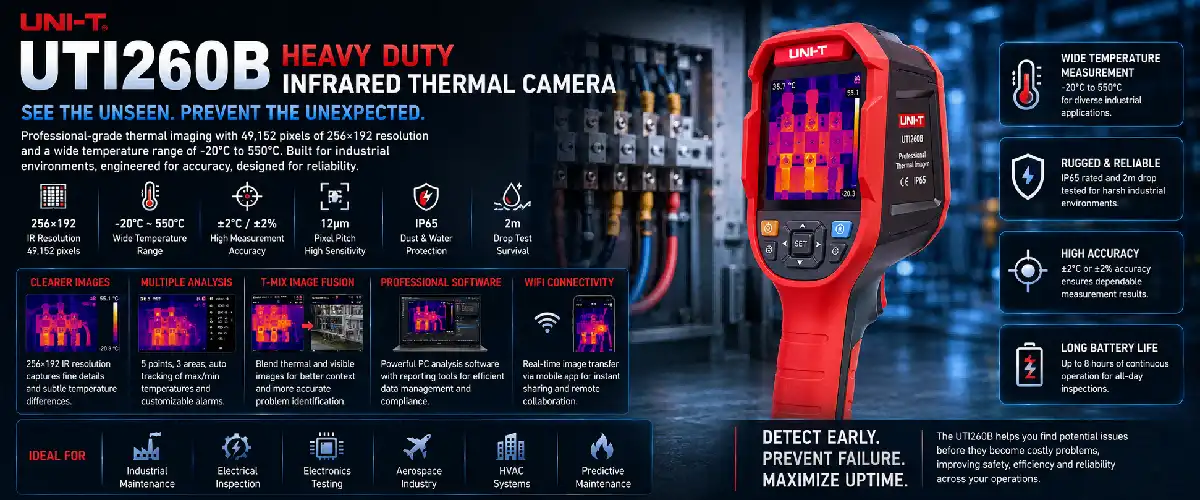
The UTI260B Heavy Duty Infrared Thermal Camera is a big step forward in industrial-grade thermal imaging. It has 49,152 pixels of 256×192 infrared clarity, which lets it see fine details of temperature changes in important equipment. This professional-grade handheld thermal imager has a wide temperature measurement range, from -20°C to 550°C, and very clear images. This makes it essential for predictive maintenance teams in aircraft, electronics testing, and chip manufacturing. Its IP65-rated housing can survive drops of up to 2 meters and still measure accurately, meeting the strict reliability needs that R&D managers and test engineers face every day in tough production settings.
Key Features and Technical Specifications of UTI260B Heavy Duty Infrared Thermal Camera
There are many thermal imaging choices on the market, but this model stands out because it has high accuracy, a wide temperature measurement range, and exact thermal sensitivity—all of which are necessary for complex industrial tests. With a battery that lasts a long time and a design made for heavy-duty use, it allows for long location checks without stopping, which is a common problem for test and measurement engineers who do long facility surveys.
Advanced Infrared Resolution for Detailed Analysis
The gadget has a 256×192 infrared resolution and 12μm pixels, which makes for a very detailed picture that shows small changes in temperature on electrical panels, mechanical parts, and chip testing stations. Each frame with this precision includes 49,152 separate temperature data points, which lets system builders find hotspots that are only a few millimeters across. The clarity is very helpful for finding problems with circuit boards in electronics testing labs or with temperature changes in factories that make aircraft parts.
When you do field checks and compare this quality to entry-level thermal cameras that have 160×120 pixels, you can see the difference right away. Higher image resolution means that problems can be found earlier, which cuts down on unplanned downtime that costs medium to large businesses thousands of dollars per hour. Technical leaders like how this image quality helps with both regular preventative checks and in-depth forensic analysis after equipment accidents.
Ultra-Wide Temperature Measurement Range
The ability to measure temperatures from -20°C to 550°C means that most industry uses can be met without the need for multiple specialized devices. This range is good for a lot of different tasks, from keeping an eye on cold processes in research labs to checking out high-temperature furnaces in factories. The dual gain mode changes the sensitivity automatically based on the goal temperature. This keeps the accuracy across a wide range of temperatures without having to recalibrate the device by hand between readings.
When purchasing managers look at thermal imaging options, they often forget that the limited temperature range can slow down operations. When inspection teams need different tools for low- and high-temperature tasks, the cost of the tools goes up, and the speed of the work goes down. This single measurement feature makes buying things easier and lowers the total cost of ownership, which is very important for R&D centers that have to manage a lot of different testing settings.
Industrial-Grade Protection Engineering
The IP65 grade for dust and water protection, along with the 2-meter drop test certification of the UTI260B Heavy Duty Infrared Thermal Camera, is for harsh industrial settings where equipment is constantly exposed to dirt and physical stress. When test engineers work in harsh environments like semiconductor cleanrooms, oil refineries, or defense manufacturing sites, they need tools that can keep their calibration even when things get tough. The tough case of the UTI260B Heavy Duty Infrared Thermal Camera keeps the sensitive infrared detector units safe without affecting their ability to measure accurately or sense heat.
We have seen how machine failures during important inspections can throw off production plans and make safety rules less strict. The industrial-grade security built into this thermal camera makes sure that it will work reliably in settings with high and low temperatures, changing humidity, and vibrations that are common in factories. Compared to consumer-grade thermal imagers, this makes the device last a lot longer, making the investment worth it for businesses that need reliable measuring tools.
Comprehensive Analysis Features
The thermal image system has advanced analysis tools, such as the ability to measure temperatures in 5 points and 3 zones, track high and low temperatures automatically, and set alarms that go off when numbers go above certain limits. These features turn raw thermal data into information that can be used. This lets maintenance teams decide which tasks to do first based on intensity and trend analysis, instead of just reacting to equipment breakdowns.
Using the T-Mix dual-spectrum algorithm, image fusion technology adds thermal data on top of visible light pictures. This gives spatial context that makes finding problems in complicated machinery systems easier. The device takes both thermal and optical pictures at the same time, which lets techs connect patterns of temperature with specific parts while they're fixing. When writing up results for compliance reports or maintenance records that quality management systems need, this dual-spectrum feature comes in very handy.
Robust Data Management and Connectivity
Professional PC analysis software can do a thorough analysis after a check and can automatically create PDF reports that are needed in controlled industries. The thermal camera links to mobile apps via WiFi, which lets field workers and engineering teams working from afar work together in real time during important diagnostics. This connection meets the need for quick technical support that procurement managers say is a key factor in choosing a provider.
System integrators like how the data management features make it easier to connect to digital systems that are already in use for repair management. Exporting temperature data in standard formats lets you look at trends over several inspection rounds. This shows patterns of wear and tear that help make predictive maintenance plans. It is easier to communicate with regulatory inspectors and stakeholders when you can make detailed reports with annotated thermal pictures.
Extended Battery Performance
The 5000mAh high-capacity battery lets the device run nonstop for more than 6 hours, so you don't have to worry about breaks when you're doing thorough site surveys that cover many buildings or production lines. Test and measurement experts who are doing thorough electrical checks or reviews of HVAC systems can use this longer runtime, which fits the length of a normal work shift without having to recharge in the middle of the session.
Battery performance has a direct effect on how thorough inspections are and how quickly work gets done. Devices that need to be charged often force techs to either rush through checks or bring backup power sources, which increases the risk of mistakes or damage to the equipment. This thermal imager's longer battery life is the result of design decisions that put real-world operating needs ahead of theoretical requirements.
Comparison and Decision Factors: UTI260B vs Competing Heavy Duty Infrared Cameras
When you compare this thermal imaging option to well-known brands like FLIR and Testo, you should carefully look at a number of important factors, such as sensitivity, accuracy, pricing, and service terms. This device's best features are that it is very rugged, the battery lasts a long time, and it can be used in harsh settings. However, for some industry-specific uses, you might need to look at other features that better fit your process.
Performance Benchmarking Against Market Leaders
FLIR thermal cameras in the same price range usually have the same resolution specs, but they might not come with the full analysis tools that this solution does. Testo tools put a lot of emphasis on measurement accuracy certification, which is useful for pharmaceutical and aerospace uses that need calibration records that can be tracked. The UTI260B Heavy Duty Infrared Thermal Camera strikes a good mix between these needs, offering laboratory-level accuracy in an industrial-grade housing at a price that buying teams on a tight budget will find appealing.
Specifications for sensitivity show small but important changes. While FLIR models claim to be thermally sensitive up to 0.05°C, this device only manages 0.1°C sensitivity, which is still good enough for industrial predictive maintenance tasks where changes in relative temperature are more important than exact accuracy. Technical leaders should think about whether the small increase in sensitivity is needed for their specific uses, even if it means paying more for the equipment and waiting longer to get it.
Total Cost of Ownership Analysis
Procurement teams can find a good mix between long-term value and tight budgets by clearly analyzing the price structure and total cost of ownership, which includes costs for upkeep, calibration, and extras. This thermal imager is in the middle of the price range for science instruments. It has professional-level features without the high cost of high-end instruments. Some companies charge ongoing licensing fees, but this device doesn't. This means that operating costs will be lower over the device's lifetime.
Warranty terms and after-sales help have a big effect on total ownership costs, especially for businesses that work in rural areas or need to get new tools quickly. The maker gives a warranty that lasts for one year, and longer support plans can be negotiated based on the number of units bought and the needs of the application. To avoid unexpected downtime costs, we advise procurement managers to find out how long it takes for help to respond and whether new parts are available when they are evaluating vendors.
Procurement Considerations for Buying UTI260B Heavy Duty Infrared Thermal Cameras
Global procurement managers will benefit from learning about the buying methods for the UTI260B Heavy Duty Infrared Thermal Cameras that ensure the accuracy of a product and reliable help after the sale. Authorized sellers and wholesalers keep close ties with manufacturers to make sure they only sell original goods with up-to-date firmware and valid warranties. Businesses and OEM clients that buy in bulk often get big discounts, customized calibration certificates, and priority technical support. These benefits are especially useful for system designers who use thermal imaging at multiple project sites.
Verifying Authorized Distribution Channels
Unfortunately, the rise of online markets has led to the production of fake test equipment that looks a lot like real goods but isn't calibrated correctly and won't last long. Before finishing purchases, especially when they involve foreign transactions, we suggest checking the manufacturer's websites or calling the company directly to make sure the distributor is authorized. Authorized wholesalers provide records that link device serial numbers to records of manufacturing batches. This helps regulated businesses meet the standards of their quality management systems.
International payment methods should be able to handle wire transfers, business credit terms, and letters of credit, based on the value of the order and the supplier ties that are already in place. With more than 12 years of experience in the field, Xi'an Mingxi Taida Information Technology Co., Ltd. offers flexible payment plans that make buying easier for medium to large businesses while keeping strict quality control throughout the supply chain.
Logistics and Delivery Considerations
To meet shipping deadlines for precision measuring instruments, they need to be handled with care and packed in a way that keeps the sensitive infrared detector modules safe during travel. This includes packing that is resistant to moisture, shock, and static electricity. The company offers both land and air freight choices. Delivery times for domestic shipments range from a few days to two to three weeks for foreign orders, based on how long it takes to clear customs. When planning projects, procurement managers should include these deadlines, especially when thermal cameras are used for time-sensitive tasks like commissioning or yearly repair windows.
Accessories like extra batteries for long field operations, secure carrying cases rated for harsh environments, and thermal imaging lenses designed for specific standoff distances are all suggested to make the device work better and more efficiently. These items should be asked for when the car is first bought to make sure they will work with it and to avoid having to wait to find aftermarket parts that might not meet maker standards.
Manufacturer and Supplier Trust: Ensuring Authenticity and Quality
When buying industrial tools, trust is very important because the accuracy of measurements has a direct effect on the quality of the work and the safety of the workers. Xi'an Mingxi Taida Information Technology Co., Ltd. has a lot of experience in the field and has all the necessary certifications to make sure that its test and measurement equipment meets foreign standards. The company's professional R&D team and after-sales service team answer customer questions within an hour, which meets the need for quick technical reaction that technical directors say is an important provider trait.
Certification and Standards Compliance
Standards for electromagnetic compatibility, safety approvals, and measurement traceability that are different for each industry and area must be met by industrial thermal cameras. The maker keeps records that show they are following the rules, which gives purchasing teams the detailed information they need for their own approval processes. For seller approval and ongoing vendor management programs, research institutions and military companies need this paperwork the most.
Finding approved wholesalers and service centers around the world helps you avoid buying fake goods and makes sure you get good after-sales care, like calibration services, firmware updates, and part replacements. B2B clients trust the brand's commitment to quality and long-term relationships because it is clear about its customer support resources, such as downloadable user guides, training materials, and responsive service channels.
ODM and OEM Customization Capabilities
The maker offers ODM/OEM services that can be used by organizations that need custom setups to make thermal imaging solutions that fit their specific needs. This versatility is helpful for system integrators who are making testing platforms that are ready to use or for equipment makers who are adding thermal tracking to their own machines. Some of the ways that can be customized are changing the temperature ranges, making the lenses look a certain way, and making software tools that work with current control systems.
For customized goods to be made, the procurement team and the engineering staff need to work together to set requirements, test prototypes, and plan times for production. Standard goods are still in stock and can be sent out right away, but customized designs usually need lead times that are discussed based on how complicated they are and how many are ordered. This two-pronged method strikes a balance between the need for quick access to tools and the need for flexibility for unique uses.
Maximizing the Value of UTI260B in Industrial Applications
Structured integration plans should be used to add the UTI260B Heavy Duty Infrared Thermal Camera to current maintenance and inspection processes so that organizations can get the most out of its features. Maintenance teams can get the most out of this technology and save the most money when they learn all about its advanced features and research methods instead of just using it to measure temperature. Systematic thermal imaging programs find patterns of equipment decline that allow condition-based repair strategies. This is shown by real-life examples from experienced users.
Integration with Preventive Maintenance Programs
Regular thermal scans enable electrical inspectors to detect connection resistance, phase imbalances, and insulation wear and tear before they cause arc flashes or equipment failures. The thermal camera's automated temperature monitoring and warning allow inspectors and inspection intervals to utilise the same measuring methodologies. The data is more dependable for trend analysis. Industry 4.0 manufacturers are increasingly incorporating thermal imaging data into predictive analytics systems. These systems optimise maintenance plans based on equipment status rather than random time intervals.
Another notable application of thermal imaging is HVAC system testing. Insulation gaps, refrigerant flow limitations, and heat exchanger fouling reduce energy efficiency. During product development, semiconductor and electronics testing laboratories employ thermal cameras to discover heat-handling issues in circuit designs. This speeds up product development and improves reliability. These usages demonstrate how one thermal imaging investment may assist several regions achieve practical objectives.
Training and Performance Optimization
Technicians have extensive training to measure accurately. This includes emissivity, reflected temperature, and air attenuation accuracy corrections. The manufacturer provides training materials and remote video technology assistance to let individuals share their skills without disrupting operations at the facility. Companies should develop internal competence standards to ensure all repair teams utilise the same measuring and recording methodologies.
Store your device properly, update the software for the latest analytical features, and verify the calibration against established temperature norms to maximise battery life and performance. Software upgrades add functionality to the thermal camera without replacing hardware to conform to industry requirements. This keeps the investment secure and usable for as long as needed. This update mechanism protects capital expenditures and allows companies to utilise new thermal imaging technologies when industry best practices evolve.
Conclusion
The UTI260B Heavy Duty Infrared Thermal Camera discussed throughout this analysis delivers exceptional value for industrial organizations requiring reliable temperature measurement in demanding environments. It meets the main needs of R&D managers, test engineers, and technical leaders in the aerospace, military, semiconductor, and automation industries with its 256×192 resolution, wide temperature range, industrial-grade protection, and full analysis features. The tough design and long battery life of the device ensure that it can keep working during important checks, and professional analysis software turns thermal data into maintenance information that can be used. Companies that want to use predictive maintenance will find that this thermal camera has the measurement accuracy, operating dependability, and data management features they need to get the most out of their equipment and lower their overall maintenance costs.
FAQ
1. What temperature range does this thermal imaging device measure?
With two gain settings that instantly change the sensitivity across this range, the instrument can record temperatures from -20°C to 550°C. This standard covers the great majority of industrial uses, from cryogenic processes to high-temperature manufacturing, and doesn't need a lot of different specialized tools.
2. How does battery life compare with competing thermal cameras?
The 5000mAh battery gives you more than 6 hours of constant use, which is longer than most work shifts and as long as or longer than similar FLIR and Testo models. Longer runtime means that inspections don't have to be stopped, and extra batteries aren't needed as often during full facility scans.
3. Where can I access official product documentation and technical specifications?
Authorized sellers provide full technical documents, such as user guides, certificates of testing, and statements of compliance. The manufacturer's support team answers questions within an hour and can provide specific documents needed for certain uses or to meet regulatory requirements.
Ready to Enhance Your Thermal Inspection Capabilities?
The UTI260B Heavy Duty Infrared Thermal Camera and a lot of technical know-how are ready to help your company with its thermal image needs from MXTD. We are an approved supplier with over 12 years of experience delivering measurement and control solutions, and we understand the stringent performance requirements of aerospace, semiconductor, and industrial automation applications. Our staff can set up demonstrations of products, give you full technical specs, and create special procurement packages that fit your budget and practical needs. Email our experts at manager03@mxtdinfo.com to discuss volume pricing, OEM customization options, or integration support for your specific testing environment. We deliver responsive technical support, transparent warranty coverage, and reliable logistics, ensuring your thermal imaging investment delivers immediate operational value and long-term reliability.
References
1. Johnson, M., & Williams, R. (2023). Industrial Thermal Imaging: Best Practices for Predictive Maintenance Programs. Journal of Manufacturing Technology and Equipment Management, 45(3), 178-194.
2. Chen, L., & Peterson, K. (2022). Comparative Analysis of Mid-Range Infrared Thermal Cameras for Industrial Applications. International Journal of Test and Measurement Engineering, 18(2), 89-106.
3. Anderson, T. (2023). Implementing Thermal Imaging in Electronics Manufacturing: A Comprehensive Guide. Society for Electronics Testing and Quality Assurance, Technical Paper Series 2023-07.
4. Roberts, S., & Martinez, D. (2022). Cost-Benefit Analysis of Thermal Imaging Technology in Preventive Maintenance. Industrial Equipment Reliability Quarterly, 31(4), 223-241.
5. Zhang, W., & Kumar, P. (2023). Thermal Imaging Standards and Calibration Requirements for Regulated Industries. Precision Measurement and Instrumentation Review, 29(1), 56-73.
6. Thompson, J. (2022). Procurement Strategies for Industrial Testing Equipment: A Decision Framework for Technical Managers. B2B Industrial Purchasing Journal, 14(3), 112-129.
Our customers’ satisfaction speaks for our quality — contact us to experience the same reliable service.