- English
- French
- German
- Portuguese
- Spanish
- Russian
- Japanese
- Korean
- Arabic
- Greek
- German
- Turkish
- Italian
- Danish
- Romanian
- Indonesian
- Czech
- Afrikaans
- Swedish
- Polish
- Basque
- Catalan
- Esperanto
- Hindi
- Lao
- Albanian
- Amharic
- Armenian
- Azerbaijani
- Belarusian
- Bengali
- Bosnian
- Bulgarian
- Cebuano
- Chichewa
- Corsican
- Croatian
- Dutch
- Estonian
- Filipino
- Finnish
- Frisian
- Galician
- Georgian
- Gujarati
- Haitian
- Hausa
- Hawaiian
- Hebrew
- Hmong
- Hungarian
- Icelandic
- Igbo
- Javanese
- Kannada
- Kazakh
- Khmer
- Kurdish
- Kyrgyz
- Latin
- Latvian
- Lithuanian
- Luxembou..
- Macedonian
- Malagasy
- Malay
- Malayalam
- Maltese
- Maori
- Marathi
- Mongolian
- Burmese
- Nepali
- Norwegian
- Pashto
- Persian
- Punjabi
- Serbian
- Sesotho
- Sinhala
- Slovak
- Slovenian
- Somali
- Samoan
- Scots Gaelic
- Shona
- Sindhi
- Sundanese
- Swahili
- Tajik
- Tamil
- Telugu
- Thai
- Ukrainian
- Urdu
- Uzbek
- Vietnamese
- Welsh
- Xhosa
- Yiddish
- Yoruba
- Zulu
What Features Should a 32-Channel ARINC429 Board Include?
A 32-channel ARINC429 board must incorporate several critical features to meet aerospace and defense industry requirements. Essential specifications include individual channel isolation for data integrity, multiple data rate support ranging from 12.5 to 100 kbps, comprehensive receive and transmit capabilities, and robust interface options including PCIe or PXI connectivity. Advanced models should offer programmable label filtering, real-time data monitoring, and built-in diagnostic tools for enhanced system reliability in mission-critical avionics applications.
Understanding the 32-Channel ARINC429 Board: Core Concepts and Protocol
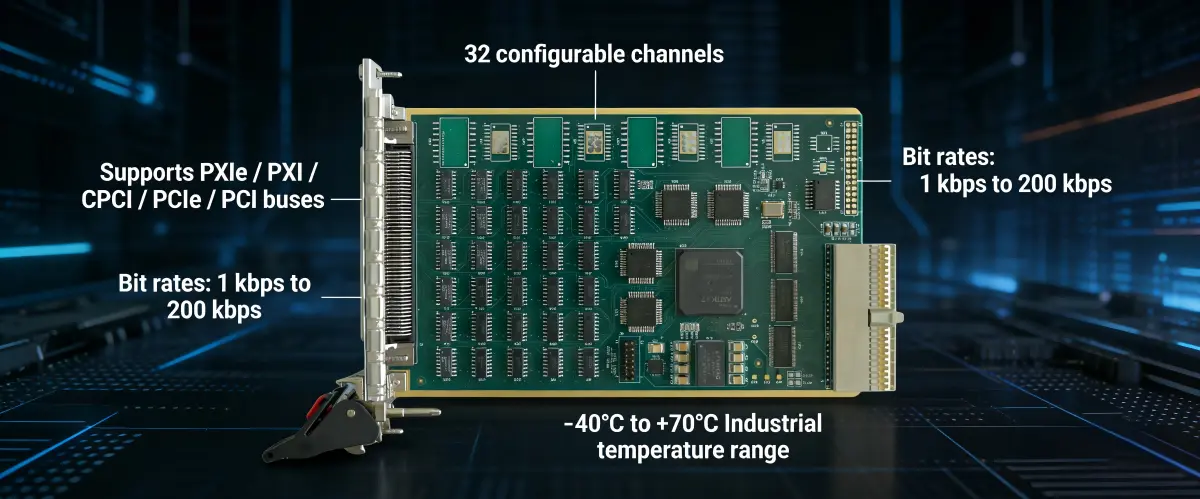
Avionics data transmission systems depend on the ARINC429 protocol, which is like a superhighway for different parts of an airplane. This standard makes it possible for important parts like flight management systems, navigation tools, and display units to reliably share information with each other. The protocol uses a serial data bus architecture that only goes in one direction. This makes sure that data can move freely from a single source to many receivers.
Channel Configuration and Architecture
Accurate channel management and data organization are at the heart of ARINC429 systems' design. Each channel works on its own and sends data words that are made up of 32 bits ordered in certain ways. The most important bits have information about parity and the Sign/Status Matrix (SSM). The less important bits have the real data content and label identification. This structure protects the security of the data and makes it possible to precisely monitor systems across complicated avionics networks.
In multi-channel setups, channel isolation is still very important because it stops crosstalk and keeps the integrity of the signal across multiple data lines at the same time. Galvanic separation between channels is used on modern ARINC429 boards to keep sensitive aviation systems safe from electrical interference and ground loops that could damage flight safety systems.
Data Rates and Label Management
ARINC429 systems can send data at different speeds. For most uses, they work at 12.5 kbps, but high-speed versions can hit 100 kbps for tasks that need to send a lot of data. These rates work for a range of information types, from navigation factors that change slowly to flight control data that changes quickly. Because the protocol is self-synchronizing, there is no need for separate clock messages. This makes the system design simpler and lowers the number of places where something could go wrong.
ARINC429 systems have advanced data sorting tools built into their label management. Each 8-bit label tells users what kind of data it is, so they can only process the relevant feeds. In real-time aviation applications, where millisecond delays can affect flight safety, this selective processing cuts down on computer overhead and speeds up system response times.
Essential Features of a 32-Channel ARINC429 Board for Avionics Applications
32-channel ARINC429 boards that offer great performance while meeting high reliability standards are needed for modern avionics systems. These boards are very important because they connect different parts of an airplane. To meet the needs of the aerospace industry, they need to be designed with strict rules and have lots of features.
Channel Isolation and Data Integrity
High-tech ARINC429 boards use advanced separation technologies to stop electromagnetic interference and make sure that all channels receive a pure signal. Here are the main features of separation that are needed for safe operation:
• Galvanic Isolation: Using a transformer or an optocoupler, each channel keeps its own electrical separation. This stops ground loops and keeps sensitive equipment safe from voltage spikes that could damage aircraft systems.
• Differential Signal Processing: More advanced boards use differential line receivers and transmitters, which block noise better and make it possible for reliable data transfer in airplanes with lots of radar, communication, and power systems that make the surroundings electrically noisy.
• Programmable Termination: This type of line termination lets you get the best performance for a range of wire lengths and system setups, making sure that the signal stays strong in all types of airplane installations and retrofits.
Because they can separate signals, ARINC429 boards can keep data accurate even in the tough electromagnetic conditions that are common in modern airplane operations.
Interface Options and Connectivity
Modern ARINC429 boards are flexible because they have a lot of different interfaces that can work with different system designs and interaction needs. PCIe interfaces offer fast links that work with desktop test systems and ground support gear. USB interfaces, on the other hand, are portable and can be used for testing and repair in the field.
When it comes to professional test and measurement applications, PXI connection is the best input choice. This standard offers uniform form factors, high-speed backplane communication, and synchronized timing, all of which are necessary for complicated test situations involving multiple instruments. PXI-based ARINC429 boards work well with current test automation tools, which speeds up development and improves measurement accuracy.
Software Compatibility and Integration
Professional-grade ARINC429 boards are different from simple ones because they come with full software support. Leading makers offer complete driver packages that work with a number of computer languages and settings, such as LabVIEW, C/C++, Python, and MATLAB. These drivers make it possible to make apps quickly and make it easier to integrate both custom apps and test tools that are already out there.
More advanced boards come with advanced programming tools that make setting up channels, filtering labels, and doing diagnostics easier. These tools let engineers set up complicated test situations without having to do a lot of code. This speeds up project timelines and lowers the costs of developing avionics system validation.
Comparative Analysis of 32-Channel ARINC429 Boards: What Sets Premium Models Apart?
The market for aircraft testing has a lot of different ARINC429 boards, each designed to meet particular application needs and price ranges. Knowing the differences between standard and premium types helps you make smart purchasing choices that balance the need for efficiency with the need to save money.
Performance Scaling and Channel Count Advantages
In thorough aircraft system testing and integration tasks, boards with a higher channel count are very helpful. While 8-channel and 16-channel boards are good for basic tests, 32-channel ARINC429 boards let you watch whole airplane subsystems at once without having to install multiple boards.
The benefits of scaling go beyond just adding more channels. High-end 32-channel boards often have advanced delay features that let you record data for longer periods of time without the host system getting in the way. This ability to operate on its own is very helpful during long-term flight tests and system validation processes that need to keep logging data all the time.
Interface Technology Comparison
Depending on the needs of the program and the limitations of the machine, PCIe and USB interfaces each have their own benefits. PCIe connections have higher bandwidth and lower latency, which makes them perfect for high-throughput apps that need to handle data in real time. The straight link to the motherboard also ensures a stable power supply and gets rid of any reliability issues that might come up with cables.
When flexibility is more important than exact speed, USB interfaces are great for portable applications and field service situations. Modern USB 3.0 versions offer enough bandwidth for most ARINC429 uses, as well as the ease of hot-plugging and laptop support needed for testing in the field.
Leading Brand Evaluation
There are a number of well-known companies that make ARINC429 boards, and each focuses on a different set of design principles and end-uses. For aerospace applications that need to last a long time, evaluation factors should include track records of dependability, the age of the software environment, the quality of expert support, and long-term product availability promises.
Premium makers set themselves apart by doing thorough qualification tests, providing lots of paperwork, and having technical support teams that are quick to respond and can handle difficult integration problems. These things often make higher starting costs worth it by lowering development risks and speeding up the time it takes to finish a job.
Procurement Insights: How to Choose and Where to Buy Your 32-Channel ARINC429 Board?
When buying ARINC429 boards strategically, you need to carefully look at the technical specs, the supplier's skills, and their long-term support promises. Because of the aircraft industry's strict quality standards and long product lifecycles, it's important to carefully evaluate vendors and come up with ways to reduce risks.
Specification Evaluation and Requirements Analysis
A thorough study of requirements that takes into account both current needs and potential for growth in the future is the first step to successful buying. The technical specs should include the number of channels, the data rates that can be supported, the interface choices, and the working temperature ranges that are right for the apps that are being planned.
The quality of the documentation is a good way to tell if a product is mature and if the company is committed to professional markets. Full technical guides, code examples, and application notes show that the company knows what its customers want and has put money into building up a product support system to meet those needs.
Supplier Assessment and Quality Assurance
ARINC429 board providers with a good reputation have thorough quality control systems and can show that they follow the appropriate aerospace standards. Manufacturers that have been around for a while usually have AS9100 certification or something similar. This shows that they are committed to meeting the needs of the aircraft business and improving all the time.
Because aircraft projects tend to have long lifecycles, long-term supplier security is an important thing to think about when buying things. Suppliers with a history of success, strong finances, and a clear commitment to keeping a product line going reduce the risks of obsolescence and support stopping production during key program stages.
Custom Configuration and OEM Services
A lot of ARINC429 applications need to be changed to fit certain system needs or form factor limitations. Leading providers provide full ODM and OEM services, which allow for custom solutions that work best for certain uses while still following all the rules and standards that apply.
Custom services usually include changes to the way something works, special connections, stricter environmental requirements, and software packages that are made just for that one use. These features let system integrators find the best options without lowering speed or taking on extra development risks that aren't needed.
Troubleshooting and Maintaining Your 32-Channel ARINC429 Board
Maintenance and troubleshooting methods that work well make sure that things work reliably over the long periods of time that are common in aircraft use. Maintenance plans that are done ahead of time keep tools working longer and costing more, while still meeting safety and dependability standards.
Diagnostic Procedures and Problem Identification
Modern 32-channel ARINC429 boards have a lot of debugging features that make it easier to find and fix problems. Built-in self-test features check the stability of the channels, the accuracy of the timing, and the performance of the interface without the need for external test tools. These automated tests make it easy to find problems quickly and cut down on the time needed to fix them during important maintenance windows.
Systematic methods for debugging start with checking basic connections and the stability of the power source. They then move on to checking signal quality and making sure the software setup is correct. Full troubleshooting processes should include both hardware and software parts, making sure that the whole system is tested and that problems are found correctly.
Preventive Maintenance Best Practices
Maintenance plans help equipment last longer and keep it from breaking down when it's needed most. Monitoring the environment makes sure that working conditions stay within certain limits, and checking the calibration on a regular basis makes sure that measurements stay accurate over time. Keeping records of maintenance tasks is a good way to get useful past information for making choices about reliability analysis and lifecycle management.
Updating drivers, backing up configurations, and making sure software is compatible with new host systems are all part of software maintenance. These things make sure that the business can keep running even as computer platforms change and operating systems get updates that might affect how well they work with other devices.
Technical Support and Service Options
Professional-grade ARINC429 board makers offer a wide range of technical support services, from help with applications to advanced repair tips. These services usually include support over the phone and email, the ability to do diagnostics remotely, and field service choices for setups that are too complicated to do without help on-site.
For problems that need a factory-level fix or analysis, there should be clear steps for how to escalate the issue. Knowing what the guarantee covers, how long it takes to fix, and how many new units are available helps you plan for the worst and keep operations running smoothly during equipment service intervals.
Conclusion
When looking for the right 32-channel ARINC429 board, you need to carefully consider the technical specs, the supplier's skills, and their long-term assistance promises. Important features include strong channel isolation, a wide range of input choices, and a lot of software support that makes it easy to connect to other test systems. Performance factors like the ability to change the data rate, the ability to diagnose problems, and the surroundings have a direct effect on how reliable and effective the system is in its operations. Using strategic buying methods that look at both current needs and future growth plans is the best way to get the best return on investment while lowering the technical risks that come with aircraft applications.
FAQ
What is the typical lifespan of a 32-channel ARINC429 board?
Professional-grade ARINC429 boards usually work well for 10 to 15 years under normal conditions, and some units keep working for more than 20 years. How long something lasts depends on where it's used, how often, and how well it's maintained. Longer service lives are common in aerospace uses, so the length of suppliers and the availability of parts are important factors to consider when buying.
How does ARINC429 integrate with ARINC664 systems?
In current aircraft systems, ARINC429 and ARINC664 protocols work together to do different things. Gateway devices translate protocols between these standards, which lets older ARINC429 systems connect to newer ARINC664 networks. A lot of new test systems can work with both protocols, which means they can fully test mixed-architecture airplane systems.
What software compatibility should I expect?
The best ARINC429 boards come with full driver packages that work with all the main computer platforms, such as LabVIEW, C/C++, Python, and MATLAB. A lot of providers also offer graphical setting tools that make the setup process easier. To make sure that software will work in the future, it should be compatible with both present and future development platforms.
Contact MXTD for Premium 32-Channel ARINC429 Board Solutions
The 32-channel ARINC429 boards that MXTD makes are the best on the market and are intended for use in aircraft, military, and industrial automation. Our wide range of products includes adaptable options that perform well compared to industry standards, while also being more reliable and cost-effective. Get in touch with our knowledgeable sales team at manager03@mxtdinfo.com to find out how our advanced ARINC429 board maker skills can help you meet the needs of your system with custom solutions backed by quick technical support and full insurance coverage.
References
1. Airlines Electronic Engineering Committee. "ARINC Specification 429: Mark 33 Digital Information Transfer System." ARINC, 2019.
2. Smith, Robert J. "Digital Avionics Systems: Principles and Practices in Aircraft Communication." Aerospace Engineering Publications, 2021.
3. Federal Aviation Administration. "Advisory Circular AC 20-141A: Airworthiness Approval of Avionics Systems." FAA, 2020.
4. Johnson, Michael K. "ARINC Standards in Modern Aviation: Implementation and Testing Strategies." Journal of Aerospace Electronics, Vol. 45, No. 3, 2022.
5. International Organization for Standardization. "ISO 14473-2: Aircraft Data Networks - Part 2: ARINC 429 Implementation Guidelines." ISO Technical Committee, 2021.
6. Williams, Sarah L. "Avionics Test and Measurement: Best Practices for ARINC Protocol Validation." Aerospace Testing Institute, 2023.
Our customers’ satisfaction speaks for our quality — contact us to experience the same reliable service.