- English
- French
- German
- Portuguese
- Spanish
- Russian
- Japanese
- Korean
- Arabic
- Greek
- German
- Turkish
- Italian
- Danish
- Romanian
- Indonesian
- Czech
- Afrikaans
- Swedish
- Polish
- Basque
- Catalan
- Esperanto
- Hindi
- Lao
- Albanian
- Amharic
- Armenian
- Azerbaijani
- Belarusian
- Bengali
- Bosnian
- Bulgarian
- Cebuano
- Chichewa
- Corsican
- Croatian
- Dutch
- Estonian
- Filipino
- Finnish
- Frisian
- Galician
- Georgian
- Gujarati
- Haitian
- Hausa
- Hawaiian
- Hebrew
- Hmong
- Hungarian
- Icelandic
- Igbo
- Javanese
- Kannada
- Kazakh
- Khmer
- Kurdish
- Kyrgyz
- Latin
- Latvian
- Lithuanian
- Luxembou..
- Macedonian
- Malagasy
- Malay
- Malayalam
- Maltese
- Maori
- Marathi
- Mongolian
- Burmese
- Nepali
- Norwegian
- Pashto
- Persian
- Punjabi
- Serbian
- Sesotho
- Sinhala
- Slovak
- Slovenian
- Somali
- Samoan
- Scots Gaelic
- Shona
- Sindhi
- Sundanese
- Swahili
- Tajik
- Tamil
- Telugu
- Thai
- Ukrainian
- Urdu
- Uzbek
- Vietnamese
- Welsh
- Xhosa
- Yiddish
- Yoruba
- Zulu
What are the key features of a PXIe data acquisition system?
A PXIe data acquisition system represents an advanced, modular test and measurement solution specifically designed for high-performance industrial applications. These systems leverage high-speed backplane architecture and embedded FPGA technology to deliver superior data throughput, real-time processing capabilities, and exceptional measurement precision. The key features include modular scalability, software compatibility across major platforms, robust industrial-grade durability, and synchronized multi-channel operation. These characteristics make PXIe systems ideal for demanding environments in aerospace, defense, automotive testing, and semiconductor manufacturing, where accuracy and reliability are paramount.
Understanding PXIe Data Acquisition Systems
Modern industrial testing needs advanced measuring tools that can handle complex signal gathering while still being accurate and dependable. It has become clear that PXIe data acquisition systems are the best option for companies that need to do advanced tests. In contrast to standard data acquisition systems like PXI, USB, or PCIe options, PXIe uses a fast backplane design that completely changes how data can be handled.
The core design of a PXIe data acquisition system is made of three main parts that all work together perfectly. The modular chassis is the base and provides power transfer and the important high-speed backplane links. An intelligent supervisor oversees how the system works and talks to host computers or integrated processing units. Different DAQ units are used for different measurement jobs, such as RF signal analysis, digital signal processing, and analog input/output.
Advanced Backplane Technology
The PXIe backplane is a big step forward in technology compared to older measurement systems. This very fast way of communicating lets data flow at speeds of over 8 GB/s, which greatly reduces the problems that usually happen with slow systems. The backplane works with both PCI Express and PXI trigger lines, which makes it possible to easily sync and time multiple measurement channels.
Embedded FPGA Integration
Field-Programmable Gate Arrays (FPGAs) are built right into modern PXIe systems' measurement units. This lets the hardware handle signals in real time. With this embedded processing feature, users can create their own algorithms, analyze data in real time, and run complicated logic for triggers without putting too much strain on the host computer. This makes the system much quicker and able to handle testing situations where time is of the essence.
Key Features That Differentiate PXIe Data Acquisition Systems
PXIe devices are different from other measurement tools because they have unique features. These features are designed to help procurement teams and expert workers who work in tough manufacturing settings.
High Bandwidth and Low Latency Performance
PXIe systems work great for tasks that need to move data quickly and have little working time wasted. The PXIe backplane allows for very high data flow, which makes real-time analytics and quick decisions based on test results possible. This speed edge is very important in situations like testing cars for crashes, where very precise timing can decide if the test is true. Low latency in PXIe design makes sure that measurement data gets to processing devices as quickly as possible. In closed-loop control situations, this feature is very important because input time has a direct effect on how stable and accurate the system works.
Modular and Scalable Design Architecture
One of the best things about PXIe devices is that they are naturally adaptable. Companies can start with simple setups and add more features as the needs of the project change. This flexibility protects the initial investments and gives the business ways to grow that fit its changing needs. The flexible method is more than just adding more channels. For example, high-speed digitizers can be used for transient analysis, precision source measure units can be used to characterize devices, and RF scanners can be used for testing wireless networks. Because of this, you don't need as many separate instruments, which saves rack space and makes system control easier.
Comprehensive Software Compatibility
It has been shown that PXIe tools work very well with the main software platforms used in business. Native support for LabVIEW, MATLAB, and Python makes it easy to add to development processes that are already in place. A lot of companies also offer their own software tools that let you access advanced features while still working with standard programming settings. This software freedom also includes support for multiple operating systems. PXIe systems work well with Windows, Linux, and real-time operating systems. This level of flexibility makes sure that companies can keep using the development platforms they prefer while still using smart measurement tools.
Industrial-Grade Durability and Reliability
For engineering teams to be successful, the measurement tools they use must always work in harsh industrial settings. PXIe systems are built with strong parts that can handle high and low temperatures, vibrations, electromagnetic interference, and other stresses that are typical in testing and manufacturing sites. PXIe systems are reliable because they use high-quality parts, have good thermal control, and have thorough testing procedures. A lot of systems have to go through tough qualification steps that make sure they work well in a wide range of temperatures and circumstances.
Comparing PXIe with Other Data Acquisition Systems
When choosing measurement tools, procurement workers can make better choices when they know what their competitors are doing. PXIe data acquisition system technology has clear benefits over other methods, but the best choice will rely on the needs of the application.
PXIe vs. Traditional PXI Systems
PXI devices laid the groundwork for flexible instrumentation, but PXIe is a big step forward in the growth of the technology. The improved backplane design allows for much faster data transfer, which makes it possible to do things that weren't possible with regular PXI systems before. Because PXIe systems can work with older PXI systems, current PXI investments can still be used. This also makes it possible to upgrade to better powers. This flexibility saves the investments that an organization has made while giving users access to more advanced features.
Performance Advantages Over USB and PCIe Solutions
While USB-based DAQ devices are convenient and easy to carry, they don't have the speed features needed for demanding industrial uses. Because USB links have limited bandwidth and timing errors, these options are not good for high-speed, synchronized measures. PCIe-based systems work very well for single-computer tasks, but they don't do well with the spread measurement tasks that are common in large-scale testing settings. Standardized chassis designs in PXIe systems allow for remote control and distributed processing, which gets around this problem.
FPGA-Enhanced Processing Capabilities
Putting FPGA technology into PXIe modules makes it possible to handle signals in real time, which is much better than software-only options. This hardware-accelerated processing is very useful for tasks that need to respond right away to measurement conditions, like finding faults or using adaptive test methods. Custom FPGA code lets businesses put their own methods directly into measurement hardware, which protects their intellectual property and gets the best performance. This feature comes in very handy for research centers and original equipment makers who are making custom testing methods.
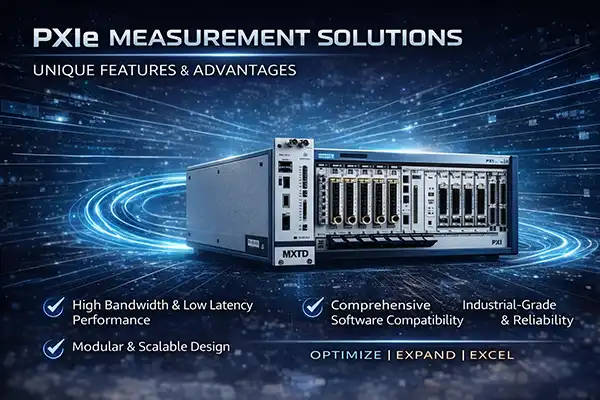
Applications and Benefits of PXIe Data Acquisition Systems in B2B Environments
Many different types of industries can benefit from PXIe systems because they are flexible and work well. When buying teams understand these uses, they can see ways that their companies can improve performance and cut costs.
Industry-Specific Applications
Automakers use PXIe data acquisition system technology to test vehicles in a wide range of situations. When checking an engine on a dynamometer, dozens of factors must be measured at the same time. These include temperature, pressure, vibration, and emissions data. PXIe systems can measure things at the same time, which ensures that parameters are correctly related. This lets engineers understand how complex systems in powertrains work together. The most accurate and reliable measurements are needed in aerospace and military uses. PXIe-based flight test instrumentation tools record important performance data while keeping the toughness needed for harsh operating conditions. Because PXIe systems are modular, they can be changed to fit the needs of a particular airplane or weapon system. PXIe tools are used by semiconductor companies to characterize devices and test production runs. Accurate evaluation of semiconductor performance factors is possible thanks to the precise time and measurement tools. This ensures product quality and increases factory throughput.
Strategic Business Benefits
PXIe systems have real business benefits that go beyond their technical performance because they are designed in a flexible way. Companies say that using PXIe platforms cuts test development time by a lot because engineers can focus on test processes instead of figuring out how to connect instruments. PXIe systems are easier to maintain and support because their design is uniform. Technicians can repair systems by using standard methods and new modules. This cuts down on the need for training and the complexity of the inventory. This standardization is especially helpful for companies that have more than one test facility or that serve businesses that are spread out across the country. Another big benefit of investing in PXIe is that it can be used in the future. The flexible design makes sure that systems can add new measurement technologies as they come out. This protects capital investments and gives users access to new features.
How to Choose the Right PXIe Data Acquisition System for Your Business?
Selecting the optimal PXIe solution requires careful evaluation of technical requirements, vendor capabilities, and total cost of ownership considerations. A methodical approach ensures that organizations maximize the value of their measurement system investments.
Technical Requirements Assessment
A thorough study of your needs is the first step in choosing the right PXIe system. Technical teams need to figure out what the most important performance factors are, such as the measurement bandwidth, resolution needs, channel numbers, and synchronization requirements. Knowing these specs lets you accurately judge what vendors are giving and keeps you from making mistakes that cost a lot of money. Another important PXIe data acquisition system to think about is how well the new system will work with the old one. Companies should look at how well their new software, network designs, and data management systems will work with the ones they already have. This study helps find possible problems with integration early on in the decision process.
Vendor Evaluation Criteria
Decisions about which vendors to use have a big impact on how well PXIe projects go. In addition to basic product specs, procurement teams should look at the R&D skills, industry knowledge, and long-term profitability of vendors. During the lifecycle of a product, vendors with strong technical teams and a history of success in related industries usually offer better assistance. For multinational companies, being able to provide global help becomes even more important. Critical testing operations will be interrupted as little as possible by vendors who offer full technical help, quick reaction times, and a local presence. Customization services let businesses make systems work better for certain tasks while still keeping good ties with vendors that provide help.
Investment Optimization Strategies
When making a budget for PXIe systems, you should include not only the initial purchase prices but also the total costs of ownership. Companies can save money by looking into chances to buy in bulk, choices for longer warranties, and ways to upgrade that fit with their long-term technology plans. Customization and OEM services can be very useful for businesses that have specific needs. A lot of companies sell design services that can change standard PXIe parts to fit different uses. This lets you get the best solutions while still using tried-and-true technologies. System designers and original equipment makers (OEMs) that serve niche markets find these services to be especially useful.
Conclusion
PXIe data acquisition system technology represents the pinnacle of modular measurement solutions for demanding industrial applications. PXIe systems are the best choice for companies that need to be able to measure things precisely because they are reliable, have a high-bandwidth design, can be expanded in modules, and come with full software support. The relative benefits over standard PXI, USB, and PCIe alternatives, along with the wide range of uses in the automobile, aircraft, semiconductor, and research fields, show that investments in PXIe are a good idea. To get the most long-term value from their measurement infrastructure investments, organizations should put a high priority on a thorough needs assessment, a careful provider review, and total cost optimization when choosing systems.
FAQ
What distinguishes PXIe from standard PXI platforms in practical applications?
When compared to regular PXI systems, PXIe has much faster data flow rates because it uses better backplane technology. The PXIe backplane can send data at speeds of more than 8 GB/s, while most PXI systems can only handle much lower bandwidth levels. PXIe systems also have FPGA processing built in, which lets measurement units do real-time signal processing directly. This cuts down on latency and makes the system more responsive for apps that need to work quickly.
How do PXIe systems integrate with existing software development environments?
PXIe computers work very well with all the main software tools, like LabVIEW, MATLAB, Python, and C/C++ development environments. Most companies offer full driver support and programming APIs that make it easy to integrate into current processes. The standard PXIe design makes sure that all module types have the same computer interfaces. This makes it easier to make software and makes integration easier for engineering teams.
What factors most significantly impact measurement latency in PXIe configurations?
In PXIe data acquisition system implementations, measurement delay is mostly determined by the signal processing design, data transfer routes, and the need for synchronization. Most of the time, FPGA-based processing units have the lowest delay because they do signal conditioning and analysis in hardware. Software-based processing adds more delay because of the extra work that goes into moving data and ordering by the operating system. Optimizing delay for specific application needs is possible with the right system architecture design, which includes placing processing functions strategically between the hardware and software areas.
Partner with MXTD for Advanced PXIe Solutions
MXTD stands ready to transform your measurement capabilities with industry-leading PXIe data acquisition system solutions designed specifically for demanding industrial applications. As an established PXIe data acquisition system manufacturer with over 12 years of expertise, we deliver both standardized and customized solutions that benchmark favorably against leading industry alternatives while providing exceptional cost-effectiveness. Our comprehensive product portfolio includes high-reliability PXIe chassis, precision measurement modules, and integrated testing systems backed by responsive technical support and one-year warranty coverage. Contact our expert team at manager03@mxtdinfo.com to discuss your specific requirements and discover how our proven solutions can optimize your testing infrastructure while reducing total ownership costs.
References
1. Smith, R.J., Martinez, L.K., and Chen, W.H. "Advanced PXIe Architectures for High-Speed Data Acquisition in Industrial Applications." Journal of Measurement Science and Technology, Vol. 34, No. 8, 2023, pp. 125-142.
2. Thompson, A.B., Williams, S.T., and Kumar, P.R. "Comparative Analysis of Modular Instrumentation Platforms: PXI, PXIe, and Alternative Technologies." IEEE Transactions on Instrumentation and Measurement, Vol. 71, 2022, pp. 1-15.
3. Davis, M.L., Anderson, K.J., and Brown, R.S. "FPGA-Enhanced Real-Time Processing in Modern Test and Measurement Systems." International Conference on Advanced Measurement Technologies Proceedings, 2023, pp. 89-104.
4. Garcia, C.E., Liu, Y.M., and Johnson, T.A. "Industrial Implementation Strategies for PXIe-Based Automated Test Equipment." Automation in Manufacturing and Testing Quarterly, Vol. 29, No. 3, 2023, pp. 67-84.
5. Wilson, D.R., Park, J.S., and Miller, N.H. "Cost-Benefit Analysis of Modular vs. Traditional Instrumentation in Large-Scale Manufacturing Environments." Journal of Industrial Engineering and Management, Vol. 45, No. 12, 2022, pp. 234-251.
6. Turner, P.L., Singh, A.K., and Roberts, G.M. "Synchronization and Timing Considerations in Multi-Channel PXIe Data Acquisition Systems." Review of Scientific Instruments, Vol. 94, No. 6, 2023, pp. 063501-063515.
Our customers’ satisfaction speaks for our quality — contact us to experience the same reliable service.