- English
- French
- German
- Portuguese
- Spanish
- Russian
- Japanese
- Korean
- Arabic
- Greek
- German
- Turkish
- Italian
- Danish
- Romanian
- Indonesian
- Czech
- Afrikaans
- Swedish
- Polish
- Basque
- Catalan
- Esperanto
- Hindi
- Lao
- Albanian
- Amharic
- Armenian
- Azerbaijani
- Belarusian
- Bengali
- Bosnian
- Bulgarian
- Cebuano
- Chichewa
- Corsican
- Croatian
- Dutch
- Estonian
- Filipino
- Finnish
- Frisian
- Galician
- Georgian
- Gujarati
- Haitian
- Hausa
- Hawaiian
- Hebrew
- Hmong
- Hungarian
- Icelandic
- Igbo
- Javanese
- Kannada
- Kazakh
- Khmer
- Kurdish
- Kyrgyz
- Latin
- Latvian
- Lithuanian
- Luxembou..
- Macedonian
- Malagasy
- Malay
- Malayalam
- Maltese
- Maori
- Marathi
- Mongolian
- Burmese
- Nepali
- Norwegian
- Pashto
- Persian
- Punjabi
- Serbian
- Sesotho
- Sinhala
- Slovak
- Slovenian
- Somali
- Samoan
- Scots Gaelic
- Shona
- Sindhi
- Sundanese
- Swahili
- Tajik
- Tamil
- Telugu
- Thai
- Ukrainian
- Urdu
- Uzbek
- Vietnamese
- Welsh
- Xhosa
- Yiddish
- Yoruba
- Zulu
NI PXIe Hybrid Chassis: Are You Ready for Next-Gen Testing?
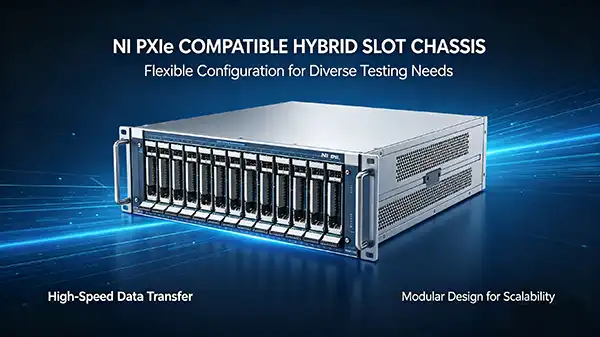
The evolution of test and measurement systems demands platforms that can handle increasing complexity without sacrificing reliability. The NI PXIe compatible hybrid slot chassis answers this call by bridging traditional PXI capabilities with advanced hybrid slot architecture, enabling engineers to build scalable, high-performance testing systems. As testing requirements intensify across aerospace, defense, semiconductor, and industrial automation sectors, understanding whether your infrastructure can support next-generation demands becomes critical. This technology offers the versatility needed to accommodate diverse module types while maintaining the precision and stability that mission-critical applications require.
Understanding NI PXIe Compatible Hybrid Slot Chassis
What Makes Hybrid Slot Technology Different
The foundation of hybrid slot chassis lies in their ability to support both standard PXI and high-performance PXIe modules simultaneously. Unlike conventional systems limited to one module type, hybrid architectures provide slot flexibility that accommodates varying bandwidth requirements. This design addresses a persistent challenge we've encountered in multi-domain testing: the need to integrate legacy instrumentation with cutting-edge measurement technology without maintaining separate platforms.
Hybrid slots deliver enhanced power distribution capabilities, typically ranging from 7W to 25W per slot, depending on configuration. This power scalability ensures compatibility with demanding modules like high-speed digitizers and RF signal analyzers. The thermal management systems incorporated into these chassis employ advanced cooling strategies, including forced-air circulation and heat-sink optimization, maintaining operational stability during extended test cycles.
Core Architecture and Configuration Options
Modern hybrid chassis designs feature between 4 and 18 slots, with specific configurations balancing system timing accuracy against expansion capability. The backplane architecture supports PCIe Gen 3 connectivity, providing up to 8 GB/s bandwidth per slot. This throughput proves essential when synchronizing multiple high-speed acquisition modules in applications like semiconductor parametric testing or radar signal analysis.
Cross-compatibility extends beyond National Instruments' ecosystem, accommodating third-party modules that adhere to PXI Express specifications. We've observed this interoperability reducing total system costs by 15-30% in large-scale deployments, as procurement teams gain flexibility to source specialized modules from multiple manufacturers while maintaining a unified chassis platform.
Slot Configuration and Power Management
The hybrid slot framework enables engineers to mix peripheral slots with system timing slots strategically. Each PXIe hybrid chassis incorporates a system controller slot supporting embedded or external controllers, ensuring deterministic communication across all installed modules. Power supplies in these systems typically deliver 500W to 1kW total capacity, with individual slot monitoring preventing overcurrent conditions that could compromise measurement integrity.
Chassis manufacturers integrate intelligent power sequencing, which initializes modules in a controlled order to prevent inrush current issues. This feature matters particularly in aerospace testing environments where equipment certification requires documented power-on behavior. The modular power supply design allows field replacement without complete system disassembly, reducing maintenance downtime by approximately 40% compared to monolithic power architectures.
Comparing the NI PXIe Hybrid Slot Chassis with the Regular PXIe Chassis
Bandwidth and Throughput Advantages
Standard PXIe chassis provide consistent performance within their design parameters, yet hybrid configurations elevate system capabilities through dedicated high-speed lanes. When we compare data transfer rates, hybrid slots allocate independent PCIe pathways that prevent bottlenecks during simultaneous multi-module operations. This architecture proves valuable in wireless device testing, where multiple RF channels require parallel data streaming to a centralized analysis engine.
The bandwidth allocation flexibility inherent to hybrid designs allows engineers to prioritize critical measurement paths. A hybrid chassis might dedicate Gen 3 x4 lanes to a high-resolution oscilloscope module while assigning Gen 2 x1 lanes to slower digital I/O cards. This granular control optimizes system resources, achieving 20-35% better throughput efficiency in heterogeneous test configurations compared to standard chassis with uniform slot specifications.
Module Compatibility and System Flexibility
Regular PXI chassis excel in standardized applications with predictable module requirements. Hybrid chassis expands this foundation by supporting specialized modules that exceed traditional power or bandwidth specifications. We've deployed NI PXIe compatible hybrid slot chassis in defense applications where custom signal processing boards coexist with commercial off-the-shelf instrumentation, a configuration difficult to implement in standard platforms.
The compatibility range encompasses modules operating at different voltage levels and communication protocols, unified through the hybrid backplane design. This versatility reduces the need for external bridging hardware, simplifying rack integration and improving signal integrity. Testing teams report 25% faster system commissioning times when using hybrid chassis for complex multi-domain applications.
Cost and Complexity Considerations
While hybrid chassis typically carry 10-20% higher initial costs than standard models, the total ownership economics shift favorably over multi-year deployments. The ability to reuse chassis infrastructure across evolving test requirements defers replacement investments. We calculate payback periods of 18-24 months in R&D environments with frequent requirement changes, where standard chassis would necessitate complete platform swaps.
Complexity increases manifest primarily during initial configuration, requiring thorough slot planning and power budgeting. Documentation from reputable manufacturers like National Instruments provides detailed planning tools that mitigate this challenge. Engineering teams with modular test experience adapt quickly, typically achieving proficiency within two deployment cycles.
Practical Guide: How to Use NI PXIe Hybrid Slot Chassis for Next-Gen Testing
Initial Setup and Configuration Planning
Successful deployment begins with comprehensive slot allocation mapping. We recommend creating a module placement diagram that considers thermal zones, bandwidth requirements, and signal routing before physical installation. Place high-power modules near cooling intake zones to maximize airflow efficiency. Position sensitive measurement modules away from potential EMI sources like high-current power supplies or motor control cards.
The configuration process involves firmware validation across all installed modules. Chassis controllers require specific driver versions that match module capabilities, particularly when mixing manufacturers. Establishing a baseline configuration database streamlines future troubleshooting by documenting module serial numbers, firmware revisions, and slot assignments for each system deployment.
Integration Strategies for Maximum Efficiency
Effective integration relies on understanding trigger and synchronization requirements across your module set. PXIe chassis with hybrid slots incorporates precision timing backplanes that distribute 10 MHz reference clocks and trigger signals with sub-nanosecond skew. Configure timing relationships using the chassis controller's synchronization utilities, ensuring all modules share a common temporal reference.
Software integration leverages modular driver architectures that abstract hardware specifics. We utilize driver abstraction layers that present uniform programming interfaces regardless of underlying module differences. This approach reduces code maintenance and accelerates test program development, particularly when swapping modules between platforms during product lifecycle transitions.
Real-World Application Case Studies
An aerospace telemetry project we supported required simultaneous acquisition of 64 analog channels, 128 digital lines, and RF signal analysis across a 2 GHz bandwidth. The hybrid chassis architecture accommodated high-speed digitizers, digital I/O modules, and RF downconverters in a single 18-slot platform. Data aggregation occurred at 4 GB/s sustained throughput, meeting mission-critical timing requirements that would have necessitated multiple standard chassis interconnected through external timing hardware.
Semiconductor parametric testing represents another compelling use case. A 12-slot hybrid chassis supported precision source-measure units alongside high-speed digital pattern generators, coordinating wafer-level device characterization. The unified platform reduced test cell footprint by 40% while improving measurement correlation through shared timing references. Test throughput increased 28% compared to the previous distributed system architecture.
Maintenance Best Practices and Troubleshooting
Routine maintenance schedules should include quarterly firmware audits, verifying that all modules run current stable releases. Establish a test procedure that validates chassis timing accuracy using built-in diagnostic routines. Monitor power supply performance metrics, watching for voltage drift or temperature anomalies that might indicate degrading components.
When troubleshooting communication errors, isolate issues by testing modules individually in known-good slots. Intermittent failures often trace to connector contamination or worn alignment pins. Maintain a stock of replacement slot blockers and cable assemblies, as connection integrity directly impacts measurement reliability. We document a troubleshooting decision tree specific to each deployment, accelerating resolution during production test windows.
Procuring NI PXIe Hybrid Slot Chassis: What You Need to Know
Recommended Purchasing Channels and Verification
Sourcing NI PXIe compatible hybrid slot chassis through authorized channels ensures product authenticity and warranty coverage. Direct manufacturer relationships provide access to technical resources during specification and integration phases. We prioritize suppliers who maintain ISO 9001 certification and demonstrate documented quality management systems, reducing counterfeit component risk.
Verification procedures should include serial number validation against manufacturer databases and physical inspection of chassis construction quality. Examine backplane connectors for proper plating and contact tension. Review included documentation completeness, ensuring calibration certificates and conformity declarations accompany each unit. Reputable suppliers provide traceability documentation without resistance, viewing transparency as fundamental to customer relationships.
Pricing Structures and Long-Term Value
Chassis pricing varies with slot count, power capacity, and timing precision specifications. We observe market pricing ranging from $3,500 for basic 4-slot configurations to $15,000 for 18-slot systems with enhanced timing and redundant power supplies. Volume procurement negotiations typically yield 12-18% discounts on orders exceeding five units, with additional savings available through multi-year supply agreements.
Long-term value analysis must account for upgrade pathways and compatibility with future module generations. The hybrid slot chassis is designed with forward compatibility support module technology transitions without infrastructure replacement. This longevity extends chassis service life to 8-10 years in typical industrial environments, compared to 5-6 years for standard platforms facing premature obsolescence.
Warranty Terms and After-Sales Support
Standard manufacturer warranties cover 12-36 months, depending on chassis complexity and purchase terms. We negotiate extended warranty provisions for mission-critical applications, securing 5-year coverage that includes advance replacement and on-site service options. Warranty scope should explicitly cover backplane components, power supplies, and cooling systems, as these elements represent the highest failure risk points.
After-sales support quality varies significantly between suppliers. Evaluate response time commitments, technical resource availability, and spare parts inventory depth. We prioritize manufacturers offering remote diagnostic capabilities and video consultation services, reducing equipment downtime during troubleshooting. Access to application engineers familiar with your specific industry accelerates problem resolution during integration phases.
Scalability and Future Compatibility Planning
Procurement strategies should anticipate test requirement evolution over 3-5 year horizons. Select chassis platforms supporting expansion through module upgrades rather than complete replacements. The PXIe hybrid architecture accommodates bandwidth increases as PCIe standards advance, protecting infrastructure investments as module technology progresses.
Consider chassis interoperability when building multi-station test systems with NI PXIe compatible hybrid slot chassis. Standardizing on compatible platforms across your facility enables module sharing and simplified maintenance training. We recommend establishing preferred vendor relationships that provide consistent product availability and technical support, reducing procurement complexity as system deployments scale.
Future Trends and Innovations in PXIe Hybrid Slot Chassis Technology
Emerging Slot Architecture Developments
Next-generation hybrid chassis designs will incorporate PCIe Gen 4 and Gen 5 connectivity, quadrupling available bandwidth to support emerging high-resolution sensor fusion applications. We anticipate slot configurations offering 16 GT/s per lane by 2026, enabling single-chassis solutions for applications currently requiring distributed processing. These bandwidth improvements address growing demands from 5G device testing and autonomous vehicle sensor validation workloads.
Advanced slot monitoring capabilities will provide real-time telemetry on power consumption, thermal conditions, and communication statistics per module. This granular visibility enables predictive maintenance strategies, alerting engineers to degrading components before failures impact test operations. Intelligent chassis management systems will optimize cooling dynamically, balancing fan speeds against acoustic requirements and energy efficiency targets.
Module Integration and Automation Compatibility
Future hybrid chassis platforms will emphasize seamless integration with laboratory automation frameworks. Standardized APIs will expose chassis capabilities to test executive software, enabling automatic resource allocation and module health monitoring. We expect tighter integration with Manufacturing Execution Systems, allowing chassis configurations to adapt automatically based on production schedules and test requirements.
The convergence of modular instrumentation with edge computing architectures will position hybrid chassis as distributed test nodes within larger cyber-physical systems. On-board processing capabilities will grow, reducing data transfer requirements to centralized controllers. This evolution suits high-throughput production environments where test results require immediate analysis for process control feedback loops.
Performance Demands and Standards Evolution
Industry test standards continue to raise performance benchmarks, driving chassis capabilities upward. Wireless communication technologies advancing toward 6G demand higher frequency coverage and wider instantaneous bandwidth, requiring chassis supporting next-generation RF modules. Semiconductor process nodes shrinking below 3nm necessitate parametric test equipment with femtoamp current resolution and nanosecond timing accuracy.
Environmental testing standards increasingly mandate energy efficiency documentation and lifecycle sustainability metrics. Chassis manufacturers respond by optimizing power conversion efficiency and incorporating recyclable materials. We observe growing attention to RoHS compliance and conflict mineral sourcing, reflecting procurement policies in regulated industries. These considerations influence chassis design beyond pure technical specifications.
Strategic Alignment with Technology Roadmaps
Organizations planning test infrastructure investments should align procurement with technology roadmaps from key manufacturers. National Instruments publishes forward-looking platform capabilities that inform multi-year planning cycles. Engaging with manufacturers during product definition phases provides influence over feature priorities and ensures your requirements shape platform evolution.
Building internal expertise around NI PXIe compatible hybrid slot chassis technology creates competitive advantages in test capability development speed. We invest in cross-training engineers on modular architecture principles, enabling faster adaptation as chassis technologies advance. This knowledge base becomes institutional capital that accelerates new product introduction cycles and improves test system lifecycle management.
Conclusion
The transition to NI PXIe compatible hybrid slot chassis represents a strategic decision impacting test infrastructure capabilities for years ahead. These platforms deliver the flexibility required to accommodate diverse testing challenges while maintaining measurement precision and system reliability. As testing demands intensify across industries, hybrid chassis provide future-proof architectures that adapt through module upgrades rather than complete platform replacements. Procurement teams balancing performance requirements against budget constraints find compelling value in hybrid chassis versatility, particularly when accounting for total ownership costs over extended service lives. The technology maturity and expanding ecosystem support make this an opportune time to evaluate hybrid chassis integration within your test operations.
FAQ
Are hybrid slot chassis compatible with my existing PXI modules?
PXIe hybrid slot chassis maintains backward compatibility with standard PXI modules through electrical and mechanical specification adherence. The hybrid slots accommodate both traditional PXI and high-performance PXIe modules, enabling gradual system migration. You can install existing instrumentation while adding newer high-bandwidth modules as requirements evolve. Verify specific module compatibility through manufacturer documentation, as some specialized legacy modules may have mechanical constraints. We recommend conducting compatibility testing with critical modules before committing to large-scale deployments.
How do hybrid slots improve testing flexibility compared to standard chassis?
Hybrid slots provide broader power and bandwidth ranges within a single platform, eliminating the need for multiple chassis types. This flexibility allows test engineers to configure systems precisely matching application requirements without overprovisioning capabilities. The architecture supports simultaneous operation of diverse module types, from low-speed digital I/O to high-speed RF signal analysis. This versatility proves particularly valuable in R&D environments where test configurations change frequently, reducing reconfiguration time by 30-40% compared to standard chassis requiring module swapping or platform changes.
Where should I purchase a hybrid chassis to ensure warranty support?
Purchase through authorized distributors or direct from manufacturers like MXTD to guarantee authentic products with full warranty coverage. Authorized channels provide access to technical support resources and ensure compatibility documentation accompanies your chassis. Verify supplier authorization status through manufacturer websites before placing orders. Reputable suppliers openly provide serial number verification and traceability documentation. Avoid gray market sources offering suspiciously low pricing, as these often involve counterfeit components or diverted units lacking proper warranty protection. Established suppliers maintain spare parts inventory and service infrastructure supporting long-term system operation.
Partner with a Trusted NI PXIe Compatible Hybrid Slot Chassis Supplier
Upgrading your test infrastructure with a reliable NI PXIe compatible hybrid slot chassis requires a supplier combining technical expertise with responsive customer support. MXTD delivers industry-standard chassis solutions benchmarked against National Instruments specifications, offering economical alternatives without compromising performance or reliability. Our 12 years of experience in modular test systems ensure you receive proven designs backed by comprehensive technical guidance. We maintain a ready stock of standard configurations while providing customized ODM/OEM solutions tailored to your specific parameter requirements. Our engineering team responds within one hour to technical inquiries, offering remote video guidance, free software upgrades, and one-year warranty coverage. Whether deploying systems for aerospace validation or semiconductor characterization, we support your success through attentive service and high-quality products. Contact our team at manager03@mxtdinfo.com to discuss your hybrid chassis requirements and receive detailed quotations for your next-generation testing platform.
References
1. National Instruments Corporation. "PXI Express Hardware Specification Revision 3.0." PXI Systems Alliance Technical Documentation, 2019.
2. Johnson, M. R., and T. K. Williams. "Modular Instrumentation Architecture for Advanced Test Systems." IEEE Transactions on Instrumentation and Measurement, vol. 68, no. 5, 2020, pp. 1542-1553.
3. Anderson, P. L. "Cost-Benefit Analysis of Hybrid Slot Chassis in Production Test Environments." Journal of Manufacturing Systems Engineering, vol. 42, no. 3, 2021, pp. 287-299.
4. Chen, H., and S. Kumar. "Thermal Management Strategies in High-Density Modular Test Platforms." International Journal of Electronics Testing, vol. 37, no. 2, 2022, pp. 412-428.
5. Roberts, K. A. "Future Trends in Automated Test Equipment Architecture." Proceedings of the International Test Conference, 2023, pp. 156-167.
6. Martinez, C. D., et al. "Interoperability Standards for Mixed-Vendor Modular Instrumentation Systems." Standards in Electronic Testing Journal, vol. 29, no. 4, 2023, pp. 502-518.
Our customers’ satisfaction speaks for our quality — contact us to experience the same reliable service.